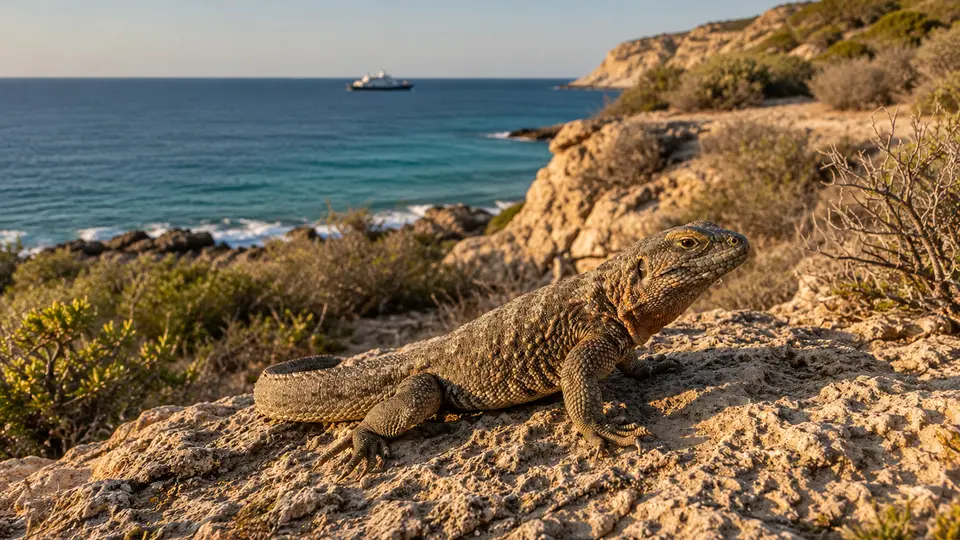
San Esteban Island Chuckwalla in its natural habitatAI-modified

San Esteban Island ChuckwallaSauromalus variusWhere and when to see them

San Esteban Island Chuckwalla at a glance

The San Esteban Island chuckwalla is a large, heavy-bodied iguanid native to a very restricted island setting in Mexico's Gulf of California. Its pale, dark-mottled coloration blends with sunlit desert rock, while a broad trunk accommodates a plant-based diet. Island isolation has produced a lizard distinct from mainland chuckwallas. Its narrow range makes habitat protection, biosecurity and prevention of illegal collection especially important considerations for any discussion of visitation.

Behaviour & reproduction

Size
Up to about 60 cm (23.6 in) total length
Weight
Not reliably established
Lifespan
Not reliably established
Status
Check current assessment

These chuckwallas warm themselves on exposed rocks before feeding, then retreat into shade or crevices when temperatures become excessive. Threatened animals wedge into rock cracks and inflate the body, making extraction difficult. Males use visual displays and may defend favored areas. Daily activity changes with weather and season, so an apparently empty rocky slope may simply reflect animals sheltering from heat rather than an absence of lizards. These chuckwallas warm themselves on exposed rocks before feeding, then retreat into shade or crevices when temperatures become excessive. Threatened animals wedge into rock cracks and inflate the body, making extraction difficult. Males use visual displays and may defend favored areas. Daily activity changes with weather and season, so an apparently empty rocky slope may simply reflect animals sheltering from heat rather than an absence of lizards. They exhibit diurnal activity, basking in the morning sun to reach optimal body temperatures. During cooler parts of the day, individuals may be seen foraging slowly across the rocky terrain.

Top wildlife locations

Mexico wildlife habitatAI-modified

Mexico

Native viewing habitat is rocky desert on San Esteban Island, not mainland beaches. Access is regulated and may be unavailable; any observation requires an explicitly authorized island visit rather than an assumed landing.
Destinations describe the species' habitat, not guaranteed cruise stops. Some animals require an optional inland excursion or are found in restricted reserves.

Fun facts about the San Esteban Island Chuckwalla

  • It is among the largest chuckwalla species.
  • Body inflation helps anchor it inside narrow rock crevices.
  • Plant food supplies much of its water in the island's arid climate.
  • Its restricted island distribution makes introduced species a particular conservation concern.

Best time to see the San Esteban Island Chuckwalla

Cooler Gulf of California travel months may offer more comfortable conditions, but lizard activity depends on sufficient warmth and recent weather. There is no guaranteed visitor season. Legal access and conservation restrictions must be checked before considering any island visit. Cooler Gulf of California travel months may offer more comfortable conditions, but lizard activity depends on sufficient warmth and recent weather. There is no guaranteed visitor season. Legal access and conservation restrictions must be checked before considering any island visit. Spring and early summer often present good viewing opportunities due to increased plant growth following winter rains, which stimulates chuckwalla foraging. Ideal viewing temperatures are typically between 75 and 90 degrees Fahrenheit (24-32 degrees Celsius) when they are most active.

San Esteban Island Chuckwalla: season matrix by destination

Travel and observation windows vary by region. Highlighted months are an orientation for planning, not confirmed sightings or a guarantee of access.

Mexico

These shoulder-season months can suit regional travel and daytime reptile activity, but do not establish access, scheduled landings or confirmed sightings.

JanFebMarAprMayJunJulAugSepOctNovDec
Cruise ships in Mexico

Where the San Esteban Island Chuckwalla lives

The species occupies arid rocky terrain with boulders, crevices and scattered desert vegetation on San Esteban Island. Rock shelters provide protection from temperature extremes and predators. Its native habitat is highly localized and should not be generalized to Mexico's mainland coastal deserts. The species occupies arid rocky terrain with boulders, crevices and scattered desert vegetation on San Esteban Island. Rock shelters provide protection from temperature extremes and predators. Its native habitat is highly localized and should not be generalized to Mexico's mainland coastal deserts. San Esteban Island is the only natural home for this species, making it critically dependent on the island's unique ecosystem. Its limited distribution within the Midriff Islands region of the Gulf of California underscores its vulnerability to habitat changes.

What the San Esteban Island Chuckwalla eats

Leaves, flowers and fruits form the core diet, obtained from available desert plants, including cacti and shrubs. Much of its water comes from food. Seasonal plant growth influences feeding opportunities, making local rainfall and flowering patterns important to this island herbivore. Leaves, flowers and fruits form the core diet, obtained from available desert plants, including cacti and shrubs. Much of its water comes from food. Seasonal plant growth influences feeding opportunities, making local rainfall and flowering patterns important to this island herbivore. These chuckwallas are primarily herbivorous, feeding on a variety of desert flora. Their diet includes items like mesquite leaves and the fruits of cacti such as organ pipe and saguaro, when available.

Species at a glance

Common name
San Esteban Island Chuckwalla
Scientific name
Sauromalus varius
Animal group
Reptiles
Size
Up to about 60 cm (23.6 in) total length
Weight
Not reliably established
Lifespan
Not reliably established
Status
Check current assessment
Identification
Compared with common chuckwalla, this island species is exceptionally large and typically shows strong dark mottling against a pale gray or yellowish background. Compared with common chuckwalla, this island species is exceptionally large and typically shows strong dark mottling against a pale gray or yellowish background. Adults can reach lengths of up to 24 inches (61 cm (24 in)) including the tail, making them one of the largest chuckwalla species. Their unique color patterns, often appearing as dark blotches or bands on a lighter body, distinguish them from other chuckwalla populations.

San Esteban Island Chuckwalla: frequently asked questions

Where can I see the San Esteban Island Chuckwalla?
Mexico. Observe only during explicitly authorized access, keeping clear of crevices and fragile vegetation. Never handle, feed or extract a chuckwalla from shelter, and follow island biosecurity measures to prevent introducing organisms. Observe only during explicitly authorized access, keeping clear of crevices and fragile vegetation. Never handle, feed or extract a chuckwalla from shelter, and follow island biosecurity measures to prevent introducing organisms. When observing from a distance, use binoculars to minimize disturbance and appreciate their natural behaviors. Maintaining a quiet presence and avoiding sudden movements will increase the chances of observing active individuals.
When is the best time to see the San Esteban Island Chuckwalla?
Cooler Gulf of California travel months may offer more comfortable conditions, but lizard activity depends on sufficient warmth and recent weather. There is no guaranteed visitor season. Legal access and conservation restrictions must be checked before considering any island visit. Cooler Gulf of California travel months may offer more comfortable conditions, but lizard activity depends on sufficient warmth and recent weather. There is no guaranteed visitor season. Legal access and conservation restrictions must be checked before considering any island visit. Spring and early summer often present good viewing opportunities due to increased plant growth following winter rains, which stimulates chuckwalla foraging. Ideal viewing temperatures are typically between 75 and 90 degrees Fahrenheit (24-32 degrees Celsius) when they are most active.
How big does the San Esteban Island Chuckwalla get?
Up to about 60 cm (23.6 in) total length. Adult weight: Not reliably established. Size varies with age, sex and population.
How should I behave around the San Esteban Island Chuckwalla?
Observe only during explicitly authorized access, keeping clear of crevices and fragile vegetation. Never handle, feed or extract a chuckwalla from shelter, and follow island biosecurity measures to prevent introducing organisms. Observe only during explicitly authorized access, keeping clear of crevices and fragile vegetation. Never handle, feed or extract a chuckwalla from shelter, and follow island biosecurity measures to prevent introducing organisms. When observing from a distance, use binoculars to minimize disturbance and appreciate their natural behaviors. Maintaining a quiet presence and avoiding sudden movements will increase the chances of observing active individuals.
What does the San Esteban Island Chuckwalla eat?
Leaves, flowers and fruits form the core diet, obtained from available desert plants, including cacti and shrubs. Much of its water comes from food. Seasonal plant growth influences feeding opportunities, making local rainfall and flowering patterns important to this island herbivore. Leaves, flowers and fruits form the core diet, obtained from available desert plants, including cacti and shrubs. Much of its water comes from food. Seasonal plant growth influences feeding opportunities, making local rainfall and flowering patterns important to this island herbivore. These chuckwallas are primarily herbivorous, feeding on a variety of desert flora. Their diet includes items like mesquite leaves and the fruits of cacti such as organ pipe and saguaro, when available.
Are wildlife sightings guaranteed on an adventure cruise?
No. Animals move freely and routes, weather, access restrictions and local conditions influence every outing. Confirm the actual itinerary and shore program before booking.

Compare wildlife in the same destinations

Explore other reptiles recorded in these destinations. Similar surroundings do not mean the animals share the same habits or viewing season.

Species comparison by animal group and destination
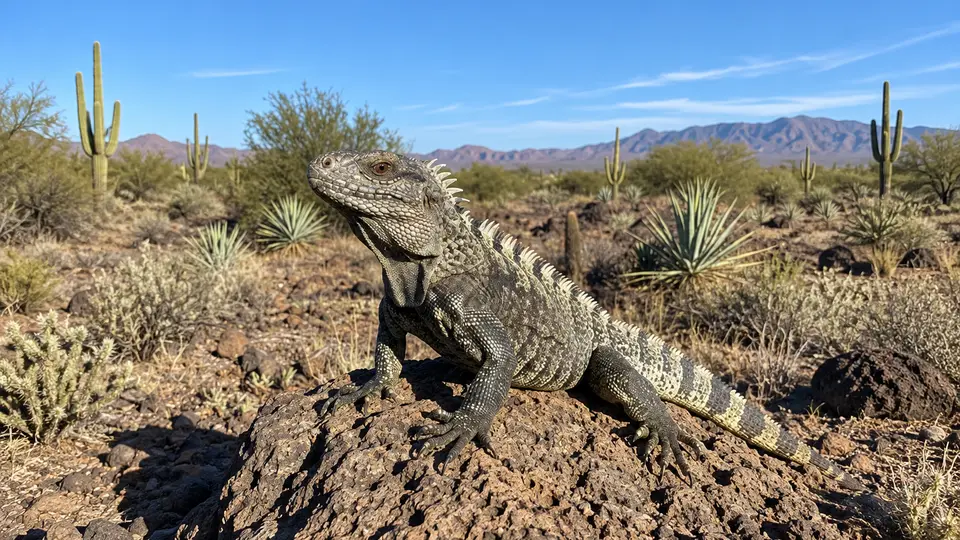
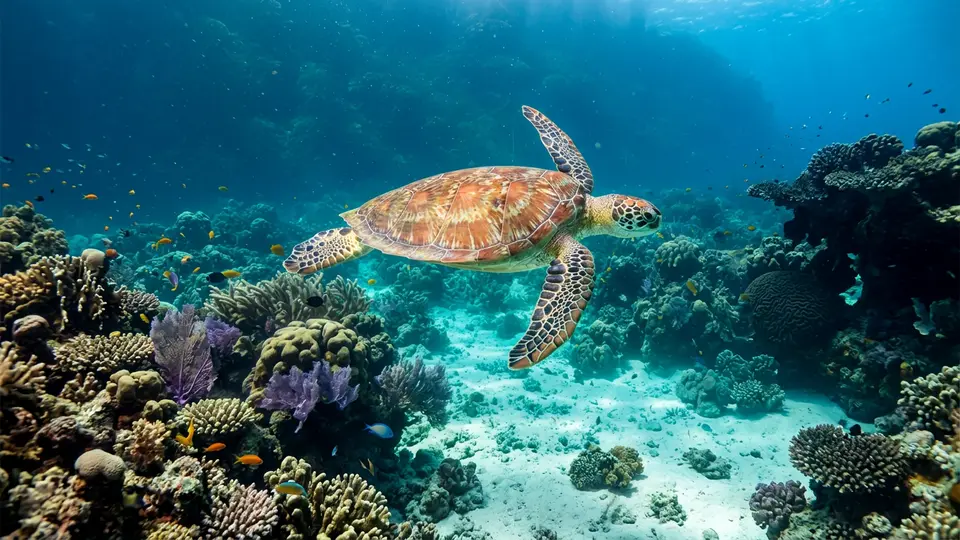
San Esteban Island ChuckwallaAI-modifiedSan Esteban Island ChuckwallaBlack Spiny-tailed IguanaAI-modifiedBlack Spiny-tailed IguanaGreen Sea TurtleAI-modifiedGreen Sea Turtle
Animal groupReptilesAnimal groupReptilesAnimal groupReptiles
DestinationsMexicoDestinationsMexicoDestinationsCosta Rica, Florida, Galapagos, Mexico, Cape Verde, Egypt, Greece, Seychelles, Turkey, Indonesia, Maldives, Thailand, Vietnam, Australia, Fiji, Polynesia
Scientific nameSauromalus variusScientific nameScientific name
All wildlife destinations
AI-modified
Plan your trip

Find your next wildlife adventure

Compare destinations, shore programs and dates with the animals and habitats you would love to see.

  • Naturalist-led shore excursions
  • Responsible wildlife watching
  • Small expedition ships