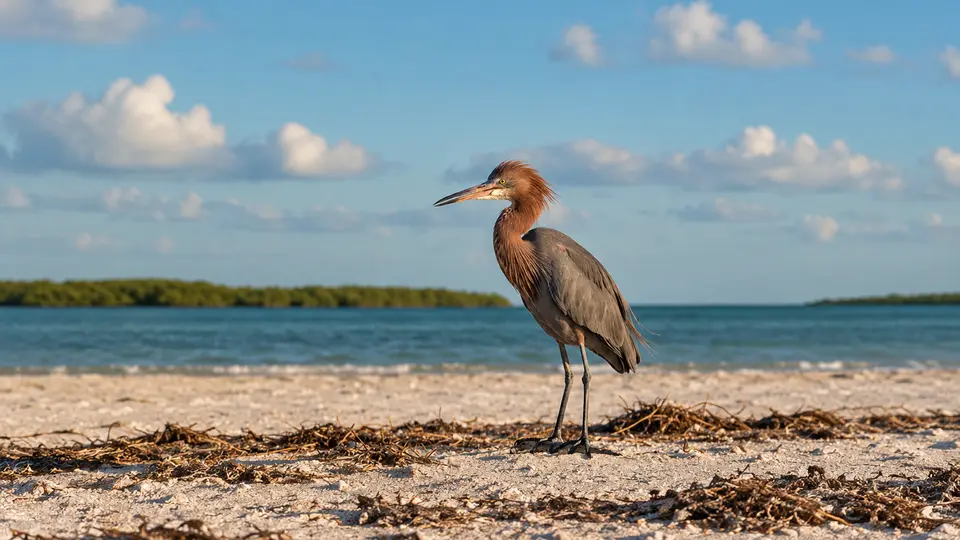
Reddish Egret in its natural habitat, AI illustration

Reddish EgretEgretta rufescensWhere and when to see them

Reddish Egret at a glance

The reddish egret is a specialist of shallow coastal flats, where its energetic hunting makes it conspicuous among more patient herons. Adults occur in two main color forms: a dark form with a rusty head and slate body, and an entirely white form. Both belong to the same species and may breed together. Its dependence on productive, undisturbed coastal wetlands makes habitat alteration and disturbance important conservation concerns.

Behaviour & reproduction

Size
66-81 cm long
Weight
700-850 g
Lifespan
Not reliably established
Status
Near Threatened

Rather than waiting motionless, this egret often runs, spins and changes direction while pursuing small fish. It spreads its wings to create shade, apparently improving visibility or influencing prey movements. Feeding birds usually maintain space around themselves, although concentrations occur where conditions are favorable. Breeding takes place in colonies, sometimes alongside other herons, with pairs building stick platforms in low coastal vegetation or occasionally nesting on the ground. Courtship displays involve elaborate bowing, neck stretching, and presenting sticks or other nesting material to potential mates. They are generally territorial while feeding, maintaining a small buffer zone around themselves.

Top wildlife locations

Florida wildlife habitat

Florida

Sheltered Gulf Coast and southern Florida tidal flats offer plausible shoreline habitat. The species is localized rather than ubiquitous, and nesting islands may be closed or inaccessible to protect breeding birds.
Destinations describe the species' habitat, not guaranteed cruise stops. Some animals require an optional inland excursion or are found in restricted reserves.

Fun facts about the Reddish Egret

  • Dark and white adults can occur in the same nesting colony.
  • Its wing-spreading hunting posture can form a temporary canopy over the water.
  • Young birds have darker bills than breeding adults.
  • The species is strongly associated with coastal saltwater rather than inland freshwater wetlands.

Best time to see the Reddish Egret

Florida offers opportunities throughout the year within the species' coastal range. Cooler months often provide comfortable viewing conditions and useful access to tidal flats. Tide height and water depth matter more than a fixed calendar, while nesting timing varies among local colonies. Peak breeding season in Florida typically runs from March to July, offering opportunities to observe nesting behaviors. Early mornings and late afternoons are often the most active feeding times, regardless of the season.

Reddish Egret: season matrix by destination

Travel and observation windows vary by region. Highlighted months are an orientation for planning, not confirmed sightings or a guarantee of access.

Florida

These months generally offer comfortable coastal observation conditions; birds occur year-round, and tides influence feeding access more directly than travel season.

JanFebMarAprMayJunJulAugSepOctNovDec
Cruise ships in Florida

Where the Reddish Egret lives

Reddish egrets favor very shallow saltwater and brackish habitats, including tidal flats, lagoons, salt pans and sheltered bays. Broad feeding areas with sparse vegetation are particularly important. Nesting habitat includes mangrove islands, coastal shrubs and other relatively secluded sites near productive shallows. While primarily coastal, they occasionally venture into freshwater areas if food is abundant. Their preference for specific salinity levels can vary regionally, but they generally thrive in estuarine systems with a mix of fresh and saltwater.

What the Reddish Egret eats

Small fish dominate the diet, especially species concentrated in shallow tidal pools and along lagoon margins. Shrimp and other aquatic invertebrates are also taken. Its active pursuit, wing shading and sudden lunges distinguish its feeding technique from the slower stalking of many neighboring herons. They employ a distinctive 'shuffle and pounce' technique, stirring up prey from the bottom before striking. This species is an opportunistic feeder and will readily exploit temporary aggregations of prey caused by tides or other disturbances.

Species at a glance

Common name
Reddish Egret
Scientific name
Egretta rufescens
Animal group
Birds
Size
66-81 cm long
Weight
700-850 g
Lifespan
Not reliably established
Status
Near Threatened
Identification
Unlike little blue herons, adults have a pink bill with a black tip, while white-form birds differ from snowy egrets in their larger build and dark feet. Juvenile reddish egrets have a duller, more uniform brownish-gray plumage, lacking the adults' distinctive two-toned appearance. Their shaggy neck feathers and crest are often visible, even when not breeding.

Reddish Egret: frequently asked questions

Where can I see the Reddish Egret?
Florida. Watch shallow flats from established shoreline paths using binoculars. Stay far enough away that feeding birds do not pause or retreat, and avoid approaching mangrove nesting colonies or crossing soft tidal mud. Scanning large areas of open water and mudflats during low tide will increase chances of spotting their distinctive feeding activities. Look for them foraging on the edges of seagrass beds or along oyster reefs.
When is the best time to see the Reddish Egret?
Florida offers opportunities throughout the year within the species' coastal range. Cooler months often provide comfortable viewing conditions and useful access to tidal flats. Tide height and water depth matter more than a fixed calendar, while nesting timing varies among local colonies. Peak breeding season in Florida typically runs from March to July, offering opportunities to observe nesting behaviors. Early mornings and late afternoons are often the most active feeding times, regardless of the season.
How big does the Reddish Egret get?
66-81 cm long. Adult weight: 700-850 g. Size varies with age, sex and population.
How should I behave around the Reddish Egret?
Watch shallow flats from established shoreline paths using binoculars. Stay far enough away that feeding birds do not pause or retreat, and avoid approaching mangrove nesting colonies or crossing soft tidal mud. Scanning large areas of open water and mudflats during low tide will increase chances of spotting their distinctive feeding activities. Look for them foraging on the edges of seagrass beds or along oyster reefs.
What does the Reddish Egret eat?
Small fish dominate the diet, especially species concentrated in shallow tidal pools and along lagoon margins. Shrimp and other aquatic invertebrates are also taken. Its active pursuit, wing shading and sudden lunges distinguish its feeding technique from the slower stalking of many neighboring herons. They employ a distinctive 'shuffle and pounce' technique, stirring up prey from the bottom before striking. This species is an opportunistic feeder and will readily exploit temporary aggregations of prey caused by tides or other disturbances.
Are wildlife sightings guaranteed on an adventure cruise?
No. Animals move freely and routes, weather, access restrictions and local conditions influence every outing. Confirm the actual itinerary and shore program before booking.

Compare wildlife in the same destinations

Explore other birds recorded in these destinations. Similar surroundings do not mean the animals share the same habits or viewing season.

Species comparison by animal group and destination
Reddish EgretReddish EgretAnhingaAnhingaBald EagleBald Eagle
Animal groupBirdsAnimal groupBirdsAnimal groupBirds
DestinationsFloridaDestinationsFloridaDestinationsAlaska, Florida, New England
All wildlife destinations
Plan your trip

Find your next wildlife adventure

Compare destinations, shore programs and dates with the animals and habitats you would love to see.

  • Naturalist-led shore excursions
  • Responsible wildlife watching
  • Small expedition ships

Newsletter

Take Blue Rides with you

Adventure cruise offers, last-minute deals and trip inspiration.

Free, unsubscribe anytime. Details: Privacy Policy

Partner with Blue Rides

Affiliate Program

Recommend adventure cruises and earn commission on every confirmed booking.

Share. Track. Earn.

Your footage, our stage

Send us your videos or pictures.

Captured remarkable nature or wildlife on your journey? Share it with us, we may feature it on Blue Rides.