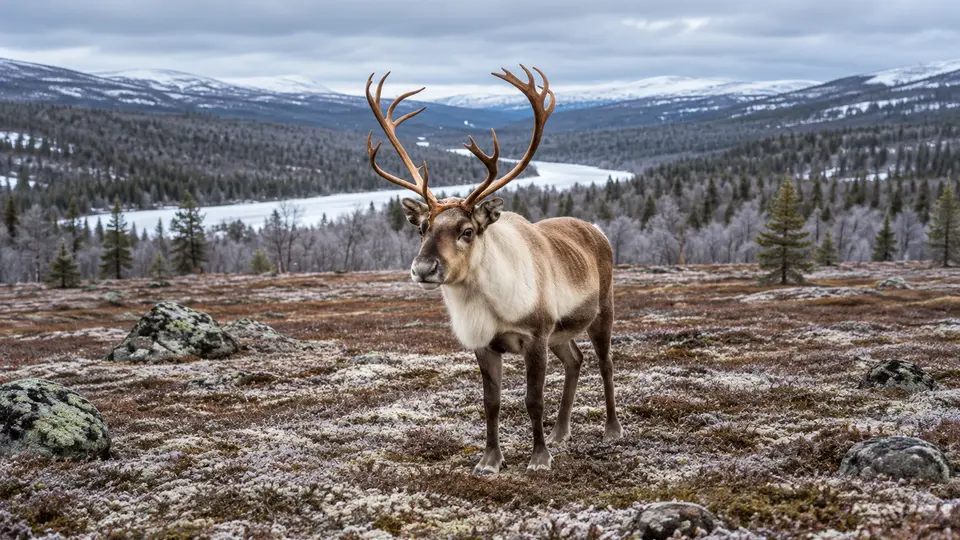
Reindeer in its natural habitat

ReindeerRangifer tarandusWhere and when to see them

Reindeer at a glance

Reindeer are northern deer adapted to cold, seasonal landscapes, with insulating coats, broad hooves and a remarkable ability to find food beneath snow. Known as caribou in North America, they include populations with very different body sizes and movement patterns. Norway supports wild mountain reindeer, semi-domesticated herds and the distinctive Svalbard subspecies. These categories should not be confused, since their management, behavior and accessibility differ substantially across the region.

Behaviour & reproduction

Size
120-220 cm (47.2-86.6 in) body length
Weight
60-180 kg (132.3-396.8 lb)
Lifespan
10-15 years in the wild
Status
Vulnerable

Social organization changes through the year, with animals gathering or separating according to food, insects, calving and mating. Some populations undertake extensive migrations, whereas Svalbard reindeer generally move over much smaller areas. Both sexes can grow antlers, although males usually shed theirs earlier after the rut. In winter, reindeer use their hooves to excavate feeding craters in snow, but hard ice layers can prevent access to vegetation and cause severe food shortages. Reindeer possess an excellent sense of smell to locate food under snow and detect predators. Their broad hooves provide superior traction on snow and ice, acting like snowshoes, and can be spread wide to support their weight.

Top wildlife locations

Norway wildlife habitat

Norway

Mainland wild reindeer usually require an inland mountain excursion rather than coastal viewing. Svalbard tundra valleys can provide shore-accessible habitat, but access restrictions and the distinction from managed mainland herds matter.

Arctic wildlife habitat

Arctic

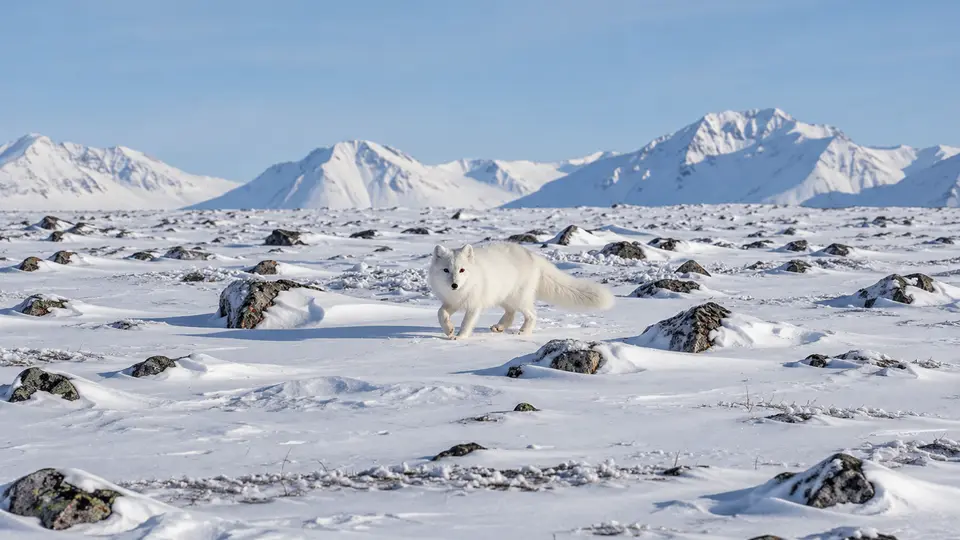
Coastal tundra and broad river valleys support reindeer or caribou in parts of the Arctic. Distribution is highly regional, and many herds remain far inland or beyond accessible shore routes.

Destinations describe the species' habitat, not guaranteed cruise stops. Some animals require an optional inland excursion or are found in restricted reserves.

Fun facts about the Reindeer

  • Females commonly retain antlers through winter, after many adult males have shed theirs.
  • The nose helps warm incoming cold air and recover moisture from exhaled breath.
  • Broad hooves support travel over soft ground and help dig through snow.
  • Svalbard reindeer are a distinctive, relatively sedentary subspecies.

Best time to see the Reindeer

Late spring through summer generally provides the best daylight and access for northern observation. Mainland mountain viewing may require inland walking, while Svalbard opportunities depend on permitted routes and local conditions. Autumn rutting and winter survival impose additional reasons to avoid disturbing animals. Prime viewing from expedition ships in Svalbard is often during the summer months, when fjords are accessible and the tundra is green. For mainland Norway, summer offers optimal conditions for guided walks to see wild herds.

Reindeer: season matrix by destination

Travel and observation windows vary by region. Highlighted months are an orientation for planning, not confirmed sightings or a guarantee of access.

Norway

Summer and early autumn favor daylight and ground access; timing does not imply migration or calving at every destination.

JanFebMarAprMayJunJulAugSepOctNovDec
Cruise ships in Norway

Arctic

These are broad Arctic access months, not a shared migration calendar; local herd movements and protected-area rules determine realistic opportunities.

JanFebMarAprMayJunJulAugSepOctNovDec
Cruise ships in Arctic

Where the Reindeer lives

Habitats include Arctic tundra, alpine plateaus, open woodland and boreal forest, depending on the population. Norwegian wild herds principally occupy inland mountain landscapes. Svalbard reindeer use tundra valleys and coastal plains where vegetation is accessible during the short growing season. They are highly adaptable, inhabiting areas from treeline to high mountain tundra. Some populations are migratory, covering vast distances between seasonal ranges.

What the Reindeer eats

Reindeer eat grasses, sedges, leaves, dwarf shrubs, fungi and lichens, with strong seasonal and regional variation. Lichens are especially important to many mainland populations in winter. Svalbard animals rely more heavily on local vascular plants and mosses than the familiar lichen-centered stereotype suggests. In spring and summer, they consume a wider variety of fresh vegetation, which is crucial for building up fat reserves. Specialized gut microbes help them digest tough plant materials, including lichens.

Species at a glance

Common name
Reindeer
Scientific name
Rangifer tarandus
Animal group
Mammals
Size
120-220 cm (47.2-86.6 in) body length
Weight
60-180 kg (132.3-396.8 lb)
Lifespan
10-15 years in the wild
Status
Vulnerable
Identification
Reindeer differ from other northern deer in their broad spreading hooves and frequent female antlers, while Svalbard animals are notably short-legged and compact. Both sexes possess a dense double coat, providing excellent insulation in cold climates. Their pelage color varies seasonally and individually, ranging from dark brown to greyish-white.

Reindeer: frequently asked questions

Where can I see the Reindeer?
Norway, Arctic. Observe quietly from established routes and allow herds to cross undisturbed. Never approach calves or rutting males, and avoid forcing winter animals to move, since unnecessary flight consumes scarce energy reserves. Maintain a safe and respectful distance of at least 200 meters, especially during calving season or when animals are resting. Binoculars or a spotting scope are essential for detailed observation without disturbance.
When is the best time to see the Reindeer?
Late spring through summer generally provides the best daylight and access for northern observation. Mainland mountain viewing may require inland walking, while Svalbard opportunities depend on permitted routes and local conditions. Autumn rutting and winter survival impose additional reasons to avoid disturbing animals. Prime viewing from expedition ships in Svalbard is often during the summer months, when fjords are accessible and the tundra is green. For mainland Norway, summer offers optimal conditions for guided walks to see wild herds.
How big does the Reindeer get?
120-220 cm (47.2-86.6 in) body length. Adult weight: 60-180 kg (132.3-396.8 lb). Size varies with age, sex and population.
How should I behave around the Reindeer?
Observe quietly from established routes and allow herds to cross undisturbed. Never approach calves or rutting males, and avoid forcing winter animals to move, since unnecessary flight consumes scarce energy reserves. Maintain a safe and respectful distance of at least 200 meters, especially during calving season or when animals are resting. Binoculars or a spotting scope are essential for detailed observation without disturbance.
What does the Reindeer eat?
Reindeer eat grasses, sedges, leaves, dwarf shrubs, fungi and lichens, with strong seasonal and regional variation. Lichens are especially important to many mainland populations in winter. Svalbard animals rely more heavily on local vascular plants and mosses than the familiar lichen-centered stereotype suggests. In spring and summer, they consume a wider variety of fresh vegetation, which is crucial for building up fat reserves. Specialized gut microbes help them digest tough plant materials, including lichens.
Are wildlife sightings guaranteed on an adventure cruise?
No. Animals move freely and routes, weather, access restrictions and local conditions influence every outing. Confirm the actual itinerary and shore program before booking.

Compare wildlife in the same destinations

Explore other mammals recorded in these destinations. Similar surroundings do not mean the animals share the same habits or viewing season.

Species comparison by animal group and destination
ReindeerReindeerArctic FoxArctic FoxArctic HareArctic Hare
Animal groupMammalsAnimal groupMammalsAnimal groupMammals
DestinationsNorway, ArcticDestinationsNorway, ArcticDestinationsArctic
Scientific nameRangifer tarandusScientific nameScientific name
All wildlife destinations
Plan your trip

Find your next wildlife adventure

Compare destinations, shore programs and dates with the animals and habitats you would love to see.

  • Naturalist-led shore excursions
  • Responsible wildlife watching
  • Small expedition ships