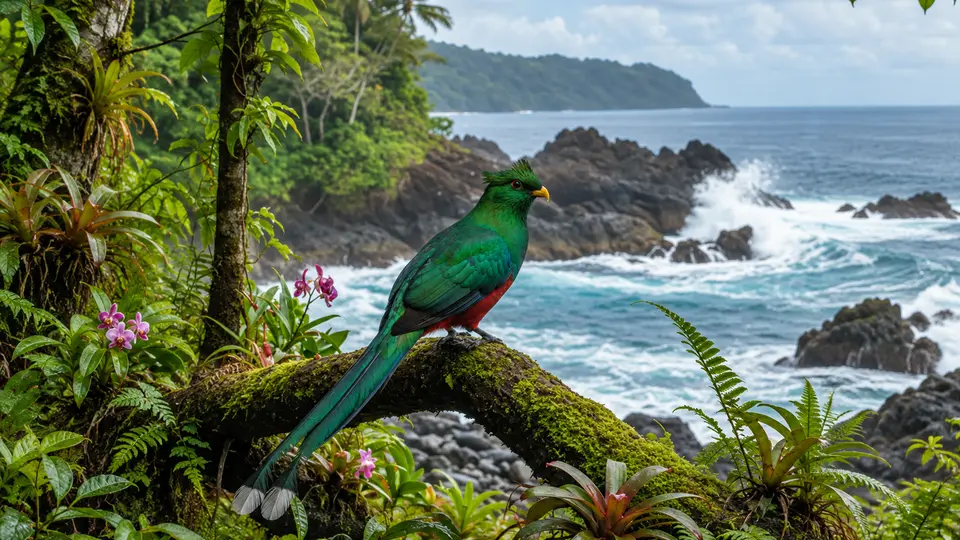
Resplendent Quetzal in its natural habitatAI-modified

Resplendent QuetzalPharomachrus mocinnoWhere and when to see them

Resplendent Quetzal at a glance

The resplendent quetzal is a cloud-forest trogon celebrated for iridescent green plumage and the male's exceptionally long upper tail coverts. Its appearance is striking, but its ecological role is equally important: it carries and disperses seeds from forest fruit trees. In Costa Rica it belongs to cool, humid upland forests, not beach habitats. Forest loss and fragmentation threaten the connected elevational landscapes it needs for feeding and seasonal movements.

Behaviour & reproduction

Size
36-40 cm (14.2-15.7 in) body length, excluding elongated male coverts
Weight
180-210 g (6.3-7.4 oz)
Lifespan
Not reliably established
Status
Near Threatened

Quetzals often sit quietly between short flights to pluck fruit, making them less obvious than their colors suggest. Pairs excavate nest cavities in decaying wood, and both parents incubate eggs and feed chicks. Outside nesting periods, birds may shift elevation as fruit availability changes. Males display their elongated coverts during courtship flights, while calls can reveal birds concealed in dense foliage before an observer notices their plumage. Courtship displays involve the male flying in an undulating pattern, often circling above the female while vocalizing and showing off his tail. Both parents share duties, with the male often incubating during the day and the female at night. Outside the breeding season, they can be more solitary, foraging independently.

Top wildlife locations

Costa Rica wildlife habitatAI-modified

Costa Rica

An inland excursion to protected highland cloud forest is required; coastal shorelines are unsuitable. Established forest trails provide plausible viewing access, but birds can shift among elevations and fruiting trees.
Destinations describe the species' habitat, not guaranteed cruise stops. Some animals require an optional inland excursion or are found in restricted reserves.

Fun facts about the Resplendent Quetzal

  • The male's ornamental streamers are upper tail coverts, not the true tail feathers.
  • Quetzals excavate cavities in wood softened by decay.
  • Both parents participate in incubation and chick care.
  • Regurgitated seeds help connect the bird's feeding habits with forest regeneration.

Best time to see the Resplendent Quetzal

In Costa Rica, roughly February through June often overlaps courtship and nesting activity in well-known highland areas. Exact timing varies with elevation and weather. Quetzals remain present outside this period, but fruit-driven movements can change which forest patches offer realistic observation opportunities. During the peak nesting season, quetzals tend to be more territorial and predictable in their movements, increasing viewing success rates. Cooler temperatures and higher humidity characterize this period, which also aligns with the fruiting of key laurel species. Migrations to lower elevations outside the nesting period are driven by fruit scarcity in the highlands.

Resplendent Quetzal: season matrix by destination

Travel and observation windows vary by region. Highlighted months are an orientation for planning, not confirmed sightings or a guarantee of access.

Costa Rica

This window often overlaps highland breeding activity, although local nesting dates and daily visibility vary with weather and fruit availability.

JanFebMarAprMayJunJulAugSepOctNovDec
Cruise ships in Costa Rica

Where the Resplendent Quetzal lives

This species occupies humid montane and cloud forest, including mature forest edges and some well-wooded secondary habitats. Large fruiting trees and soft, decaying trunks suitable for nesting are important. Connected forest across elevations supports seasonal movements beyond individual breeding territories. Quetzals typically range from 1,000 to 3,000 meters in elevation. Habitat loss and fragmentation, often due to agricultural expansion, are significant threats to their populations. Preserving large, contiguous tracts of these specific forest types is crucial for their survival.

What the Resplendent Quetzal eats

Fruits, particularly those of trees in the laurel family, form a major part of the adult diet. Birds swallow many fruits whole and later regurgitate large seeds. Insects, small lizards and other animal prey supplement feeding, especially when adults provision chicks. Avocados and wild relatives of the avocado (like those in the genera Ocotea and Nectandra) are particularly vital food sources. The regurgitation of seeds aids in the dispersal and regeneration of these important fruiting trees. A diverse fruit supply throughout the year is essential for their nomadic movements.

Species at a glance

Common name
Resplendent Quetzal
Scientific name
Pharomachrus mocinno
Animal group
Birds
Size
36-40 cm (14.2-15.7 in) body length, excluding elongated male coverts
Weight
180-210 g (6.3-7.4 oz)
Lifespan
Not reliably established
Status
Near Threatened
Identification
The male's streaming green upper tail coverts and red belly distinguish it from other Costa Rican trogons, while females combine a green head with a gray breast and red lower belly. Beyond the long tail coverts, male quetzals have a distinctive golden-green sheen that appears to shift with light angles. Females, though less flamboyant, exhibit a duller green body with a contrasting reddish-brown bill. Juvenile quetzals have much shorter tail feathers and a more subdued plumage overall.

Resplendent Quetzal: frequently asked questions

Where can I see the Resplendent Quetzal?
Costa Rica. Use established cloud-forest trails with a knowledgeable guide. Keep well back from nest cavities, avoid playback and flash, and never obstruct adults carrying food or gather directly beneath an occupied nesting tree. Listen for their distinctive, low-pitched calls, often described as a soft 'coo-coo' or 'whaa-whaa' which can guide you to their location. Patience is key, as quetzals can remain still for long periods. Dawn and dusk are often the most active times for feeding and vocalizations.
When is the best time to see the Resplendent Quetzal?
In Costa Rica, roughly February through June often overlaps courtship and nesting activity in well-known highland areas. Exact timing varies with elevation and weather. Quetzals remain present outside this period, but fruit-driven movements can change which forest patches offer realistic observation opportunities. During the peak nesting season, quetzals tend to be more territorial and predictable in their movements, increasing viewing success rates. Cooler temperatures and higher humidity characterize this period, which also aligns with the fruiting of key laurel species. Migrations to lower elevations outside the nesting period are driven by fruit scarcity in the highlands.
How big does the Resplendent Quetzal get?
36-40 cm (14.2-15.7 in) body length, excluding elongated male coverts. Adult weight: 180-210 g (6.3-7.4 oz). Size varies with age, sex and population.
How should I behave around the Resplendent Quetzal?
Use established cloud-forest trails with a knowledgeable guide. Keep well back from nest cavities, avoid playback and flash, and never obstruct adults carrying food or gather directly beneath an occupied nesting tree. Listen for their distinctive, low-pitched calls, often described as a soft 'coo-coo' or 'whaa-whaa' which can guide you to their location. Patience is key, as quetzals can remain still for long periods. Dawn and dusk are often the most active times for feeding and vocalizations.
What does the Resplendent Quetzal eat?
Fruits, particularly those of trees in the laurel family, form a major part of the adult diet. Birds swallow many fruits whole and later regurgitate large seeds. Insects, small lizards and other animal prey supplement feeding, especially when adults provision chicks. Avocados and wild relatives of the avocado (like those in the genera Ocotea and Nectandra) are particularly vital food sources. The regurgitation of seeds aids in the dispersal and regeneration of these important fruiting trees. A diverse fruit supply throughout the year is essential for their nomadic movements.
Are wildlife sightings guaranteed on an adventure cruise?
No. Animals move freely and routes, weather, access restrictions and local conditions influence every outing. Confirm the actual itinerary and shore program before booking.

Compare wildlife in the same destinations

Explore other birds recorded in these destinations. Similar surroundings do not mean the animals share the same habits or viewing season.

Species comparison by animal group and destination
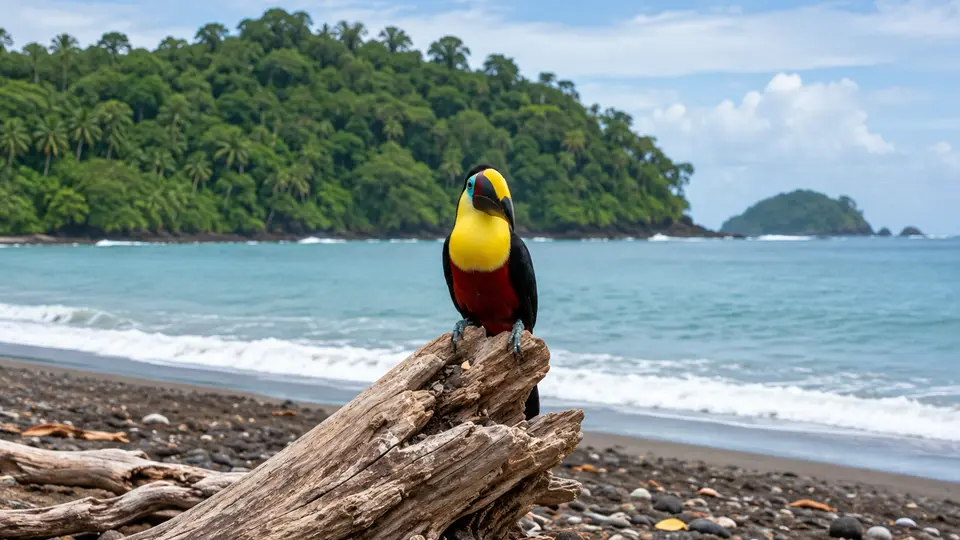
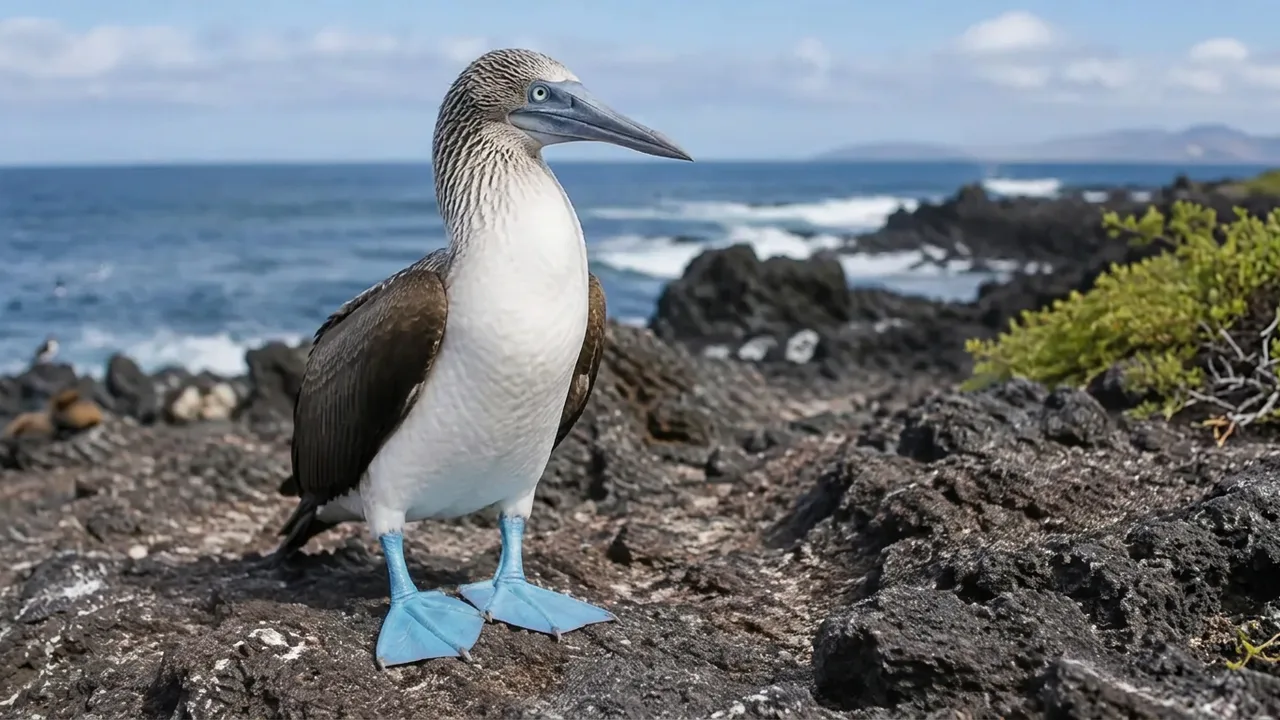
Resplendent QuetzalAI-modifiedResplendent QuetzalBlack-mandibled ToucanAI-modifiedBlack-mandibled ToucanBlue-footed BoobyAI-modifiedBlue-footed Booby
Animal groupBirdsAnimal groupBirdsAnimal groupBirds
DestinationsCosta RicaDestinationsCosta RicaDestinationsCosta Rica, Galapagos, Mexico
Scientific namePharomachrus mocinnoScientific nameScientific name
All wildlife destinations
AI-modified
Plan your trip

Find your next wildlife adventure

Compare destinations, shore programs and dates with the animals and habitats you would love to see.

  • Naturalist-led shore excursions
  • Responsible wildlife watching
  • Small expedition ships