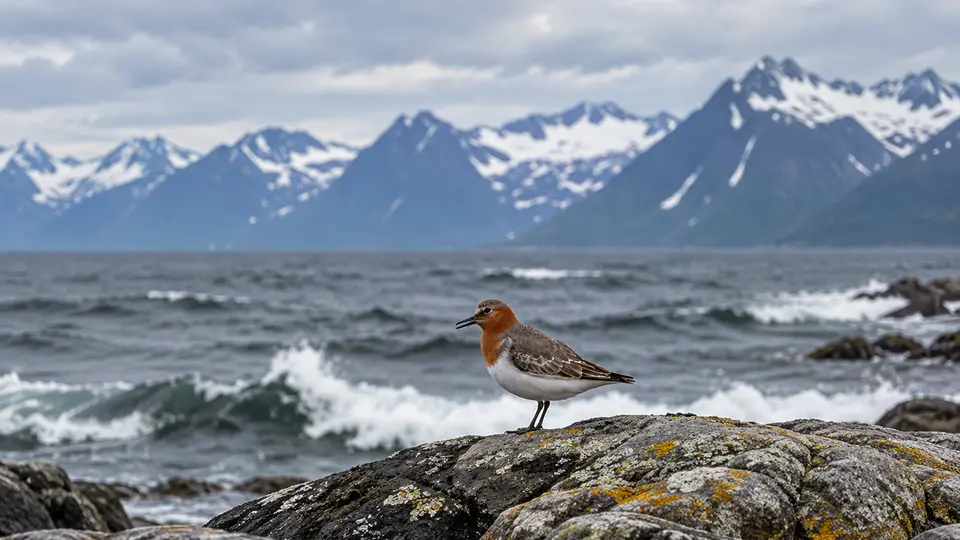
Red-necked Phalarope in its natural habitat, AI illustration

Red-necked Phalarope: where and when to see them

Phalaropus lobatus

Red-necked Phalarope at a glance

Red-necked phalaropes are small migratory shorebirds that combine delicate bills with an unusually aquatic lifestyle. They breed around northern freshwater wetlands but spend much of the rest of the year at sea. Breeding females are brighter and somewhat larger than males, reversing the familiar pattern of many birds. Their chestnut neck markings disappear into much paler nonbreeding plumage. In Norway, suitable tundra pools and coastal wetlands provide the main land-based opportunities during summer.

Behaviour & reproduction

Size
Length 17–19 cm
Weight
25–48 g
Lifespan
Not reliably established
Status
Least Concern

These birds often swim while feeding, sometimes spinning tightly to bring small prey toward the surface. Females court males and may leave them to incubate eggs and rear the young. Males guide mobile chicks around shallow wetlands after hatching. Outside breeding, the species becomes strongly marine and can gather in flocks where currents concentrate food. Migration routes link northern nesting grounds with distant oceanic wintering areas rather than simply following nearby coastlines. The female's bright breeding plumage and aggressive courtship displays are unique among most birds, with males being duller and taking on incubation duties. After the eggs hatch, the male alone cares for the precocial chicks, leading them to feeding areas. During migration and winter, they spend almost their entire lives on the open ocean, rarely coming to shore.

Top wildlife locations

Norway wildlife habitat

Norway

Northern coastal tundra pools and marshy lake edges offer shore-based opportunities from established routes. Suitable wetlands may require an inland excursion, and birds are localized rather than widespread along every fjord or harbour.

Adventure cruises in Norway
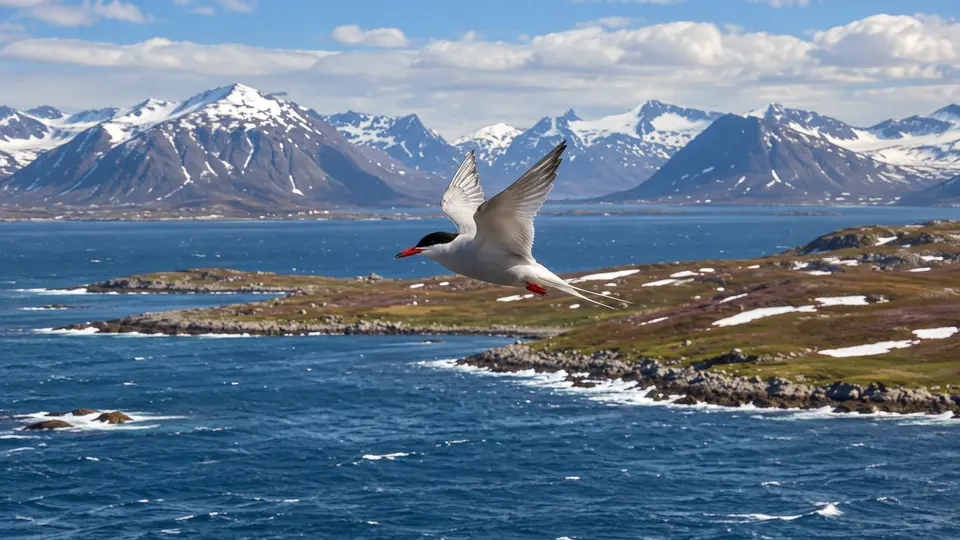
Destinations describe the species' habitat, not guaranteed cruise stops. Some animals require an optional inland excursion or are found in restricted reserves.

Fun facts about the Red-necked Phalarope

  • Females are usually more colourful than males.
  • Males perform incubation and most chick care.
  • Lobed toes help this shorebird swim efficiently.
  • Feeding spins can lift tiny prey toward the surface.

Best time to see the Red-necked Phalarope

June and July provide the clearest Norwegian breeding-ground window, especially in the north after snowmelt. Some passage birds occur later in summer. Timing varies with latitude and thaw conditions, and accessible wetlands are more useful than general coastal travel dates alone. Prime breeding activity occurs from late June to early July, when eggs are laid and young hatch. By late July and August, many adults and young birds will have started their southward migration. Early arrivals in May are possible, but most are still migrating through.

Red-necked Phalarope: season matrix by destination

Travel and observation windows vary by region. Highlighted months are an orientation for planning, not confirmed sightings or a guarantee of access.

Norway

Covers breeding-ground access and some late-summer passage; snowmelt and local wetland conditions determine timing.

JanFebMarAprMayJunJulAugSepOctNovDec
Cruise ships in Norway

Where the Red-necked Phalarope lives

Breeding habitat includes shallow tundra ponds, marshy lake margins and wet sedge areas, sometimes close to the coast. During migration, sheltered pools and coastal wetlands may be used briefly. Nonbreeding birds mainly occupy offshore waters where fronts and upwellings concentrate plankton. In Norway, breeding sites are typically found in the northern fells and coastal lowlands, especially on small islands or peninsulas. These areas often feature a mosaic of shallow freshwater pools, mossy ground, and sedge tussocks. They prefer open, exposed locations near water bodies with low vegetation.

What the Red-necked Phalarope eats

On breeding grounds, phalaropes take aquatic insects, larvae and other tiny invertebrates from water and vegetation. At sea, they feed largely on small crustaceans and other planktonic prey. Their fine bills pick individual items from the surface with quick, precise movements. Their feeding technique involves rapid pecking at the water surface, often in a characteristic spinning motion to create a vortex. This vortex brings small invertebrates from slightly deeper water up to the surface for capture. Beyond crustaceans, they also consume larval forms of marine worms and small insect larvae found in both freshwater and marine environments.

Species at a glance

Common name
Red-necked Phalarope
Scientific name
Phalaropus lobatus
Animal group
Birds
Size
Length 17–19 cm
Weight
25–48 g
Lifespan
Not reliably established
Status
Least Concern
Identification
Its slim needle-like bill and breeding chestnut neck distinguish it from the broader-billed red phalarope, while nonbreeding birds show a dark eye patch and streaked upperparts. The slender, all-dark bill is a key feature distinguishing it from the stouter, often yellow-based bill of the Red Phalarope. In flight, a prominent white wing bar is visible on both breeding and nonbreeding birds, which aids identification at a distance. Nonbreeding adults and juveniles show distinct white underparts contrasting with grey upperparts, with a dark line extending through the eye.

Red-necked Phalarope: frequently asked questions

Where can I see the Red-necked Phalarope?
Norway. Scan shallow pools from existing paths or boardwalks with binoculars. Avoid stepping into sedge margins, where nests and chicks are easily overlooked, and withdraw if adults repeatedly alarm or distract. Do not follow birds across fragile wet tundra. When viewing from a ship, look for small, delicate birds rapidly pecking at the surface of calm coastal waters or sheltered fjords. On land excursions, patient scanning of tundra pools near coastal areas or in northern valleys may reveal breeding pairs. Remember to use a spotting scope or binoculars for detailed observation without disturbing the birds.
When is the best time to see the Red-necked Phalarope?
June and July provide the clearest Norwegian breeding-ground window, especially in the north after snowmelt. Some passage birds occur later in summer. Timing varies with latitude and thaw conditions, and accessible wetlands are more useful than general coastal travel dates alone. Prime breeding activity occurs from late June to early July, when eggs are laid and young hatch. By late July and August, many adults and young birds will have started their southward migration. Early arrivals in May are possible, but most are still migrating through.
How big does the Red-necked Phalarope get?
Length 17–19 cm. Adult weight: 25–48 g. Size varies with age, sex and population.
How should I behave around the Red-necked Phalarope?
Scan shallow pools from existing paths or boardwalks with binoculars. Avoid stepping into sedge margins, where nests and chicks are easily overlooked, and withdraw if adults repeatedly alarm or distract. Do not follow birds across fragile wet tundra. When viewing from a ship, look for small, delicate birds rapidly pecking at the surface of calm coastal waters or sheltered fjords. On land excursions, patient scanning of tundra pools near coastal areas or in northern valleys may reveal breeding pairs. Remember to use a spotting scope or binoculars for detailed observation without disturbing the birds.
What does the Red-necked Phalarope eat?
On breeding grounds, phalaropes take aquatic insects, larvae and other tiny invertebrates from water and vegetation. At sea, they feed largely on small crustaceans and other planktonic prey. Their fine bills pick individual items from the surface with quick, precise movements. Their feeding technique involves rapid pecking at the water surface, often in a characteristic spinning motion to create a vortex. This vortex brings small invertebrates from slightly deeper water up to the surface for capture. Beyond crustaceans, they also consume larval forms of marine worms and small insect larvae found in both freshwater and marine environments.
Are wildlife sightings guaranteed on an adventure cruise?
No. Animals move freely and routes, weather, access restrictions and local conditions influence every outing. Confirm the actual itinerary and shore programme before booking.

Compare wildlife in the same destinations

Explore other birds recorded in these destinations. Similar surroundings do not mean the animals share the same habits or viewing season.

Species comparison by animal group and destination
Red-necked PhalaropeRed-necked PhalaropeArctic TernArctic TernAtlantic PuffinAtlantic Puffin
Animal groupBirdsAnimal groupBirdsAnimal groupBirds
DestinationsNorwayDestinationsAlaska, Norway, ArcticDestinationsNew England, Norway, Scotland, Arctic
All wildlife destinations
Plan your trip

Find your next wildlife adventure

Compare destinations, shore programmes and dates with the animals and habitats you would love to see.

  • Naturalist-led shore excursions
  • Responsible wildlife watching
  • Small expedition ships

Newsletter

Take Blue Rides with you

Adventure cruise offers, last-minute deals and trip inspiration.

Free, unsubscribe anytime. Details: Privacy Policy

Partner with Blue Rides

Affiliate Program

Recommend adventure cruises and earn commission on every confirmed booking.

Share. Track. Earn.
