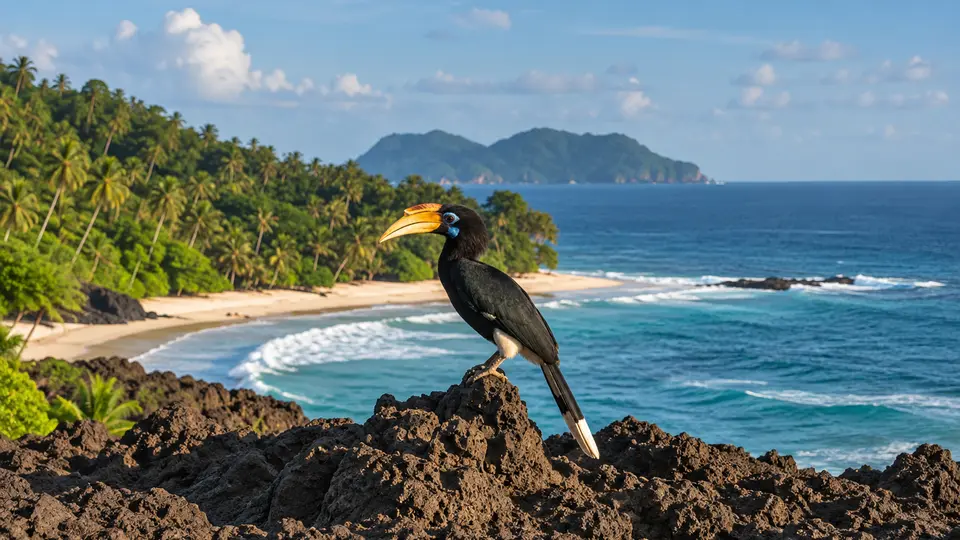
Red-knobbed hornbill in its natural habitatAI-modified

Red-knobbed hornbillRhyticeros cassidixWhere and when to see them

Red-knobbed hornbill at a glance

The red-knobbed hornbill, also called the knobbed hornbill, is a large forest bird endemic to Sulawesi and nearby Indonesian islands. Its black body, white tail and colourful bare throat make it conspicuous when seen well, while males carry the characteristic red casque above the bill. As a consumer of large fruits, it transports seeds through forest landscapes. Logging and hunting threaten populations, particularly where mature nesting trees and connected feeding areas are lost.

Behaviour & reproduction

Size
Length 70–80 cm (27.6–31.5 in)
Weight
1.4–2.5 kg (3.1–5.5 lb)
Lifespan
Not reliably established
Status
Vulnerable

Pairs and groups travel through the canopy, often announcing their passage with loud calls and audible wingbeats. During nesting, the female enters a tree cavity and seals most of the opening with help from her mate, leaving a narrow feeding slit. She remains inside during incubation and early chick development while the male supplies food. Outside nesting, gatherings at productive fruit trees can bring several birds together without indicating a permanent colony. Courtship displays involve the male offering food items to the female. The pair forms a strong bond, often staying together for multiple breeding seasons. The sealed nest provides protection from predators like snakes and monkeys during the vulnerable nesting period.

Top wildlife locations

Indonesia wildlife habitatAI-modified

Indonesia

Sulawesi coastal foothill forest and nearby island forests offer potential canopy viewing from trails. An inland forest excursion is normally required, and generic Indonesian beach stops fall outside this endemic bird's restricted range.
Destinations describe the species' habitat, not guaranteed cruise stops. Some animals require an optional inland excursion or are found in restricted reserves.

Fun facts about the Red-knobbed hornbill

  • The female temporarily seals herself inside a tree cavity.
  • The male passes food through a narrow opening during nesting.
  • Adult males and females differ markedly in head colour.
  • Its wingbeats can be audible before the bird becomes visible.

Best time to see the Red-knobbed hornbill

Observation is possible year-round in suitable Sulawesi forest, but local rainfall and fruiting patterns influence access and bird movements. Drier months often make trails easier to use. Nesting dates are not uniform enough to substitute for current advice from local forest guides. While generally resident, local movements may occur in response to food availability, especially during dry spells or peak fruiting periods. Early mornings and late afternoons are typically the most active times for hornbills, regardless of the season. Visiting during shoulder seasons might offer a balance between trail conditions and reduced tourist numbers.

Red-knobbed hornbill: season matrix by destination

Travel and observation windows vary by region. Highlighted months are an orientation for planning, not confirmed sightings or a guarantee of access.

Indonesia

Often practical for parts of Sulawesi, but rainfall varies regionally; these are access months, not a universal breeding period.

JanFebMarAprMayJunJulAugSepOctNovDec
Cruise ships in Indonesia

Where the Red-knobbed hornbill lives

The species inhabits tropical forest from lowlands into hills and mountains, using mature trees for nesting and fruiting canopy trees for food. Some secondary forest is visited, but heavily cleared landscapes are unsuitable. Reliable observation generally involves a forest excursion rather than beach watching. This species is endemic to Sulawesi and its smaller offshore islands like Buton, Muna, and Kabaena. It prefers undisturbed primary rainforest but can tolerate moderately disturbed secondary growth if large trees are present for nesting. Habitat loss and degradation due to logging and agriculture are significant threats to its long term survival.

What the Red-knobbed hornbill eats

Figs and other fleshy forest fruits form the bulk of the diet. Small animal prey may also be taken, especially when provisioning a nest. By swallowing fruit and later depositing seeds elsewhere, hornbills contribute to regeneration and connectivity among forest patches. Beyond figs, they consume a variety of other tropical fruits, including those from nutmeg and canarium trees. The male forages for food, regurgitating it to feed the female and chick through the narrow nest opening. This broad diet and seed dispersal role make them a keystone species in their forest ecosystems.

Species at a glance

Common name
Red-knobbed hornbill
Scientific name
Rhyticeros cassidix
Animal group
Birds
Size
Length 70–80 cm (27.6–31.5 in)
Weight
1.4–2.5 kg (3.1–5.5 lb)
Lifespan
Not reliably established
Status
Vulnerable
Identification
Its large size, white tail and prominent casque distinguish it from the smaller Sulawesi hornbill, with adult males showing a red knob and pale head. The adult female has an all black head and neck, lacking the pale head and red knob of the male. Juveniles resemble females but have a smaller, paler casque and often duller plumage. Their flight is characterized by heavy, rather ponderous wingbeats followed by a long glide.

Red-knobbed hornbill: frequently asked questions

Where can I see the Red-knobbed hornbill?
Indonesia. Watch canopy gaps from established forest paths with a local guide. Do not approach occupied nest trees or use repeated playback, since a provisioning male's disruption can affect the enclosed female and chick. Expect uneven, humid terrain. Their large size and often conspicuous calls make them easier to spot than many other forest birds, despite dense foliage. Binoculars are essential for good views, as they often perch high in the canopy. Patience is key, as hornbills can remain still for extended periods before moving or calling.
When is the best time to see the Red-knobbed hornbill?
Observation is possible year-round in suitable Sulawesi forest, but local rainfall and fruiting patterns influence access and bird movements. Drier months often make trails easier to use. Nesting dates are not uniform enough to substitute for current advice from local forest guides. While generally resident, local movements may occur in response to food availability, especially during dry spells or peak fruiting periods. Early mornings and late afternoons are typically the most active times for hornbills, regardless of the season. Visiting during shoulder seasons might offer a balance between trail conditions and reduced tourist numbers.
How big does the Red-knobbed hornbill get?
Length 70–80 cm (27.6–31.5 in). Adult weight: 1.4–2.5 kg (3.1–5.5 lb). Size varies with age, sex and population.
How should I behave around the Red-knobbed hornbill?
Watch canopy gaps from established forest paths with a local guide. Do not approach occupied nest trees or use repeated playback, since a provisioning male's disruption can affect the enclosed female and chick. Expect uneven, humid terrain. Their large size and often conspicuous calls make them easier to spot than many other forest birds, despite dense foliage. Binoculars are essential for good views, as they often perch high in the canopy. Patience is key, as hornbills can remain still for extended periods before moving or calling.
What does the Red-knobbed hornbill eat?
Figs and other fleshy forest fruits form the bulk of the diet. Small animal prey may also be taken, especially when provisioning a nest. By swallowing fruit and later depositing seeds elsewhere, hornbills contribute to regeneration and connectivity among forest patches. Beyond figs, they consume a variety of other tropical fruits, including those from nutmeg and canarium trees. The male forages for food, regurgitating it to feed the female and chick through the narrow nest opening. This broad diet and seed dispersal role make them a keystone species in their forest ecosystems.
Are wildlife sightings guaranteed on an adventure cruise?
No. Animals move freely and routes, weather, access restrictions and local conditions influence every outing. Confirm the actual itinerary and shore program before booking.

Compare wildlife in the same destinations

Explore other birds recorded in these destinations. Similar surroundings do not mean the animals share the same habits or viewing season.

Species comparison by animal group and destination
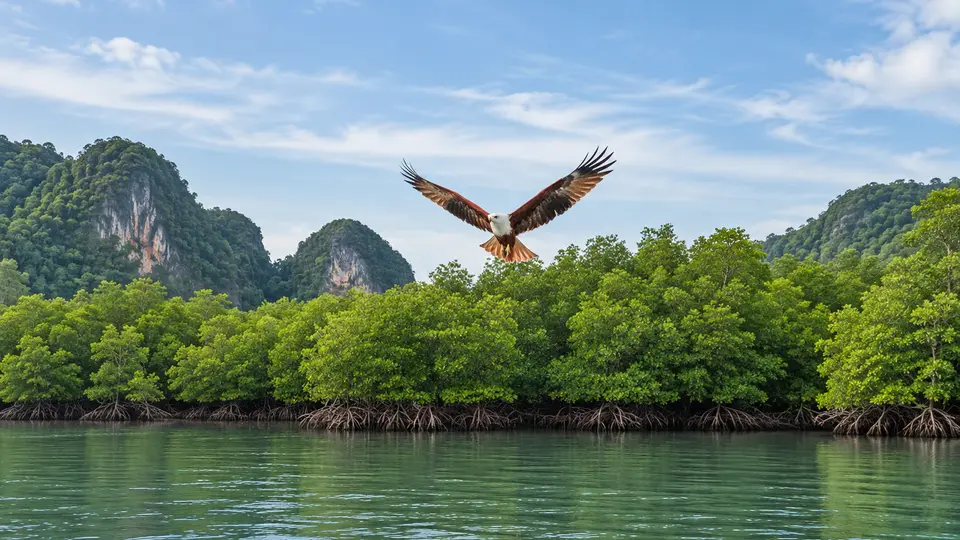
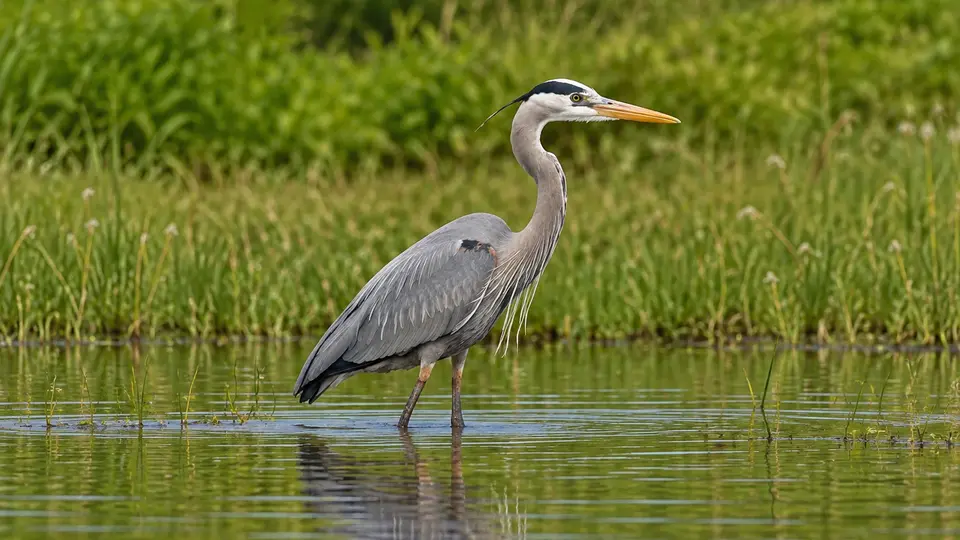
Red-knobbed hornbillAI-modifiedRed-knobbed hornbillBrahminy kiteAI-modifiedBrahminy kiteGreat-billed heronAI-modifiedGreat-billed heron
Animal groupBirdsAnimal groupBirdsAnimal groupBirds
DestinationsIndonesiaDestinationsIndonesia, Thailand, VietnamDestinationsIndonesia, Thailand
Scientific nameRhyticeros cassidixScientific nameScientific name
All wildlife destinations
AI-modified
Plan your trip

Find your next wildlife adventure

Compare destinations, shore programs and dates with the animals and habitats you would love to see.

  • Naturalist-led shore excursions
  • Responsible wildlife watching
  • Small expedition ships