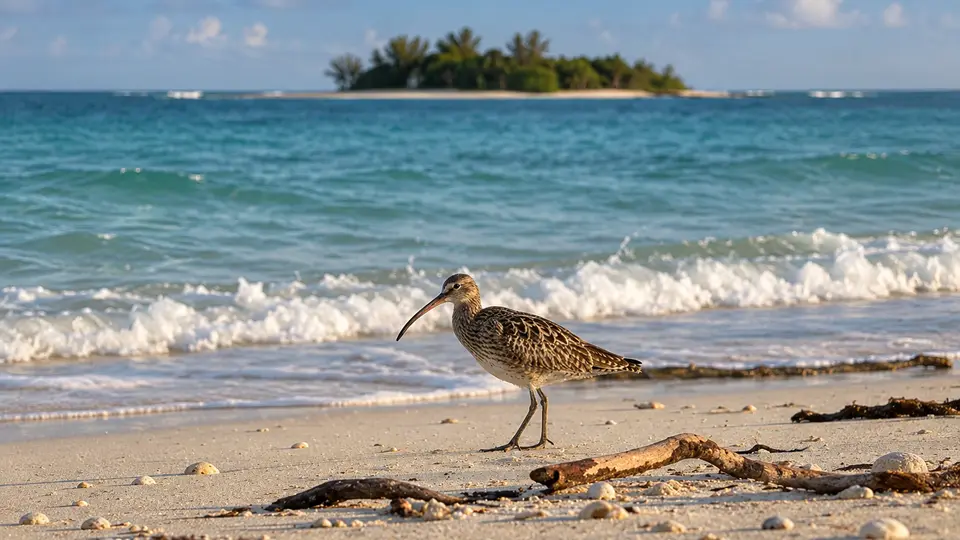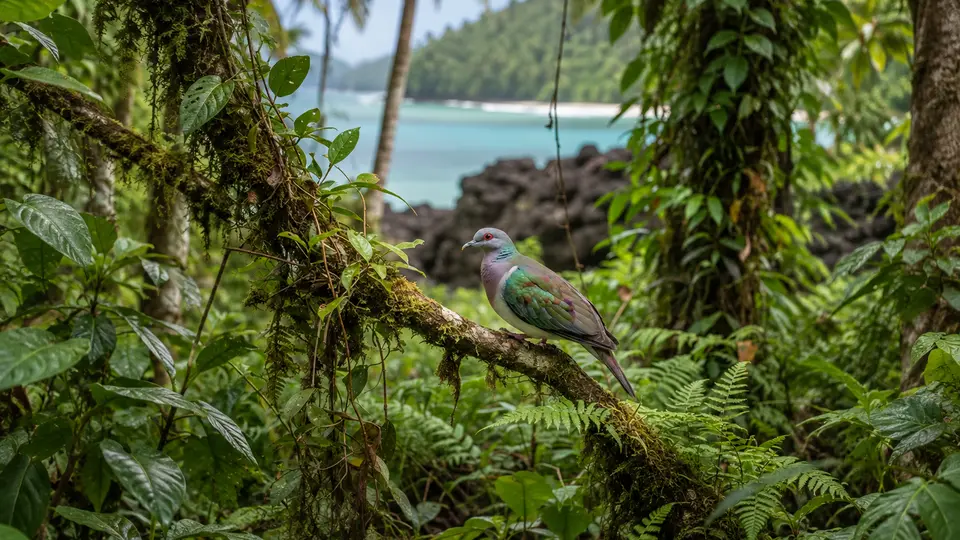
Polynesian ground dove in its natural habitat, AI illustration
Size23–26 cm body lengthLifespanNot reliably establishedStatusCritically Endangered

Polynesian ground dove: where and when to see them

Pampusana erythroptera

Polynesian ground dove at a glance

The Polynesian ground dove is an exceptionally rare bird now restricted to a few small islands and islets in French Polynesia's Tuamotu Archipelago. It spends much of its time on the ground, where introduced predators have had devastating effects. Males show contrasting pale and dark plumage, while females are generally browner. Its survival depends on protecting tiny remaining populations and maintaining or restoring islands free of invasive predators.

Behaviour & reproduction

Size
23–26 cm body length
Weight
Not reliably established
Lifespan
Not reliably established
Status
Critically Endangered

These doves walk quietly through low island vegetation and leaf litter, picking food from the ground. They can fly but often rely on concealment and cautious movement rather than conspicuous activity. Pairs nest low in vegetation, leaving eggs and young vulnerable to introduced mammals. Detailed behavioural knowledge remains limited because the surviving population is extremely small and access is sensitive. Observation must never take precedence over conservation work or biosecurity. Courtship displays, though rarely observed, involve bowing and cooing, common among columbids. They are primarily diurnal, actively foraging during daylight hours, but their secretive nature makes them challenging to spot even in suitable habitat.

Top wildlife locations

Polynesia wildlife habitat

Polynesia

Only a few Tuamotu refuge islets retain populations in coastal scrub and woodland. These sensitive sites are not standard landings; access may be prohibited, and ordinary Polynesian shore excursions should not expect sightings.

Adventure cruises in Polynesia
Destinations describe the species' habitat, not guaranteed cruise stops. Some animals require an optional inland excursion or are found in restricted reserves.

Fun facts about the Polynesian ground dove

  • Its surviving range is only a small remnant of its former eastern Polynesian distribution.
  • Introduced rats are a major threat to its eggs, young and survival.
  • Males and females differ markedly in plumage.
  • Older references often place this species in the genus Gallicolumba.

Best time to see the Polynesian ground dove

No general visitor observation season can be recommended for this critically endangered species. Access depends on conservation authorization, site protection and biosecurity rather than ordinary tourism calendars. Any legitimate visit must be coordinated with responsible local authorities and should avoid sensitive breeding activity. Breeding activity, which should be avoided, typically occurs from October to December, when food resources are more abundant. Planning any legitimate visit outside this window can help minimize disturbance to nesting pairs and vulnerable young.

Polynesian ground dove: season matrix by destination

Travel and observation windows vary by region. Highlighted months are an orientation for planning, not confirmed sightings or a guarantee of access.

Polynesia

No supported public shore-viewing window exists; conservation permissions and current protection measures determine whether any observation is appropriate.

JanFebMarAprMayJunJulAugSepOctNovDec
Cruise ships in Polynesia

Where the Polynesian ground dove lives

Remaining habitat consists of low coral-island vegetation, including scrub and woodland with accessible ground cover. Predator-free refuges are particularly important. Suitable-looking atolls elsewhere in Polynesia do not imply occupancy, and the few surviving sites are not standard visitor landings. This species exhibits high site fidelity, often remaining in small, stable home ranges within these critical island fragments. The specific structure of the understory vegetation, particularly dense ground cover, provides crucial foraging and nesting opportunities.

What the Polynesian ground dove eats

Seeds and other small plant foods form an important part of the diet, with small invertebrates also reported. Birds forage largely on the ground among litter and sparse vegetation. Detailed seasonal diet information is limited, so precise food proportions should not be assumed. Their diet primarily consists of seeds fallen from native trees and shrubs, including Ficus species, as well as small fruits. The consumption of minute gastropods and other small invertebrates provides essential protein, especially during breeding periods.

Species at a glance

Common name
Polynesian ground dove
Scientific name
Pampusana erythroptera
Animal group
Birds
Size
23–26 cm body length
Weight
Not reliably established
Lifespan
Not reliably established
Status
Critically Endangered
Identification
Adult males combine a pale head and breast with dark upperparts and reddish-purple shoulder areas, unlike the more uniformly brown female; distinguishing other island doves requires careful locality checks. Juveniles are generally duller than adults, showing an intermediate plumage pattern that develops with age. The distinctive reddish-purple shoulder patch on males is a key field mark that differentiates them from other Pacific ground dove species.

Polynesian ground dove: frequently asked questions

Where can I see the Polynesian ground dove?
Polynesia. Do not seek independent landings on occupied refuge islands. Any authorized observation must follow conservation staff instructions, strict rodent and seed biosecurity, and substantial nest buffers without playback or baiting. Any approved observation will likely be restricted to specific, non-critical zones to minimize impact on breeding and foraging. Binoculars are essential for distant viewing, ensuring no direct approach or disturbance to these sensitive birds.
When is the best time to see the Polynesian ground dove?
No general visitor observation season can be recommended for this critically endangered species. Access depends on conservation authorization, site protection and biosecurity rather than ordinary tourism calendars. Any legitimate visit must be coordinated with responsible local authorities and should avoid sensitive breeding activity. Breeding activity, which should be avoided, typically occurs from October to December, when food resources are more abundant. Planning any legitimate visit outside this window can help minimize disturbance to nesting pairs and vulnerable young.
How big does the Polynesian ground dove get?
23–26 cm body length. Adult weight: Not reliably established. Size varies with age, sex and population.
How should I behave around the Polynesian ground dove?
Do not seek independent landings on occupied refuge islands. Any authorized observation must follow conservation staff instructions, strict rodent and seed biosecurity, and substantial nest buffers without playback or baiting. Any approved observation will likely be restricted to specific, non-critical zones to minimize impact on breeding and foraging. Binoculars are essential for distant viewing, ensuring no direct approach or disturbance to these sensitive birds.
What does the Polynesian ground dove eat?
Seeds and other small plant foods form an important part of the diet, with small invertebrates also reported. Birds forage largely on the ground among litter and sparse vegetation. Detailed seasonal diet information is limited, so precise food proportions should not be assumed. Their diet primarily consists of seeds fallen from native trees and shrubs, including Ficus species, as well as small fruits. The consumption of minute gastropods and other small invertebrates provides essential protein, especially during breeding periods.
Are wildlife sightings guaranteed on an adventure cruise?
No. Animals move freely and routes, weather, access restrictions and local conditions influence every outing. Confirm the actual itinerary and shore programme before booking.

Compare wildlife in the same destinations

Explore other birds recorded in these destinations. Similar surroundings do not mean the animals share the same habits or viewing season.

Species comparison by animal group and destination
Polynesian ground dovePolynesian ground doveBlue lorikeetBlue lorikeetBristle-thighed curlewBristle-thighed curlew
Animal groupBirdsAnimal groupBirdsAnimal groupBirds
DestinationsPolynesiaDestinationsPolynesiaDestinationsPolynesia
All wildlife destinations
Plan your trip

Find your next wildlife adventure

Compare destinations, shore programmes and dates with the animals and habitats you would love to see.

  • Naturalist-led shore excursions
  • Responsible wildlife watching
  • Small expedition ships

Newsletter

Take Blue Rides with you

Adventure cruise offers, last-minute deals and trip inspiration.

Free, unsubscribe anytime. Details: Privacy Policy

Partner with Blue Rides

Affiliate Program

Recommend adventure cruises and earn commission on every confirmed booking.

Share. Track. Earn.