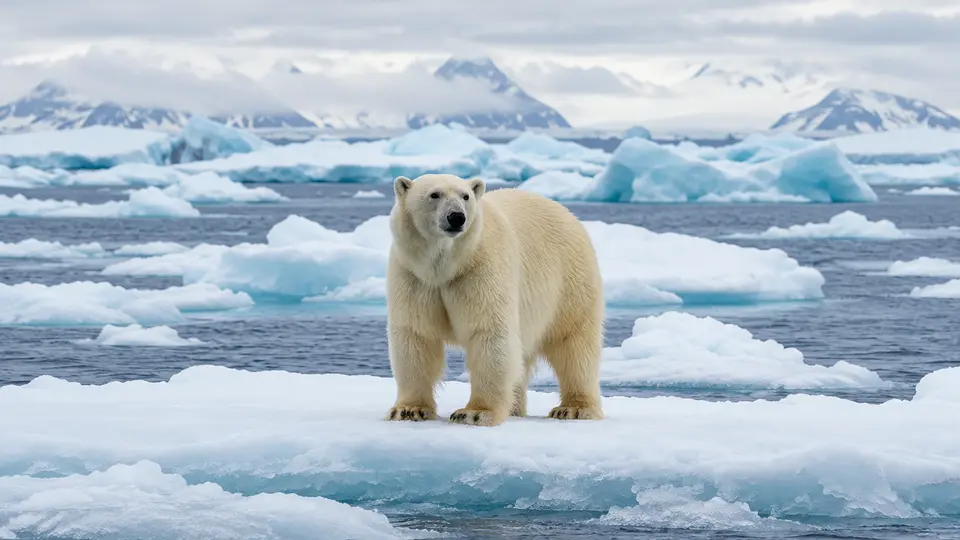
Polar Bear in its natural habitat, AI illustration
Size1.8–2.6 m body lengthLifespan15–25 yearsStatusVulnerable

Polar Bear: where and when to see them

Ursus maritimus

Polar Bear at a glance

The polar bear is a marine mammal whose life is closely connected to Arctic sea ice. It is the largest living bear on average, with males substantially heavier than females. Dense fur, a thick fat layer and broad paws help it function in cold environments. Although bears sometimes rest or travel on land, productive sea ice provides crucial access to seals, making habitat loss from warming a central conservation concern.

Behaviour & reproduction

Size
1.8–2.6 m body length
Weight
150–600 kg
Lifespan
15–25 years
Status
Vulnerable

Polar bears range widely and are usually solitary outside mating, maternal families or temporary feeding aggregations. They conserve energy by resting and walking steadily across ice or coastlines. Hunting often involves waiting near seal breathing holes or approaching seals resting on ice. Pregnant females enter maternity dens, where exceptionally small cubs are born. Other bears generally do not undergo the prolonged winter dormancy typical of many brown bear populations. Polar bears possess an exceptional sense of smell, capable of detecting seals under a meter of snow and ice from several kilometers away. When moving across open water, they are strong swimmers, using their large front paws for propulsion and hind legs as rudders. Mating typically occurs in spring, and the female usually gives birth to one to three cubs in a snow den between November and January.

Top wildlife locations

Norway wildlife habitat

Norway

Svalbard's remote coasts and sea-ice margins offer possible distant deck views, not mainland Norway's standard waterfronts. Shore access is tightly managed, many areas are inaccessible, and bears must never be deliberately approached.

Adventure cruises in Norway
Arctic wildlife habitat

Arctic

Remote Arctic coastlines may support distant viewing from secure decks or authorized facilities. Access is highly regional, frequently restricted or inaccessible, and casual independent shore walks are inappropriate in occupied bear habitat.

Adventure cruises in Arctic

Destinations describe the species' habitat, not guaranteed cruise stops. Some animals require an optional inland excursion or are found in restricted reserves.

Fun facts about the Polar Bear

  • Polar bears have dark skin beneath their pale fur.
  • Their foot soles carry fur and small textured structures that improve traction.
  • Cubs are born in sheltered maternity dens.
  • The species is classified as a marine mammal because of its dependence on the ocean ecosystem.

Best time to see the Polar Bear

Practical viewing windows vary greatly across the Arctic and depend on ice, daylight and regulations. Around Svalbard, late spring and summer support many vessel-based journeys. Elsewhere, seasonal coastal concentrations follow local ice cycles, so no single Arctic-wide month range is biologically defensible. In areas like Svalbard, 24-hour daylight during the summer months allows for extended viewing opportunities. Vessel-based expeditions often follow the ice edge, where bears are more likely to be found hunting seals. Always consult local expedition guides for the most current information on viewing conditions and ethical practices.

Polar Bear: season matrix by destination

Travel and observation windows vary by region. Highlighted months are an orientation for planning, not confirmed sightings or a guarantee of access.

Norway

This is a broad Svalbard daylight and vessel-travel window, not a promise of bear presence; ice, weather and current wildlife-distance regulations govern operations.

JanFebMarAprMayJunJulAugSepOctNovDec
Cruise ships in Norway

Arctic

The Arctic is too broad for one credible monthly window; destination-specific ice cycles, legal access and guided safety arrangements must determine timing.

JanFebMarAprMayJunJulAugSepOctNovDec
Cruise ships in Arctic

Where the Polar Bear lives

The species occupies the circumpolar Arctic, especially sea ice over productive continental shelves. Coasts and islands provide resting ground, travel routes and denning areas. In Norway, natural occurrence is associated with Svalbard and surrounding Arctic waters, not ordinary mainland Norwegian coastal tourism. As an apex predator, polar bears require a healthy marine ecosystem, particularly a robust seal population, to thrive. They are highly adapted to life in cold, icy environments, possessing a thick layer of blubber and a dense fur coat for insulation. The loss of sea ice due to climate change is a primary threat, impacting their hunting grounds and migration routes.

What the Polar Bear eats

Seals, especially ringed and bearded seals, provide the principal energy-rich food. Bears preferentially consume fat when prey is plentiful. They also scavenge marine mammal carcasses and occasionally take other foods, but most terrestrial alternatives cannot replace reliable access to seal hunting habitat. Despite their carnivorous nature, polar bears have been observed to consume berries and kelp opportunistically during summer months, though these items do not provide sufficient nutritional value. Cubs are weaned at approximately two and a half years old, and during this period, mothers prioritize teaching hunting skills. Specialized teeth and strong jaws are adapted for tearing flesh and crushing bone.

Species at a glance

Common name
Polar Bear
Scientific name
Ursus maritimus
Animal group
Mammals
Size
1.8–2.6 m body length
Weight
150–600 kg
Lifespan
15–25 years
Status
Vulnerable
Identification
Its long neck, relatively narrow head, white-to-yellowish coat and lack of a pronounced shoulder hump distinguish it from a pale brown bear. Adult male polar bears are significantly larger than females, often weighing more than double, and can stand over 3 meters tall on their hind legs. Their small, rounded ears and short tail help minimize heat loss in their extreme environment. The black nose and pads of their paws are visible contrasting features against their white fur.

Polar Bear: frequently asked questions

Where can I see the Polar Bear?
Norway, Arctic. Observe only at long range from a secure deck or an authorized, professionally managed viewpoint. Never approach, feed or follow a bear; shore activity requires region-specific permits, trained guides and strict emergency procedures. Binoculars and spotting scopes are essential tools for observing polar bears from a safe distance, allowing for detailed views without disturbance. Always maintain a respectful distance, typically at least 300 meters, to avoid stressing the animal or altering its natural behavior. Never leave food unattended or attempt to lure a bear closer, as this can habituate them to humans and create dangerous situations.
When is the best time to see the Polar Bear?
Practical viewing windows vary greatly across the Arctic and depend on ice, daylight and regulations. Around Svalbard, late spring and summer support many vessel-based journeys. Elsewhere, seasonal coastal concentrations follow local ice cycles, so no single Arctic-wide month range is biologically defensible. In areas like Svalbard, 24-hour daylight during the summer months allows for extended viewing opportunities. Vessel-based expeditions often follow the ice edge, where bears are more likely to be found hunting seals. Always consult local expedition guides for the most current information on viewing conditions and ethical practices.
How big does the Polar Bear get?
1.8–2.6 m body length. Adult weight: 150–600 kg. Size varies with age, sex and population.
How should I behave around the Polar Bear?
Observe only at long range from a secure deck or an authorized, professionally managed viewpoint. Never approach, feed or follow a bear; shore activity requires region-specific permits, trained guides and strict emergency procedures. Binoculars and spotting scopes are essential tools for observing polar bears from a safe distance, allowing for detailed views without disturbance. Always maintain a respectful distance, typically at least 300 meters, to avoid stressing the animal or altering its natural behavior. Never leave food unattended or attempt to lure a bear closer, as this can habituate them to humans and create dangerous situations.
What does the Polar Bear eat?
Seals, especially ringed and bearded seals, provide the principal energy-rich food. Bears preferentially consume fat when prey is plentiful. They also scavenge marine mammal carcasses and occasionally take other foods, but most terrestrial alternatives cannot replace reliable access to seal hunting habitat. Despite their carnivorous nature, polar bears have been observed to consume berries and kelp opportunistically during summer months, though these items do not provide sufficient nutritional value. Cubs are weaned at approximately two and a half years old, and during this period, mothers prioritize teaching hunting skills. Specialized teeth and strong jaws are adapted for tearing flesh and crushing bone.
Are wildlife sightings guaranteed on an adventure cruise?
No. Animals move freely and routes, weather, access restrictions and local conditions influence every outing. Confirm the actual itinerary and shore programme before booking.

Compare wildlife in the same destinations

Explore other mammals recorded in these destinations. Similar surroundings do not mean the animals share the same habits or viewing season.

Species comparison by animal group and destination
Polar BearPolar BearArctic FoxArctic FoxArctic HareArctic Hare
Animal groupMammalsAnimal groupMammalsAnimal groupMammals
DestinationsNorway, ArcticDestinationsNorway, ArcticDestinationsArctic
All wildlife destinations
Plan your trip

Find your next wildlife adventure

Compare destinations, shore programmes and dates with the animals and habitats you would love to see.

  • Naturalist-led shore excursions
  • Responsible wildlife watching
  • Small expedition ships

Newsletter

Take Blue Rides with you

Adventure cruise offers, last-minute deals and trip inspiration.

Free, unsubscribe anytime. Details: Privacy Policy

Partner with Blue Rides

Affiliate Program

Recommend adventure cruises and earn commission on every confirmed booking.

Share. Track. Earn.