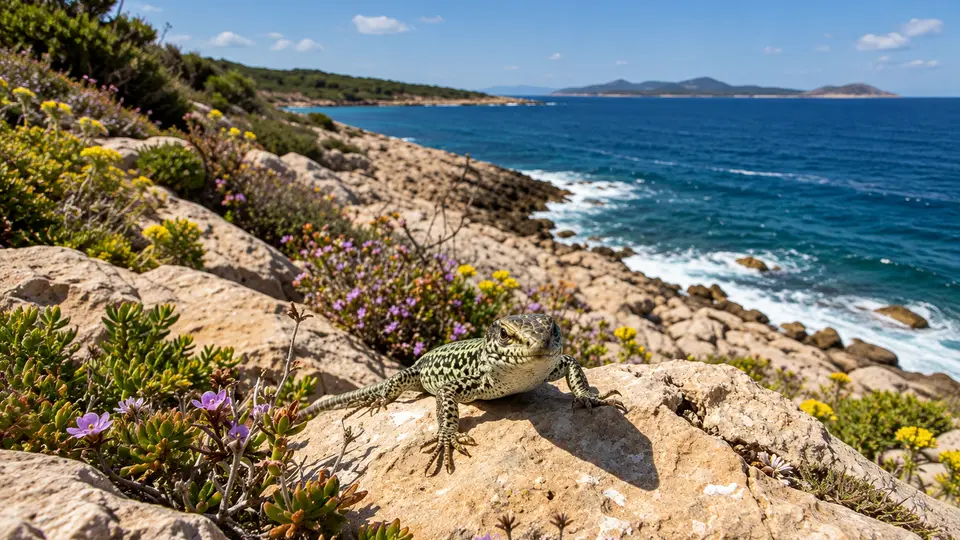
Dalmatian Wall Lizard in its natural habitat, AI illustration
Size5–7 cm snout-to-vent lengthLifespanNot reliably establishedStatusLeast Concern

Dalmatian Wall Lizard: where and when to see them

Podarcis melisellensis

Dalmatian Wall Lizard at a glance

The Dalmatian wall lizard is a small, agile reptile of the eastern Adriatic region, including coastal Croatia and many islands. Its coloration varies considerably, with green or brown upperparts and differing amounts of striping or dark spotting. This variation makes quick identification less straightforward than its name suggests. It shares parts of its range with other wall lizards, so locality and careful views of body pattern are important.

Behaviour & reproduction

Size
5–7 cm snout-to-vent length
Weight
Not reliably established
Lifespan
Not reliably established
Status
Least Concern

Dalmatian wall lizards emerge in suitable warmth to bask, forage and interact with neighbors. They alternate exposed sunny patches with nearby shelter, retreating quickly into vegetation or crevices when approached. Males can defend small areas during reproductive activity, using postures and short chases. Females lay eggs in sheltered substrate. During cold periods, activity is strongly reduced, while very hot summer conditions may shift visible activity toward mornings and late afternoons. Courtship involves head-bobbing displays and chasing, with males using pheromones to attract mates. Females lay clutches of 2-7 eggs, typically buried in loose soil or under stones, which hatch after about 6-8 weeks. During colder months, they enter brumation, a state of inactivity, in sheltered retreats to conserve energy.

Top wildlife locations

Croatia wildlife habitat

Croatia

Sunny coastal paths, scrub margins and stone-walled landscapes can provide accessible habitat. Island populations vary, some localities are inaccessible, and photographs may need expert review to exclude other Croatian wall lizards.

Adventure cruises in Croatia
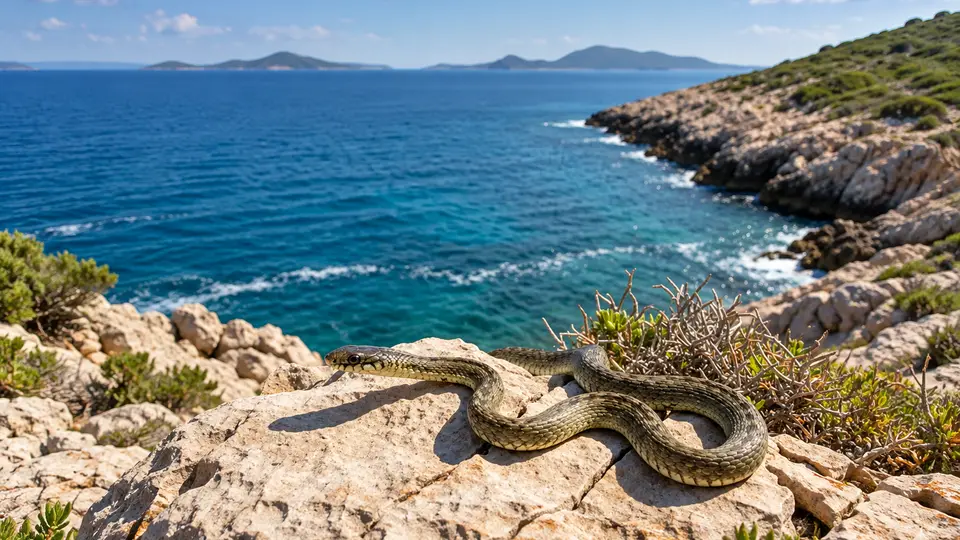
Destinations describe the species' habitat, not guaranteed cruise stops. Some animals require an optional inland excursion or are found in restricted reserves.

Fun facts about the Dalmatian Wall Lizard

  • Its scientific name refers to Melisello, the Adriatic island now known as Brusnik.
  • Island populations can differ noticeably in coloration.
  • It can shed its tail when seized by a predator.
  • The tail that regrows differs internally from the original, replacing vertebrae with a cartilage structure.

Best time to see the Dalmatian Wall Lizard

Spring through early autumn generally offers the best chance of surface activity in coastal Croatia. Mild sunny mornings can be productive, whereas cool rain or intense midday heat reduces visibility. These months describe thermal conditions for observation rather than a guarantee of local occurrence. Prime observation coincides with their breeding season, typically from April to June, when males are more active and visible. September and October can also be productive as temperatures cool, prompting renewed foraging activity before winter dormancy. Early morning sun immediately after dawn often reveals basking individuals.

Dalmatian Wall Lizard: season matrix by destination

Travel and observation windows vary by region. Highlighted months are an orientation for planning, not confirmed sightings or a guarantee of access.

Croatia

These are broad warm-weather observation months; elevation, island climate and daily heat affect activity, and species identity must be confirmed locally.

JanFebMarAprMayJunJulAugSepOctNovDec
Cruise ships in Croatia

Where the Dalmatian Wall Lizard lives

The species uses sunny grassland, scrub edges, rocky ground, field margins and some stone-built landscapes. Coastal and island habitats can be suitable, but not every Adriatic wall lizard belongs to this species. Vegetation structure and competition with other lizards influence its local distribution. Found from sea level to over 1400 meters in altitude, the Dalmatian wall lizard adapts to various microclimates across its range. It is particularly common in human-modified landscapes such as ruins, olive groves, and vineyards, demonstrating its synanthropic tendencies. The species often utilizes crevices and rock piles for refuge and overwintering.

What the Dalmatian Wall Lizard eats

Small insects, spiders and other terrestrial invertebrates provide the main diet. Lizards search actively through low vegetation, litter and open ground, taking prey that fits their small jaws. Available food changes seasonally, particularly as Mediterranean summer dryness reduces activity among some invertebrates. Occasionally, this lizard may also consume plant material like berries or soft fruits, especially when insect prey is scarce. Young lizards typically focus on smaller, softer-bodied invertebrates. Their keen eyesight is crucial for spotting camouflaged insects in varied terrain.

Species at a glance

Common name
Dalmatian Wall Lizard
Scientific name
Podarcis melisellensis
Animal group
Reptiles
Size
5–7 cm snout-to-vent length
Weight
Not reliably established
Lifespan
Not reliably established
Status
Least Concern
Identification
It is generally smaller and more slender than the Italian wall lizard, but overlapping patterns mean reliable separation requires locality information and detailed scale or pattern assessment. Key identification features include a relatively depressed head and often distinctive, keeled scales on the upper side. Coloration is highly variable, ranging from greenish or brownish to grey, with or without dark spots, lines, or a lighter vertebral stripe. Males often display brighter colors, particularly on their flanks and underside, during the breeding season.

Dalmatian Wall Lizard: frequently asked questions

Where can I see the Dalmatian Wall Lizard?
Croatia. Watch quietly beside paths, stone walls or scrub margins without lifting rocks. Never catch a lizard by its tail, and avoid trampling low vegetation where animals shelter and eggs may be hidden. Look for them on vertical surfaces like stone walls, where they often bask or hunt insects. Binoculars can help in observing their intricate patterns and behaviors from a respectful distance. Avoid making sudden movements, which can cause them to dart into cover.
When is the best time to see the Dalmatian Wall Lizard?
Spring through early autumn generally offers the best chance of surface activity in coastal Croatia. Mild sunny mornings can be productive, whereas cool rain or intense midday heat reduces visibility. These months describe thermal conditions for observation rather than a guarantee of local occurrence. Prime observation coincides with their breeding season, typically from April to June, when males are more active and visible. September and October can also be productive as temperatures cool, prompting renewed foraging activity before winter dormancy. Early morning sun immediately after dawn often reveals basking individuals.
How big does the Dalmatian Wall Lizard get?
5–7 cm snout-to-vent length. Adult weight: Not reliably established. Size varies with age, sex and population.
How should I behave around the Dalmatian Wall Lizard?
Watch quietly beside paths, stone walls or scrub margins without lifting rocks. Never catch a lizard by its tail, and avoid trampling low vegetation where animals shelter and eggs may be hidden. Look for them on vertical surfaces like stone walls, where they often bask or hunt insects. Binoculars can help in observing their intricate patterns and behaviors from a respectful distance. Avoid making sudden movements, which can cause them to dart into cover.
What does the Dalmatian Wall Lizard eat?
Small insects, spiders and other terrestrial invertebrates provide the main diet. Lizards search actively through low vegetation, litter and open ground, taking prey that fits their small jaws. Available food changes seasonally, particularly as Mediterranean summer dryness reduces activity among some invertebrates. Occasionally, this lizard may also consume plant material like berries or soft fruits, especially when insect prey is scarce. Young lizards typically focus on smaller, softer-bodied invertebrates. Their keen eyesight is crucial for spotting camouflaged insects in varied terrain.
Are wildlife sightings guaranteed on an adventure cruise?
No. Animals move freely and routes, weather, access restrictions and local conditions influence every outing. Confirm the actual itinerary and shore programme before booking.

Compare wildlife in the same destinations

Explore other reptiles recorded in these destinations. Similar surroundings do not mean the animals share the same habits or viewing season.

Species comparison by animal group and destination
Dalmatian Wall LizardDalmatian Wall LizardBalkan Whip SnakeBalkan Whip SnakeEuropean Glass LizardEuropean Glass Lizard
Animal groupReptilesAnimal groupReptilesAnimal groupReptiles
DestinationsCroatiaDestinationsCroatiaDestinationsCroatia
All wildlife destinations
Plan your trip

Find your next wildlife adventure

Compare destinations, shore programmes and dates with the animals and habitats you would love to see.

  • Naturalist-led shore excursions
  • Responsible wildlife watching
  • Small expedition ships

Newsletter

Take Blue Rides with you

Adventure cruise offers, last-minute deals and trip inspiration.

Free, unsubscribe anytime. Details: Privacy Policy

Partner with Blue Rides

Affiliate Program

Recommend adventure cruises and earn commission on every confirmed booking.

Share. Track. Earn.