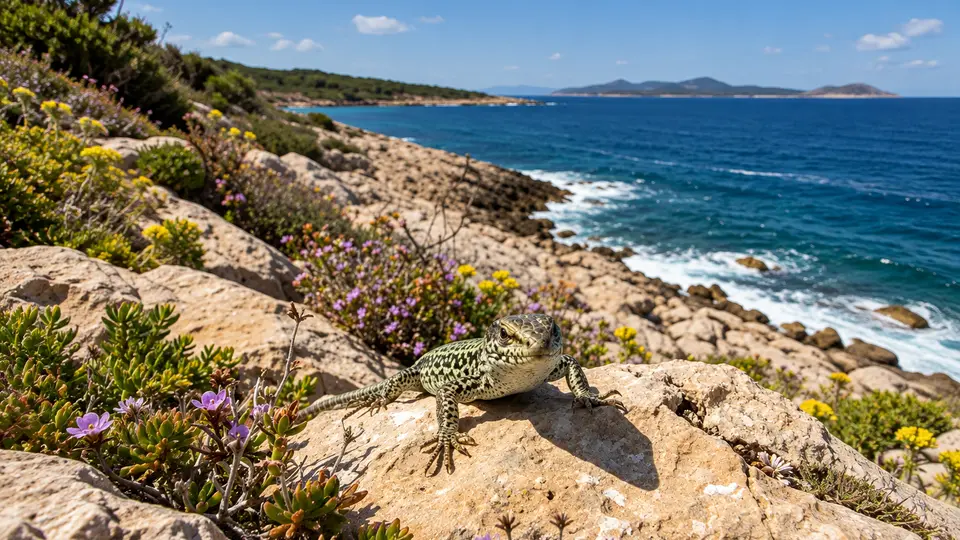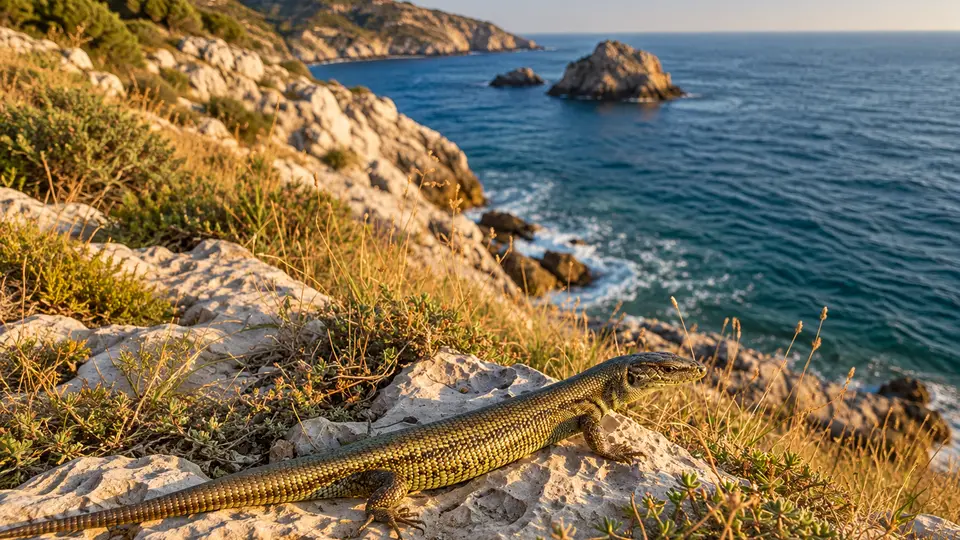
European Glass Lizard in its natural habitat, AI illustration

European Glass Lizard: where and when to see them

Pseudopus apodus

European Glass Lizard at a glance

The European glass lizard, also called the sheltopusik, is a large legless lizard found from southeastern Europe into western and central Asia. Its elongated body can suggest a snake, but movable eyelids, external ear openings and a deep groove along each flank reveal its identity. Adults are usually brown or bronze. In Adriatic landscapes it is a useful predator of invertebrates, yet it is sometimes persecuted through mistaken fear of snakes.

Behaviour & reproduction

Size
80–120 cm total length
Weight
Not reliably established
Lifespan
Not reliably established
Status
Least Concern

European glass lizards forage mainly on the ground, pushing through vegetation and leaf litter with powerful sideways movements. They bask near cover and retreat into dense plants, holes or stonework when disturbed. Activity is often strongest in mild conditions, particularly after rain, while summer heat encourages sheltering. Females lay eggs and may remain with the clutch. Although capable of defensive biting, these lizards generally try to escape rather than confront people. They are primarily diurnal, though activity can extend into the twilight hours during very warm periods. European glass lizards are known for their ability to voluntarily shed their tail (autotomy) when threatened, which can then regrow over time.

Top wildlife locations

Croatia wildlife habitat

Croatia

Dalmatian coastal scrub, rough grassland and dry-stone field margins provide plausible viewing habitat beside public paths. Encounters are irregular, and some suitable areas require a short inland excursion from the waterfront.

Adventure cruises in Croatia
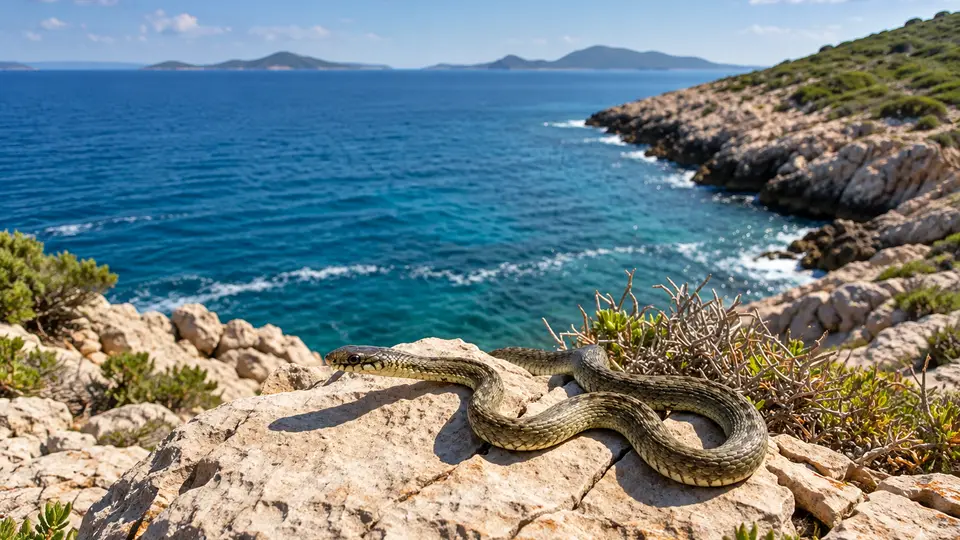
Destinations describe the species' habitat, not guaranteed cruise stops. Some animals require an optional inland excursion or are found in restricted reserves.

Fun facts about the European Glass Lizard

  • Tiny hind-limb remnants remain near the vent.
  • Its eyelids can close, unlike those of snakes.
  • Juveniles have stronger contrasting markings than most adults.
  • Females may guard their eggs until hatching.

Best time to see the European Glass Lizard

Spring and early autumn generally offer comfortable conditions for observing active glass lizards along Adriatic paths. Mild mornings after rain can be productive. During the hottest summer periods, animals often remain concealed, while cold-season activity is reduced or absent. During spring and early autumn cruises, guests may spot them sunning themselves on warm rocks or dry walls, especially in the morning. These periods also coincide with more comfortable hiking temperatures for shore excursions.

European Glass Lizard: season matrix by destination

Travel and observation windows vary by region. Highlighted months are an orientation for planning, not confirmed sightings or a guarantee of access.

Croatia

These months often offer mild activity conditions; local temperatures and rainfall matter more than fixed dates.

JanFebMarAprMayJunJulAugSepOctNovDec
Cruise ships in Croatia

Where the European Glass Lizard lives

Typical habitat includes scrub, open woodland, rough grassland, field margins and rocky slopes with ample ground cover. In coastal southeastern Europe, traditional farmland and dry-stone walls can provide shelter. Completely bare, intensively managed ground offers fewer feeding and refuge opportunities. This adaptable species is often found in mosaic landscapes where different habitat types intermingle. While preferring open areas, it needs nearby refugia like rock crevices or dense vegetation to retreat from predators and extreme weather.

What the European Glass Lizard eats

Snails, slugs, beetles and other substantial invertebrates make up much of its food. Strong jaws can crush hard-shelled prey. It also takes small vertebrates opportunistically, but should not be portrayed primarily as a snake-eating or rodent-hunting specialist. Their robust teeth are particularly effective for consuming gastropods, which form a significant part of their diet. This diet also makes them important natural pest controllers in agricultural areas.

Species at a glance

Common name
European Glass Lizard
Scientific name
Pseudopus apodus
Animal group
Reptiles
Size
80–120 cm total length
Weight
Not reliably established
Lifespan
Not reliably established
Status
Least Concern
Identification
Unlike snakes, the European glass lizard has movable eyelids, visible ear openings and a pronounced lateral groove, and it is much larger than most slow worms. Beyond the distinct ear openings and eyelids, a key feature is their long, snake-like body, which can reach up to 1.4 meters in length. Their scales are underlaid with bony plates (osteoderms), giving them a rigid, almost armored feel when handled.

European Glass Lizard: frequently asked questions

Where can I see the European Glass Lizard?
Croatia. Look beside paths without turning stones or dismantling walls. Never grab the tail or attempt handling, since restraint can injure the animal and provoke a strong bite despite its lack of venom. When searching, maintain a respectful distance to avoid disturbing the animal; a good pair of binoculars can enhance your viewing experience. Patience is key, as they can be cryptically colored and blend well with their surroundings.
When is the best time to see the European Glass Lizard?
Spring and early autumn generally offer comfortable conditions for observing active glass lizards along Adriatic paths. Mild mornings after rain can be productive. During the hottest summer periods, animals often remain concealed, while cold-season activity is reduced or absent. During spring and early autumn cruises, guests may spot them sunning themselves on warm rocks or dry walls, especially in the morning. These periods also coincide with more comfortable hiking temperatures for shore excursions.
How big does the European Glass Lizard get?
80–120 cm total length. Adult weight: Not reliably established. Size varies with age, sex and population.
How should I behave around the European Glass Lizard?
Look beside paths without turning stones or dismantling walls. Never grab the tail or attempt handling, since restraint can injure the animal and provoke a strong bite despite its lack of venom. When searching, maintain a respectful distance to avoid disturbing the animal; a good pair of binoculars can enhance your viewing experience. Patience is key, as they can be cryptically colored and blend well with their surroundings.
What does the European Glass Lizard eat?
Snails, slugs, beetles and other substantial invertebrates make up much of its food. Strong jaws can crush hard-shelled prey. It also takes small vertebrates opportunistically, but should not be portrayed primarily as a snake-eating or rodent-hunting specialist. Their robust teeth are particularly effective for consuming gastropods, which form a significant part of their diet. This diet also makes them important natural pest controllers in agricultural areas.
Are wildlife sightings guaranteed on an adventure cruise?
No. Animals move freely and routes, weather, access restrictions and local conditions influence every outing. Confirm the actual itinerary and shore program before booking.

Compare wildlife in the same destinations

Explore other reptiles recorded in these destinations. Similar surroundings do not mean the animals share the same habits or viewing season.

Species comparison by animal group and destination
European Glass LizardEuropean Glass LizardBalkan Whip SnakeBalkan Whip SnakeDalmatian Wall LizardDalmatian Wall Lizard
Animal groupReptilesAnimal groupReptilesAnimal groupReptiles
DestinationsCroatiaDestinationsCroatiaDestinationsCroatia
All wildlife destinations
Plan your trip

Find your next wildlife adventure

Compare destinations, shore programs and dates with the animals and habitats you would love to see.

  • Naturalist-led shore excursions
  • Responsible wildlife watching
  • Small expedition ships

Newsletter

Take Blue Rides with you

Adventure cruise offers, last-minute deals and trip inspiration.

Free, unsubscribe anytime. Details: Privacy Policy

Partner with Blue Rides

Affiliate Program

Recommend adventure cruises and earn commission on every confirmed booking.

Share. Track. Earn.

Your footage, our stage

Send us your videos or pictures.

Captured beautiful landscapes or wildlife? Share your videos and pictures with us, we may feature them on Blue Rides.