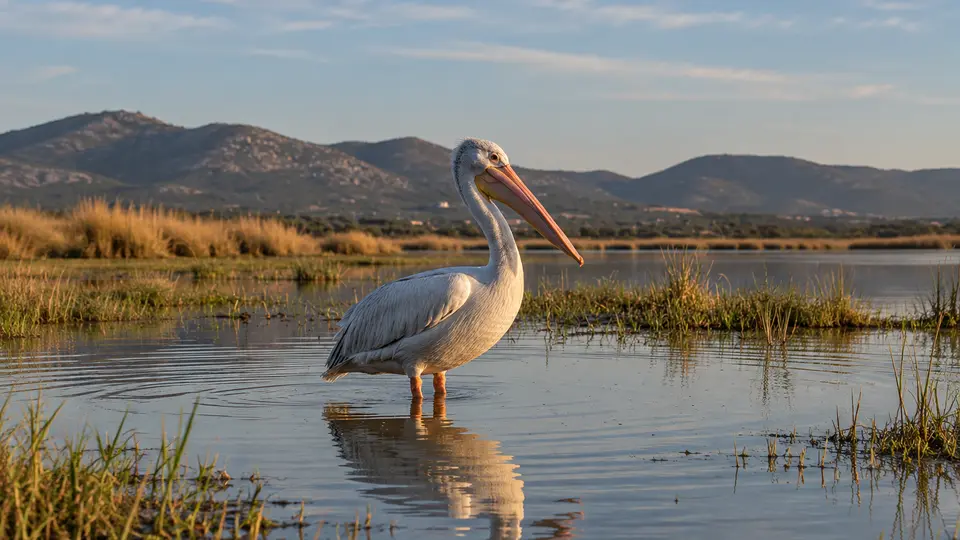
Dalmatian Pelican in its natural habitat, AI illustration
Size160–183 cm long; 245–351 cm wingspanLifespanNot reliably establishedStatusNear Threatened

Dalmatian Pelican: where and when to see them

Pelecanus crispus

Dalmatian Pelican at a glance

The Dalmatian pelican is one of the world's largest flying birds, with silvery plumage, a massive bill and shaggy feathers on the nape. Southeastern Europe supports important populations, including birds using Greek and Turkish wetlands. Despite its imposing size, it depends on a limited network of productive waters and secure nesting places. Wetland alteration, disturbance, power-line collisions and disease can have serious consequences for these often concentrated populations.

Behaviour & reproduction

Size
160–183 cm long; 245–351 cm wingspan
Weight
7–15 kg
Lifespan
Not reliably established
Status
Near Threatened

Dalmatian pelicans spend much of the day resting on undisturbed banks, islands or shallow-water margins between feeding bouts. They catch fish near the surface, sometimes coordinating loosely with other pelicans or benefiting from fish driven by cormorants. Colonies form on secluded islands, reed platforms or similar safe substrates. Adults become especially conspicuous in breeding condition, when their throat pouches brighten, but disturbance can cause costly interruptions to nesting and resting. Dalmatian pelicans are highly social birds, often forming large, cohesive flocks outside the breeding season. They are strong fliers and can travel long distances between feeding and roosting sites, sometimes using thermals to gain altitude.

Top wildlife locations

Greece wildlife habitat

Greece

Lake Kerkini and other major wetlands provide plausible bank-side observation, usually requiring an inland excursion. Coastal lagoons may also hold birds, but access restrictions around colonies and roosts must be respected.

Adventure cruises in Greece
Turkey wildlife habitat

Turkey

Aegean deltas and sheltered lagoon shores offer plausible viewing from authorized public routes. Some important wetlands require a separate excursion, and birds may be distant or absent as water levels change.

Adventure cruises in Turkey

Destinations describe the species' habitat, not guaranteed cruise stops. Some animals require an optional inland excursion or are found in restricted reserves.

Fun facts about the Dalmatian Pelican

  • The throat pouch becomes orange-red in breeding condition.
  • Its wingspan can exceed three metres.
  • The pouch drains water after a fish is captured.
  • Some populations move seasonally while others remain close to productive wetlands throughout the year.

Best time to see the Dalmatian Pelican

Winter and early spring can be rewarding at major Greek and Turkish wetlands where birds gather or develop breeding colours. Other sites support birds in summer. The best window depends on the wetland, and nesting colonies require particularly careful protection. In Greece and Turkey, the breeding season generally extends from March to June, offering excellent opportunities to observe nesting activity. Post-breeding dispersal can lead to sightings at new locations in late summer and autumn.

Dalmatian Pelican: season matrix by destination

Travel and observation windows vary by region. Highlighted months are an orientation for planning, not confirmed sightings or a guarantee of access.

Greece

Useful months for winter concentrations and early breeding colour at some sites; local presence and breeding timing differ among wetlands.

JanFebMarAprMayJunJulAugSepOctNovDec
Cruise ships in Greece

Turkey

A credible cool-season wetland observation window, not a nationwide breeding calendar; consult current access information and recent local records.

JanFebMarAprMayJunJulAugSepOctNovDec
Cruise ships in Turkey

Where the Dalmatian Pelican lives

Large freshwater lakes, reservoirs, river deltas and sheltered brackish lagoons are typical habitats. Suitable sites combine accessible fish with quiet roosts and secure nesting substrates. Birds may move between inland wetlands and coastal waters as water levels and food availability change. These large birds require extensive areas of shallow, unpolluted water. They are typically found in lowland wetlands, rarely venturing into mountainous regions.

What the Dalmatian Pelican eats

Fish make up almost the entire diet, with species and sizes varying among wetlands. The expandable throat pouch acts as a capture basket rather than a food-storage bag. Water is drained before the fish is positioned and swallowed. Prey commonly includes carp, roach, and mullet, caught by dipping their bills into the water while swimming. They are opportunistic feeders and will take whatever fish species are locally abundant.

Species at a glance

Common name
Dalmatian Pelican
Scientific name
Pelecanus crispus
Animal group
Birds
Size
160–183 cm long; 245–351 cm wingspan
Weight
7–15 kg
Lifespan
Not reliably established
Status
Near Threatened
Identification
Silvery-grey plumage, pale legs and a curly nape distinguish it from the warmer-toned great white pelican with pinkish legs and a more contrasting flight pattern. Juveniles are browner overall with a darker, greyish pouch and a less prominent crest. The adult's shaggy neck feathers form a distinctive 'mane' particularly visible during courtship.

Dalmatian Pelican: frequently asked questions

Where can I see the Dalmatian Pelican?
Greece, Turkey. Use binoculars from public wetland viewpoints and keep well away from nesting islands and resting flocks. Never offer fish or approach for pouch photographs. Large birds may abandon a bank before disturbance seems obvious. When viewing from a boat, maintain a considerable distance to avoid causing stress or flushing the birds. Consider using a spotting scope for detailed views without disturbing these sensitive species.
When is the best time to see the Dalmatian Pelican?
Winter and early spring can be rewarding at major Greek and Turkish wetlands where birds gather or develop breeding colours. Other sites support birds in summer. The best window depends on the wetland, and nesting colonies require particularly careful protection. In Greece and Turkey, the breeding season generally extends from March to June, offering excellent opportunities to observe nesting activity. Post-breeding dispersal can lead to sightings at new locations in late summer and autumn.
How big does the Dalmatian Pelican get?
160–183 cm long; 245–351 cm wingspan. Adult weight: 7–15 kg. Size varies with age, sex and population.
How should I behave around the Dalmatian Pelican?
Use binoculars from public wetland viewpoints and keep well away from nesting islands and resting flocks. Never offer fish or approach for pouch photographs. Large birds may abandon a bank before disturbance seems obvious. When viewing from a boat, maintain a considerable distance to avoid causing stress or flushing the birds. Consider using a spotting scope for detailed views without disturbing these sensitive species.
What does the Dalmatian Pelican eat?
Fish make up almost the entire diet, with species and sizes varying among wetlands. The expandable throat pouch acts as a capture basket rather than a food-storage bag. Water is drained before the fish is positioned and swallowed. Prey commonly includes carp, roach, and mullet, caught by dipping their bills into the water while swimming. They are opportunistic feeders and will take whatever fish species are locally abundant.
Are wildlife sightings guaranteed on an adventure cruise?
No. Animals move freely and routes, weather, access restrictions and local conditions influence every outing. Confirm the actual itinerary and shore programme before booking.

Compare wildlife in the same destinations

Explore other birds recorded in these destinations. Similar surroundings do not mean the animals share the same habits or viewing season.

Species comparison by animal group and destination
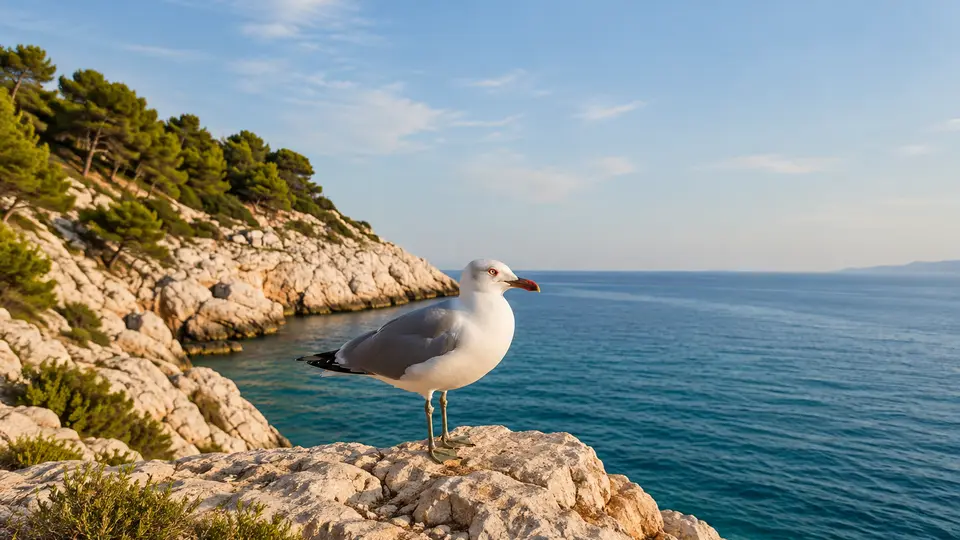
Dalmatian PelicanDalmatian PelicanAudouin's GullAudouin's GullBlack StorkBlack Stork
Animal groupBirdsAnimal groupBirdsAnimal groupBirds
DestinationsGreece, TurkeyDestinationsCroatia, Greece, Portugal, TurkeyDestinationsPortugal, Turkey
All wildlife destinations
Plan your trip

Find your next wildlife adventure

Compare destinations, shore programmes and dates with the animals and habitats you would love to see.

  • Naturalist-led shore excursions
  • Responsible wildlife watching
  • Small expedition ships

Newsletter

Take Blue Rides with you

Adventure cruise offers, last-minute deals and trip inspiration.

Free, unsubscribe anytime. Details: Privacy Policy

Partner with Blue Rides

Affiliate Program

Recommend adventure cruises and earn commission on every confirmed booking.

Share. Track. Earn.