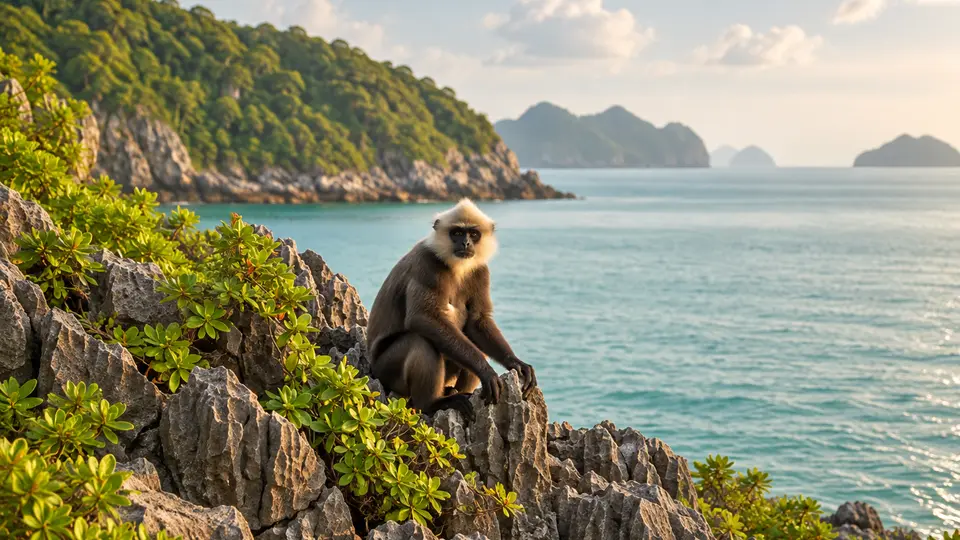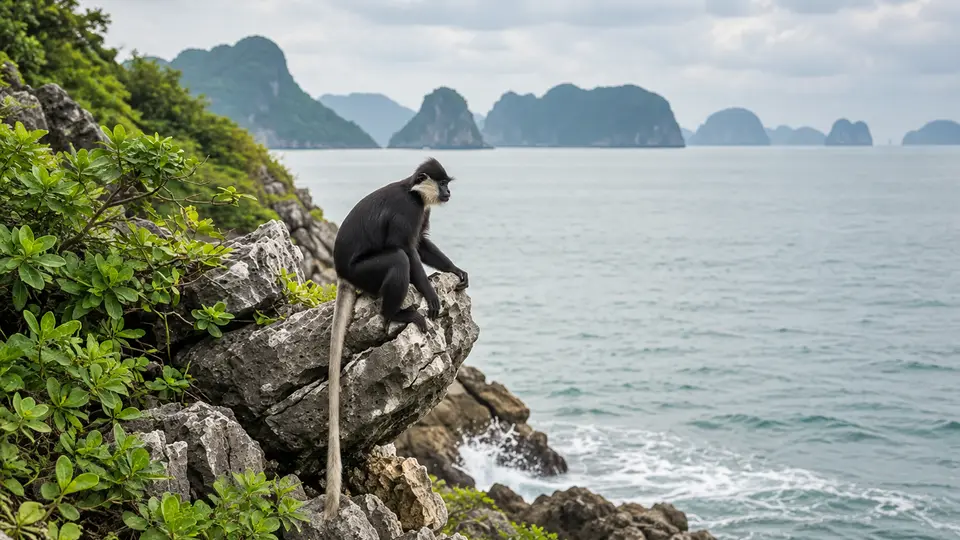
Delacour's langur in its natural habitat, AI illustration
Size55–62 cm head-body lengthLifespanNot reliably establishedStatusCritically Endangered

Delacour's langur: where and when to see them

Trachypithecus delacouri

Delacour's langur at a glance

Delacour's langur is a highly threatened leaf-eating monkey found only in a small part of northern Vietnam. Its black body contrasts dramatically with broad white patches around the rump and thighs, often described as white shorts. Remaining groups inhabit fragmented limestone landscapes rather than the country's general coastal forests. Hunting and habitat loss have reduced its range severely, making protection of each surviving population important to the species' future.

Behaviour & reproduction

Size
55–62 cm head-body length
Weight
7–10 kg
Lifespan
Not reliably established
Status
Critically Endangered

Groups commonly include an adult male, several females and their young, although composition varies. They move between limestone ledges and patches of vegetation, balancing with long tails as they cross broken terrain. Feeding and resting occupy much of the day because leaves require prolonged processing. Cliffs provide sleeping refuges, and alarmed animals can retreat into difficult terrain. Infants have bright orange coats that gradually change as they mature. Communication involves a range of vocalizations, including alarm calls and contact calls between group members. Langurs are predominantly diurnal, spending their days foraging and resting, typically retreating to cliff crevices or caves at night.

Top wildlife locations

Vietnam wildlife habitat

Vietnam

An inland excursion to protected northern limestone landscapes such as Van Long is required. Wetland-edge viewpoints can overlook occupied cliffs, but this rare primate is not a standard coastal landing species.

Adventure cruises in Vietnam
Destinations describe the species' habitat, not guaranteed cruise stops. Some animals require an optional inland excursion or are found in restricted reserves.

Fun facts about the Delacour's langur

  • The species occurs naturally only in Vietnam.
  • Newborns are orange rather than black and white.
  • Its long tail is used for balance, not for grasping branches.
  • A specialized stomach allows microbes to help break down leafy food.

Best time to see the Delacour's langur

The cooler, relatively drier months often make northern Vietnam's inland excursions more comfortable. Langurs are resident, not seasonal visitors, and visibility depends on their movements and permitted routes. Mist, rain and heat can all affect distant cliff observation. Morning hours often provide the best opportunities for spotting langurs as they emerge from sleeping sites to feed. Clear, calm weather allows for better viewing of these arboreal primates across the often distant and rugged terrain.

Delacour's langur: season matrix by destination

Travel and observation windows vary by region. Highlighted months are an orientation for planning, not confirmed sightings or a guarantee of access.

Vietnam

A practical cooler-season travel window for resident animals; sightings depend on authorized access, visibility and group movements, not seasonal arrival.

JanFebMarAprMayJunJulAugSepOctNovDec
Cruise ships in Vietnam

Where the Delacour's langur lives

Steep limestone karst with remaining forest, scrub and cliff vegetation is essential habitat. Some populations occupy karst rising beside inland wetlands and agricultural land. These are specialized inland landscapes, not routine coastal wildlife stops, and access may be tightly managed. The species is highly specialized to the limestone karst, making it a critical indicator of habitat health in these unique ecosystems. Its reliance on these specific geological formations means it is often found in isolated, fragmented populations.

What the Delacour's langur eats

Leaves dominate the diet, supplemented by shoots, fruit and other plant material according to availability. A complex stomach supports microbial fermentation of fibrous food. Feeding choices reflect the patchy vegetation available on limestone hills and within surviving forest fragments. They exhibit selective feeding, often preferring young leaves which are easier to digest and contain fewer toxins. This dietary specialization underscores their vulnerability to habitat changes impacting preferred food plants.

Species at a glance

Common name
Delacour's langur
Scientific name
Trachypithecus delacouri
Animal group
Mammals
Size
55–62 cm head-body length
Weight
7–10 kg
Lifespan
Not reliably established
Status
Critically Endangered
Identification
Its broad white rump-and-thigh patches distinguish it from other Vietnamese black langurs, including François' langur, which instead has conspicuous white cheek stripes. The extent and prominence of the white rump and thigh patches can vary slightly between individuals and age classes. These distinctive white markings provide camouflage against the pale limestone cliffs in some lighting conditions.

Delacour's langur: frequently asked questions

Where can I see the Delacour's langur?
Vietnam. Use authorized local guides and watch from permitted paths or wetland banks. Never feed, call to or pursue groups onto limestone slopes. Keep locations of vulnerable, unprotected groups private and accept distant views. Be prepared for potentially long observation distances as langurs inhabit inaccessible cliffs and high canopy. Binoculars or a spotting scope are essential tools for identifying individuals and observing their natural behaviors without disturbance.
When is the best time to see the Delacour's langur?
The cooler, relatively drier months often make northern Vietnam's inland excursions more comfortable. Langurs are resident, not seasonal visitors, and visibility depends on their movements and permitted routes. Mist, rain and heat can all affect distant cliff observation. Morning hours often provide the best opportunities for spotting langurs as they emerge from sleeping sites to feed. Clear, calm weather allows for better viewing of these arboreal primates across the often distant and rugged terrain.
How big does the Delacour's langur get?
55–62 cm head-body length. Adult weight: 7–10 kg. Size varies with age, sex and population.
How should I behave around the Delacour's langur?
Use authorized local guides and watch from permitted paths or wetland banks. Never feed, call to or pursue groups onto limestone slopes. Keep locations of vulnerable, unprotected groups private and accept distant views. Be prepared for potentially long observation distances as langurs inhabit inaccessible cliffs and high canopy. Binoculars or a spotting scope are essential tools for identifying individuals and observing their natural behaviors without disturbance.
What does the Delacour's langur eat?
Leaves dominate the diet, supplemented by shoots, fruit and other plant material according to availability. A complex stomach supports microbial fermentation of fibrous food. Feeding choices reflect the patchy vegetation available on limestone hills and within surviving forest fragments. They exhibit selective feeding, often preferring young leaves which are easier to digest and contain fewer toxins. This dietary specialization underscores their vulnerability to habitat changes impacting preferred food plants.
Are wildlife sightings guaranteed on an adventure cruise?
No. Animals move freely and routes, weather, access restrictions and local conditions influence every outing. Confirm the actual itinerary and shore programme before booking.

Compare wildlife in the same destinations

Explore other mammals recorded in these destinations. Similar surroundings do not mean the animals share the same habits or viewing season.

Species comparison by animal group and destination
Delacour's langurDelacour's langurBryde's WhaleBryde's WhaleCat Ba langurCat Ba langur
Animal groupMammalsAnimal groupMammalsAnimal groupMammals
DestinationsVietnamDestinationsGalapagos, Mexico, Egypt, Thailand, VietnamDestinationsVietnam
All wildlife destinations
Plan your trip

Find your next wildlife adventure

Compare destinations, shore programmes and dates with the animals and habitats you would love to see.

  • Naturalist-led shore excursions
  • Responsible wildlife watching
  • Small expedition ships

Newsletter

Take Blue Rides with you

Adventure cruise offers, last-minute deals and trip inspiration.

Free, unsubscribe anytime. Details: Privacy Policy

Partner with Blue Rides

Affiliate Program

Recommend adventure cruises and earn commission on every confirmed booking.

Share. Track. Earn.