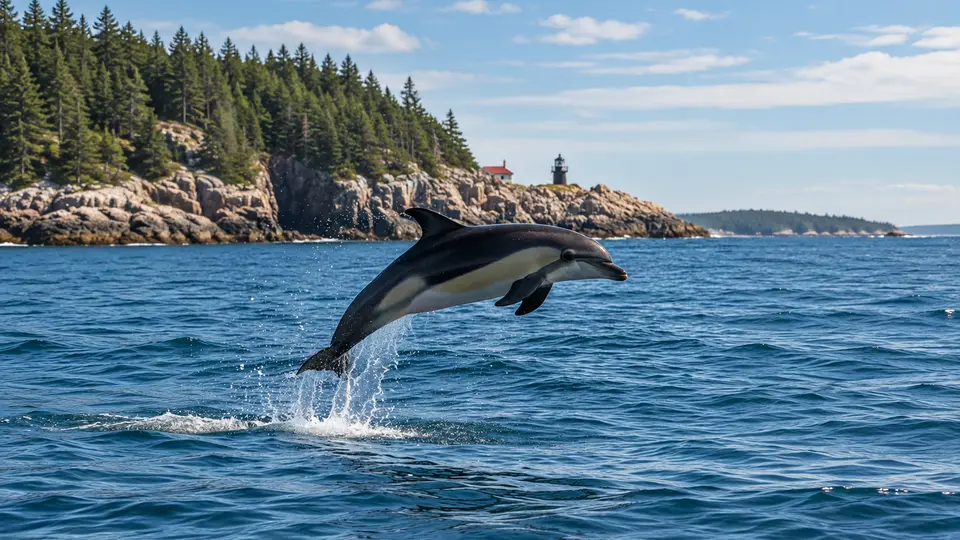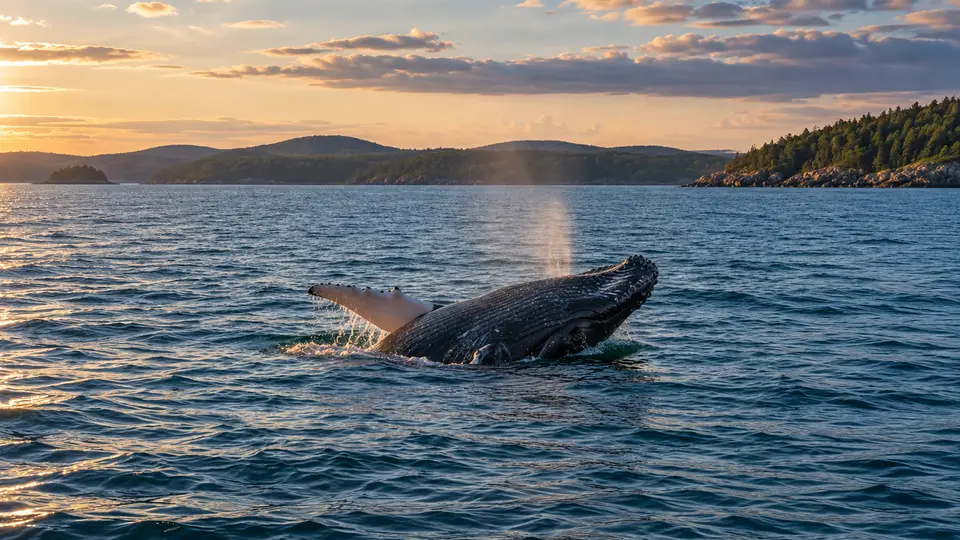
Minke Whale in its natural habitat, AI illustration
Size7-10 m long, common minke whaleLifespan30-50 years, common minke whaleStatusAssessment varies

Minke Whale: where and when to see them

Mammals

Minke Whale at a glance

Minke whale is a common name used for more than one species; New England observations ordinarily concern the common minke whale, Balaenoptera acutorostrata. This relatively small baleen whale has a streamlined body, pointed head and curved dorsal fin. It is a marine mammal, not a land animal, and is usually noticed during brief surfacings. From a distant coast or vessel deck, identification may depend on repeated views rather than one fleeting glimpse.

Behaviour & reproduction

Size
7-10 m long, common minke whale
Weight
5-10 tonnes, common minke whale
Lifespan
30-50 years, common minke whale
Status
Assessment varies

Common minke whales often travel alone or in small, loose associations, although productive feeding patches can draw several together. They alternate short surface appearances with longer absences and frequently show little conspicuous blow. Feeding behavior changes with prey distribution, sometimes producing quick turns or visible surface lunges. They do not routinely raise their tail flukes before descending, which can make following an individual's movements difficult from a fixed coastal viewpoint. Minke whales are known for their inquisitive nature and may occasionally approach vessels, though this is not predictable behavior. They are among the fastest baleen whales and are capable of quick, agile movements when pursuing prey.

Top wildlife locations

New England wildlife habitat

New England

Public headlands overlooking productive Gulf of Maine waters offer possible distant views, while passing decks provide another platform. Shore sightings are unpredictable, and many feeding areas lie too far offshore for reliable identification.

Adventure cruises in New England
Destinations describe the species' habitat, not guaranteed cruise stops. Some animals require an optional inland excursion or are found in restricted reserves.

Fun facts about the Minke Whale

  • Common and Antarctic minke whales are distinct species.
  • The common minke whale's blow is often inconspicuous.
  • Its throat grooves expand during engulfment feeding.
  • North Atlantic common minke whales produce characteristic pulse-train vocalizations.

Best time to see the Minke Whale

Late spring through autumn is a practical New England observation window, overlapping seasonal feeding activity and generally easier coastal access. Local occurrence varies among years and with prey availability. Clear visibility and calm water often matter more than the exact month. Peak numbers often correspond with the seasonal abundance of their primary prey species in New England waters. Early season observations might include migrating individuals, while late season reflects continued feeding before winter dispersal.

Minke Whale: season matrix by destination

Travel and observation windows vary by region. Highlighted months are an orientation for planning, not confirmed sightings or a guarantee of access.

New England

This reflects regional feeding-season opportunities and usable viewing conditions, not guaranteed presence at any coastal viewpoint.

JanFebMarAprMayJunJulAugSepOctNovDec
Cruise ships in New England

Where the Minke Whale lives

In New England, common minke whales use coastal and continental-shelf waters where fish schools gather. Banks, island passages and productive coastal fronts can be suitable. Their distribution shifts with prey, and even apparently favorable water may hold no visible whales. They are the smallest and most abundant of the baleen whales in the region, often found closer to shore than larger rorquals. Minke whales are also known to use estuaries and fjords in other parts of their global range.

What the Minke Whale eats

The regional diet includes schooling fish such as herring, sand lance and capelin, with other fish and small crustaceans taken elsewhere. Baleen plates strain prey from seawater after a mouthful is engulfed. Feeding locations change as prey schools move. When actively feeding, they can make multiple lunges into schools of fish, sometimes turning on their side to engulf prey. Minke whales use a lunge-feeding strategy, accelerating to engulf a large volume of water and prey, then filtering it through their baleen plates.

Species at a glance

Common name
Minke Whale
Scientific name
Name covers more than one taxon
Animal group
Mammals
Size
7-10 m long, common minke whale
Weight
5-10 tonnes, common minke whale
Lifespan
30-50 years, common minke whale
Status
Assessment varies
Identification
New England's common minke whale is smaller than fin and sei whales and has a white flipper band, though that feature is often invisible from shore. Beyond the white flipper band, their relatively small, falcate dorsal fin is typically seen simultaneously with their blow. The dorsal fin is located about two-thirds of the way back on their body, making it a key identification mark.

Minke Whale: frequently asked questions

Where can I see the Minke Whale?
New England. Scan from an established headland or remain safely on a vessel deck. Do not request close approaches or pursuit. Brief, low surfacings are easy to miss, especially in rough water or glare. Be patient and scan the water surface for any subtle changes or disturbances that might indicate a whale's presence. Binoculars are highly recommended for shore-based viewing to better resolve distant movements or features.
When is the best time to see the Minke Whale?
Late spring through autumn is a practical New England observation window, overlapping seasonal feeding activity and generally easier coastal access. Local occurrence varies among years and with prey availability. Clear visibility and calm water often matter more than the exact month. Peak numbers often correspond with the seasonal abundance of their primary prey species in New England waters. Early season observations might include migrating individuals, while late season reflects continued feeding before winter dispersal.
How big does the Minke Whale get?
7-10 m long, common minke whale. Adult weight: 5-10 tonnes, common minke whale. Size varies with age, sex and population.
How should I behave around the Minke Whale?
Scan from an established headland or remain safely on a vessel deck. Do not request close approaches or pursuit. Brief, low surfacings are easy to miss, especially in rough water or glare. Be patient and scan the water surface for any subtle changes or disturbances that might indicate a whale's presence. Binoculars are highly recommended for shore-based viewing to better resolve distant movements or features.
What does the Minke Whale eat?
The regional diet includes schooling fish such as herring, sand lance and capelin, with other fish and small crustaceans taken elsewhere. Baleen plates strain prey from seawater after a mouthful is engulfed. Feeding locations change as prey schools move. When actively feeding, they can make multiple lunges into schools of fish, sometimes turning on their side to engulf prey. Minke whales use a lunge-feeding strategy, accelerating to engulf a large volume of water and prey, then filtering it through their baleen plates.
Are wildlife sightings guaranteed on an adventure cruise?
No. Animals move freely and routes, weather, access restrictions and local conditions influence every outing. Confirm the actual itinerary and shore programme before booking.

Compare wildlife in the same destinations

Explore other mammals recorded in these destinations. Similar surroundings do not mean the animals share the same habits or viewing season.

Species comparison by animal group and destination
Minke WhaleMinke WhaleAmerican Black BearAmerican Black BearAtlantic White-sided DolphinAtlantic White-sided Dolphin
Animal groupMammalsAnimal groupMammalsAnimal groupMammals
DestinationsNew EnglandDestinationsAlaska, New EnglandDestinationsNew England
All wildlife destinations
Plan your trip

Find your next wildlife adventure

Compare destinations, shore programmes and dates with the animals and habitats you would love to see.

  • Naturalist-led shore excursions
  • Responsible wildlife watching
  • Small expedition ships

Newsletter

Take Blue Rides with you

Adventure cruise offers, last-minute deals and trip inspiration.

Free, unsubscribe anytime. Details: Privacy Policy

Partner with Blue Rides

Affiliate Program

Recommend adventure cruises and earn commission on every confirmed booking.

Share. Track. Earn.