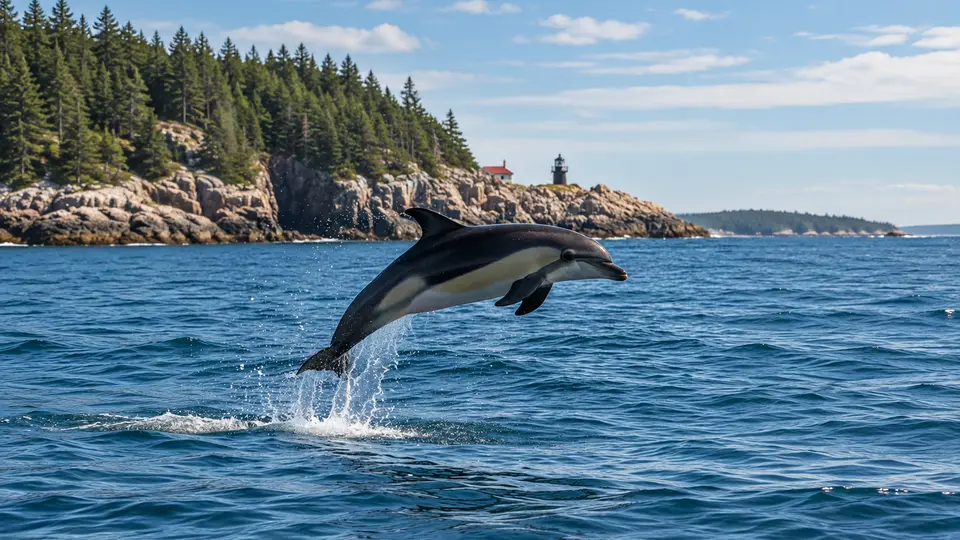
Atlantic White-sided Dolphin in its natural habitat, AI illustration

Atlantic White-sided Dolphin: where and when to see them

Leucopleurus acutus

Atlantic White-sided Dolphin at a glance

The Atlantic white-sided dolphin is a robust, boldly patterned marine mammal of the cool North Atlantic. A dark back, pale belly and distinctive white-and-yellow flank markings give it a striking appearance when it surfaces. It is not a land animal and is usually encountered well offshore rather than beside beaches. Around New England, distant deck observation offers a more realistic opportunity than shore watching, although neither approach can promise a sighting.

Behaviour & reproduction

Size
2.1–2.8 m long
Weight
180–230 kg
Lifespan
20–27 years
Status
Least Concern

These dolphins form social groups that can expand into large aggregations where prey is concentrated. They travel energetically, sometimes leaping clear of the surface, and may associate with other cetaceans. Group members use sound for communication and echolocation during foraging. Their distribution shifts with food availability and ocean conditions rather than following a simple beach-viewing season. Resting, feeding and travelling groups can look very different, making brief surface observations only a partial picture of their lives. They are known for their energetic surfacing behavior, including breaching, porpoising, and tail-slapping, especially when traveling or feeding. These dolphins are often seen in mixed-species aggregations, frequently with fin whales or other large cetaceans, indicating shared feeding grounds. Group sizes in New England can range from small pods of a few individuals to large herds of several hundred during peak feeding events.

Top wildlife locations

New England wildlife habitat

New England

Exposed headlands offer distant scanning, but shore sightings are uncommon because these dolphins usually favour offshore shelf waters. Deck observation on a responsible coastal wildlife excursion is more plausible than watching sheltered harbour beaches.

Adventure cruises in New England

Destinations describe the species' habitat, not guaranteed cruise stops. Some animals require an optional inland excursion or are found in restricted reserves.

Fun facts about the Atlantic White-sided Dolphin

  • The species is restricted to the North Atlantic.
  • Its common name omits the yellow-ochre part of its flank pattern.
  • Females can live longer than males.
  • Groups sometimes include hundreds of animals when feeding conditions are favourable.

Best time to see the Atlantic White-sided Dolphin

Late spring through autumn provides a practical New England deck-observation window because more wildlife trips operate and conditions are often more manageable. The species can occur outside these months. This travel window is not a defined breeding season or a guarantee of local presence. While present year-round in some parts of their range, their movements into New England waters are often linked to seasonal upwellings and prey migrations. Therefore, observing them in New England is generally more successful during the warmer months when their prey is more abundant and accessible. Increased boat traffic during summer also means more opportunities for incidental sightings.

Atlantic White-sided Dolphin: season matrix by destination

Travel and observation windows vary by region. Highlighted months are an orientation for planning, not confirmed sightings or a guarantee of access.

New England

These months reflect practical vessel access and observation conditions, not a confirmed seasonal presence at any particular coastal site.

JanFebMarAprMayJunJulAugSepOctNovDec
Cruise ships in New England

Where the Atlantic White-sided Dolphin lives

They favour cool temperate and subpolar North Atlantic waters, especially productive continental-shelf and shelf-edge areas. Some enter deep coastal channels or bays, but shallow shoreline habitat is not their usual setting. Their New England distribution frequently places them beyond practical land-based viewing range. The species ranges from Cape Cod north to Newfoundland, Greenland, and into the Barents Sea in the eastern Atlantic. In New England, they are commonly found offshore, often over depths greater than 100 meters. They frequently occur in areas with strong oceanographic features, such as shelf breaks and submarine canyons, which concentrate prey.

What the Atlantic White-sided Dolphin eats

The diet includes schooling fish such as herring, mackerel and various gadoids, together with squid. Prey composition varies by region and season. Dolphins may gather where fish concentrate, but feeding movements are dynamic and cannot be predicted from a coastal location alone. Their opportunistic feeding strategy allows them to adapt to variations in prey availability across their range. Foraging typically involves cooperative herding of fish schools, sometimes near the surface, making them visible to observers. Specific prey items in New England can include Atlantic herring, mackerel, and hake, reflecting regional abundance.

Species at a glance

Common name
Atlantic White-sided Dolphin
Scientific name
Leucopleurus acutus
Animal group
Mammals
Size
2.1–2.8 m long
Weight
180–230 kg
Lifespan
20–27 years
Status
Least Concern
Identification
A conspicuous white flank patch followed by a yellow-ochre streak distinguishes it from the white-beaked dolphin, whose flank pattern lacks this characteristic combination. Beyond the distinct flank pattern, Atlantic white-sided dolphins have a robust body, a short beak, and a tall, falcate dorsal fin. Their overall coloration is dark gray to black on the back, with a light gray flank that transitions to white on the belly. The specific yellow-ochre streak is a key diagnostic feature for this species within the North Atlantic.

Atlantic White-sided Dolphin: frequently asked questions

Where can I see the Atlantic White-sided Dolphin?
New England. Scan from a stable deck or elevated shore viewpoint with binoculars. Use operators following marine-mammal approach rules, never request pursuit or interception, and keep hands and equipment inside railings when dolphins pass at a distance. Look for groups of fast-moving dolphins, sometimes creating splashes and bow riding vessels. Keep a keen eye on changes in water texture or bird activity, as these can indicate feeding aggregations below the surface. Binoculars are essential for identifying key features and observing natural behaviors from a distance.
When is the best time to see the Atlantic White-sided Dolphin?
Late spring through autumn provides a practical New England deck-observation window because more wildlife trips operate and conditions are often more manageable. The species can occur outside these months. This travel window is not a defined breeding season or a guarantee of local presence. While present year-round in some parts of their range, their movements into New England waters are often linked to seasonal upwellings and prey migrations. Therefore, observing them in New England is generally more successful during the warmer months when their prey is more abundant and accessible. Increased boat traffic during summer also means more opportunities for incidental sightings.
How big does the Atlantic White-sided Dolphin get?
2.1–2.8 m long. Adult weight: 180–230 kg. Size varies with age, sex and population.
How should I behave around the Atlantic White-sided Dolphin?
Scan from a stable deck or elevated shore viewpoint with binoculars. Use operators following marine-mammal approach rules, never request pursuit or interception, and keep hands and equipment inside railings when dolphins pass at a distance. Look for groups of fast-moving dolphins, sometimes creating splashes and bow riding vessels. Keep a keen eye on changes in water texture or bird activity, as these can indicate feeding aggregations below the surface. Binoculars are essential for identifying key features and observing natural behaviors from a distance.
What does the Atlantic White-sided Dolphin eat?
The diet includes schooling fish such as herring, mackerel and various gadoids, together with squid. Prey composition varies by region and season. Dolphins may gather where fish concentrate, but feeding movements are dynamic and cannot be predicted from a coastal location alone. Their opportunistic feeding strategy allows them to adapt to variations in prey availability across their range. Foraging typically involves cooperative herding of fish schools, sometimes near the surface, making them visible to observers. Specific prey items in New England can include Atlantic herring, mackerel, and hake, reflecting regional abundance.
Are wildlife sightings guaranteed on an adventure cruise?
No. Animals move freely and routes, weather, access restrictions and local conditions influence every outing. Confirm the actual itinerary and shore programme before booking.

Compare wildlife in the same destinations

Explore other mammals recorded in these destinations. Similar surroundings do not mean the animals share the same habits or viewing season.

Species comparison by animal group and destination
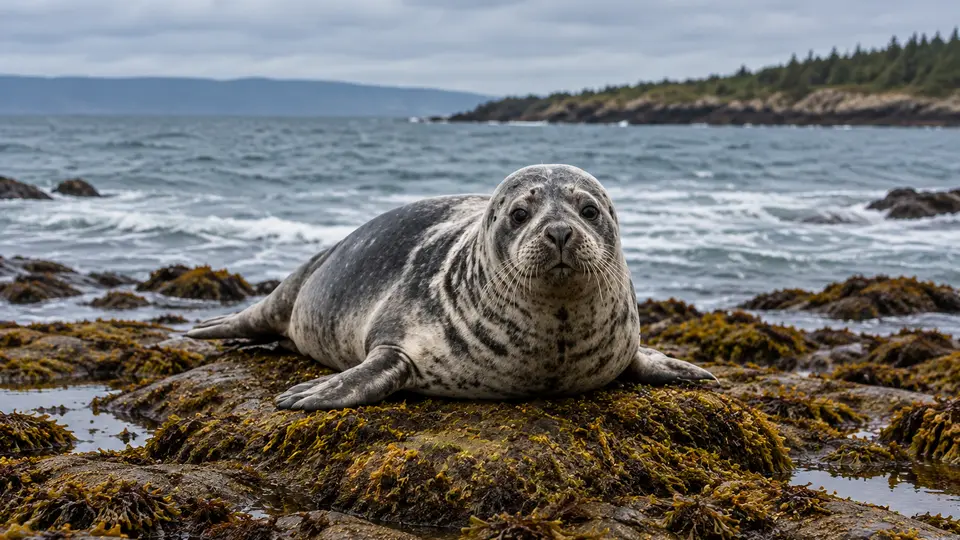
Atlantic White-sided DolphinAtlantic White-sided DolphinAmerican Black BearAmerican Black BearGray SealGray Seal
Animal groupMammalsAnimal groupMammalsAnimal groupMammals
DestinationsNew EnglandDestinationsAlaska, New EnglandDestinationsNew England
All wildlife destinations
Plan your trip

Find your next wildlife adventure

Compare destinations, shore programmes and dates with the animals and habitats you would love to see.

  • Naturalist-led shore excursions
  • Responsible wildlife watching
  • Small expedition ships

Newsletter

Take Blue Rides with you

Adventure cruise offers, last-minute deals and trip inspiration.

Free, unsubscribe anytime. Details: Privacy Policy

Partner with Blue Rides

Affiliate Program

Recommend adventure cruises and earn commission on every confirmed booking.

Share. Track. Earn.