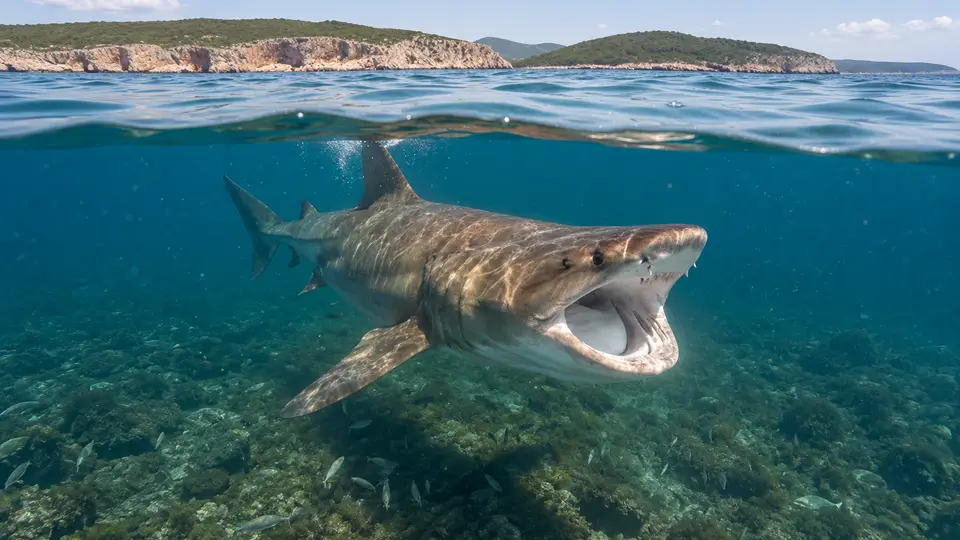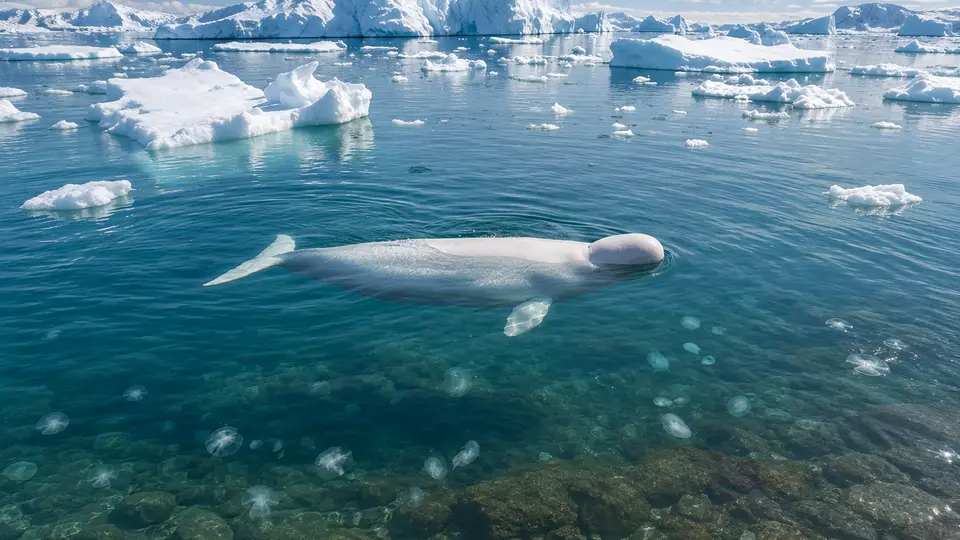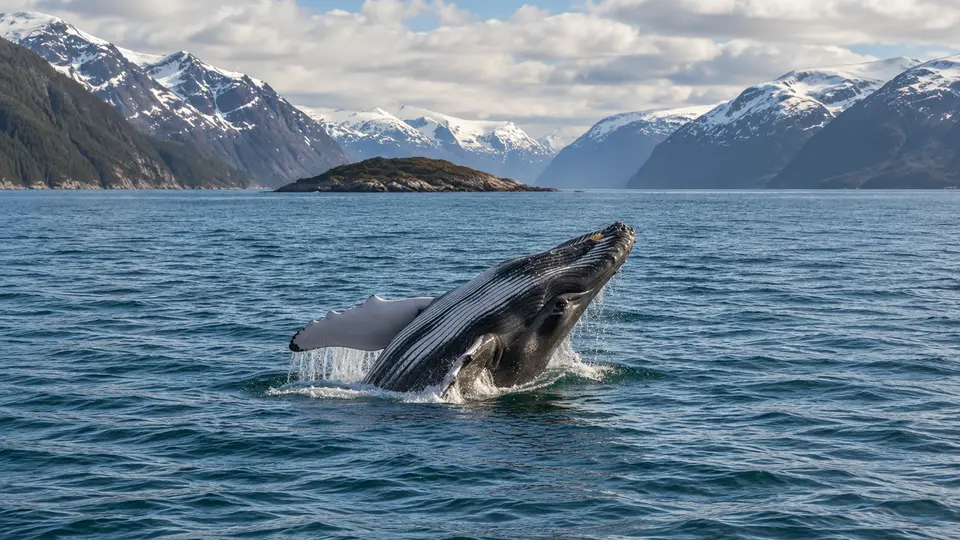
Minke Whale in its natural habitat, AI illustration
Size7-10 m longLifespan30-50 yearsStatusLeast Concern

Minke Whale: where and when to see them

Balaenoptera acutorostrata

Minke Whale at a glance

The common minke whale is a relatively small baleen whale of the North Atlantic, North Pacific and parts of the Southern Hemisphere. A pointed head, streamlined body and modest dorsal fin can make its brief surface appearances easy to miss. Unlike larger whales, it often produces no conspicuous visible blow. It remains an entirely marine animal, and coastal opportunities depend on prey movements, sea conditions and the distance of feeding waters from land.

Behaviour & reproduction

Size
7-10 m long
Weight
5-10 tonnes
Lifespan
30-50 years
Status
Least Concern

Minke whales are often seen alone or in small, loose associations rather than stable social groups. Feeding animals may change direction abruptly as they follow concentrated prey. Several short surfacings can be followed by a longer period out of sight, making their course difficult to predict from a headland. They sometimes approach coastal feeding areas, but distant deck and shore observers should expect fleeting views rather than prolonged surface activity. Minke whales are among the fastest baleen whales and are known for their quick movements and elusive nature. While generally solitary, loose aggregations can occur in rich feeding areas, but these are transient and lack complex social structures.

Top wildlife locations

Alaska wildlife habitat

Alaska

Coastal headlands and decks crossing shelf waters offer plausible distant observation. Shore sightings are often uncommon compared with larger whales, and many suitable feeding areas are remote or inaccessible by land.

Adventure cruises in Alaska
Norway wildlife habitat

Norway

Headlands, fjord approaches and distant coastal decks overlook potentially suitable feeding waters. No inland excursion is relevant, but whales may remain far offshore and exposed shore viewpoints can be weather-limited.

Adventure cruises in Norway
Scotland wildlife habitat

Scotland

Western and northern headlands overlook shelf waters where minke whales may feed. Public coastal viewpoints offer possibilities without inland excursions, but sightings remain irregular and often require extended scanning in calm weather.

Adventure cruises in Scotland
Arctic wildlife habitat

Arctic

Ice-free coastal approaches and shelf margins may offer distant deck views, while shore opportunities are geographically limited. Many suitable coasts are inaccessible, and the broad destination does not establish local occurrence.

Adventure cruises in Arctic

Destinations describe the species' habitat, not guaranteed cruise stops. Some animals require an optional inland excursion or are found in restricted reserves.

Fun facts about the Minke Whale

  • Its blow is often inconspicuous in ordinary viewing conditions.
  • Northern animals have a distinctive white band on each flipper.
  • Baleen plates filter small prey from seawater.
  • The dorsal fin sits well behind the midpoint of the body.

Best time to see the Minke Whale

Late spring through early autumn generally offers the most practical northern shore and deck observation, combining longer daylight with seasonal feeding activity. Exact windows vary between Alaska, Norway, Scotland and Arctic regions. Calm seas greatly improve detection, and summer travel does not guarantee whales close to shore. The presence of minke whales near shore or in fjords during these months is often tied to the abundance and distribution of their preferred prey. Their migratory patterns mean they are less frequently observed in northern areas during the cold winter months when prey is less concentrated.

Minke Whale: season matrix by destination

Travel and observation windows vary by region. Highlighted months are an orientation for planning, not confirmed sightings or a guarantee of access.

Alaska

These months offer practical coastal access and long daylight; local prey and weather determine any viewing opportunity.

JanFebMarAprMayJunJulAugSepOctNovDec
Cruise ships in Alaska

Norway

Northern summer supports access and feeding-season observation, with substantial regional variation and no guaranteed shore presence.

JanFebMarAprMayJunJulAugSepOctNovDec
Cruise ships in Norway

Scotland

Late spring to early autumn is a practical broad window; prey distribution and sea state are more important on individual days.

JanFebMarAprMayJunJulAugSepOctNovDec
Cruise ships in Scotland

Arctic

This is a broad open-water travel window, subject to latitude, ice and species range rather than a uniform Arctic season.

JanFebMarAprMayJunJulAugSepOctNovDec
Cruise ships in Arctic

Where the Minke Whale lives

The species occupies coastal shelves, banks, fjord approaches and offshore waters across a broad climatic range. Northern summer feeding areas can extend toward the ice edge. Suitable marine habitat may lie near headlands, but many populations remain beyond practical shore-viewing distance. The species is a cosmopolitan inhabitant of both temperate and polar waters, showing seasonal migrations between breeding grounds in warmer waters and feeding grounds in colder, high-latitude regions. While capable of deep dives, minke whales typically feed in the upper water column and are often found in areas with strong oceanographic features that concentrate prey.

What the Minke Whale eats

Small schooling fish and krill are principal foods, with regional differences in emphasis. North Atlantic animals often take sandeels, herring or capelin, while other populations exploit different forage species. Expandable throat grooves allow a mouthful of prey-rich water to be filtered through baleen. Despite their size, common minke whales primarily feed on small prey, filtering large volumes of water with their relatively short baleen plates. In some regions, opportunistic feeding on larger fish like cod or haddock has been observed, particularly when schooling prey are scarce.

Species at a glance

Common name
Minke Whale
Scientific name
Balaenoptera acutorostrata
Animal group
Marine life
Size
7-10 m long
Weight
5-10 tonnes
Lifespan
30-50 years
Status
Least Concern
Identification
A white flipper band helps distinguish common minke from Antarctic minke whale, although that feature is seldom visible during distant surface observations. The head of a common minke whale is pointed, and the rostrum is narrow with a distinctive ridge along the top. Unlike some larger baleen whales, their dorsal fin is recurved and positioned well back on the body, which can sometimes be seen simultaneously with the blowhole during a surfacing.

Minke Whale: frequently asked questions

Where can I see the Minke Whale?
Alaska, Norway, Scotland, Arctic. Scan from a safe headland or vessel deck with binoculars, watching for a low back and small curved fin. Keep all encounters distant, never encourage pursuit, and avoid exposed rocks during swell. Their relatively small size and inconspicuous blow, which is often difficult to see, can make them challenging to spot even in favorable conditions. When observed from a vessel, they may exhibit curiosity, occasionally approaching boats, but this behavior is unpredictable and should never be encouraged.
When is the best time to see the Minke Whale?
Late spring through early autumn generally offers the most practical northern shore and deck observation, combining longer daylight with seasonal feeding activity. Exact windows vary between Alaska, Norway, Scotland and Arctic regions. Calm seas greatly improve detection, and summer travel does not guarantee whales close to shore. The presence of minke whales near shore or in fjords during these months is often tied to the abundance and distribution of their preferred prey. Their migratory patterns mean they are less frequently observed in northern areas during the cold winter months when prey is less concentrated.
How big does the Minke Whale get?
7-10 m long. Adult weight: 5-10 tonnes. Size varies with age, sex and population.
How should I behave around the Minke Whale?
Scan from a safe headland or vessel deck with binoculars, watching for a low back and small curved fin. Keep all encounters distant, never encourage pursuit, and avoid exposed rocks during swell. Their relatively small size and inconspicuous blow, which is often difficult to see, can make them challenging to spot even in favorable conditions. When observed from a vessel, they may exhibit curiosity, occasionally approaching boats, but this behavior is unpredictable and should never be encouraged.
What does the Minke Whale eat?
Small schooling fish and krill are principal foods, with regional differences in emphasis. North Atlantic animals often take sandeels, herring or capelin, while other populations exploit different forage species. Expandable throat grooves allow a mouthful of prey-rich water to be filtered through baleen. Despite their size, common minke whales primarily feed on small prey, filtering large volumes of water with their relatively short baleen plates. In some regions, opportunistic feeding on larger fish like cod or haddock has been observed, particularly when schooling prey are scarce.
Are wildlife sightings guaranteed on an adventure cruise?
No. Animals move freely and routes, weather, access restrictions and local conditions influence every outing. Confirm the actual itinerary and shore programme before booking.

Compare wildlife in the same destinations

Explore other marine life recorded in these destinations. Similar surroundings do not mean the animals share the same habits or viewing season.

Species comparison by animal group and destination
Minke WhaleMinke WhaleBasking SharkBasking SharkBeluga WhaleBeluga Whale
Animal groupMarine lifeAnimal groupMarine lifeAnimal groupMarine life
DestinationsAlaska, Norway, Scotland, ArcticDestinationsScotlandDestinationsNorway, Arctic
All wildlife destinations
Plan your trip

Find your next wildlife adventure

Compare destinations, shore programmes and dates with the animals and habitats you would love to see.

  • Naturalist-led shore excursions
  • Responsible wildlife watching
  • Small expedition ships

Newsletter

Take Blue Rides with you

Adventure cruise offers, last-minute deals and trip inspiration.

Free, unsubscribe anytime. Details: Privacy Policy

Partner with Blue Rides

Affiliate Program

Recommend adventure cruises and earn commission on every confirmed booking.

Share. Track. Earn.