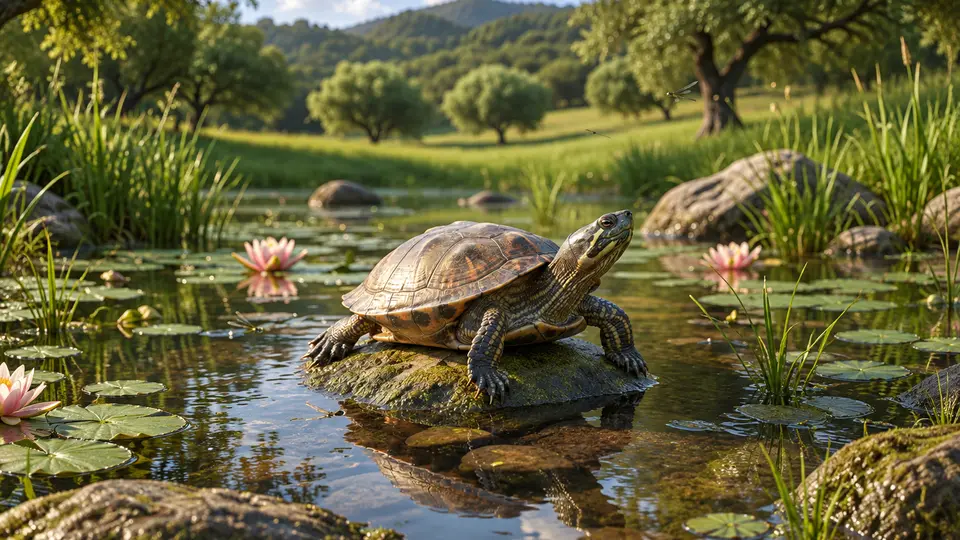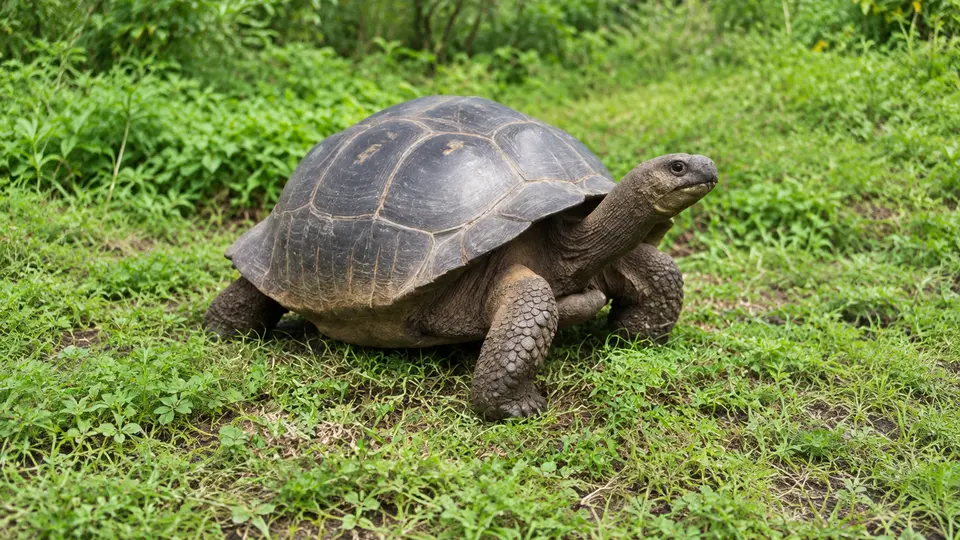
Marginated Tortoise in its natural habitat, AI illustration
Size25–35 cm shell lengthLifespanNot reliably establishedStatusLeast Concern

Marginated Tortoise: where and when to see them

Testudo marginata

Marginated Tortoise at a glance

The marginated tortoise is a large Mediterranean tortoise particularly associated with Greece. Mature animals develop a distinctive outward flare along the rear shell, especially pronounced in males. Dark shell plates often retain lighter centers, although color and shape change with age. It is a terrestrial browser of scrubby, rocky landscapes, not a beach animal, and may be surprisingly well concealed beneath low vegetation or among stones.

Behaviour & reproduction

Size
25–35 cm shell length
Weight
2–5 kg
Lifespan
Not reliably established
Status
Least Concern

Daily activity follows temperature closely. Tortoises bask to warm up, browse during suitable conditions and shelter when midday heat becomes excessive. Winter inactivity varies with elevation and local climate. Males court females persistently, sometimes biting and ramming during encounters. Females excavate nests in soil and leave the eggs to develop without parental care, so successful reproduction depends heavily on suitable ground conditions and seasonal warmth. Courtship rituals can be observed as males actively pursue and attempt to mount females, sometimes vocalizing with grunts or squeaks. Females exhibit site fidelity for nesting, often returning to the same general area year after year if conditions permit.

Top wildlife locations

Greece wildlife habitat

Greece

Coastal foothill scrub and open olive landscapes offer plausible habitat within its range. An inland excursion is often required, and distribution is uneven; use established paths rather than searching private land or dense cover.

Adventure cruises in Greece
Destinations describe the species' habitat, not guaranteed cruise stops. Some animals require an optional inland excursion or are found in restricted reserves.

Fun facts about the Marginated Tortoise

  • It is the largest tortoise native to mainland Europe.
  • The rear shell flare becomes more pronounced as animals mature.
  • Males typically have longer tails and more concave undersides than females.
  • Females bury their eggs and provide no subsequent parental care.

Best time to see the Marginated Tortoise

April through June and September through October often provide suitable conditions for daytime activity in Greece. Summer heat can keep animals concealed, while winter cold reduces activity. Elevation and recent rainfall influence timing, so these are broad windows rather than fixed rules. Early mornings or late afternoons during the shoulder seasons are particularly rewarding for sightings, as temperatures are more moderate. Local guides often have knowledge of specific sheltered spots or sun-exposed slopes where tortoises are regularly observed.

Marginated Tortoise: season matrix by destination

Travel and observation windows vary by region. Highlighted months are an orientation for planning, not confirmed sightings or a guarantee of access.

Greece

Mild-weather activity and walking windows; local temperature, rainfall and elevation can shift activity substantially.

JanFebMarAprMayJunJulAugSepOctNovDec
Cruise ships in Greece

Where the Marginated Tortoise lives

Rocky hillsides, Mediterranean scrub, open woodland and rough grassland are characteristic habitats. Animals also use some olive-growing landscapes with cover and uncultivated margins. Coastal foothills may be suitable, but busy beaches, dense development and intensively managed ground generally are not. They demonstrate a preference for habitats with a mosaic of dense cover and open sunny patches, essential for thermoregulation and foraging. While largely terrestrial, they may occasionally enter shallow water to drink or cool off during extremely hot periods.

What the Marginated Tortoise eats

Wild plants supply most food, including leaves, flowers and soft growth from herbs and grasses. Seasonal availability changes the mix of plants eaten. Human food, especially bread or processed scraps, is inappropriate and should never be offered to free-living tortoises. In their natural habitat, these tortoises play a role in seed dispersal through their diet, consuming fruits and berries. They also obtain much of their water requirements from the moisture content of the plants they consume, reducing the need for direct drinking.

Species at a glance

Common name
Marginated Tortoise
Scientific name
Testudo marginata
Animal group
Reptiles
Size
25–35 cm shell length
Weight
2–5 kg
Lifespan
Not reliably established
Status
Least Concern
Identification
The elongated shell with a strongly flared rear margin distinguishes mature animals from the generally rounder Hermann’s and spur-thighed tortoises. Beyond the flared rear, a characteristic feature of adult males is their significantly larger size compared to females, and a longer, thicker tail. Their carapaces are typically dark, ranging from dark brown to black, often with yellow or cream marginal markings.

Marginated Tortoise: frequently asked questions

Where can I see the Marginated Tortoise?
Greece. Look along quiet scrub paths without lifting, feeding or relocating tortoises. Keep dogs away and avoid trampling vegetation while searching. If an animal is crossing a road, prioritize human safety and seek local wildlife guidance before intervening. When viewing, maintain a respectful distance to avoid disturbing their natural behavior, typically at least several meters. Flash photography should be avoided, as it can startle them and cause unnecessary stress.
When is the best time to see the Marginated Tortoise?
April through June and September through October often provide suitable conditions for daytime activity in Greece. Summer heat can keep animals concealed, while winter cold reduces activity. Elevation and recent rainfall influence timing, so these are broad windows rather than fixed rules. Early mornings or late afternoons during the shoulder seasons are particularly rewarding for sightings, as temperatures are more moderate. Local guides often have knowledge of specific sheltered spots or sun-exposed slopes where tortoises are regularly observed.
How big does the Marginated Tortoise get?
25–35 cm shell length. Adult weight: 2–5 kg. Size varies with age, sex and population.
How should I behave around the Marginated Tortoise?
Look along quiet scrub paths without lifting, feeding or relocating tortoises. Keep dogs away and avoid trampling vegetation while searching. If an animal is crossing a road, prioritize human safety and seek local wildlife guidance before intervening. When viewing, maintain a respectful distance to avoid disturbing their natural behavior, typically at least several meters. Flash photography should be avoided, as it can startle them and cause unnecessary stress.
What does the Marginated Tortoise eat?
Wild plants supply most food, including leaves, flowers and soft growth from herbs and grasses. Seasonal availability changes the mix of plants eaten. Human food, especially bread or processed scraps, is inappropriate and should never be offered to free-living tortoises. In their natural habitat, these tortoises play a role in seed dispersal through their diet, consuming fruits and berries. They also obtain much of their water requirements from the moisture content of the plants they consume, reducing the need for direct drinking.
Are wildlife sightings guaranteed on an adventure cruise?
No. Animals move freely and routes, weather, access restrictions and local conditions influence every outing. Confirm the actual itinerary and shore programme before booking.

Compare wildlife in the same destinations

Explore other reptiles recorded in these destinations. Similar surroundings do not mean the animals share the same habits or viewing season.

Species comparison by animal group and destination
Marginated TortoiseMarginated TortoiseBalkan Green LizardBalkan Green LizardBalkan Pond TurtleBalkan Pond Turtle
Animal groupReptilesAnimal groupReptilesAnimal groupReptiles
DestinationsGreeceDestinationsGreeceDestinationsGreece
All wildlife destinations
Plan your trip

Find your next wildlife adventure

Compare destinations, shore programmes and dates with the animals and habitats you would love to see.

  • Naturalist-led shore excursions
  • Responsible wildlife watching
  • Small expedition ships

Newsletter

Take Blue Rides with you

Adventure cruise offers, last-minute deals and trip inspiration.

Free, unsubscribe anytime. Details: Privacy Policy

Partner with Blue Rides

Affiliate Program

Recommend adventure cruises and earn commission on every confirmed booking.

Share. Track. Earn.