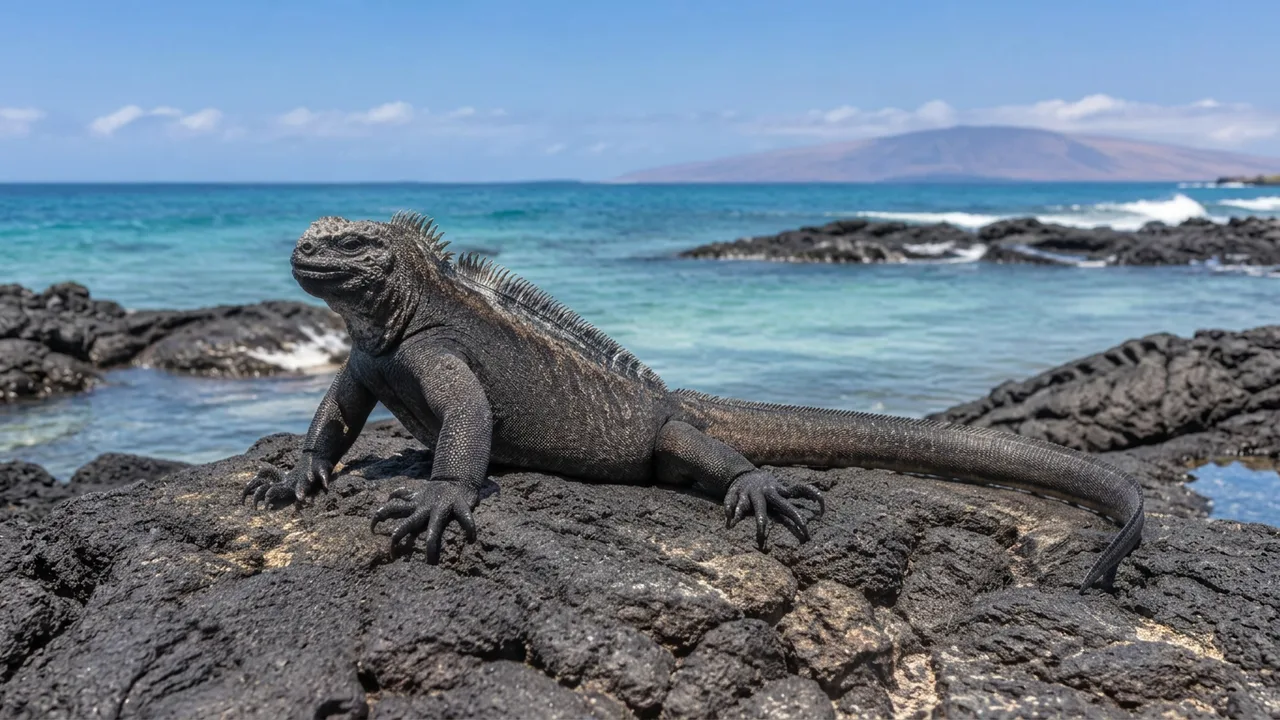
Marine Iguana in its natural habitat, AI illustration
Size60–120 cm total lengthLifespanNot reliably establishedStatusVulnerable

Marine Iguana: where and when to see them

Amblyrhynchus cristatus

Marine Iguana at a glance

The marine iguana is an endemic Galápagos reptile whose feeding ecology is uniquely tied to marine algae. Ashore, its dark body, blunt face and spiny crest blend with volcanic rock. Size and breeding coloration vary among islands and populations. Although often conspicuous at accessible coastal sites, these iguanas face pressures from introduced predators, disease risks and ocean changes that can sharply reduce their food supply.

Behaviour & reproduction

Size
60–120 cm total length
Weight
0.5–5 kg
Lifespan
Not reliably established
Status
Vulnerable

On land, marine iguanas bask to recover body heat, often forming dense resting groups on lava. They adjust posture and orientation to manage warming and cooling, and expel excess salt through nasal glands. Territorial males display with head movements and may fight during breeding. Females dig nests in suitable coastal soil, while smaller animals commonly feed on algae exposed along the intertidal shore at low tide. On land, marine iguanas bask to recover body heat, often forming dense resting groups on lava. They adjust posture and orientation to manage warming and cooling, and expel excess salt through nasal glands. Territorial males display with head movements and may fight during breeding. Females dig nests in suitable coastal soil, while smaller animals commonly feed on algae exposed along the intertidal shore at low tide. They are the only lizard in the world that forages in the sea, holding their breath for extended periods to graze underwater. After a cold foraging trip, they bask extensively to raise their body temperature back to optimal levels for digestion.

Top wildlife locations

Galapagos wildlife habitat

Galapagos

Authorized coastal visitor trails beside lava shores provide plausible observation habitat. Some colonies and nesting areas are inaccessible or restricted; remain with the licensed guide and do not assume every itinerary visits suitable shore.

Adventure cruises in Galapagos
Destinations describe the species' habitat, not guaranteed cruise stops. Some animals require an optional inland excursion or are found in restricted reserves.

Fun facts about the Marine Iguana

  • It is the only living lizard specialized for feeding on marine algae.
  • Nasal salt glands produce the conspicuous salty sneezes seen ashore.
  • Some populations can temporarily shrink in body length during severe food shortages.
  • Breeding males on certain islands develop vivid red and green coloration.

Best time to see the Marine Iguana

Shore observation is possible throughout the year at authorized Galápagos visitor sites. Warmer months can bring conspicuous breeding colors in some populations, but timing varies among islands. Tide, weather and the permitted itinerary often matter more for viewing than month alone. Shore observation is possible throughout the year at authorized Galápagos visitor sites. Warmer months can bring conspicuous breeding colors in some populations, but timing varies among islands. Tide, weather and the permitted itinerary often matter more for viewing than month alone. The breeding season typically runs from December to March, making these months ideal for observing courtship and territorial displays. Hatchlings usually emerge from their nests between April and June, offering a chance to see young iguanas.

Marine Iguana: season matrix by destination

Travel and observation windows vary by region. Highlighted months are an orientation for planning, not confirmed sightings or a guarantee of access.

Galapagos

Year-round shore travel is possible, but permissions, sea conditions, tides and island-specific breeding schedules shape viewing opportunities.

JanFebMarAprMayJunJulAugSepOctNovDec
Cruise ships in Galapagos

Where the Marine Iguana lives

Rocky volcanic shores with nearby algal feeding grounds are central habitat. Sandy or friable coastal patches provide nesting ground, and cracks offer shelter. Populations occur across much of the archipelago, but abundance, body size and local access differ greatly among islands. Rocky volcanic shores with nearby algal feeding grounds are central habitat. Sandy or friable coastal patches provide nesting ground, and cracks offer shelter. Populations occur across much of the archipelago, but abundance, body size and local access differ greatly among islands. The eastern islands of Española and Floreana, along with Santa Fe, host distinct subspecies, some of the smallest in the archipelago. Isabela and Fernandina support the largest populations and generally the largest individuals, favoring shores with extensive intertidal zones.

What the Marine Iguana eats

Marine algae dominate the diet, scraped from rock with specialized teeth and jaws. Red and green algae are especially important, with food composition varying locally. Warm-water events can replace nutritious algae with less suitable growth, causing severe food shortages and mortality. Marine algae dominate the diet, scraped from rock with specialized teeth and jaws. Red and green algae are especially important, with food composition varying locally. Warm-water events can replace nutritious algae with less suitable growth, causing severe food shortages and mortality. Juveniles and smaller individuals may consume detached algal fragments in tide pools or graze during low tide to avoid deeper water. Some individuals on smaller islands, where preferred algae are scarce, have been observed occasionally eating insect larvae or even land plants.

Species at a glance

Common name
Marine Iguana
Scientific name
Amblyrhynchus cristatus
Animal group
Reptiles
Size
60–120 cm total length
Weight
0.5–5 kg
Lifespan
Not reliably established
Status
Vulnerable
Identification
Its blunt snout, flattened swimming tail and usually dark coloration distinguish it from the more yellowish Galápagos land iguanas with rounder tails. Its blunt snout, flattened swimming tail and usually dark coloration distinguish it from the more yellowish Galápagos land iguanas with rounder tails. Though typically dark, their coloration can vary from charcoal gray to reddish, green, or patchy shades, especially during breeding season. The presence of spiny dorsal crests, particularly prominent in adult males, also helps differentiate them.

Marine Iguana: frequently asked questions

Where can I see the Marine Iguana?
Galapagos. Observe from designated shore paths, keeping at least the required park distance and following your guide. Never block routes between resting areas and the sea, step over animals, or enter nesting patches; lava and wet rocks can be slippery. Observe from designated shore paths, keeping at least the required park distance and following your guide. Never block routes between resting areas and the sea, step over animals, or enter nesting patches; lava and wet rocks can be slippery. They are generally tolerant of quiet observers, but sudden movements or loud noises can disturb them. Early mornings are excellent for viewing iguanas basking, as they are often lethargic before warming up.
When is the best time to see the Marine Iguana?
Shore observation is possible throughout the year at authorized Galápagos visitor sites. Warmer months can bring conspicuous breeding colors in some populations, but timing varies among islands. Tide, weather and the permitted itinerary often matter more for viewing than month alone. Shore observation is possible throughout the year at authorized Galápagos visitor sites. Warmer months can bring conspicuous breeding colors in some populations, but timing varies among islands. Tide, weather and the permitted itinerary often matter more for viewing than month alone. The breeding season typically runs from December to March, making these months ideal for observing courtship and territorial displays. Hatchlings usually emerge from their nests between April and June, offering a chance to see young iguanas.
How big does the Marine Iguana get?
60–120 cm total length. Adult weight: 0.5–5 kg. Size varies with age, sex and population.
How should I behave around the Marine Iguana?
Observe from designated shore paths, keeping at least the required park distance and following your guide. Never block routes between resting areas and the sea, step over animals, or enter nesting patches; lava and wet rocks can be slippery. Observe from designated shore paths, keeping at least the required park distance and following your guide. Never block routes between resting areas and the sea, step over animals, or enter nesting patches; lava and wet rocks can be slippery. They are generally tolerant of quiet observers, but sudden movements or loud noises can disturb them. Early mornings are excellent for viewing iguanas basking, as they are often lethargic before warming up.
What does the Marine Iguana eat?
Marine algae dominate the diet, scraped from rock with specialized teeth and jaws. Red and green algae are especially important, with food composition varying locally. Warm-water events can replace nutritious algae with less suitable growth, causing severe food shortages and mortality. Marine algae dominate the diet, scraped from rock with specialized teeth and jaws. Red and green algae are especially important, with food composition varying locally. Warm-water events can replace nutritious algae with less suitable growth, causing severe food shortages and mortality. Juveniles and smaller individuals may consume detached algal fragments in tide pools or graze during low tide to avoid deeper water. Some individuals on smaller islands, where preferred algae are scarce, have been observed occasionally eating insect larvae or even land plants.
Are wildlife sightings guaranteed on an adventure cruise?
No. Animals move freely and routes, weather, access restrictions and local conditions influence every outing. Confirm the actual itinerary and shore programme before booking.

Compare wildlife in the same destinations

Explore other reptiles recorded in these destinations. Similar surroundings do not mean the animals share the same habits or viewing season.

Species comparison by animal group and destination
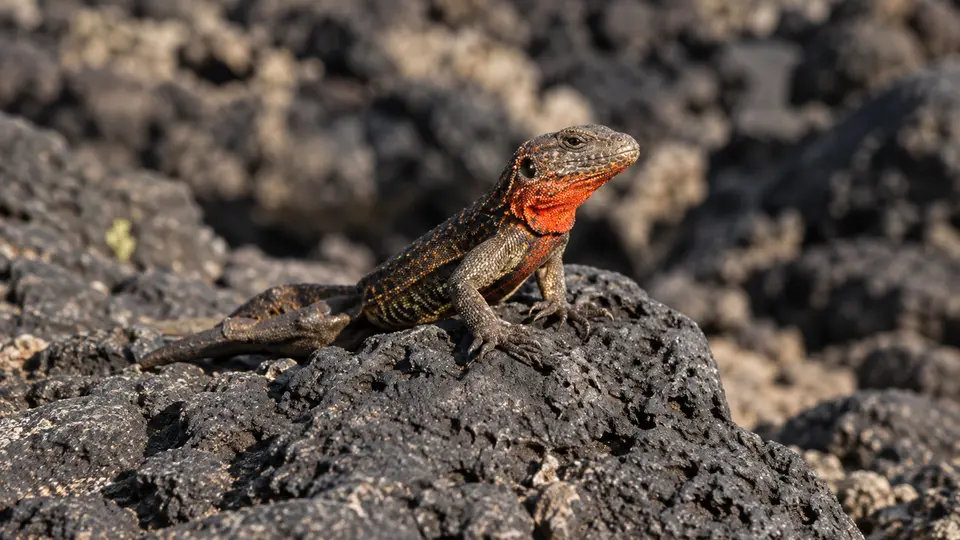
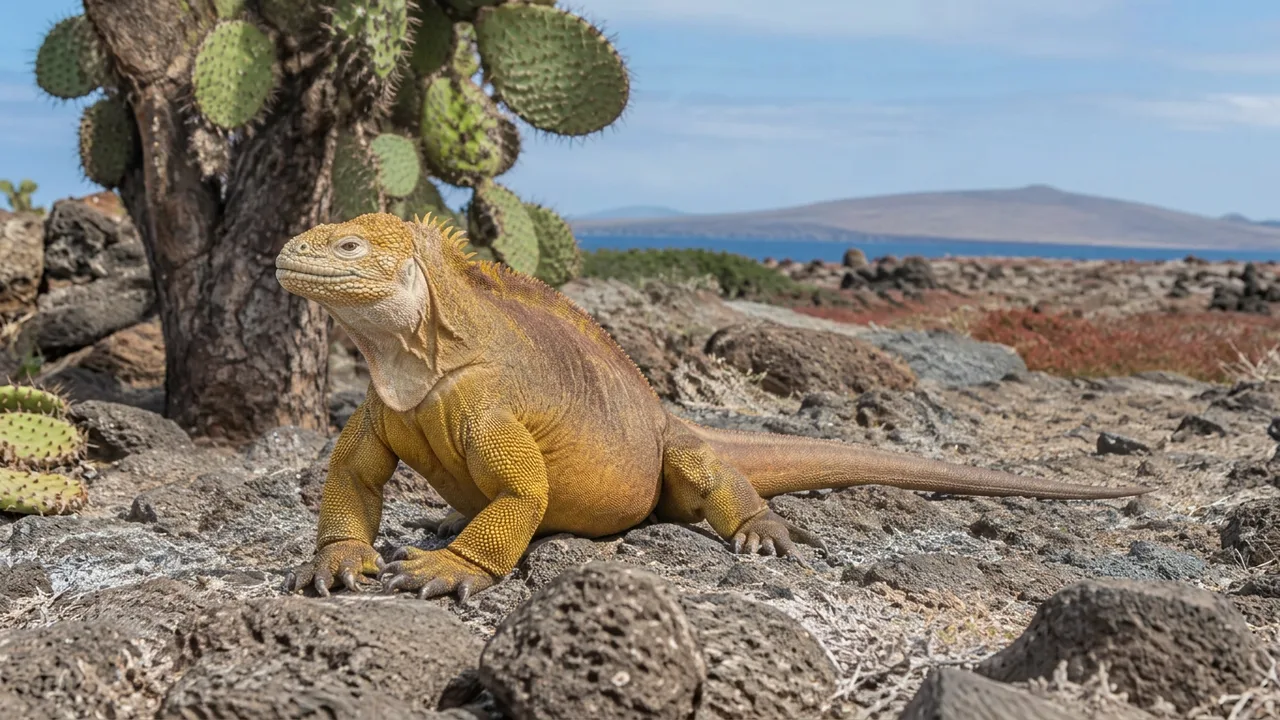
Marine IguanaMarine IguanaGalápagos Land IguanaGalápagos Land IguanaGalápagos Lava LizardGalápagos Lava Lizard
Animal groupReptilesAnimal groupReptilesAnimal groupReptiles
DestinationsGalapagosDestinationsGalapagosDestinationsGalapagos
All wildlife destinations
Plan your trip

Find your next wildlife adventure

Compare destinations, shore programmes and dates with the animals and habitats you would love to see.

  • Naturalist-led shore excursions
  • Responsible wildlife watching
  • Small expedition ships

Newsletter

Take Blue Rides with you

Adventure cruise offers, last-minute deals and trip inspiration.

Free, unsubscribe anytime. Details: Privacy Policy

Partner with Blue Rides

Affiliate Program

Recommend adventure cruises and earn commission on every confirmed booking.

Share. Track. Earn.