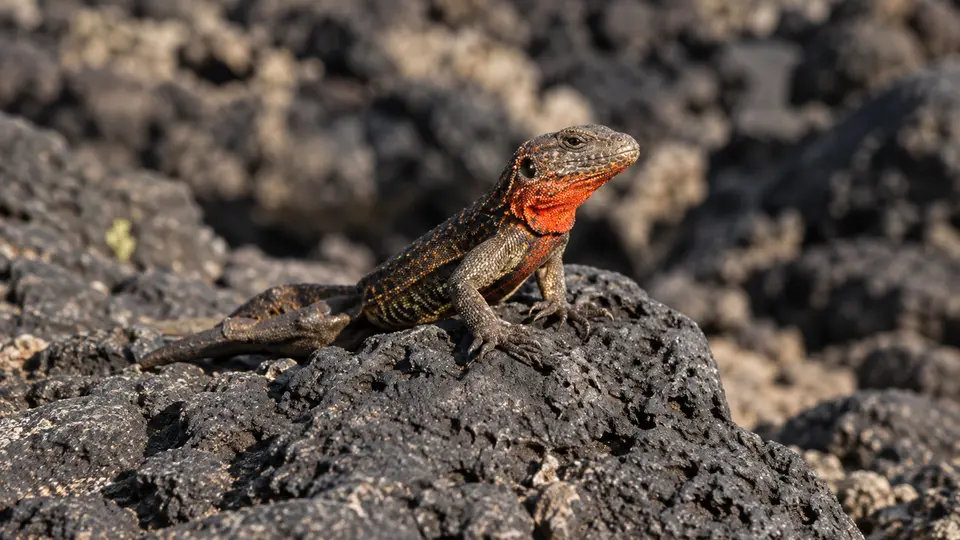
Galápagos Lava Lizard in its natural habitat, AI illustration

Galápagos Lava Lizard: where and when to see them

Reptiles

Galápagos Lava Lizard at a glance

Galápagos lava lizard is a collective label for several endemic Microlophus species, rather than one unambiguous species name. Different islands support different forms, with variation in size, markings and coloration. These small terrestrial lizards are conspicuous members of dry coastal communities, often appearing on sunlit rocks beside visitor paths. An island location is essential for a defensible species identification, so a single scientific name or conservation assessment would be misleading here.

Behaviour & reproduction

Size
Not reliably established
Weight
Not reliably established
Lifespan
Not reliably established
Status
Assessment varies

Lava lizards regulate body temperature by moving between sun, shade and sheltered crevices. Males commonly display with repeated push-up movements and defend small territories against rivals. Females may show bright red or orange facial coloration, but its extent differs among species and individuals. They search actively for small prey, pause on elevated lookout rocks and retreat rapidly when threatened. Specific courtship patterns and seasonal schedules should be described only after the island species is established. Males' push-up displays serve not only to warn off rivals but also to attract mates, often performed from prominent perches within their territory. These lizards are known for their high site fidelity, often returning to the same basking and hunting spots daily.

Top wildlife locations

Galapagos wildlife habitat

Galapagos

Authorized coastal lava and dry-scrub trails provide plausible habitat for the local island species. Many routes need no inland excursion, but the island must be recorded before assigning a species-level identification.

Adventure cruises in Galapagos
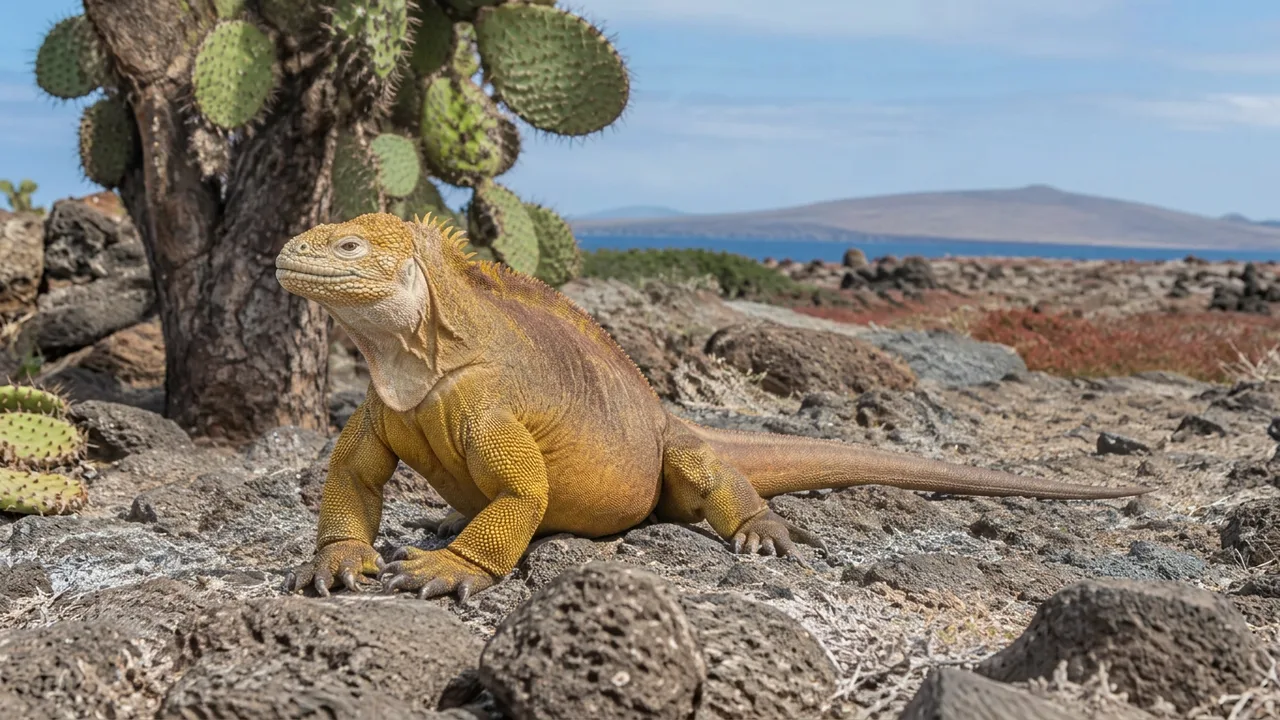
Destinations describe the species' habitat, not guaranteed cruise stops. Some animals require an optional inland excursion or are found in restricted reserves.

Fun facts about the Galápagos Lava Lizard

  • Several distinct endemic species are grouped under this common label.
  • Push-up displays communicate with rivals and potential mates.
  • In many forms, adult males are noticeably larger than females.
  • Tail loss can help escape a predator, but regeneration carries an energetic cost.

Best time to see the Galápagos Lava Lizard

Lava lizards are resident and may be observed year-round on suitable island trails. Activity depends strongly on sunshine and ground temperature, with excessive heat encouraging sheltering. Breeding timing and changes in display coloration vary among species, making a single group-wide breeding season inappropriate. While resident, the most active periods for observation typically coincide with the warmer, sunnier months from December to May, when temperatures are ideal for their ectothermic metabolism. During cooler, cloudy periods, they may be less visible, spending more time in sheltered retreats.

Galápagos Lava Lizard: season matrix by destination

Travel and observation windows vary by region. Highlighted months are an orientation for planning, not confirmed sightings or a guarantee of access.

Galapagos

Year-round group-level observation window; precise size, status and breeding information require identification of the particular island species.

JanFebMarAprMayJunJulAugSepOctNovDec
Cruise ships in Galapagos

Where the Galápagos Lava Lizard lives

The group occupies rocky lava surfaces, dry scrub, sandy patches and coastal vegetation across different islands. Crevices and plant cover provide refuge from heat and predators. Some species also occur farther inland, but each has its own island distribution and habitat limits. Found on nearly all the larger islands and many smaller islets, their presence is often limited by the distribution of suitable sunning and refuge spots. They are often abundant in human-modified environments such as trails and settlements, benefiting from clearings and altered vegetation.

What the Galápagos Lava Lizard eats

Small insects and other arthropods form the dietary core for these lizards. Some also consume flowers, fruit or other plant material when available. Exact prey proportions differ between species, seasons and islands, so one detailed menu cannot represent the entire group accurately. Some larger individuals have been observed preying on other lizards, including smaller lava lizards or even young iguanas, especially during periods of food scarcity. They are opportunistic feeders and will consume carrion or human food scraps if available, although this is not a primary food source.

Species at a glance

Common name
Galápagos Lava Lizard
Scientific name
Name covers more than one taxon
Animal group
Reptiles
Size
Not reliably established
Weight
Not reliably established
Lifespan
Not reliably established
Status
Assessment varies
Identification
Unlike young iguanas, lava lizards are slender with long tapering tails and no prominent dorsal crest, while species identification usually requires the island locality. Beyond island locality, species can sometimes be differentiated by specific patterns of dark spots or blotches, scale characteristics, or subtle variations in body proportion and head shape. Females often exhibit distinct color patterns, particularly around the head and throat, which can aid in distinguishing species.

Galápagos Lava Lizard: frequently asked questions

Where can I see the Galápagos Lava Lizard?
Galapagos. Watch sunlit trail edges without pursuing lizards into cover. Check footing carefully around small animals, avoid touching display rocks or crevices, and never capture one for identification or a closer photograph. Visitors should scan for their characteristic quick movements along sun-warmed rocks and tree trunks near pathways. Binoculars can be useful for observing their subtle display behaviors from a respectful distance without causing disturbance.
When is the best time to see the Galápagos Lava Lizard?
Lava lizards are resident and may be observed year-round on suitable island trails. Activity depends strongly on sunshine and ground temperature, with excessive heat encouraging sheltering. Breeding timing and changes in display coloration vary among species, making a single group-wide breeding season inappropriate. While resident, the most active periods for observation typically coincide with the warmer, sunnier months from December to May, when temperatures are ideal for their ectothermic metabolism. During cooler, cloudy periods, they may be less visible, spending more time in sheltered retreats.
How big does the Galápagos Lava Lizard get?
Not reliably established. Adult weight: Not reliably established. Size varies with age, sex and population.
How should I behave around the Galápagos Lava Lizard?
Watch sunlit trail edges without pursuing lizards into cover. Check footing carefully around small animals, avoid touching display rocks or crevices, and never capture one for identification or a closer photograph. Visitors should scan for their characteristic quick movements along sun-warmed rocks and tree trunks near pathways. Binoculars can be useful for observing their subtle display behaviors from a respectful distance without causing disturbance.
What does the Galápagos Lava Lizard eat?
Small insects and other arthropods form the dietary core for these lizards. Some also consume flowers, fruit or other plant material when available. Exact prey proportions differ between species, seasons and islands, so one detailed menu cannot represent the entire group accurately. Some larger individuals have been observed preying on other lizards, including smaller lava lizards or even young iguanas, especially during periods of food scarcity. They are opportunistic feeders and will consume carrion or human food scraps if available, although this is not a primary food source.
Are wildlife sightings guaranteed on an adventure cruise?
No. Animals move freely and routes, weather, access restrictions and local conditions influence every outing. Confirm the actual itinerary and shore program before booking.

Compare wildlife in the same destinations

Explore other reptiles recorded in these destinations. Similar surroundings do not mean the animals share the same habits or viewing season.

Species comparison by animal group and destination
Galápagos Lava LizardGalápagos Lava LizardGalápagos Land IguanaGalápagos Land IguanaGalápagos Pink Land IguanaGalápagos Pink Land Iguana
Animal groupReptilesAnimal groupReptilesAnimal groupReptiles
DestinationsGalapagosDestinationsGalapagosDestinationsGalapagos
All wildlife destinations
Plan your trip

Find your next wildlife adventure

Compare destinations, shore programs and dates with the animals and habitats you would love to see.

  • Naturalist-led shore excursions
  • Responsible wildlife watching
  • Small expedition ships

Newsletter

Take Blue Rides with you

Adventure cruise offers, last-minute deals and trip inspiration.

Free, unsubscribe anytime. Details: Privacy Policy

Partner with Blue Rides

Affiliate Program

Recommend adventure cruises and earn commission on every confirmed booking.

Share. Track. Earn.

Your footage, our stage

Send us your videos or pictures.

Captured beautiful landscapes or wildlife? Share your videos and pictures with us, we may feature them on Blue Rides.
