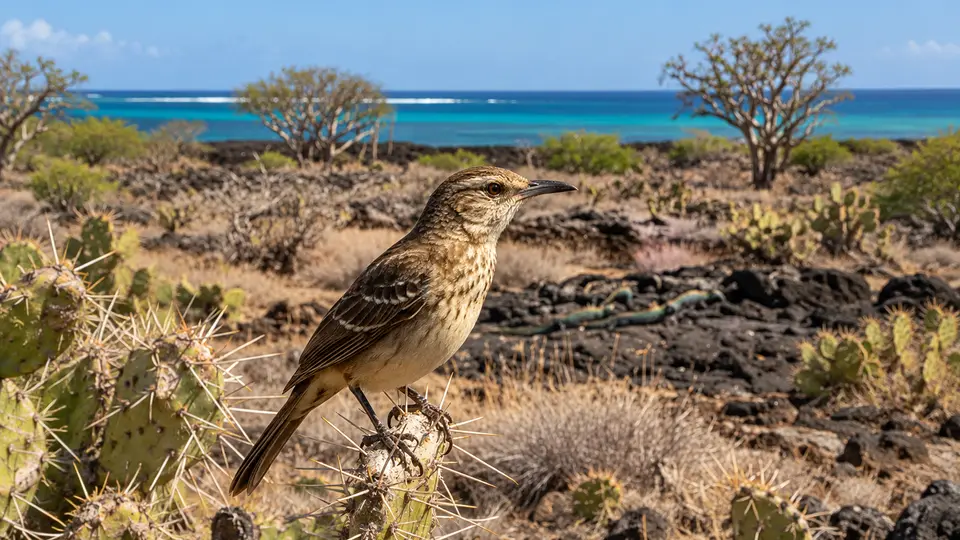
Galápagos Mockingbird in its natural habitat

Galápagos MockingbirdMimus parvulusWhere and when to see them

Galápagos Mockingbird at a glance

The Galápagos mockingbird is the most widespread of the archipelago's four endemic mockingbird species. A long-tailed, gray-brown bird with a curved bill, it is often conspicuous around scrub and open woodland. Its broad diet and social flexibility help it exploit strongly seasonal island environments. Despite the general-sounding English name, it is a particular species, not a collective term for the distinct mockingbirds of Española, Floreana and San Cristóbal.

Behaviour & reproduction

Size
25–26 cm long
Weight
40–60 g
Lifespan
Not reliably established
Status
Least Concern

Birds forage on the ground and in vegetation, moving with quick steps and investigating leaves, crevices and unfamiliar objects. Territorial groups may contain a breeding pair and additional birds that assist with defense or chick care. Calls and song help maintain contact and advertise occupancy. Curious individuals sometimes approach visitors, but feeding can alter their behavior and concentrate birds unnaturally. Nest defense may become conspicuous when an intruder passes nearby. Mockingbirds are known for their complex songs, often mimicking other bird species and incorporating various calls. Cooperative breeding is common in this species, with offspring from previous broods assisting their parents in raising new chicks. These birds are highly territorial and will actively chase away perceived threats, including other birds or even much larger animals.

Top wildlife locations

Galapagos wildlife habitat

Galapagos

Coastal scrub trails on islands within this species' range offer plausible viewing without a major inland excursion. Island identity matters because Española, San Cristóbal and the Floreana region support different endemic mockingbirds.
Destinations describe the species' habitat, not guaranteed cruise stops. Some animals require an optional inland excursion or are found in restricted reserves.

Fun facts about the Galápagos Mockingbird

  • It is one of four endemic mockingbird species in the archipelago.
  • Some groups include helpers that assist the breeding pair.
  • Darwin's island mockingbird specimens helped shape his thinking about species change.
  • Its diet combines animal prey with fruit, seeds and nectar.

Best time to see the Galápagos Mockingbird

Resident birds can be observed throughout the year where their range overlaps permitted trails. Rainfall during the warmer months often increases food and nesting activity, but timing is variable. Local island identity is more important than season when distinguishing this species from related mockingbirds. Breeding activity peaks during the wet season when insect populations are abundant, providing ample food for chicks. However, these opportunistic breeders can attempt nesting in any month if conditions, particularly food availability, are favorable. Observing nesting birds requires patience as nests are often well-concealed within dense vegetation.

Galápagos Mockingbird: season matrix by destination

Travel and observation windows vary by region. Highlighted months are an orientation for planning, not confirmed sightings or a guarantee of access.

Galapagos

Year-round resident window on appropriate islands; breeding responds to local conditions rather than a uniform archipelago-wide calendar.

JanFebMarAprMayJunJulAugSepOctNovDec
Cruise ships in Galapagos

Where the Galápagos Mockingbird lives

Arid scrub, cactus woodland and more humid vegetation zones support this species on several islands. It uses both ground cover and shrubs or trees for feeding and nesting. Its distribution must be separated from islands occupied by the other endemic mockingbird species. This species exhibits adaptability, thriving in diverse island habitats from coastal zones to higher elevations. Specific island populations may show preferences for certain vegetation types, such as dry forest or shrubland. They often utilize thorny bushes for nesting protection against predators.

What the Galápagos Mockingbird eats

Its varied diet includes insects, other invertebrates, fruit, seeds, nectar and occasional small vertebrates or eggs. Birds investigate many potential food sources as seasonal conditions change. Human food is neither necessary nor appropriate, even when individuals appear interested in bags or bottles. Foraging occurs both on the ground and in shrubs, with birds often flipping over leaves or probing bark for hidden invertebrates. Their ability to switch between food sources, including scavenging carrion, contributes to their survival during lean periods. Adult birds also feed regurgitated food to their young.

Species at a glance

Common name
Galápagos Mockingbird
Scientific name
Mimus parvulus
Animal group
Birds
Size
25–26 cm long
Weight
40–60 g
Lifespan
Not reliably established
Status
Least Concern
Identification
Compared with the Española mockingbird, it has a shorter, less strongly curved bill, although island locality is often the clearest distinction among Galápagos mockingbirds. The Galápagos mockingbird has a streaky grey brown plumage with a whitish belly and a dark eye stripe. Its medium length tail is often cocked upwards, and it has relatively long legs. Distinguishing individuals can be challenging, but subtle variations in bill length and plumage tone exist across islands.

Galápagos Mockingbird: frequently asked questions

Where can I see the Galápagos Mockingbird?
Galapagos. Let curious birds approach or withdraw on their own, keeping food and drink secured. Avoid nests and defensive groups, and never use food, water or playback to create a closer encounter. On smaller islands or islets, these birds can be particularly bold due to limited human interaction, sometimes perching on visitor's shoulders or hats. Maintaining a respectful distance is crucial for their well being, allowing them to exhibit natural behaviors without disturbance. Keep your eyes peeled for birds on the ground near trails, as they are often very active in these areas.
When is the best time to see the Galápagos Mockingbird?
Resident birds can be observed throughout the year where their range overlaps permitted trails. Rainfall during the warmer months often increases food and nesting activity, but timing is variable. Local island identity is more important than season when distinguishing this species from related mockingbirds. Breeding activity peaks during the wet season when insect populations are abundant, providing ample food for chicks. However, these opportunistic breeders can attempt nesting in any month if conditions, particularly food availability, are favorable. Observing nesting birds requires patience as nests are often well-concealed within dense vegetation.
How big does the Galápagos Mockingbird get?
25–26 cm long. Adult weight: 40–60 g. Size varies with age, sex and population.
How should I behave around the Galápagos Mockingbird?
Let curious birds approach or withdraw on their own, keeping food and drink secured. Avoid nests and defensive groups, and never use food, water or playback to create a closer encounter. On smaller islands or islets, these birds can be particularly bold due to limited human interaction, sometimes perching on visitor's shoulders or hats. Maintaining a respectful distance is crucial for their well being, allowing them to exhibit natural behaviors without disturbance. Keep your eyes peeled for birds on the ground near trails, as they are often very active in these areas.
What does the Galápagos Mockingbird eat?
Its varied diet includes insects, other invertebrates, fruit, seeds, nectar and occasional small vertebrates or eggs. Birds investigate many potential food sources as seasonal conditions change. Human food is neither necessary nor appropriate, even when individuals appear interested in bags or bottles. Foraging occurs both on the ground and in shrubs, with birds often flipping over leaves or probing bark for hidden invertebrates. Their ability to switch between food sources, including scavenging carrion, contributes to their survival during lean periods. Adult birds also feed regurgitated food to their young.
Are wildlife sightings guaranteed on an adventure cruise?
No. Animals move freely and routes, weather, access restrictions and local conditions influence every outing. Confirm the actual itinerary and shore program before booking.

Compare wildlife in the same destinations

Explore other birds recorded in these destinations. Similar surroundings do not mean the animals share the same habits or viewing season.

Species comparison by animal group and destination
Galápagos MockingbirdGalápagos MockingbirdAmerican FlamingoAmerican FlamingoBarn OwlBarn Owl
Animal groupBirdsAnimal groupBirdsAnimal groupBirds
DestinationsGalapagosDestinationsGalapagos, MexicoDestinationsGalapagos
All wildlife destinations
Plan your trip

Find your next wildlife adventure

Compare destinations, shore programs and dates with the animals and habitats you would love to see.

  • Naturalist-led shore excursions
  • Responsible wildlife watching
  • Small expedition ships

Newsletter

Take Blue Rides with you

Adventure cruise offers, last-minute deals and trip inspiration.

Free, unsubscribe anytime. Details: Privacy Policy

Partner with Blue Rides

Affiliate Program

Recommend adventure cruises and earn commission on every confirmed booking.

Share. Track. Earn.

Your footage, our stage

Send us your videos or pictures.

Captured remarkable nature or wildlife on your journey? Share it with us, we may feature it on Blue Rides.