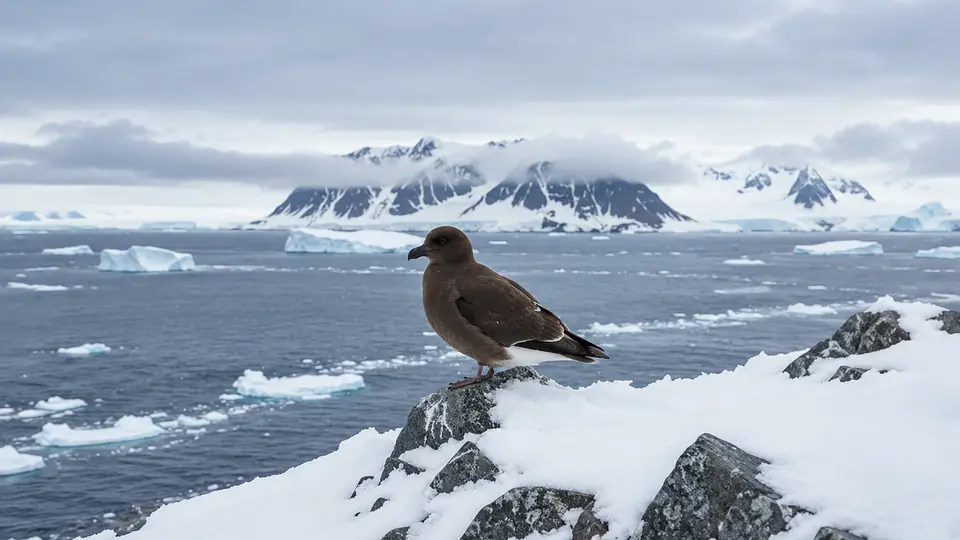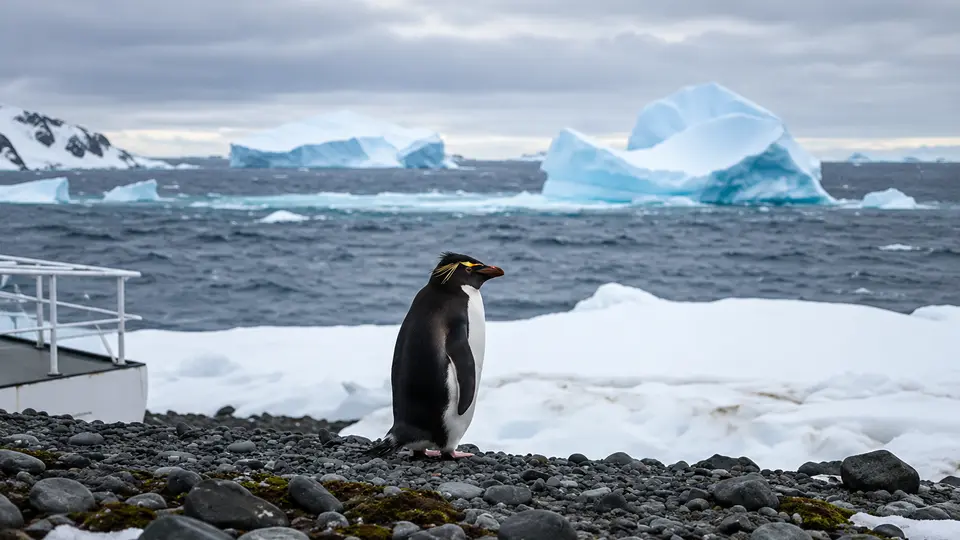
Macaroni Penguin in its natural habitat, AI illustration
Size65–75 cm tallLifespanNot reliably establishedStatusVulnerable

Macaroni Penguin: where and when to see them

Eudyptes chrysolophus

Macaroni Penguin at a glance

The macaroni penguin is a robust crested penguin of the Southern Ocean, recognized by bright yellow-orange plumes that meet across its forehead. It breeds mainly on subantarctic islands rather than the Antarctic continent itself. Enormous colonies can occupy steep, noisy coastal slopes, but geographic abundance is uneven and several populations have declined. Its life alternates between concentrated periods ashore for breeding or moulting and extensive movements at sea in search of food.

Behaviour & reproduction

Size
65–75 cm tall
Weight
3.5–6.5 kg
Lifespan
Not reliably established
Status
Vulnerable

Macaroni penguins return to dense colonies for a tightly seasonal breeding cycle. Pairs use calls and displays to recognize one another amid the crowd. Females normally lay two differently sized eggs, but the smaller first egg usually fails and only one chick is raised. Parents alternate incubation and feeding duties, with chicks later gathering in groups. After breeding, adults build reserves before remaining ashore for a complete annual moult. Courtship involves head-shaking, bowing, and mutual preening, reinforcing pair bonds. After moulting, adults spend several months exclusively at sea before returning to the colonies for the next breeding cycle.

Top wildlife locations

Antarctica wildlife habitat

Antarctica

Macaroni penguins are rare on standard Antarctic Peninsula routes; most colonies lie on subantarctic islands. Rocky colony shores may be inaccessible, with any permitted observation limited to designated viewpoints or distant decks.

Adventure cruises in Antarctica
Destinations describe the species' habitat, not guaranteed cruise stops. Some animals require an optional inland excursion or are found in restricted reserves.

Fun facts about the Macaroni Penguin

  • The name recalls the extravagant dress of eighteenth-century 'macaroni' fashion.
  • The first egg is markedly smaller than the second and usually does not produce a surviving chick.
  • Breeding adults recognize mates and offspring through vocal cues in crowded colonies.
  • Their principal breeding strongholds lie north of the Antarctic continent on subantarctic islands.

Best time to see the Macaroni Penguin

Austral summer, broadly November through March, offers the relevant regional travel window. Nesting, chick-rearing and moulting occur at different stages within it. Most standard Antarctic Peninsula itineraries do not reach major colonies, so species-specific access depends strongly on the permitted route. Early in the season, adults arrive at breeding sites and courtship rituals begin. By late summer, fledged chicks depart for the open ocean and adults undergo their annual feather replacement.

Macaroni Penguin: season matrix by destination

Travel and observation windows vary by region. Highlighted months are an orientation for planning, not confirmed sightings or a guarantee of access.

Antarctica

This is the regional austral-summer travel window, not evidence that a particular itinerary reaches an accessible macaroni penguin colony.

JanFebMarAprMayJunJulAugSepOctNovDec
Cruise ships in Antarctica

Where the Macaroni Penguin lives

Breeding colonies occupy rocky shores, tussock-covered slopes and exposed coastal ground on subantarctic islands and a few maritime Antarctic sites. At sea, birds use cold, productive Southern Ocean waters. Many colonies are remote, steep or otherwise inaccessible to ordinary visitors. These colonial nesters favor sheltered coves or valleys offering some protection from prevailing winds. Their breeding grounds often show significant modification from guano accumulation and trampling by generations of birds.

What the Macaroni Penguin eats

Krill are important prey across much of the range, with other crustaceans, small fish and squid contributing regionally. Food composition changes with season and ocean conditions. Breeding adults must obtain enough prey for themselves and their chick while repeatedly returning to the colony. Prey capture generally occurs during short, shallow dives, though they are capable of deeper excursions when necessary. The daily energy demands are particularly high during chick-rearing, requiring consistent and successful foraging trips.

Species at a glance

Common name
Macaroni Penguin
Scientific name
Eudyptes chrysolophus
Animal group
Birds
Size
65–75 cm tall
Weight
3.5–6.5 kg
Lifespan
Not reliably established
Status
Vulnerable
Identification
Macaroni penguins have a black face and orange-yellow crest joining across the forehead, unlike white-faced royal penguins and the separated crest lines of rockhopper penguins. Their robust bill is deep orange-brown, and their eyes are a striking reddish-brown, often appearing very dark. The orange-yellow crest feathers are shaggy and extend backwards from the forehead, creating a distinctive bushy appearance.

Macaroni Penguin: frequently asked questions

Where can I see the Macaroni Penguin?
Antarctica. Watch only from authorized paths, designated viewpoints or a vessel's deck. Keep penguin routes between colony and sea clear, avoid guano-covered slippery slopes and follow local minimum distances. Never approach moulting birds to provoke movement. Be mindful of their rapid and sometimes erratic movements on land, especially when approaching or leaving the sea. When observing from a distance, binoculars can help appreciate details of their crest and facial features.
When is the best time to see the Macaroni Penguin?
Austral summer, broadly November through March, offers the relevant regional travel window. Nesting, chick-rearing and moulting occur at different stages within it. Most standard Antarctic Peninsula itineraries do not reach major colonies, so species-specific access depends strongly on the permitted route. Early in the season, adults arrive at breeding sites and courtship rituals begin. By late summer, fledged chicks depart for the open ocean and adults undergo their annual feather replacement.
How big does the Macaroni Penguin get?
65–75 cm tall. Adult weight: 3.5–6.5 kg. Size varies with age, sex and population.
How should I behave around the Macaroni Penguin?
Watch only from authorized paths, designated viewpoints or a vessel's deck. Keep penguin routes between colony and sea clear, avoid guano-covered slippery slopes and follow local minimum distances. Never approach moulting birds to provoke movement. Be mindful of their rapid and sometimes erratic movements on land, especially when approaching or leaving the sea. When observing from a distance, binoculars can help appreciate details of their crest and facial features.
What does the Macaroni Penguin eat?
Krill are important prey across much of the range, with other crustaceans, small fish and squid contributing regionally. Food composition changes with season and ocean conditions. Breeding adults must obtain enough prey for themselves and their chick while repeatedly returning to the colony. Prey capture generally occurs during short, shallow dives, though they are capable of deeper excursions when necessary. The daily energy demands are particularly high during chick-rearing, requiring consistent and successful foraging trips.
Are wildlife sightings guaranteed on an adventure cruise?
No. Animals move freely and routes, weather, access restrictions and local conditions influence every outing. Confirm the actual itinerary and shore programme before booking.

Compare wildlife in the same destinations

Explore other birds recorded in these destinations. Similar surroundings do not mean the animals share the same habits or viewing season.

Species comparison by animal group and destination
Macaroni PenguinMacaroni PenguinAdélie PenguinAdélie PenguinAntarctic PetrelAntarctic Petrel
Animal groupBirdsAnimal groupBirdsAnimal groupBirds
DestinationsAntarcticaDestinationsAntarcticaDestinationsAntarctica
All wildlife destinations
Plan your trip

Find your next wildlife adventure

Compare destinations, shore programmes and dates with the animals and habitats you would love to see.

  • Naturalist-led shore excursions
  • Responsible wildlife watching
  • Small expedition ships

Newsletter

Take Blue Rides with you

Adventure cruise offers, last-minute deals and trip inspiration.

Free, unsubscribe anytime. Details: Privacy Policy

Partner with Blue Rides

Affiliate Program

Recommend adventure cruises and earn commission on every confirmed booking.

Share. Track. Earn.