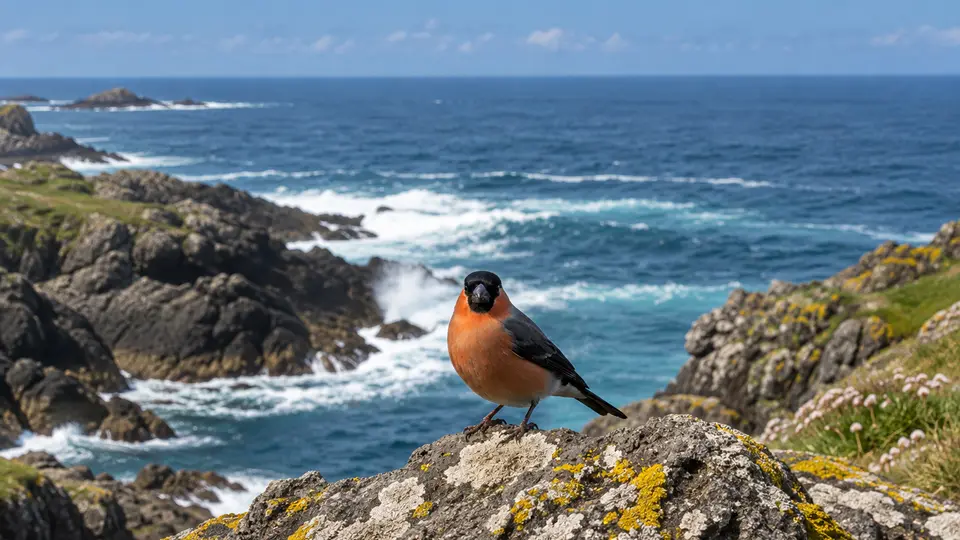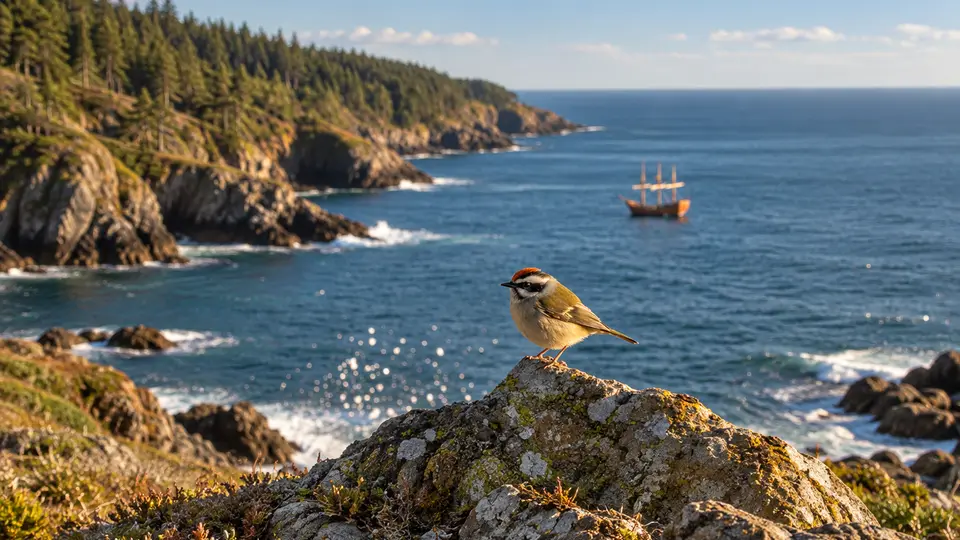
Madeira Firecrest in its natural habitat

Madeira FirecrestRegulus madeirensisWhere and when to see them

Madeira Firecrest at a glance

The Madeira firecrest is a tiny bird endemic to the island of Madeira. Once treated as a form of common firecrest, it is now recognized as a separate species with distinctive vocalizations and plumage details. It is particularly associated with the island's humid wooded landscapes, including native laurel forest. Despite its bright crown, it can be difficult to locate among moving leaves, and its thin calls often reveal it before its appearance does.

Behaviour & reproduction

Size
9–10 cm (3.5–3.9 in) long
Weight
5–7 g (0.18–0.25 oz)
Lifespan
Not reliably established
Status
Least Concern

Madeira firecrests search foliage almost continuously, hopping along fine branches and briefly hovering to inspect leaves. They often hang beneath twigs while picking off small prey. During breeding, males sing and display their coloured crowns in territorial encounters. Outside the nesting period, birds may join loose feeding groups. Their small size and rapid movements demand patient observation, especially when they remain high in dense forest canopy or wind-stirred vegetation. They maintain constant vigilance, often flicking their wings and tails as they move through branches. During the non breeding season, they may form mixed species flocks with other small passerines like chiffchaffs, adding an extra challenge for observers.

Top wildlife locations

Portugal wildlife habitat

Portugal

An inland excursion into Madeira's wooded hills is normally required; mainland Portugal is outside its natural range. Established forest paths provide viewing habitat, while exposed shores offer little realistic opportunity.
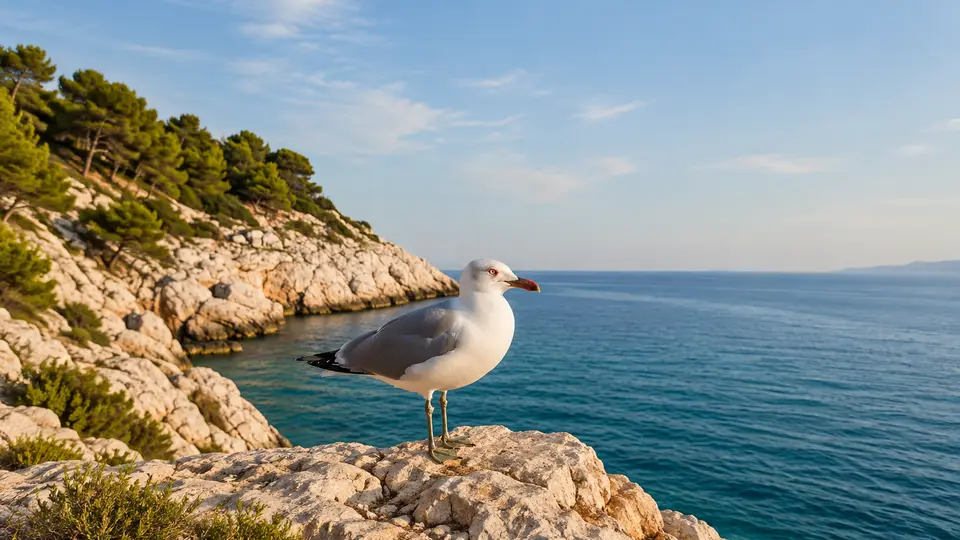
Destinations describe the species' habitat, not guaranteed cruise stops. Some animals require an optional inland excursion or are found in restricted reserves.

Fun facts about the Madeira Firecrest

  • Its natural range is confined to Madeira island.
  • Males have a more orange crown centre, while females show a yellower crown.
  • The nest is a small suspended cup woven into vegetation.
  • Its scientific name directly references Madeira.

Best time to see the Madeira Firecrest

Resident birds can be sought throughout the year. Spring and early summer offer increased song activity, which can make locating territories easier. Forest visibility and safe trail conditions depend on cloud, rain and wind, so coastal sunshine does not guarantee favourable upland conditions. Breeding activity peaks from April to June, when males are most vocal and conspicuous. The island's mild climate means these birds remain active and can be located even during the winter months, albeit with less song.

Madeira Firecrest: season matrix by destination

Travel and observation windows vary by region. Highlighted months are an orientation for planning, not confirmed sightings or a guarantee of access.

Portugal

A practical forest-walking window with spring song activity; the species is resident year-round, and upland weather can restrict access in any month.

JanFebMarAprMayJunJulAugSepOctNovDec
Cruise ships in Portugal

Where the Madeira Firecrest lives

The species inhabits Madeira's laurel forest, heath woodland and other wooded habitats, including some planted stands. Moist vegetation and abundant small invertebrates are important. Reliable habitat generally requires an inland forest excursion rather than observation from an exposed coastal promenade. They are particularly associated with laurel forest dominated by species like Laurus novocanariensis and Ocotea foetens. While generally an upland species, they can sometimes be found in lower elevation ravines and gardens with suitable dense vegetation.

What the Madeira Firecrest eats

Madeira firecrests eat small arthropods, including insects, their eggs and larvae, and spiders. Most food is gleaned from foliage and slender branches. Their fine bills allow precise picking, while short hovering movements help reach prey on leaves that cannot support their weight. In winter months, their diet may also include a small proportion of plant material, such as nectar from flowering plants. Their agile foraging allows them to exploit a wide array of microhabitats on leaves and bark.

Species at a glance

Common name
Madeira Firecrest
Scientific name
Regulus madeirensis
Animal group
Birds
Size
9–10 cm (3.5–3.9 in) long
Weight
5–7 g (0.18–0.25 oz)
Lifespan
Not reliably established
Status
Least Concern
Identification
Compared with common firecrest, Madeira firecrest has a shorter white eyebrow and distinctive song, while its bold facial pattern separates it from the plainer-faced goldcrest. The Madeira firecrest is slightly larger and has a proportionally longer bill than the common firecrest. Its facial pattern includes a broad black eye-stripe and a bright orange-gold crown stripe, which is more intense in males.

Madeira Firecrest: frequently asked questions

Where can I see the Madeira Firecrest?
Portugal. Listen quietly along established forest trails and scan outer foliage without using playback. Stay back from suspended nests and avoid leaving paths on wet slopes. Carry rain protection, since Madeira's forest weather can change quickly. Binoculars are essential for observing these tiny, active birds, which often forage high in the canopy. Look for small, rapid movements and listen for their distinctive, rapid trilling song which helps pinpoint their location.
When is the best time to see the Madeira Firecrest?
Resident birds can be sought throughout the year. Spring and early summer offer increased song activity, which can make locating territories easier. Forest visibility and safe trail conditions depend on cloud, rain and wind, so coastal sunshine does not guarantee favourable upland conditions. Breeding activity peaks from April to June, when males are most vocal and conspicuous. The island's mild climate means these birds remain active and can be located even during the winter months, albeit with less song.
How big does the Madeira Firecrest get?
9–10 cm (3.5–3.9 in) long. Adult weight: 5–7 g (0.18–0.25 oz). Size varies with age, sex and population.
How should I behave around the Madeira Firecrest?
Listen quietly along established forest trails and scan outer foliage without using playback. Stay back from suspended nests and avoid leaving paths on wet slopes. Carry rain protection, since Madeira's forest weather can change quickly. Binoculars are essential for observing these tiny, active birds, which often forage high in the canopy. Look for small, rapid movements and listen for their distinctive, rapid trilling song which helps pinpoint their location.
What does the Madeira Firecrest eat?
Madeira firecrests eat small arthropods, including insects, their eggs and larvae, and spiders. Most food is gleaned from foliage and slender branches. Their fine bills allow precise picking, while short hovering movements help reach prey on leaves that cannot support their weight. In winter months, their diet may also include a small proportion of plant material, such as nectar from flowering plants. Their agile foraging allows them to exploit a wide array of microhabitats on leaves and bark.
Are wildlife sightings guaranteed on an adventure cruise?
No. Animals move freely and routes, weather, access restrictions and local conditions influence every outing. Confirm the actual itinerary and shore program before booking.

Compare wildlife in the same destinations

Explore other birds recorded in these destinations. Similar surroundings do not mean the animals share the same habits or viewing season.

Species comparison by animal group and destination
Madeira FirecrestMadeira FirecrestAudouin's GullAudouin's GullAzores BullfinchAzores Bullfinch
Animal groupBirdsAnimal groupBirdsAnimal groupBirds
DestinationsPortugalDestinationsCroatia, Greece, Portugal, TurkeyDestinationsPortugal
Scientific nameRegulus madeirensisScientific nameScientific name
All wildlife destinations
Plan your trip

Find your next wildlife adventure

Compare destinations, shore programs and dates with the animals and habitats you would love to see.

  • Naturalist-led shore excursions
  • Responsible wildlife watching
  • Small expedition ships