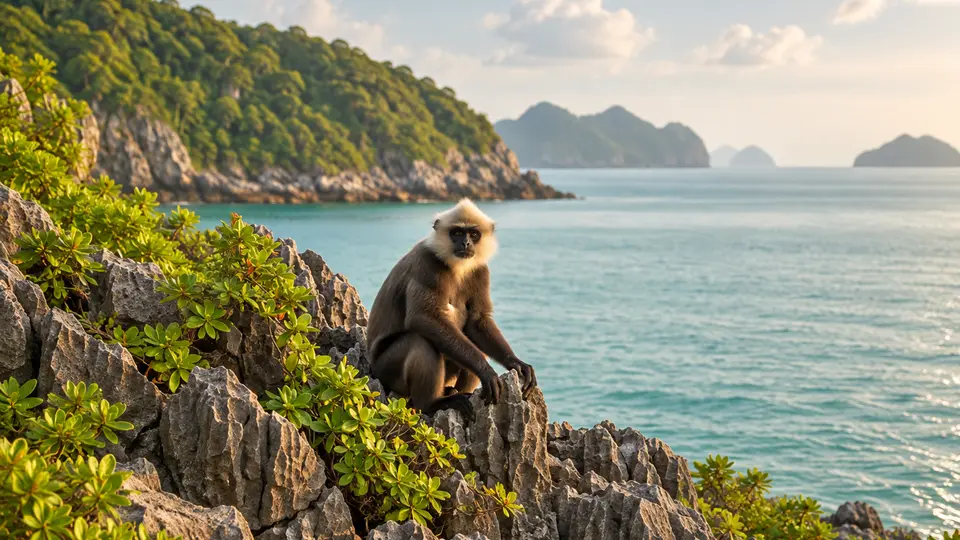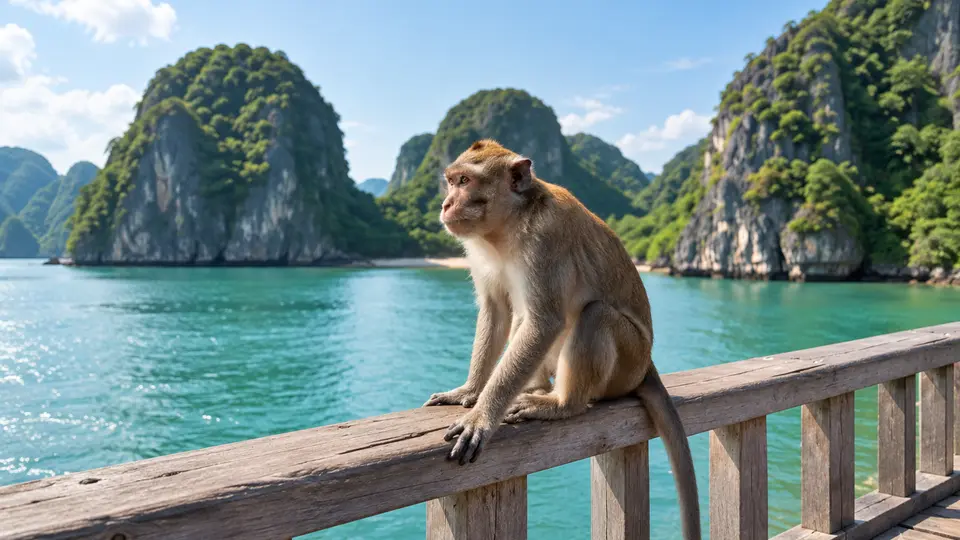
Long-tailed macaque in its natural habitat, AI illustration

Long-tailed macaqueMacaca fascicularisWhere and when to see them

Long-tailed macaque at a glance

The long-tailed macaque is an adaptable Southeast Asian monkey found in forests, mangroves and some human-modified landscapes. A tail often as long as the body helps distinguish it from several neighbouring macaques. Its familiarity around tourist sites can obscure serious conservation pressures, including capture, habitat loss and persecution. In Vietnam, coastal populations may use mangrove edges and islands, but abundance at a few provisioned locations does not reflect the species' overall security.

Behaviour & reproduction

Size
38–65 cm head and body; tail 40–65 cm
Weight
3–9 kg
Lifespan
Not reliably established
Status
Endangered

Long-tailed macaques live in multi-male, multi-female groups with structured dominance relationships. Females commonly remain in their birth group, while males usually disperse. Grooming maintains social bonds, and individuals use varied calls and facial expressions. They forage both on the ground and in trees, exploiting tidal resources in some coastal habitats. Where people feed them, animals may become assertive, steal bags and spend less time finding natural foods. Group sizes are variable, ranging from small family units to larger troops of several dozen individuals, often with multiple adult males. Infants are born with black fur which gradually lightens to the adult coloration within a few months, aiding in their recognition within the group structure.

Top wildlife locations

Vietnam wildlife habitat

Vietnam

Southern mangrove reserves and some coastal forest sites offer plausible viewing from established paths. A road excursion may be required, and localized tourist-site abundance should not be mistaken for widespread secure populations.
Destinations describe the species' habitat, not guaranteed cruise stops. Some animals require an optional inland excursion or are found in restricted reserves.

Fun facts about the Long-tailed macaque

  • Females often remain with their maternal relatives throughout life.
  • Cheek pouches allow food to be stored temporarily while foraging.
  • Some populations use stones to open shellfish, but this behaviour is not universal.
  • The alternative name crab-eating macaque describes only part of its highly varied diet.

Best time to see the Long-tailed macaque

Observation is possible throughout the year where groups remain in accessible habitat. In southern Vietnam, the drier months often make mangrove paths and coastal excursions more practical. This travel window is not a species-wide breeding season, and local group movements remain variable. While generally observable year-round, local conservation efforts or ecotourism initiatives might offer specific guided tours during certain periods. Understanding seasonal fruit availability or local agricultural cycles can sometimes predict where groups might be concentrated.

Long-tailed macaque: season matrix by destination

Travel and observation windows vary by region. Highlighted months are an orientation for planning, not confirmed sightings or a guarantee of access.

Vietnam

These are generally practical dry-season months in southern Vietnam, not a breeding window or guarantee of group presence.

JanFebMarAprMayJunJulAugSepOctNovDec
Cruise ships in Vietnam

Where the Long-tailed macaque lives

Natural habitats include lowland evergreen forest, riverine woodland, mangroves and coastal forest. The species also occupies forest edges, plantations and settlements where food is available. Coastal groups need connected vegetation and safe resting trees, even when frequently seen on open ground. They are highly adaptable and often thrive in human-modified landscapes, frequently found in proximity to human settlements, agricultural areas, and temples. Their ability to utilize both arboreal and terrestrial environments contributes to their success across diverse habitats, including islands and fragmented forests.

What the Long-tailed macaque eats

Fruit is a major food, supplemented by seeds, leaves, flowers, insects and other small animals. Coastal groups may take crabs and shellfish. Human food can become important at tourist sites, but provisioning alters behaviour and can worsen conflict and health problems. Their opportunistic diet makes them important seed dispersers in forest ecosystems, but also brings them into conflict with farmers. In coastal areas, they exhibit unique foraging behaviors, overturning stones and probing mudflats to find molluscs and crustaceans.

Species at a glance

Common name
Long-tailed macaque
Scientific name
Macaca fascicularis
Animal group
Mammals
Size
38–65 cm head and body; tail 40–65 cm
Weight
3–9 kg
Lifespan
Not reliably established
Status
Endangered
Identification
Compared with rhesus and pig-tailed macaques, long-tailed macaques usually have a much longer tail, a relatively slender build and a pointed or swept-back crown. Key distinguishing features include their reddish-brown to grayish fur, with lighter undersides and often a darker crown patch. Their facial skin is typically dark gray, and they possess cheek pouches for temporarily storing food items.

Long-tailed macaque: frequently asked questions

Where can I see the Long-tailed macaque?
Vietnam. Keep food and loose belongings concealed, avoid staring or baring teeth, and give groups room to pass. Never feed or touch macaques. If bitten or scratched, wash the wound promptly and seek urgent medical advice. Be aware that these macaques are highly intelligent and learn quickly, especially regarding human behavior and food sources. They often approach boats or vehicles with little fear, so maintain a respectful distance to avoid reinforcing dependency or aggression.
When is the best time to see the Long-tailed macaque?
Observation is possible throughout the year where groups remain in accessible habitat. In southern Vietnam, the drier months often make mangrove paths and coastal excursions more practical. This travel window is not a species-wide breeding season, and local group movements remain variable. While generally observable year-round, local conservation efforts or ecotourism initiatives might offer specific guided tours during certain periods. Understanding seasonal fruit availability or local agricultural cycles can sometimes predict where groups might be concentrated.
How big does the Long-tailed macaque get?
38–65 cm head and body; tail 40–65 cm. Adult weight: 3–9 kg. Size varies with age, sex and population.
How should I behave around the Long-tailed macaque?
Keep food and loose belongings concealed, avoid staring or baring teeth, and give groups room to pass. Never feed or touch macaques. If bitten or scratched, wash the wound promptly and seek urgent medical advice. Be aware that these macaques are highly intelligent and learn quickly, especially regarding human behavior and food sources. They often approach boats or vehicles with little fear, so maintain a respectful distance to avoid reinforcing dependency or aggression.
What does the Long-tailed macaque eat?
Fruit is a major food, supplemented by seeds, leaves, flowers, insects and other small animals. Coastal groups may take crabs and shellfish. Human food can become important at tourist sites, but provisioning alters behaviour and can worsen conflict and health problems. Their opportunistic diet makes them important seed dispersers in forest ecosystems, but also brings them into conflict with farmers. In coastal areas, they exhibit unique foraging behaviors, overturning stones and probing mudflats to find molluscs and crustaceans.
Are wildlife sightings guaranteed on an adventure cruise?
No. Animals move freely and routes, weather, access restrictions and local conditions influence every outing. Confirm the actual itinerary and shore program before booking.

Compare wildlife in the same destinations

Explore other mammals recorded in these destinations. Similar surroundings do not mean the animals share the same habits or viewing season.

Species comparison by animal group and destination
Long-tailed macaqueLong-tailed macaqueBryde's WhaleBryde's WhaleCat Ba langurCat Ba langur
Animal groupMammalsAnimal groupMammalsAnimal groupMammals
DestinationsVietnamDestinationsGalapagos, Mexico, Egypt, Thailand, VietnamDestinationsVietnam
All wildlife destinations
Plan your trip

Find your next wildlife adventure

Compare destinations, shore programs and dates with the animals and habitats you would love to see.

  • Naturalist-led shore excursions
  • Responsible wildlife watching
  • Small expedition ships

Newsletter

Take Blue Rides with you

Adventure cruise offers, last-minute deals and trip inspiration.

Free, unsubscribe anytime. Details: Privacy Policy

Partner with Blue Rides

Affiliate Program

Recommend adventure cruises and earn commission on every confirmed booking.

Share. Track. Earn.

Your footage, our stage

Send us your videos or pictures.

Captured remarkable nature or wildlife on your journey? Share it with us, we may feature it on Blue Rides.