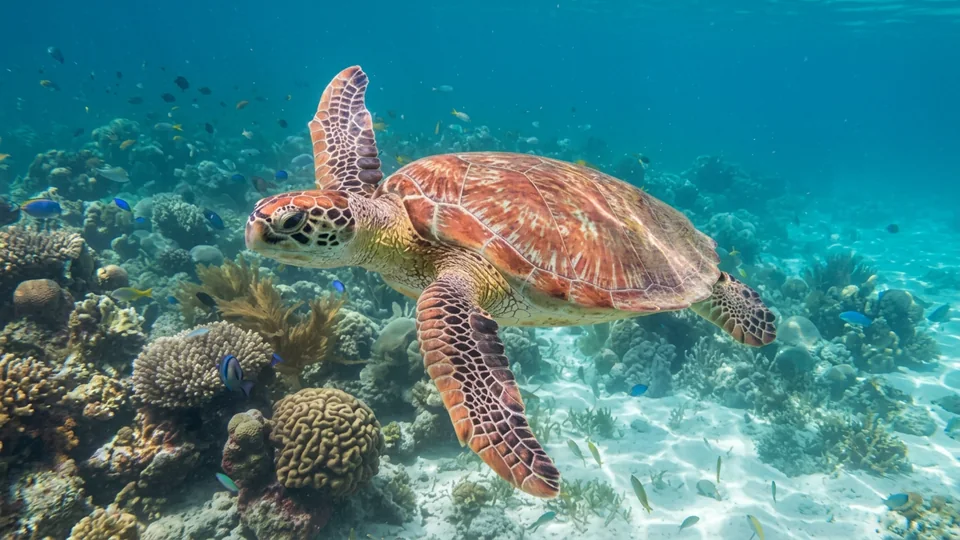
Loggerhead Sea Turtle in its natural habitat, AI illustration

Loggerhead Sea TurtleCaretta carettaWhere and when to see them

Loggerhead Sea Turtle at a glance

The loggerhead is a large marine turtle named for its broad head and powerful jaws. Adults occupy warm-temperate and subtropical seas, while young turtles may spend years travelling through oceanic habitats. Females return to sandy shores to lay eggs, but otherwise these are marine animals, not regular land inhabitants. Long migrations connect feeding grounds and nesting beaches, exposing different populations to fisheries, vessel traffic, coastal development and artificial lighting.

Behaviour & reproduction

Size
70–110 cm curved carapace length
Weight
70–180 kg
Lifespan
Not reliably established
Status
Vulnerable

Loggerheads alternate feeding activity with long resting periods and surface regularly to breathe. Females usually nest at night, excavating an egg chamber with their rear flippers before covering the clutch and returning to sea. Several clutches may be laid within one season, followed by years without nesting. Hatchlings emerge together and orient toward the open horizon. Adults can navigate across large distances, although their routes and destinations vary among populations. Loggerhead females exhibit strong nest site fidelity, often returning to the same general area or even the same beach to lay clutches. Males spend their entire lives at sea, never returning to land after hatching. They can remain submerged for several minutes during routine activities, but deep or prolonged dives can last for over an hour.

Top wildlife locations

Florida wildlife habitat

Florida

Atlantic beaches support regulated nesting observation, while coastal overlooks occasionally reveal surfacing turtles. Nesting areas may be restricted at night; use authorized beach programs rather than independently approaching tracks, females or hatchlings.

Cape Verde wildlife habitat

Cape Verde

Sandy beaches on several islands support important nesting colonies. Guided, locally authorized shore visits are essential where offered; sensitive beaches may be inaccessible, and ordinary beach access does not authorize approaching nesting females.

Croatia wildlife habitat

Croatia

Adriatic coastal headlands and open decks offer only occasional distant views of surfacing loggerheads. Regular nesting-beach viewing is not expected, and sightings from accessible shores are rare and difficult to predict.

Greece wildlife habitat

Greece

Protected sandy nesting beaches provide regulated shore-observation opportunities, particularly where conservation programs operate. Night access may be prohibited, and daytime visitors must avoid marked nests, nesting zones and beach furniture restrictions.

Portugal wildlife habitat

Portugal

Atlantic island coasts and open decks offer occasional distant surface views, but loggerheads are rarely identifiable from mainland shores. This is not a dependable nesting-beach destination, and no special shore encounter should be expected.

Turkey wildlife habitat

Turkey

Protected Mediterranean sandy beaches support loggerhead nesting, with viewing governed by local conservation rules. Some sections are inaccessible at night, so use authorized programs and remain outside fenced or marked nesting areas.

Destinations describe the species' habitat, not guaranteed cruise stops. Some animals require an optional inland excursion or are found in restricted reserves.

Fun facts about the Loggerhead Sea Turtle

  • Loggerhead jaws are adapted to breaking hard-shelled prey.
  • Incubation temperature influences whether hatchlings develop as males or females.
  • Females can lay several separate clutches in one nesting season.
  • Young loggerheads may cross entire ocean basins before settling into coastal feeding habitats.

Best time to see the Loggerhead Sea Turtle

Nesting observation is most plausible from late spring through summer in Florida and the Mediterranean, and mainly summer into autumn in Cape Verde. Portugal and Croatia are primarily marine-observation contexts. Local protected-beach rules and authorized programs determine suitable viewing dates. In the Mediterranean, nesting occurs from May to August, with peak activity in June and July. Cape Verde's nesting season is predominantly from June to October, with July and August being the busiest months. Observing adult turtles from a boat is possible year-round in many parts of their range, depending on local conditions.

Loggerhead Sea Turtle: season matrix by destination

Travel and observation windows vary by region. Highlighted months are an orientation for planning, not confirmed sightings or a guarantee of access.

Florida

This broadly overlaps nesting and hatching activity; permitted observation dates vary by beach and program.

JanFebMarAprMayJunJulAugSepOctNovDec
Cruise ships in Florida

Cape Verde

This is a broad nesting-season window; local program schedules, weather and beach restrictions determine actual access.

JanFebMarAprMayJunJulAugSepOctNovDec
Cruise ships in Cape Verde

Croatia

These months offer practical coastal travel and observation conditions, not a confirmed turtle occurrence or nesting window.

JanFebMarAprMayJunJulAugSepOctNovDec
Cruise ships in Croatia

Greece

Late spring through summer covers much nesting activity, with hatching extending later; permissions and local schedules take priority.

JanFebMarAprMayJunJulAugSepOctNovDec
Cruise ships in Greece

Portugal

A practical fair-weather coastal observation window only; turtle presence near shore is unpredictable and differs between mainland and island waters.

JanFebMarAprMayJunJulAugSepOctNovDec
Cruise ships in Portugal

Turkey

This broadly spans nesting and some hatchling emergence; individual beaches have different restrictions and activity peaks.

JanFebMarAprMayJunJulAugSepOctNovDec
Cruise ships in Turkey

Where the Loggerhead Sea Turtle lives

Adults use continental shelves, coastal bays, estuaries and offshore waters, often feeding over sandy or mixed seabeds. Juveniles also inhabit oceanic convergence zones. Nesting requires suitable sandy beaches with access from the sea and relatively undisturbed, appropriately warm incubation conditions. Loggerheads frequently utilize shallow coastal waters during their foraging activities. They often migrate long distances between feeding grounds and nesting beaches. Juveniles also use sargassum beds as important nursery habitats for protection and food.

What the Loggerhead Sea Turtle eats

Strong jaws allow loggerheads to crush hard-shelled prey, including crabs, molluscs and other bottom-dwelling invertebrates. They also eat softer animals and occasional fish. Oceanic juveniles consume floating or near-surface organisms, so diet changes with age and habitat. Their powerful jaws enable them to consume a wide range of prey, including conchs, clams, and sea urchins. Younger turtles, especially in oceanic phases, feed on jellyfish and other pelagic organisms. They are opportunistic feeders, adapting their diet to local prey availability.

Species at a glance

Common name
Loggerhead Sea Turtle
Scientific name
Caretta caretta
Animal group
Reptiles
Size
70–110 cm curved carapace length
Weight
70–180 kg
Lifespan
Not reliably established
Status
Vulnerable
Identification
Compared with green and hawksbill turtles, loggerheads have a disproportionately broad head and typically five pairs of costal scutes on a reddish-brown shell. Key distinguishing features include their large head and strong, hooked upper jaw, which is adapted for crushing. The carapaces are typically heart shaped and range from reddish brown to olive brown. Unlike green turtles, loggerheads have two prefrontal scales between their eyes.

Loggerhead Sea Turtle: frequently asked questions

Where can I see the Loggerhead Sea Turtle?
Florida, Cape Verde, Croatia, Greece, Portugal, Turkey. Observe surfacing turtles only at a distance from shore or deck. At nesting beaches, join authorized observation where available, keep lights off and never obstruct females or hatchlings. Do not touch turtles or excavate nests. When viewing from a boat, maintain a slow, steady course and avoid sudden movements to prevent startling the animal. On deck, use binoculars for a closer look, ensuring not to disturb the turtle's natural activities. Always adhere to local marine wildlife viewing guidelines and maintain a respectful distance to minimize disturbance.
When is the best time to see the Loggerhead Sea Turtle?
Nesting observation is most plausible from late spring through summer in Florida and the Mediterranean, and mainly summer into autumn in Cape Verde. Portugal and Croatia are primarily marine-observation contexts. Local protected-beach rules and authorized programs determine suitable viewing dates. In the Mediterranean, nesting occurs from May to August, with peak activity in June and July. Cape Verde's nesting season is predominantly from June to October, with July and August being the busiest months. Observing adult turtles from a boat is possible year-round in many parts of their range, depending on local conditions.
How big does the Loggerhead Sea Turtle get?
70–110 cm curved carapace length. Adult weight: 70–180 kg. Size varies with age, sex and population.
How should I behave around the Loggerhead Sea Turtle?
Observe surfacing turtles only at a distance from shore or deck. At nesting beaches, join authorized observation where available, keep lights off and never obstruct females or hatchlings. Do not touch turtles or excavate nests. When viewing from a boat, maintain a slow, steady course and avoid sudden movements to prevent startling the animal. On deck, use binoculars for a closer look, ensuring not to disturb the turtle's natural activities. Always adhere to local marine wildlife viewing guidelines and maintain a respectful distance to minimize disturbance.
What does the Loggerhead Sea Turtle eat?
Strong jaws allow loggerheads to crush hard-shelled prey, including crabs, molluscs and other bottom-dwelling invertebrates. They also eat softer animals and occasional fish. Oceanic juveniles consume floating or near-surface organisms, so diet changes with age and habitat. Their powerful jaws enable them to consume a wide range of prey, including conchs, clams, and sea urchins. Younger turtles, especially in oceanic phases, feed on jellyfish and other pelagic organisms. They are opportunistic feeders, adapting their diet to local prey availability.
Are wildlife sightings guaranteed on an adventure cruise?
No. Animals move freely and routes, weather, access restrictions and local conditions influence every outing. Confirm the actual itinerary and shore program before booking.

Compare wildlife in the same destinations

Explore other reptiles recorded in these destinations. Similar surroundings do not mean the animals share the same habits or viewing season.

Species comparison by animal group and destination
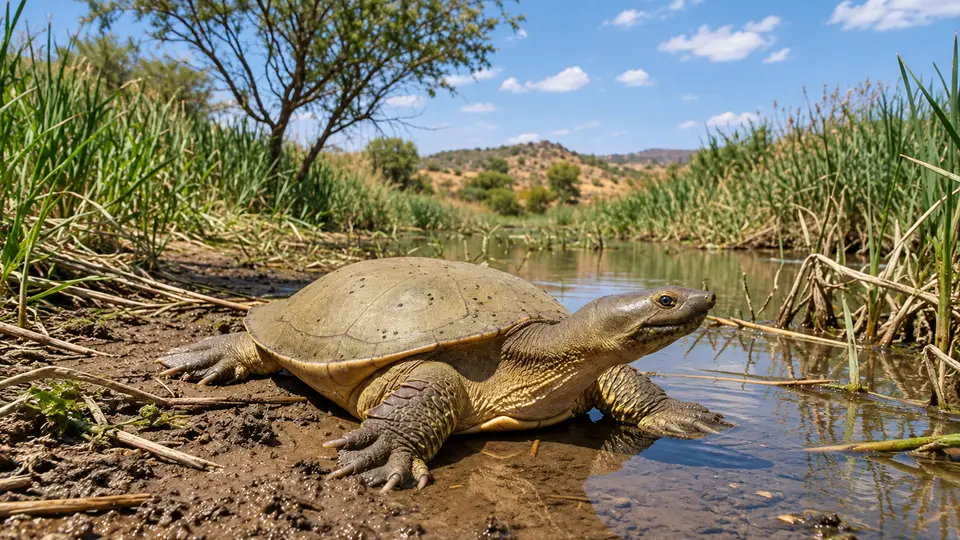
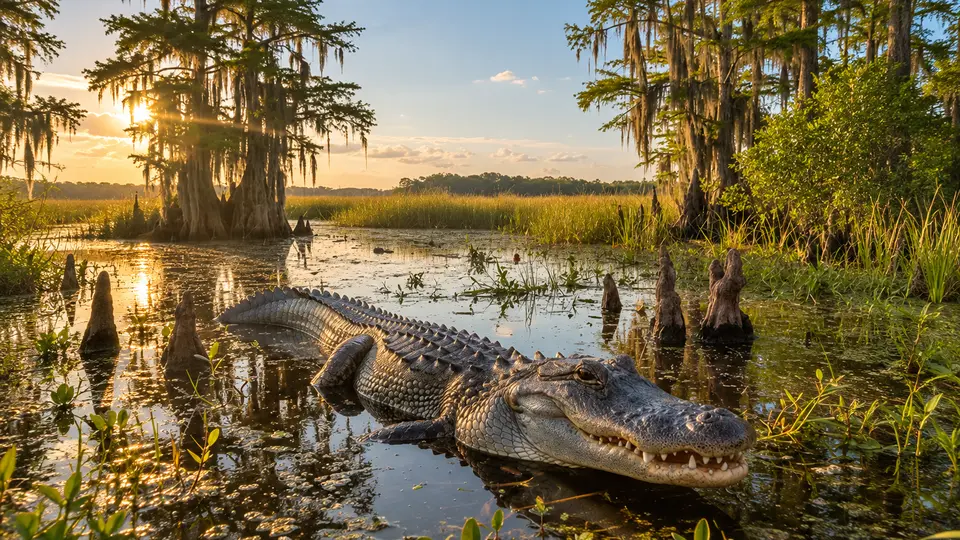
Loggerhead Sea TurtleLoggerhead Sea TurtleAfrican Softshell TurtleAfrican Softshell TurtleAmerican AlligatorAmerican Alligator
Animal groupReptilesAnimal groupReptilesAnimal groupReptiles
DestinationsFlorida, Cape Verde, Croatia, Greece, Portugal, TurkeyDestinationsTurkeyDestinationsFlorida
All wildlife destinations
Plan your trip

Find your next wildlife adventure

Compare destinations, shore programs and dates with the animals and habitats you would love to see.

  • Naturalist-led shore excursions
  • Responsible wildlife watching
  • Small expedition ships

Newsletter

Take Blue Rides with you

Adventure cruise offers, last-minute deals and trip inspiration.

Free, unsubscribe anytime. Details: Privacy Policy

Partner with Blue Rides

Affiliate Program

Recommend adventure cruises and earn commission on every confirmed booking.

Share. Track. Earn.

Your footage, our stage

Send us your videos or pictures.

Captured remarkable nature or wildlife on your journey? Share it with us, we may feature it on Blue Rides.