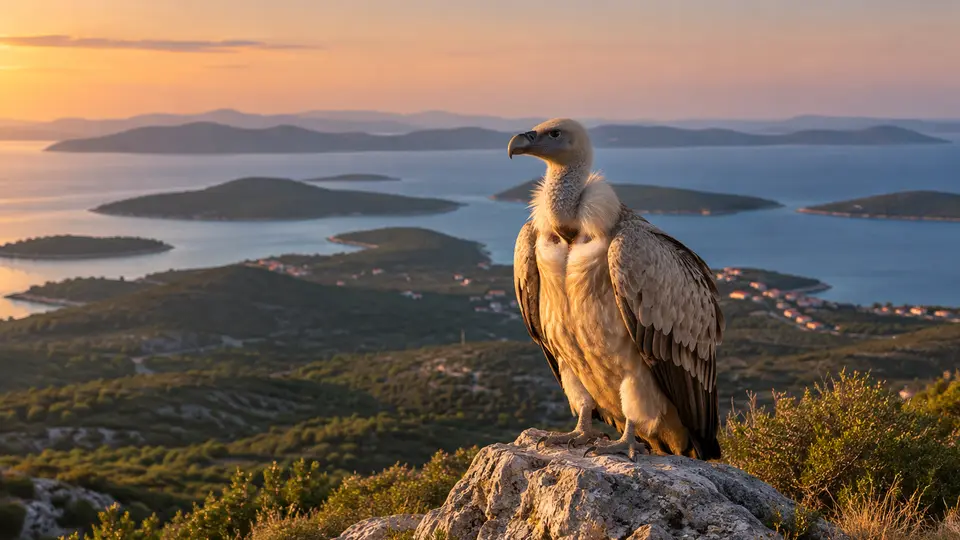
Griffon Vulture in its natural habitat, AI illustration
Size95–110 cm longLifespan20–30 yearsStatusLeast Concern

Griffon Vulture: where and when to see them

Gyps fulvus

Griffon Vulture at a glance

The griffon vulture is a huge, pale-headed scavenger of open landscapes across southern Europe, North Africa and western Asia. Broad wings and a relatively short tail suit long-distance soaring between scattered carcasses. Croatia's northern Adriatic islands support remarkable coastal colonies, while Greek populations occupy both island and mainland landscapes. Although globally widespread, local colonies remain vulnerable to poisoning, collisions, food changes and disturbance, so global status does not imply that every population is secure.

Behaviour & reproduction

Size
95–110 cm long
Weight
6–11 kg
Lifespan
20–30 years
Status
Least Concern

Griffons leave roosts when rising air allows efficient soaring, then search widely for food while watching other vultures for clues. Several birds may converge rapidly on a carcass, where social interactions determine access. They breed on cliff ledges, usually in colonies, and pairs invest heavily in a single chick. Young birds can range far beyond their natal area, while established adults often retain strong ties to familiar nesting cliffs and feeding landscapes. Courtship displays involve synchronized soaring and spectacular aerial maneuvers, often culminating in nesting on a cliff ledge. Chicks are fed regurgitated carrion by both parents and remain in the nest for a prolonged period, typically three to four months, before fledging.

Top wildlife locations

Croatia wildlife habitat

Croatia

Northern Adriatic islands, especially Cres and neighboring suitable islands, offer distant views of coastal cliffs and soaring birds. Nesting ledges are inaccessible or protected; use established viewpoints and respect restrictions around colony waters.

Adventure cruises in Croatia
Greece wildlife habitat

Greece

Crete and selected mainland landscapes provide cliffs and open grazing habitat. Some coastal viewpoints are useful, but many colonies require inland excursions; nesting ledges and sensitive protected areas are not approach sites.

Adventure cruises in Greece

Destinations describe the species' habitat, not guaranteed cruise stops. Some animals require an optional inland excursion or are found in restricted reserves.

Fun facts about the Griffon Vulture

  • A breeding pair usually raises just one chick in a season.
  • Broad wings allow long journeys using rising air rather than continuous flapping.
  • Croatian birds include colonies nesting directly above the sea.
  • Young birds may disperse widely before settling into breeding populations.

Best time to see the Griffon Vulture

Resident colonies can be watched throughout the year, with spring through early autumn often offering useful soaring conditions and easier travel. Midmorning onward is frequently better once rising air develops. Breeding cliffs require particular restraint, regardless of whether adults or large chicks are visible. Prime viewing opportunities from cruise decks or shore excursions often occur when birds are soaring high above coastal cliffs or inland mountain ranges. Binoculars or a spotting scope are essential for appreciating their impressive size and identifying specific markings during these distant observations.

Griffon Vulture: season matrix by destination

Travel and observation windows vary by region. Highlighted months are an orientation for planning, not confirmed sightings or a guarantee of access.

Croatia

Spring through early autumn supports practical coastal travel and soaring observation; residents remain present outside this window.

JanFebMarAprMayJunJulAugSepOctNovDec
Cruise ships in Croatia

Greece

Warmer months often provide useful soaring conditions, though residents occur year-round and local wind can strongly affect visibility.

JanFebMarAprMayJunJulAugSepOctNovDec
Cruise ships in Greece

Where the Griffon Vulture lives

They require cliffs for nesting or roosting and extensive open country where carcasses can be located and reached. Pastures, rocky uplands and lightly wooded landscapes are suitable feeding areas. Some Croatian colonies occupy sea cliffs, but many Greek sites require substantial inland travel. While predominantly cliff-nesters, some populations in Eastern Europe and Asia have adapted to nesting in large trees. Their expansive foraging flights often cover hundreds of kilometers daily, utilizing thermals to conserve energy.

What the Griffon Vulture eats

Griffon vultures specialize in carrion, particularly soft tissues from medium-sized and large mammals. Livestock carcasses can be important where disposal regulations allow safe access. Poisoned animals and veterinary drug residues can create serious risks, making the quality of available carrion as important as its quantity. Despite their size, their bills are not strong enough to tear open fresh hides, so they often rely on smaller scavengers or predators to initiate access to a carcass. They play a vital ecological role by rapidly consuming putrefying flesh, thereby limiting disease spread.

Species at a glance

Common name
Griffon Vulture
Scientific name
Gyps fulvus
Animal group
Birds
Size
95–110 cm long
Weight
6–11 kg
Lifespan
20–30 years
Status
Least Concern
Identification
Compared with the cinereous vulture, it is paler-bodied with a whitish head and neck ruff, contrasting dark flight feathers and a less uniformly dark silhouette. Its broad, finger-like primary feathers are distinctly separated at the wingtips, a feature easily observed during soaring flight. The short tail is wedge-shaped, helping to distinguish it from other large raptors even at a distance.

Griffon Vulture: frequently asked questions

Where can I see the Griffon Vulture?
Croatia, Greece. Use established distant viewpoints and avoid cliff edges, nest approaches and drones. Never place carrion to attract birds. Report grounded or distressed vultures to local wildlife authorities rather than attempting capture or forcing them airborne. Be mindful of local regulations regarding protected areas and specific viewing guidelines, especially near known breeding sites. Contributing to citizen science projects by reporting sightings can aid conservation efforts, particularly regarding range expansion or unusual occurrences.
When is the best time to see the Griffon Vulture?
Resident colonies can be watched throughout the year, with spring through early autumn often offering useful soaring conditions and easier travel. Midmorning onward is frequently better once rising air develops. Breeding cliffs require particular restraint, regardless of whether adults or large chicks are visible. Prime viewing opportunities from cruise decks or shore excursions often occur when birds are soaring high above coastal cliffs or inland mountain ranges. Binoculars or a spotting scope are essential for appreciating their impressive size and identifying specific markings during these distant observations.
How big does the Griffon Vulture get?
95–110 cm long. Adult weight: 6–11 kg. Size varies with age, sex and population.
How should I behave around the Griffon Vulture?
Use established distant viewpoints and avoid cliff edges, nest approaches and drones. Never place carrion to attract birds. Report grounded or distressed vultures to local wildlife authorities rather than attempting capture or forcing them airborne. Be mindful of local regulations regarding protected areas and specific viewing guidelines, especially near known breeding sites. Contributing to citizen science projects by reporting sightings can aid conservation efforts, particularly regarding range expansion or unusual occurrences.
What does the Griffon Vulture eat?
Griffon vultures specialize in carrion, particularly soft tissues from medium-sized and large mammals. Livestock carcasses can be important where disposal regulations allow safe access. Poisoned animals and veterinary drug residues can create serious risks, making the quality of available carrion as important as its quantity. Despite their size, their bills are not strong enough to tear open fresh hides, so they often rely on smaller scavengers or predators to initiate access to a carcass. They play a vital ecological role by rapidly consuming putrefying flesh, thereby limiting disease spread.
Are wildlife sightings guaranteed on an adventure cruise?
No. Animals move freely and routes, weather, access restrictions and local conditions influence every outing. Confirm the actual itinerary and shore programme before booking.

Compare wildlife in the same destinations

Explore other birds recorded in these destinations. Similar surroundings do not mean the animals share the same habits or viewing season.

Species comparison by animal group and destination
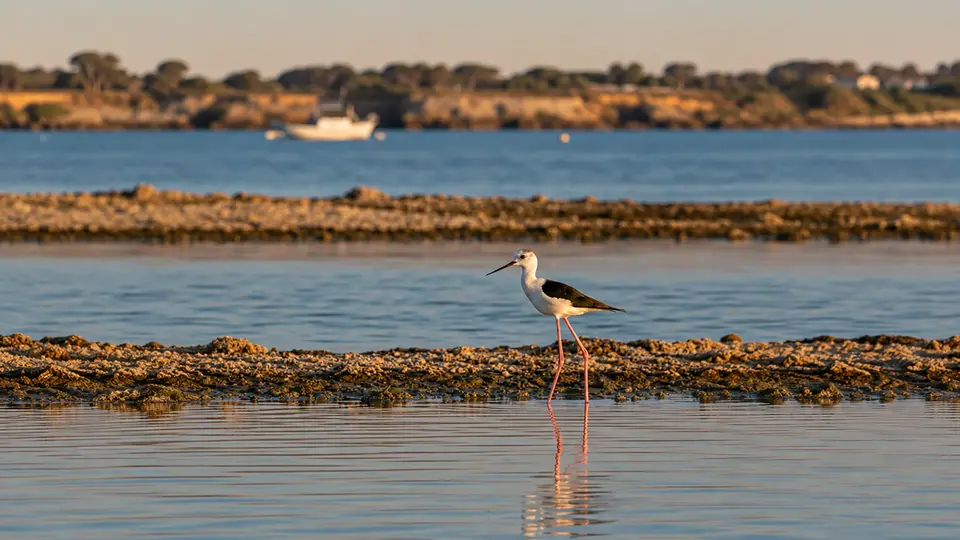
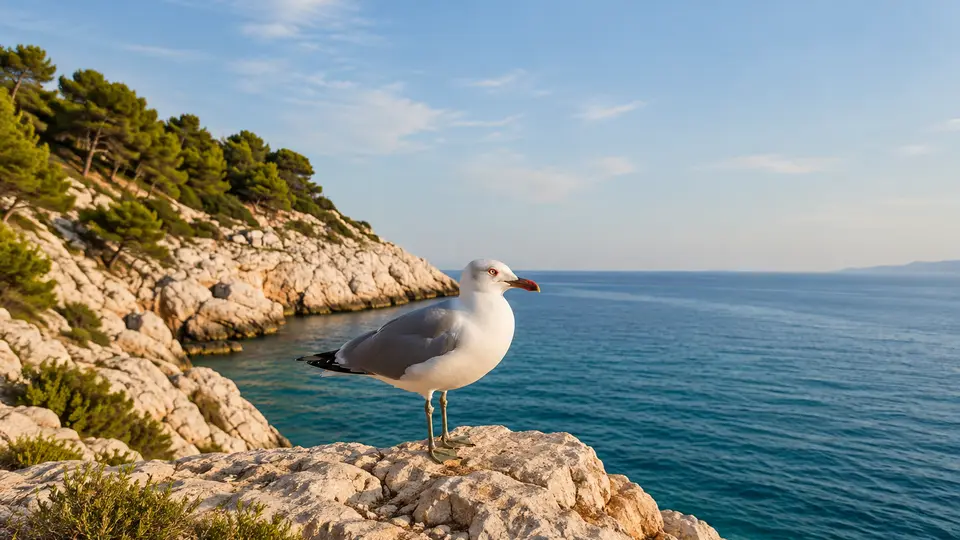
Griffon VultureGriffon VultureAudouin's GullAudouin's GullBlack-winged StiltBlack-winged Stilt
Animal groupBirdsAnimal groupBirdsAnimal groupBirds
DestinationsCroatia, GreeceDestinationsCroatia, Greece, Portugal, TurkeyDestinationsCroatia, Greece
All wildlife destinations
Plan your trip

Find your next wildlife adventure

Compare destinations, shore programmes and dates with the animals and habitats you would love to see.

  • Naturalist-led shore excursions
  • Responsible wildlife watching
  • Small expedition ships

Newsletter

Take Blue Rides with you

Adventure cruise offers, last-minute deals and trip inspiration.

Free, unsubscribe anytime. Details: Privacy Policy

Partner with Blue Rides

Affiliate Program

Recommend adventure cruises and earn commission on every confirmed booking.

Share. Track. Earn.