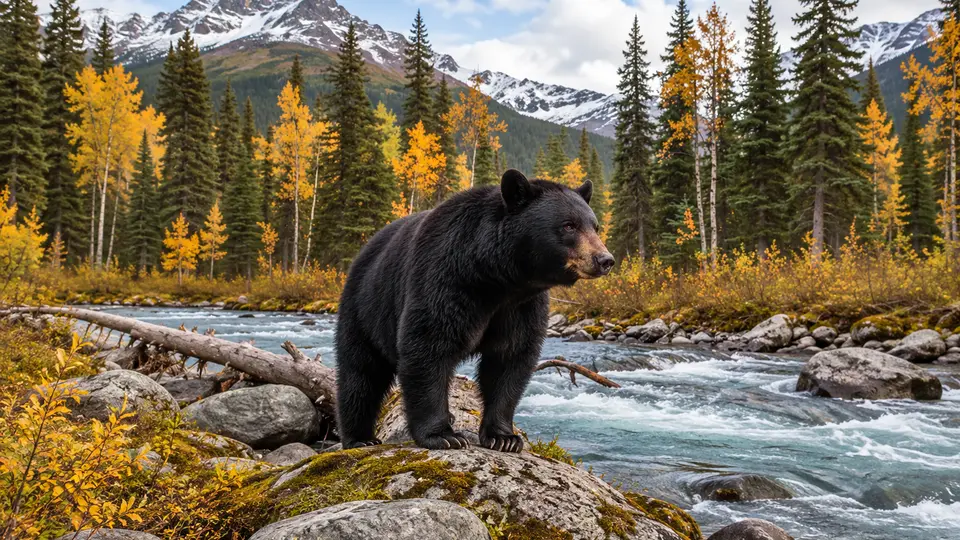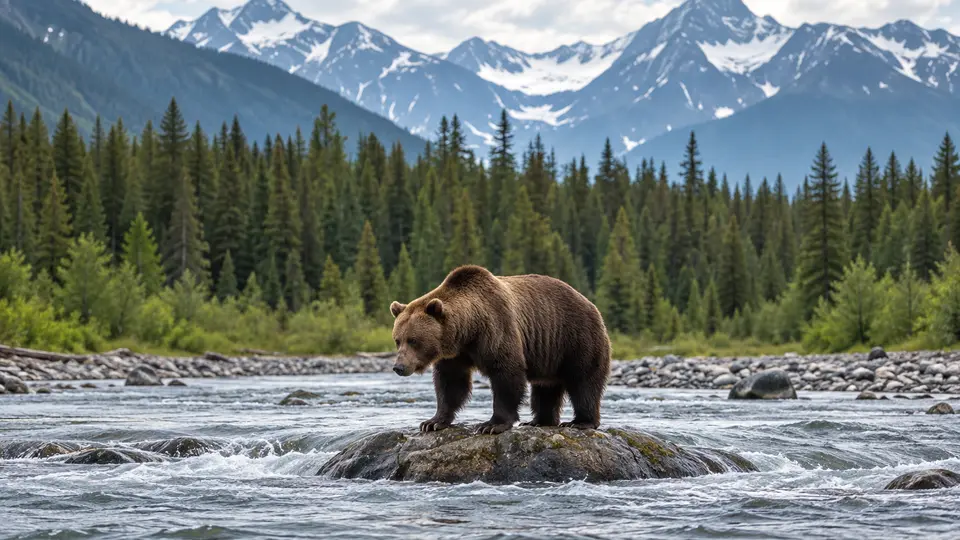
Grizzly Bear in its natural habitat, AI illustration

Grizzly Bear: where and when to see them

Ursus arctos

Grizzly Bear at a glance

The grizzly is a North American brown bear, not a separate species from Alaska's coastal brown bears. Its muscular shoulder hump powers digging, while long claws uncover roots and burrowing prey. Size varies greatly with food supply: salmon-rich coastal populations can grow much larger than interior bears. Despite their formidable appearance, these adaptable omnivores obtain substantial nutrition from plants, insects and other seasonally abundant foods.

Behaviour & reproduction

Size
1.5–2.5 m body length
Weight
100–360 kg; large coastal adults heavier
Lifespan
20–30 years
Status
Least Concern

Grizzlies usually forage alone, although productive salmon streams and sedge meadows can draw several individuals together. Mothers keep cubs for roughly two to three years and defend them vigorously. Bears communicate through scent, posture and vocalizations, often avoiding costly fights. During winter dormancy they rely on stored fat; pregnant females give birth in dens. Their daily activity shifts with weather, food availability and disturbance from people. Grizzly bears exhibit seasonal hyperphagia, intensely feeding in late summer and fall to build fat reserves for winter hibernation. While often solitary, shared food resources can lead to temporary aggregations where a dominance hierarchy is often observed.

Top wildlife locations

Alaska wildlife habitat

Alaska

Coastal sedge meadows and salmon-stream margins offer established bear-viewing settings. Many productive areas require specialist transport and guided access; interior grizzly viewing requires an inland excursion rather than an ordinary coastal stop.

Adventure cruises in Alaska
Destinations describe the species' habitat, not guaranteed cruise stops. Some animals require an optional inland excursion or are found in restricted reserves.

Fun facts about the Grizzly Bear

  • The shoulder hump contains powerful muscles used for digging.
  • Females can give birth while denned during winter.
  • Fertilized embryos delay implantation until autumn.
  • Brown and black coat colours occur in both brown bears and American black bears, so colour alone is unreliable.

Best time to see the Grizzly Bear

Late spring through early autumn offers the most practical Alaskan viewing opportunities. Coastal meadow feeding often precedes local salmon runs, whose timing differs among rivers. Winter denning greatly reduces visibility, and any viewing plan should follow current local access and bear-management advice. Prime viewing aligns with key feeding periods, such as salmon runs in late summer or berry ripening in early fall. Although less common, bears can be sighted in higher elevations during early spring as they emerge from dens, seeking initial food sources.

Grizzly Bear: season matrix by destination

Travel and observation windows vary by region. Highlighted months are an orientation for planning, not confirmed sightings or a guarantee of access.

Alaska

These are practical active-season viewing months, not a universal salmon-run calendar; local food availability and access determine opportunities.

JanFebMarAprMayJunJulAugSepOctNovDec
Cruise ships in Alaska

Where the Grizzly Bear lives

Alaskan grizzlies occupy tundra, mountain valleys, boreal forest and coastal meadows. Productive river mouths and salmon streams support coastal brown bears, while interior animals range widely across less concentrated food resources. Secure denning slopes and connected seasonal feeding areas are important. Alaskan grizzlies demonstrate remarkable adaptability, thriving in environments from dense forest interiors to open tundra, reflecting their broad diet. Their home ranges can vary significantly from tens to hundreds of square miles depending on food availability and population density.

What the Grizzly Bear eats

Food includes sedges, berries, roots, insects, carrion and mammals, with salmon particularly important in many coastal populations. Bears may hunt moose or caribou calves in spring. The balance changes markedly with location and season rather than following a single meat-dominated diet. Beyond their varied diet, grizzlies are known to cache food, especially larger kills, for later consumption. They are opportunistic omnivores, and their digestive system is well-suited to extract nutrients from both plant matter and animal protein.

Species at a glance

Common name
Grizzly Bear
Scientific name
Ursus arctos
Animal group
Mammals
Size
1.5–2.5 m body length
Weight
100–360 kg; large coastal adults heavier
Lifespan
20–30 years
Status
Least Concern
Identification
Unlike an American black bear, a grizzly usually has a prominent shoulder hump, a concave facial profile and long, relatively straight front claws. The fur color of grizzlies can range from light blonde to dark brown, often with lighter tips on their guard hairs giving a 'grizzled' appearance. Their ears are typically shorter and more rounded compared to the longer, pointed ears of black bears.

Grizzly Bear: frequently asked questions

Where can I see the Grizzly Bear?
Alaska. Use established bear-viewing facilities or qualified local guides, keeping prescribed distances and food securely contained. Never approach cubs or feeding bears, block a travel route, or run from a bear. Coastal sightings remain dependent on food and conditions. Always maintain awareness of your surroundings and carry bear spray in accessible fashion when hiking in bear country. When observing from a vessel, keep noise to a minimum and avoid sudden movements that might startle animals on shore.
When is the best time to see the Grizzly Bear?
Late spring through early autumn offers the most practical Alaskan viewing opportunities. Coastal meadow feeding often precedes local salmon runs, whose timing differs among rivers. Winter denning greatly reduces visibility, and any viewing plan should follow current local access and bear-management advice. Prime viewing aligns with key feeding periods, such as salmon runs in late summer or berry ripening in early fall. Although less common, bears can be sighted in higher elevations during early spring as they emerge from dens, seeking initial food sources.
How big does the Grizzly Bear get?
1.5–2.5 m body length. Adult weight: 100–360 kg; large coastal adults heavier. Size varies with age, sex and population.
How should I behave around the Grizzly Bear?
Use established bear-viewing facilities or qualified local guides, keeping prescribed distances and food securely contained. Never approach cubs or feeding bears, block a travel route, or run from a bear. Coastal sightings remain dependent on food and conditions. Always maintain awareness of your surroundings and carry bear spray in accessible fashion when hiking in bear country. When observing from a vessel, keep noise to a minimum and avoid sudden movements that might startle animals on shore.
What does the Grizzly Bear eat?
Food includes sedges, berries, roots, insects, carrion and mammals, with salmon particularly important in many coastal populations. Bears may hunt moose or caribou calves in spring. The balance changes markedly with location and season rather than following a single meat-dominated diet. Beyond their varied diet, grizzlies are known to cache food, especially larger kills, for later consumption. They are opportunistic omnivores, and their digestive system is well-suited to extract nutrients from both plant matter and animal protein.
Are wildlife sightings guaranteed on an adventure cruise?
No. Animals move freely and routes, weather, access restrictions and local conditions influence every outing. Confirm the actual itinerary and shore program before booking.

Compare wildlife in the same destinations

Explore other mammals recorded in these destinations. Similar surroundings do not mean the animals share the same habits or viewing season.

Species comparison by animal group and destination
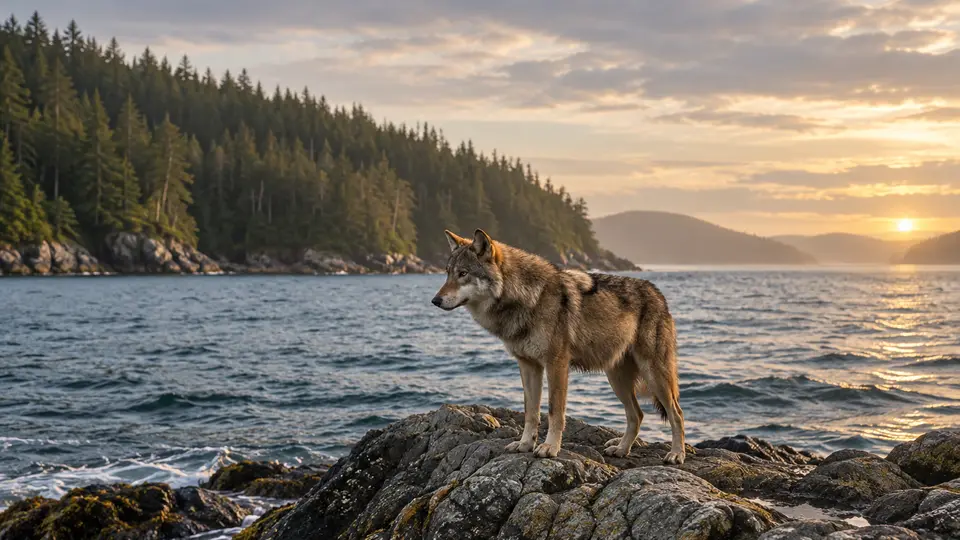
Grizzly BearGrizzly BearAlexander Archipelago WolfAlexander Archipelago WolfAmerican Black BearAmerican Black Bear
Animal groupMammalsAnimal groupMammalsAnimal groupMammals
DestinationsAlaskaDestinationsAlaskaDestinationsAlaska, New England
All wildlife destinations
Plan your trip

Find your next wildlife adventure

Compare destinations, shore programs and dates with the animals and habitats you would love to see.

  • Naturalist-led shore excursions
  • Responsible wildlife watching
  • Small expedition ships

Newsletter

Take Blue Rides with you

Adventure cruise offers, last-minute deals and trip inspiration.

Free, unsubscribe anytime. Details: Privacy Policy

Partner with Blue Rides

Affiliate Program

Recommend adventure cruises and earn commission on every confirmed booking.

Share. Track. Earn.

Your footage, our stage

Send us your videos or pictures.

Captured beautiful landscapes or wildlife? Share your videos and pictures with us, we may feature them on Blue Rides.