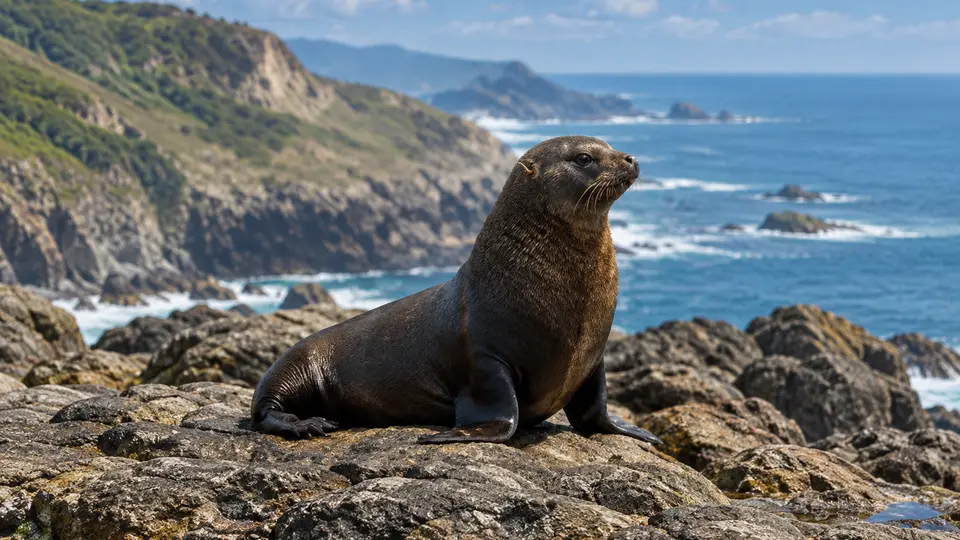
Guadalupe Fur Seal in its natural habitatAI-modified

Guadalupe Fur SealArctocephalus townsendiWhere and when to see them

Guadalupe Fur Seal at a glance

The Guadalupe fur seal is a dark, densely furred seal of the northeastern Pacific, with its principal breeding stronghold on Mexico's Guadalupe Island. Commercial hunting once reduced it to extremely small numbers, and recovery has remained geographically concentrated. Males are much larger than females and develop a heavier neck and mane. Its external ears and long foreflippers identify it as an eared seal rather than a true seal.

Behaviour & reproduction

Size
1.4–2.2 m (4.6–7.2 ft) body length
Weight
40–160 kg (88–353 lb)
Lifespan
Not reliably established
Status
Least Concern

Breeding males establish territories among rocky shores, where females give birth and mate during the summer season. Mothers alternate nursing visits with offshore feeding trips, leaving pups sheltered among rocks. Away from colonies, animals spend extensive periods at sea and can disperse far beyond Mexican breeding islands. On land they climb uneven terrain using all four flippers, but disturbance can cause abrupt movement and separate mothers from pups. Mothers recognize their pups by vocalizations and scent, a critical adaptation in crowded colonies. Males vigorously defend their breeding territories, sometimes for several weeks, to maximize mating opportunities. When at sea, they exhibit efficient foraging strategies, often resting at the surface in characteristic 'jug handle' postures with their flippers out of the water to thermoregulate.

Top wildlife locations

Mexico wildlife habitatAI-modified

Mexico

Remote rocky islands off Baja California provide colony habitat, but Guadalupe Island access is restricted and not a standard landing. Mainland shore records are unusual; authorized distant deck observation is the realistic alternative.
Destinations describe the species' habitat, not guaranteed cruise stops. Some animals require an optional inland excursion or are found in restricted reserves.

Fun facts about the Guadalupe Fur Seal

  • Commercial sealing once led to the species being considered extinct.
  • Guadalupe Island remains its main breeding stronghold.
  • Dense underfur provides insulation that sea lions largely lack.
  • Small breeding groups have also become established in the San Benito Islands.

Best time to see the Guadalupe Fur Seal

Summer overlaps colony breeding activity, but biological timing does not imply visitor access. Guadalupe Island tourism and entry restrictions must be checked with current Mexican authorities. Distant observations elsewhere are unpredictable, and no ordinary mainland shore-viewing season can be promised. While colony breeding occurs in summer, pups are born between June and July, with mating following shortly after. Post-breeding dispersal can see individuals ranging widely, making their presence unpredictable outside the immediate breeding season and location. For conservation reasons, any observation window must prioritize minimal disturbance to the species' critical life cycle events.

Guadalupe Fur Seal: season matrix by destination

Travel and observation windows vary by region. Highlighted months are an orientation for planning, not confirmed sightings or a guarantee of access.

Mexico

Summer breeding is established, but current island restrictions and irregular mainland records do not support a dependable visitor observation window.

JanFebMarAprMayJunJulAugSepOctNovDec
Cruise ships in Mexico

Where the Guadalupe Fur Seal lives

Breeding colonies occupy remote volcanic islands with rocky ledges, boulder beaches and sheltered crevices. Adjacent deep Pacific waters provide feeding habitat. These island colonies are not equivalent to accessible mainland seal beaches, and conservation rules strongly limit close shore access. The species primarily inhabits Guadalupe Island, which lies off the Pacific coast of Baja California. Non-breeding individuals may occasionally be found further north along the coast of California or south into Central American waters, though these sightings are rare. Their preference for rugged, steep terrain offers protection from terrestrial predators and storm surges.

What the Guadalupe Fur Seal eats

Squid are especially important prey, supplemented by fish taken during offshore feeding trips. Diet varies with ocean conditions and prey distribution. Females must balance finding food at sea with returning to nurse pups, making productive waters around breeding islands particularly valuable. They are nocturnal or crepuscular feeders, primarily hunting mesopelagic fish and cephalopods that migrate closer to the surface at night. Deep-diving capabilities allow them to access prey in the twilight zone of the ocean, significantly expanding their foraging range. Their specialized diet and foraging behavior are adapted to the oligotrophic waters surrounding their breeding islands.

Species at a glance

Common name
Guadalupe Fur Seal
Scientific name
Arctocephalus townsendi
Animal group
Mammals
Size
1.4–2.2 m (4.6–7.2 ft) body length
Weight
40–160 kg (88–353 lb)
Lifespan
Not reliably established
Status
Least Concern
Identification
Compared with California sea lions, Guadalupe fur seals have denser fur, a more sharply pointed muzzle and conspicuously long external ear flaps. Their dark brown to black pelage appears sleek when wet, but much thicker and reddish-brown when dry. Adult males develop a prominent mane and a sagittal crest, giving their heads a more robust appearance than females. Unlike sea lions, their small, pointed ears protrude significantly from their fur.

Guadalupe Fur Seal: frequently asked questions

Where can I see the Guadalupe Fur Seal?
Mexico. Observe only from authorized distant coastal or deck viewpoints. Do not seek access to closed colonies or approach resting animals; fur seals can bite and scramble suddenly. Leave any stranded individual undisturbed and report it to local wildlife authorities. View Guadalupe fur seals only from a safe, respectful distance that avoids altering their natural behaviors. Binoculars or spotting scopes are highly recommended for detailed viewing from tour vessel decks or designated distant viewpoints. Adhering to all local wildlife regulations, including minimum approach distances, is crucial for their protection and the sustainability of wildlife tourism.
When is the best time to see the Guadalupe Fur Seal?
Summer overlaps colony breeding activity, but biological timing does not imply visitor access. Guadalupe Island tourism and entry restrictions must be checked with current Mexican authorities. Distant observations elsewhere are unpredictable, and no ordinary mainland shore-viewing season can be promised. While colony breeding occurs in summer, pups are born between June and July, with mating following shortly after. Post-breeding dispersal can see individuals ranging widely, making their presence unpredictable outside the immediate breeding season and location. For conservation reasons, any observation window must prioritize minimal disturbance to the species' critical life cycle events.
How big does the Guadalupe Fur Seal get?
1.4–2.2 m (4.6–7.2 ft) body length. Adult weight: 40–160 kg (88–353 lb). Size varies with age, sex and population.
How should I behave around the Guadalupe Fur Seal?
Observe only from authorized distant coastal or deck viewpoints. Do not seek access to closed colonies or approach resting animals; fur seals can bite and scramble suddenly. Leave any stranded individual undisturbed and report it to local wildlife authorities. View Guadalupe fur seals only from a safe, respectful distance that avoids altering their natural behaviors. Binoculars or spotting scopes are highly recommended for detailed viewing from tour vessel decks or designated distant viewpoints. Adhering to all local wildlife regulations, including minimum approach distances, is crucial for their protection and the sustainability of wildlife tourism.
What does the Guadalupe Fur Seal eat?
Squid are especially important prey, supplemented by fish taken during offshore feeding trips. Diet varies with ocean conditions and prey distribution. Females must balance finding food at sea with returning to nurse pups, making productive waters around breeding islands particularly valuable. They are nocturnal or crepuscular feeders, primarily hunting mesopelagic fish and cephalopods that migrate closer to the surface at night. Deep-diving capabilities allow them to access prey in the twilight zone of the ocean, significantly expanding their foraging range. Their specialized diet and foraging behavior are adapted to the oligotrophic waters surrounding their breeding islands.
Are wildlife sightings guaranteed on an adventure cruise?
No. Animals move freely and routes, weather, access restrictions and local conditions influence every outing. Confirm the actual itinerary and shore program before booking.

Compare wildlife in the same destinations

Explore other mammals recorded in these destinations. Similar surroundings do not mean the animals share the same habits or viewing season.

Species comparison by animal group and destination
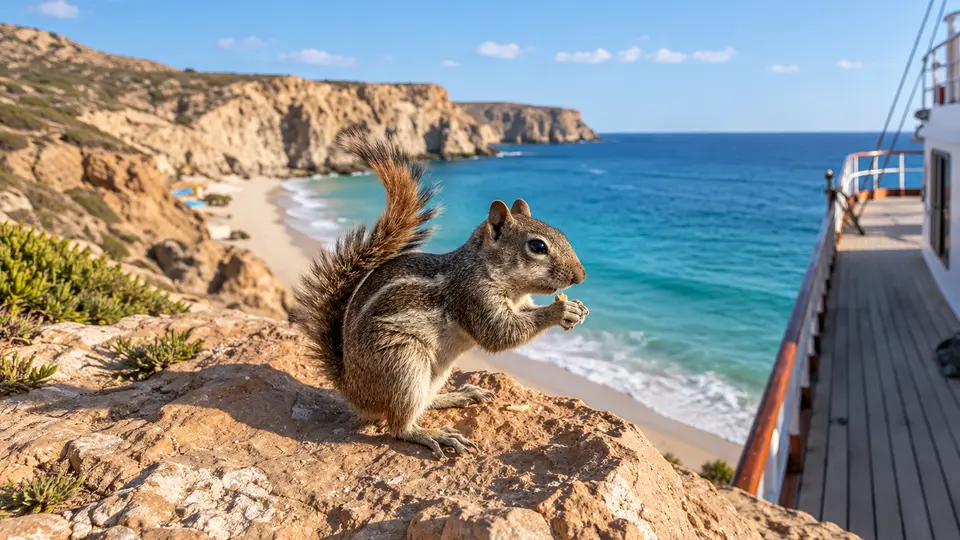
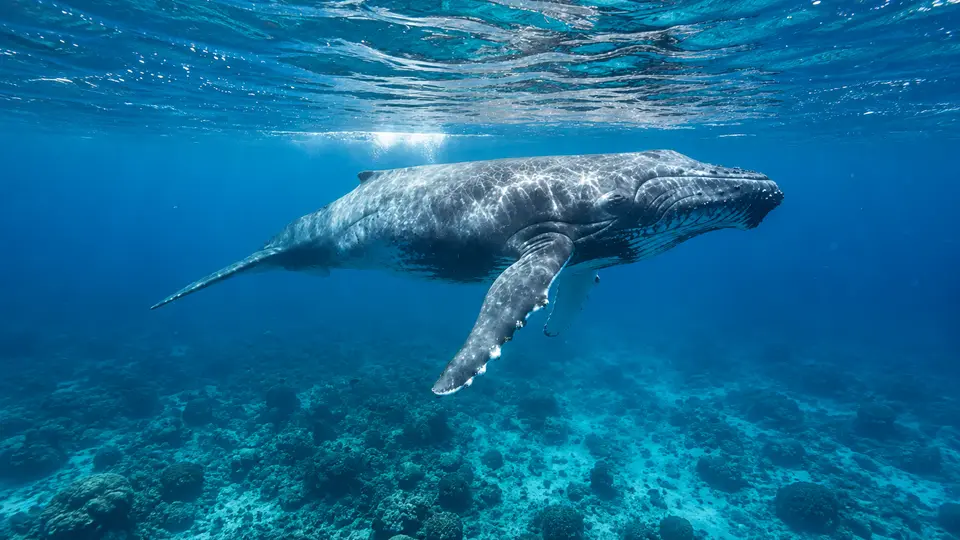
Guadalupe Fur SealAI-modifiedGuadalupe Fur SealBaja California Rock SquirrelAI-modifiedBaja California Rock SquirrelBlue WhaleAI-modifiedBlue Whale
Animal groupMammalsAnimal groupMammalsAnimal groupMammals
DestinationsMexicoDestinationsMexicoDestinationsMexico, Norway, Portugal, Antarctica, Arctic, Maldives, New Zealand
Scientific nameArctocephalus townsendiScientific nameScientific name
All wildlife destinations
AI-modified
Plan your trip

Find your next wildlife adventure

Compare destinations, shore programs and dates with the animals and habitats you would love to see.

  • Naturalist-led shore excursions
  • Responsible wildlife watching
  • Small expedition ships