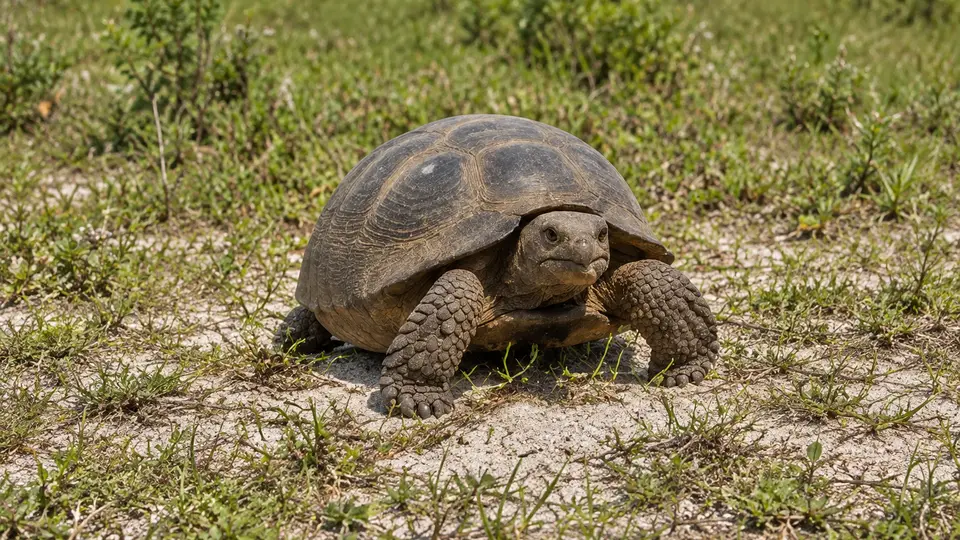
Gopher Tortoise in its natural habitat, AI illustration

Gopher TortoiseGopherus polyphemusWhere and when to see them

Gopher Tortoise at a glance

The gopher tortoise is a terrestrial reptile of the southeastern United States, with Florida containing a major portion of its range. Its sturdy forelimbs excavate long burrows in sandy soil, creating shelter used by numerous other animals. This makes it an important ecosystem engineer rather than merely a resident grazer. Habitat loss, fragmentation and unsuitable land management threaten populations, especially where open, fire-maintained vegetation becomes overgrown or is converted to development.

Behaviour & reproduction

Size
23-38 cm shell length
Weight
3-6 kg
Lifespan
40-60 years
Status
Vulnerable

Individuals spend substantial time inside their burrows, emerging to bask, feed and interact when temperatures are suitable. Their daily schedule shifts seasonally, avoiding extreme heat or cold. A tortoise may use several burrows within its home range, and males travel between burrows seeking mates. Courtship involves head movements and shell contact. Females lay eggs in sandy soil, often near a burrow entrance, but provide no care after covering the nest. Courtship rituals include males circling females and nudging their shells before mating. Females typically lay a clutch of 3-14 eggs, burying them near the burrow entrance to protect them from predators and temperature extremes. Hatchlings emerge several months later, immediately independent and seeking shelter.

Top wildlife locations

Florida wildlife habitat

Florida

Protected coastal dunes, scrub trails and sandy pine uplands offer plausible land viewing. Inland excursions may improve habitat access, while occupied burrows are protected and must never be entered, blocked or disturbed.
Destinations describe the species' habitat, not guaranteed cruise stops. Some animals require an optional inland excursion or are found in restricted reserves.

Fun facts about the Gopher Tortoise

  • Its burrows shelter hundreds of other animal species collectively across the range.
  • Burrow temperatures are more stable than exposed surface conditions.
  • A single tortoise may maintain and use multiple burrows.
  • It is the only native tortoise in the southeastern United States.

Best time to see the Gopher Tortoise

Spring and autumn often provide comfortable temperatures for above-ground activity in Florida. Tortoises may emerge in any month during suitable weather, while summer activity often shifts away from midday. Cool spells can keep them underground, so absence from view does not indicate an unused burrow. Early morning or late afternoon are prime viewing times as tortoises are most active during these cooler periods. Observing them after a rain shower can also increase your chances, as they may emerge to drink or forage on fresh vegetation.

Gopher Tortoise: season matrix by destination

Travel and observation windows vary by region. Highlighted months are an orientation for planning, not confirmed sightings or a guarantee of access.

Florida

These months often provide moderate conditions for surface activity; weather, latitude and site management matter, and emergence is possible outside this window.

JanFebMarAprMayJunJulAugSepOctNovDec
Cruise ships in Florida

Where the Gopher Tortoise lives

Well-drained sandy soils support burrowing in longleaf pine sandhills, scrub, open woodland and coastal dune systems. Low vegetation supplies forage, while sunlight helps maintain suitable temperatures. Prescribed fire can preserve these open conditions where carefully managed, preventing dense shrubs from overwhelming the ground layer. These burrows are crucial for many other species, making the gopher tortoise a keystone species in its ecosystem. Their extensive underground networks provide refuge for over 360 commensal species, ranging from insects and amphibians to various reptiles and small mammals.

What the Gopher Tortoise eats

Grasses, legumes and other low-growing herbs make up most food, supplemented by flowers, fruits and occasional additional plant material. Feeding is selective within a broad herbivorous diet. Much water comes from vegetation, although tortoises also drink when suitable surface water is available. Young tortoises consume more protein-rich plants to support growth, while adults maintain a more general herbivorous diet. Seasonal availability influences plant choices, with tortoises adapting their foraging to what is fresh and abundant.

Species at a glance

Common name
Gopher Tortoise
Scientific name
Gopherus polyphemus
Animal group
Reptiles
Size
23-38 cm shell length
Weight
3-6 kg
Lifespan
40-60 years
Status
Vulnerable
Identification
Its domed brown shell, shovel-like forelegs and unwebbed elephant-like hind feet distinguish it from Florida's flatter-shelled aquatic turtles and more patterned box turtles. Beyond its domed shell, the gopher tortoise often exhibits growth rings on its scutes, which can sometimes be used to estimate age. The plastron, or underside of the shell, is typically a uniform yellowish to tan color without prominent patterns, further differentiating it from other turtle species.

Gopher Tortoise: frequently asked questions

Where can I see the Gopher Tortoise?
Florida. Watch from established trails without touching tortoises or approaching burrow mouths. Never place this land species in water, feed it or insert anything into a burrow; burrow edges can collapse and sheltered wildlife may be present. Be aware that gopher tortoises are protected by law, and disturbing them or their burrows is illegal. Maintain a respectful distance of at least 15 feet to avoid causing stress to the animal.
When is the best time to see the Gopher Tortoise?
Spring and autumn often provide comfortable temperatures for above-ground activity in Florida. Tortoises may emerge in any month during suitable weather, while summer activity often shifts away from midday. Cool spells can keep them underground, so absence from view does not indicate an unused burrow. Early morning or late afternoon are prime viewing times as tortoises are most active during these cooler periods. Observing them after a rain shower can also increase your chances, as they may emerge to drink or forage on fresh vegetation.
How big does the Gopher Tortoise get?
23-38 cm shell length. Adult weight: 3-6 kg. Size varies with age, sex and population.
How should I behave around the Gopher Tortoise?
Watch from established trails without touching tortoises or approaching burrow mouths. Never place this land species in water, feed it or insert anything into a burrow; burrow edges can collapse and sheltered wildlife may be present. Be aware that gopher tortoises are protected by law, and disturbing them or their burrows is illegal. Maintain a respectful distance of at least 15 feet to avoid causing stress to the animal.
What does the Gopher Tortoise eat?
Grasses, legumes and other low-growing herbs make up most food, supplemented by flowers, fruits and occasional additional plant material. Feeding is selective within a broad herbivorous diet. Much water comes from vegetation, although tortoises also drink when suitable surface water is available. Young tortoises consume more protein-rich plants to support growth, while adults maintain a more general herbivorous diet. Seasonal availability influences plant choices, with tortoises adapting their foraging to what is fresh and abundant.
Are wildlife sightings guaranteed on an adventure cruise?
No. Animals move freely and routes, weather, access restrictions and local conditions influence every outing. Confirm the actual itinerary and shore program before booking.

Compare wildlife in the same destinations

Explore other reptiles recorded in these destinations. Similar surroundings do not mean the animals share the same habits or viewing season.

Species comparison by animal group and destination
Gopher TortoiseGopher TortoiseAmerican AlligatorAmerican AlligatorAmerican CrocodileAmerican Crocodile
Animal groupReptilesAnimal groupReptilesAnimal groupReptiles
DestinationsFloridaDestinationsFloridaDestinationsCosta Rica, Florida
All wildlife destinations
Plan your trip

Find your next wildlife adventure

Compare destinations, shore programs and dates with the animals and habitats you would love to see.

  • Naturalist-led shore excursions
  • Responsible wildlife watching
  • Small expedition ships

Newsletter

Take Blue Rides with you

Adventure cruise offers, last-minute deals and trip inspiration.

Free, unsubscribe anytime. Details: Privacy Policy

Partner with Blue Rides

Affiliate Program

Recommend adventure cruises and earn commission on every confirmed booking.

Share. Track. Earn.

Your footage, our stage

Send us your videos or pictures.

Captured remarkable nature or wildlife on your journey? Share it with us, we may feature it on Blue Rides.