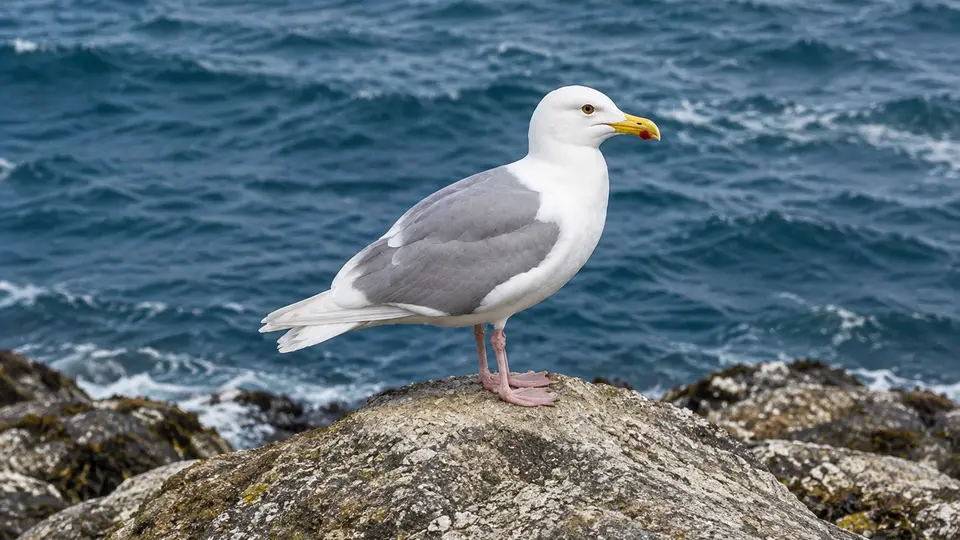
Glaucous-winged Gull in its natural habitat, AI illustration
Size50-68 cm longLifespanNot reliably establishedStatusLeast Concern

Glaucous-winged Gull: where and when to see them

Larus glaucescens

Glaucous-winged Gull at a glance

The glaucous-winged gull is a characteristic large gull of the North Pacific coast, including much of coastal Alaska. Adults show pale gray upperparts and wing tips similar in tone to the mantle rather than boldly black. It thrives around marine food sources and readily uses harbors and settlements. Identification is not always straightforward because it hybridizes with related gulls, producing birds with intermediate wing patterns, body proportions and soft-part colors.

Behaviour & reproduction

Size
50-68 cm long
Weight
0.9-1.7 kg
Lifespan
Not reliably established
Status
Least Concern

Pairs nest colonially or in looser groups on islands, rocky shores and occasionally human structures. They defend the area around their nests and communicate through varied calls and postures. Outside the breeding period, birds gather where tides, fisheries or natural events make food available. They walk through intertidal areas, pick items from the surface and scavenge opportunistically. Both parents incubate and care for chicks, which initially remain close to the nest territory. Courtship displays involve head-tossing and 'choking' movements, often accompanied by characteristic calls. They are known for kleptoparasitism, often stealing food from other seabirds and even other gulls. Young birds typically leave the nest site when they are able to fly, around six weeks old, but continue to be fed by parents for some time.

Top wildlife locations

Alaska wildlife habitat

Alaska

Public harbor fronts, rocky beaches and estuary viewpoints offer plausible coastal observation without inland travel. Breeding islands may be inaccessible or protected, and hybrid gulls can make confident identification difficult.

Adventure cruises in Alaska
Destinations describe the species' habitat, not guaranteed cruise stops. Some animals require an optional inland excursion or are found in restricted reserves.

Fun facts about the Glaucous-winged Gull

  • The name refers to its gray rather than black outer wing.
  • It hybridizes extensively with western gulls in the Pacific Northwest.
  • Alaskan birds also hybridize with American herring gulls.
  • Young birds require roughly four years to attain adult plumage.

Best time to see the Glaucous-winged Gull

May through September generally provides convenient Alaskan coastal travel, long daylight and opportunities to compare adults with developing young. Many birds remain along suitable coasts in winter, especially farther south. Local tides and food availability often matter more than the month for shoreline activity. Prime viewing for active foraging and social behaviors extends from late spring through early fall as migratory fish runs occur. While some adults are resident, a significant portion of the population undergoes seasonal movements, especially younger birds.

Glaucous-winged Gull: season matrix by destination

Travel and observation windows vary by region. Highlighted months are an orientation for planning, not confirmed sightings or a guarantee of access.

Alaska

This is a practical coastal travel window, not the full period of occurrence; many southern Alaskan locations support birds outside summer.

JanFebMarAprMayJunJulAugSepOctNovDec
Cruise ships in Alaska

Where the Glaucous-winged Gull lives

Sheltered bays, rocky beaches, offshore islands, estuaries and coastal towns form its main habitat. Nesting often occurs on predator-limited islands or elevated sites. Although individuals sometimes travel inland, the species is strongly associated with the North Pacific marine shoreline and nearby waters. This species can be found along coastlines from Alaska south to Washington and occasionally Oregon during the breeding season. During winter, its range expands south to Baja California, Mexico, utilizing a wider array of coastal habitats. Nesting colonies can contain thousands of pairs, particularly on remote islands.

What the Glaucous-winged Gull eats

It eats fish, intertidal invertebrates, carrion, eggs and chicks, together with scraps where people provide access. Shellfish and other shoreline animals become available on falling tides. Flexible feeding allows birds to exploit seasonal fish runs and localized concentrations of marine food. They frequently drop hard-shelled prey such as clams and mussels onto rocks to break them open. Glaucous-winged gulls also forage at landfills, fishing docks, and agricultural fields when inland. Their adaptable diet makes them successful in both natural and human-altered environments.

Species at a glance

Common name
Glaucous-winged Gull
Scientific name
Larus glaucescens
Animal group
Birds
Size
50-68 cm long
Weight
0.9-1.7 kg
Lifespan
Not reliably established
Status
Least Concern
Identification
Adults have gray wing tips approximately matching the back, unlike the white tips of glaucous gulls and the strongly black-tipped wings of typical western gulls. Juveniles display a mottled brown plumage that gradually lightens over several years, achieving adult coloration around four years of age. Their large size and stout bill distinguish them from many other gull species in their range. The presence of a prominent red spot on the lower mandible is typical of adult birds.

Glaucous-winged Gull: frequently asked questions

Where can I see the Glaucous-winged Gull?
Alaska. Watch from public shore access or decks without feeding gulls or approaching rooftop and island nests. Avoid standing beneath defensive nesting birds, and use binoculars to assess wing tips rather than moving close to resting groups. Observe individuals soaring high on updrafts or actively foraging along the water's edge at low tide. Look for them perching on buoys, pilings, or the masts of docked boats in harbors. Coastal cruise passengers often encounter them following ships, especially fishing vessels.
When is the best time to see the Glaucous-winged Gull?
May through September generally provides convenient Alaskan coastal travel, long daylight and opportunities to compare adults with developing young. Many birds remain along suitable coasts in winter, especially farther south. Local tides and food availability often matter more than the month for shoreline activity. Prime viewing for active foraging and social behaviors extends from late spring through early fall as migratory fish runs occur. While some adults are resident, a significant portion of the population undergoes seasonal movements, especially younger birds.
How big does the Glaucous-winged Gull get?
50-68 cm long. Adult weight: 0.9-1.7 kg. Size varies with age, sex and population.
How should I behave around the Glaucous-winged Gull?
Watch from public shore access or decks without feeding gulls or approaching rooftop and island nests. Avoid standing beneath defensive nesting birds, and use binoculars to assess wing tips rather than moving close to resting groups. Observe individuals soaring high on updrafts or actively foraging along the water's edge at low tide. Look for them perching on buoys, pilings, or the masts of docked boats in harbors. Coastal cruise passengers often encounter them following ships, especially fishing vessels.
What does the Glaucous-winged Gull eat?
It eats fish, intertidal invertebrates, carrion, eggs and chicks, together with scraps where people provide access. Shellfish and other shoreline animals become available on falling tides. Flexible feeding allows birds to exploit seasonal fish runs and localized concentrations of marine food. They frequently drop hard-shelled prey such as clams and mussels onto rocks to break them open. Glaucous-winged gulls also forage at landfills, fishing docks, and agricultural fields when inland. Their adaptable diet makes them successful in both natural and human-altered environments.
Are wildlife sightings guaranteed on an adventure cruise?
No. Animals move freely and routes, weather, access restrictions and local conditions influence every outing. Confirm the actual itinerary and shore programme before booking.

Compare wildlife in the same destinations

Explore other birds recorded in these destinations. Similar surroundings do not mean the animals share the same habits or viewing season.

Species comparison by animal group and destination
Glaucous-winged GullGlaucous-winged GullArctic TernArctic TernBald EagleBald Eagle
Animal groupBirdsAnimal groupBirdsAnimal groupBirds
DestinationsAlaskaDestinationsAlaska, Norway, ArcticDestinationsAlaska, Florida, New England
All wildlife destinations
Plan your trip

Find your next wildlife adventure

Compare destinations, shore programmes and dates with the animals and habitats you would love to see.

  • Naturalist-led shore excursions
  • Responsible wildlife watching
  • Small expedition ships

Newsletter

Take Blue Rides with you

Adventure cruise offers, last-minute deals and trip inspiration.

Free, unsubscribe anytime. Details: Privacy Policy

Partner with Blue Rides

Affiliate Program

Recommend adventure cruises and earn commission on every confirmed booking.

Share. Track. Earn.