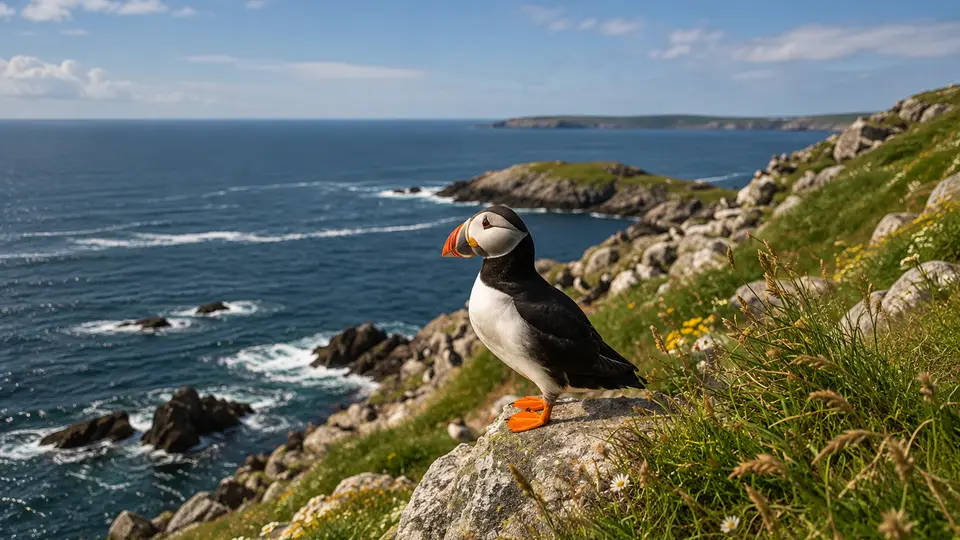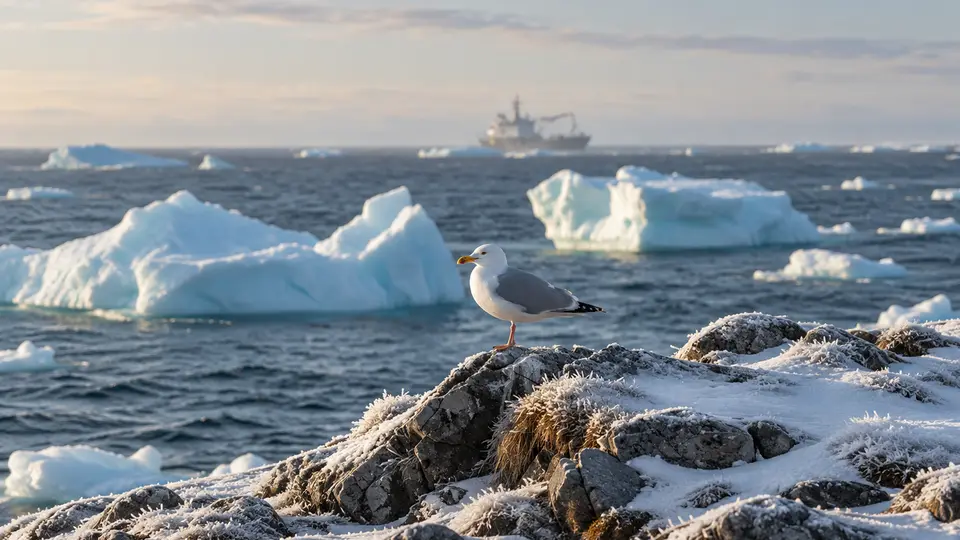
Glaucous Gull in its natural habitat, AI illustration

Glaucous GullLarus hyperboreusWhere and when to see them

Glaucous Gull at a glance

The glaucous gull is a large, pale gull breeding across the Arctic. Adults have a light gray back and entirely pale wing tips, giving them an unusually frosty appearance against dark cliffs. It is both predator and scavenger, exploiting rich coastal food sources and other birds' colonies. Many move south outside the breeding season, while others remain near open northern waters. Size, plumage age and hybridization can complicate identification in mixed gull gatherings.

Behaviour & reproduction

Size
63-77 cm long
Weight
1.0-2.3 kg
Lifespan
Not reliably established
Status
Least Concern

Breeding pairs defend territories on cliffs, islands or open tundra close to feeding areas. Some specialize in taking eggs or chicks from neighboring seabirds, while others rely more on fish, carrion or intertidal food. Outside nesting areas they may congregate around concentrated food supplies. Their flight is powerful and deliberate, and adults aggressively challenge intruders near nests. Young birds pass through several pale, mottled plumages before acquiring the adult appearance. Outside the breeding season, they are less territorial and often form loose flocks, sometimes mixed with other gull species. Their powerful flight allows them to cover vast distances efficiently, often following fishing vessels or whale pods for opportunistic feeding.

Top wildlife locations

Arctic wildlife habitat

Arctic

Accessible tundra shores, estuaries and seabird cliffs offer plausible land or deck views. No inland excursion is normally necessary, but many breeding coasts are remote, inaccessible or subject to wildlife restrictions.
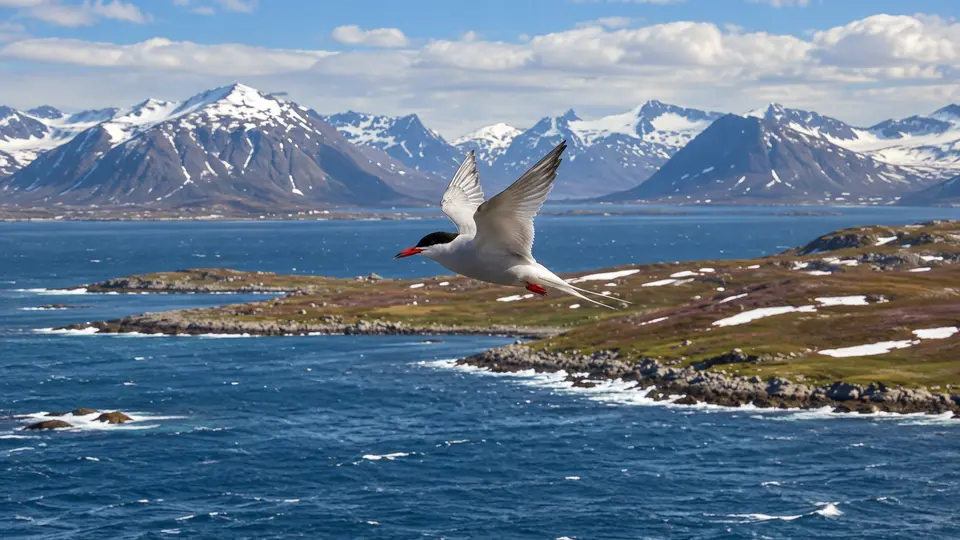
Destinations describe the species' habitat, not guaranteed cruise stops. Some animals require an optional inland excursion or are found in restricted reserves.

Fun facts about the Glaucous Gull

  • Adults lack the black wing tips familiar on many large gulls.
  • Juveniles typically have a pink bill with a sharply dark tip.
  • Some individuals become specialized predators at seabird colonies.
  • Adult plumage takes approximately four years to develop.

Best time to see the Glaucous Gull

June through August generally offers the most practical Arctic coastal access and opportunities to see breeding adults. Local nesting schedules depend on latitude, snow and ice. Birds may occur outside this window, but darkness, sea ice and limited transport restrict many northern shore visits. Early summer offers the best chance to observe courtship displays and nest building activities. By late summer, fledglings can be seen accompanying adults, learning essential foraging skills.

Glaucous Gull: season matrix by destination

Travel and observation windows vary by region. Highlighted months are an orientation for planning, not confirmed sightings or a guarantee of access.

Arctic

These months broadly reflect Arctic daylight and travel access; breeding stage and local abundance vary greatly across this extensive region.

JanFebMarAprMayJunJulAugSepOctNovDec
Cruise ships in Arctic

Where the Glaucous Gull lives

Arctic coasts, offshore islands, estuaries and tundra lakes provide breeding and feeding habitat. Nest sites range from cliff ledges to low ground. In winter, birds use ice-free shores, harbors and estuaries farther south, often gathering where currents or human activity concentrate food. This adaptable species is often found near human settlements in the Arctic, utilizing fishing ports and garbage dumps when available. They are one of the few gulls capable of breeding successfully in extremely high Arctic latitudes, showcasing their resilience to harsh conditions.

What the Glaucous Gull eats

The diet includes fish, marine invertebrates, carrion, small mammals and the eggs or young of other birds. It also scavenges human waste where accessible. Individual feeding habits vary considerably, with some breeding birds repeatedly exploiting nearby seabird colonies as a dependable seasonal resource. Prey consumed also includes a variety of berries and plant matter, particularly during seasons when animal protein is scarce. Chicks are primarily fed on a rich diet of fish and invertebrates, requiring frequent foraging trips by parents.

Species at a glance

Common name
Glaucous Gull
Scientific name
Larus hyperboreus
Animal group
Birds
Size
63-77 cm long
Weight
1.0-2.3 kg
Lifespan
Not reliably established
Status
Least Concern
Identification
Its massive build, heavy bill and white wing tips separate it from the generally smaller Iceland gull and the gray-wing-tipped glaucous-winged gull. The Glaucous gull is the largest gull in the Arctic, typically exhibiting a pale back and wings without any dark markings. Juveniles are uniformly buffy or mottled cream-brown, gradually lightening with each molt before achieving adult plumage around four years of age.

Glaucous Gull: frequently asked questions

Where can I see the Glaucous Gull?
Arctic. Use binoculars from open shore paths or decks and keep away from nesting ledges. Retreat if adults repeatedly alarm or swoop; do not approach nests for photographs or encourage scavenging with food. When viewing from a ship, scan ice floes and open water for individuals resting or actively hunting. Remember to maintain a respectful distance from any birds encountered on shore, especially during the breeding season to minimize disturbance.
When is the best time to see the Glaucous Gull?
June through August generally offers the most practical Arctic coastal access and opportunities to see breeding adults. Local nesting schedules depend on latitude, snow and ice. Birds may occur outside this window, but darkness, sea ice and limited transport restrict many northern shore visits. Early summer offers the best chance to observe courtship displays and nest building activities. By late summer, fledglings can be seen accompanying adults, learning essential foraging skills.
How big does the Glaucous Gull get?
63-77 cm long. Adult weight: 1.0-2.3 kg. Size varies with age, sex and population.
How should I behave around the Glaucous Gull?
Use binoculars from open shore paths or decks and keep away from nesting ledges. Retreat if adults repeatedly alarm or swoop; do not approach nests for photographs or encourage scavenging with food. When viewing from a ship, scan ice floes and open water for individuals resting or actively hunting. Remember to maintain a respectful distance from any birds encountered on shore, especially during the breeding season to minimize disturbance.
What does the Glaucous Gull eat?
The diet includes fish, marine invertebrates, carrion, small mammals and the eggs or young of other birds. It also scavenges human waste where accessible. Individual feeding habits vary considerably, with some breeding birds repeatedly exploiting nearby seabird colonies as a dependable seasonal resource. Prey consumed also includes a variety of berries and plant matter, particularly during seasons when animal protein is scarce. Chicks are primarily fed on a rich diet of fish and invertebrates, requiring frequent foraging trips by parents.
Are wildlife sightings guaranteed on an adventure cruise?
No. Animals move freely and routes, weather, access restrictions and local conditions influence every outing. Confirm the actual itinerary and shore program before booking.

Compare wildlife in the same destinations

Explore other birds recorded in these destinations. Similar surroundings do not mean the animals share the same habits or viewing season.

Species comparison by animal group and destination
Glaucous GullGlaucous GullArctic TernArctic TernAtlantic PuffinAtlantic Puffin
Animal groupBirdsAnimal groupBirdsAnimal groupBirds
DestinationsArcticDestinationsAlaska, Norway, ArcticDestinationsNew England, Norway, Scotland, Arctic
All wildlife destinations
Plan your trip

Find your next wildlife adventure

Compare destinations, shore programs and dates with the animals and habitats you would love to see.

  • Naturalist-led shore excursions
  • Responsible wildlife watching
  • Small expedition ships

Newsletter

Take Blue Rides with you

Adventure cruise offers, last-minute deals and trip inspiration.

Free, unsubscribe anytime. Details: Privacy Policy

Partner with Blue Rides

Affiliate Program

Recommend adventure cruises and earn commission on every confirmed booking.

Share. Track. Earn.

Your footage, our stage

Send us your videos or pictures.

Captured remarkable nature or wildlife on your journey? Share it with us, we may feature it on Blue Rides.