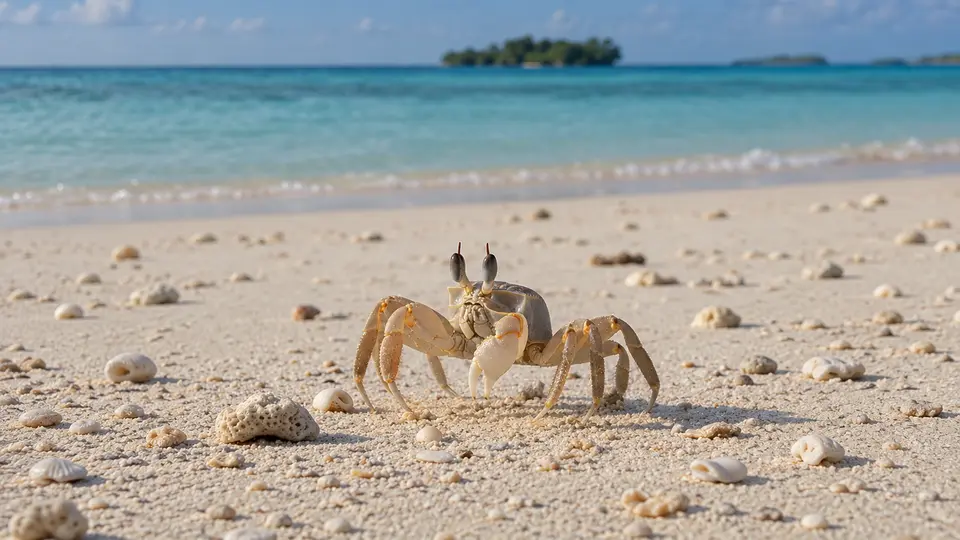
Ghost crab in its natural habitat, AI illustration

Ghost crab: where and when to see them

Marine life

Ghost crab at a glance

Ocypode is a genus of ghost crabs rather than a single species, so this catalog entry cannot support one species-level scientific name or set of measurements. These quick-running crabs inhabit sandy tropical and subtropical shores, including islands of the Maldives. Their pale colors often blend with dry sand, while stalked eyes provide a wide view. They link beach food webs by scavenging stranded material and hunting small animals along the shore.

Behaviour & reproduction

Size
Not reliably established
Weight
Not reliably established
Lifespan
Not reliably established
Status
Assessment varies

Ghost crabs excavate burrows that provide shelter from predators, heat and drying conditions. Many forage most visibly around dusk or at night, although daytime activity varies among species and sites. They dash sideways across open sand and retreat rapidly when approached. Individuals maintain and defend burrows, carrying sand to the entrance during excavation. Tracks, fresh spoil and open holes may reveal their presence even when the crabs remain hidden. They possess specialized gills and can spend extended periods out of water, returning to the ocean only to moisten their gills or for breeding. Ghost crabs exhibit complex social behaviors, including territorial disputes over burrows and foraging grounds. During reproduction, females release larvae into the ocean, which undergo several developmental stages before returning to the shore as tiny juveniles.

Top wildlife locations

Maldives wildlife habitat

Maldives

Accessible sandy island beaches and quieter backshore margins provide plausible viewing without an inland excursion. Heavily groomed or armored shores may support fewer crabs, and the particular Ocypode species requires local identification.

Adventure cruises in Maldives
Destinations describe the species' habitat, not guaranteed cruise stops. Some animals require an optional inland excursion or are found in restricted reserves.

Fun facts about the Ghost crab

  • Ocypode means swift-footed.
  • Their burrows buffer the extremes of exposed beach conditions.
  • Many have unequal-sized claws.
  • Some species produce sounds using specialized rubbing structures.

Best time to see the Ghost crab

December through April often offers practical beach-walking conditions in the Maldives. Ghost crab activity is not restricted to those months, and tide, darkness and local disturbance may matter more. This is a travel-weather window, not a species-specific reproductive season. While adult ghost crabs are active year-round, larval settlement and reproductive peaks for some species may occur during specific warmer months. Cooler, less humid periods might encourage more extended daytime foraging, especially during high tides that limit access to their burrows. It is important to note that their activity patterns are often nocturnal, regardless of the season, to avoid heat and predators.

Ghost crab: season matrix by destination

Travel and observation windows vary by region. Highlighted months are an orientation for planning, not confirmed sightings or a guarantee of access.

Maldives

These are generally favorable beach-travel months, not a confirmed crab breeding period; activity can occur year-round under suitable local conditions.

JanFebMarAprMayJunJulAugSepOctNovDec
Cruise ships in Maldives

Where the Ghost crab lives

These crabs typically occupy sandy beaches from the upper intertidal zone into the backshore. Burrow placement depends on moisture, tides, grain size and species. Unarmored beaches with limited vehicle traffic are generally more suitable than seawalls, heavily compacted sand or constantly groomed resort frontage. The specific type of sand, its moisture content, and the slope of the beach significantly influence the suitability of a habitat for different ghost crab species. Their burrows can extend vertically for a meter or more, providing stable microclimates against extreme temperatures and dehydration. Ghost crabs generally avoid areas with dense vegetation directly on the beach, preferring open sandy expanses for foraging and escape.

What the Ghost crab eats

Ghost crabs are opportunistic scavengers and predators, eating stranded animal remains, small invertebrates and other edible beach material. Some species take turtle eggs or hatchlings where available, but this should not be assumed for every crab or every island population. Their diet also includes detritus, algae, and small bivalves found in the intertidal zone. While primarily scavengers, some species are known to actively hunt smaller crustaceans or insects. The availability of food resources heavily influences their distribution and density on a given beach.

Species at a glance

Common name
Ghost crab
Scientific name
Name covers more than one taxon
Animal group
Marine life
Size
Not reliably established
Weight
Not reliably established
Lifespan
Not reliably established
Status
Assessment varies
Identification
Ghost crabs have a squarish body, long running legs and elevated eye stalks, unlike flattened swimming crabs, but identifying an Ocypode species requires closer anatomical evidence. Key identification features often include the presence or absence of a stylus on the eye stalks and the specific morphology of the tips of their walking legs. The color of ghost crabs varies considerably, acting as camouflage against different sand types and can range from pale white to mottled brown or grey. Size differences between species can be significant, with some reaching carapaces over 5 centimeters wide.

Ghost crab: frequently asked questions

Where can I see the Ghost crab?
Maldives. Walk slowly on permitted beaches at dusk, using low light and avoiding burrow entrances. Do not dig out or handle crabs, and obey turtle-beach lighting restrictions wherever they apply. Using a red-filtered flashlight can minimize disturbance to both crabs and other nocturnal beach wildlife, including nesting turtles. Observing from a distance with binoculars allows for detailed study without altering their natural foraging or social behaviors. Look for their characteristic V-shaped tracks in the sand, which can lead to burrow entrances or active foraging areas.
When is the best time to see the Ghost crab?
December through April often offers practical beach-walking conditions in the Maldives. Ghost crab activity is not restricted to those months, and tide, darkness and local disturbance may matter more. This is a travel-weather window, not a species-specific reproductive season. While adult ghost crabs are active year-round, larval settlement and reproductive peaks for some species may occur during specific warmer months. Cooler, less humid periods might encourage more extended daytime foraging, especially during high tides that limit access to their burrows. It is important to note that their activity patterns are often nocturnal, regardless of the season, to avoid heat and predators.
How big does the Ghost crab get?
Not reliably established. Adult weight: Not reliably established. Size varies with age, sex and population.
How should I behave around the Ghost crab?
Walk slowly on permitted beaches at dusk, using low light and avoiding burrow entrances. Do not dig out or handle crabs, and obey turtle-beach lighting restrictions wherever they apply. Using a red-filtered flashlight can minimize disturbance to both crabs and other nocturnal beach wildlife, including nesting turtles. Observing from a distance with binoculars allows for detailed study without altering their natural foraging or social behaviors. Look for their characteristic V-shaped tracks in the sand, which can lead to burrow entrances or active foraging areas.
What does the Ghost crab eat?
Ghost crabs are opportunistic scavengers and predators, eating stranded animal remains, small invertebrates and other edible beach material. Some species take turtle eggs or hatchlings where available, but this should not be assumed for every crab or every island population. Their diet also includes detritus, algae, and small bivalves found in the intertidal zone. While primarily scavengers, some species are known to actively hunt smaller crustaceans or insects. The availability of food resources heavily influences their distribution and density on a given beach.
Are wildlife sightings guaranteed on an adventure cruise?
No. Animals move freely and routes, weather, access restrictions and local conditions influence every outing. Confirm the actual itinerary and shore program before booking.

Compare wildlife in the same destinations

Explore other marine life recorded in these destinations. Similar surroundings do not mean the animals share the same habits or viewing season.

Species comparison by animal group and destination
Ghost crabGhost crabHermit crabHermit crabRisso's DolphinRisso's Dolphin
Animal groupMarine lifeAnimal groupMarine lifeAnimal groupMarine life
DestinationsMaldivesDestinationsMaldivesDestinationsEgypt, Greece, Portugal, Scotland, Turkey, Maldives
All wildlife destinations
Plan your trip

Find your next wildlife adventure

Compare destinations, shore programs and dates with the animals and habitats you would love to see.

  • Naturalist-led shore excursions
  • Responsible wildlife watching
  • Small expedition ships

Newsletter

Take Blue Rides with you

Adventure cruise offers, last-minute deals and trip inspiration.

Free, unsubscribe anytime. Details: Privacy Policy

Partner with Blue Rides

Affiliate Program

Recommend adventure cruises and earn commission on every confirmed booking.

Share. Track. Earn.

Your footage, our stage

Send us your videos or pictures.

Captured beautiful landscapes or wildlife? Share your videos and pictures with us, we may feature them on Blue Rides.