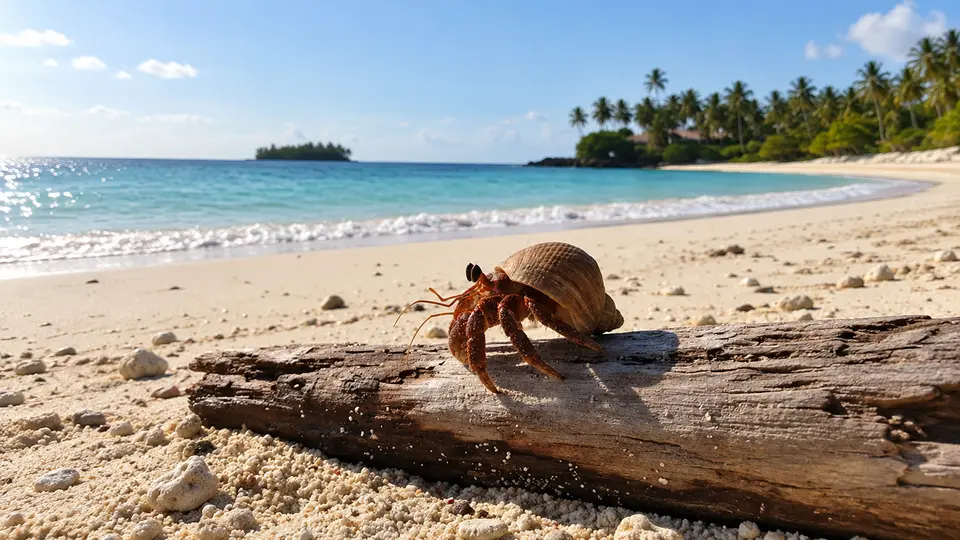
Hermit crab in its natural habitat, AI illustration

Hermit crabWhere and when to see them

Hermit crab at a glance

Hermit crab is a broad common name, not a single species, and the Maldives supports both marine and land-associated forms. Most shelter a soft, asymmetrical abdomen inside an empty gastropod shell, carrying this portable refuge as they move. A beach sighting alone does not establish species identity. Size, lifespan, conservation status and dependence on seawater differ substantially, so a more precise profile requires a securely identified animal.

Behaviour & reproduction

Size
Not reliably established
Weight
Not reliably established
Lifespan
Not reliably established
Status
Assessment varies

Many hermit crabs search for food most actively after dark or during cooler, humid conditions. When threatened, they withdraw into their borrowed shell and may block the entrance with a claw. Growth requires finding progressively larger housing, and competition over suitable shells can be intense. Terrestrial species return to the coast for reproduction, whereas marine species remain associated with tidal or permanently submerged habitats throughout their adult lives. Competition for suitable shells is a significant selective pressure, driving complex social interactions in some species during shell-swapping events. Some marine hermit crabs form aggregations, potentially for mating or shared resource foraging. The precise timing of reproduction for many Maldivian species is tied to lunar cycles and tidal patterns, influencing larval release.

Top wildlife locations

Maldives wildlife habitat

Maldives

Accessible island beaches, shaded strandlines and exposed rock pools offer plausible shore habitat. Species identity is often uncertain, and access to undeveloped islands may be restricted rather than routinely available.
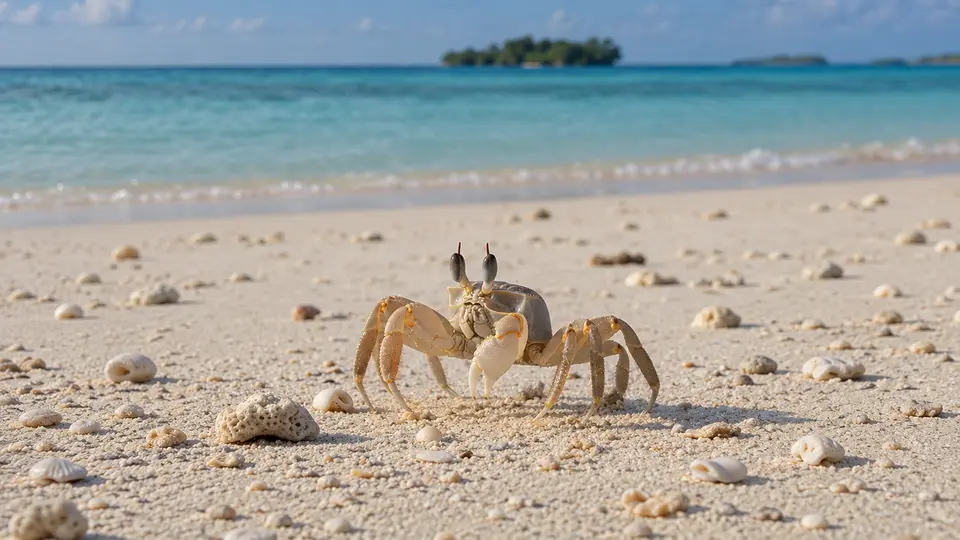
Destinations describe the species' habitat, not guaranteed cruise stops. Some animals require an optional inland excursion or are found in restricted reserves.

Fun facts about the Hermit crab

  • Hermit crabs are more closely grouped with squat lobsters than with true crabs.
  • Modified rear legs help grip the inside of a shell.
  • One abandoned large shell can trigger a sequence of shell exchanges.
  • Land hermit crabs still have marine larval stages.

Best time to see the Hermit crab

Shore observation may be possible throughout the year, with local tides, humidity and time of day often more important than month. The Maldives' drier season offers easier beach walking, but it does not establish a shared breeding or activity season for all species. Peak foraging activity for many terrestrial species aligns with periods of higher humidity or after rainfall, which can occur during the Maldives' wet season. While year-round observation is possible, calm sea conditions during the dry season might facilitate spotting marine species in shallow reef areas. However, hermit crab activity patterns are often more influenced by tidal cycles than seasonal changes.

Hermit crab: season matrix by destination

Travel and observation windows vary by region. Highlighted months are an orientation for planning, not confirmed sightings or a guarantee of access.

Maldives

This is a generally drier beach-travel window, not evidence of particular hermit crab species or their breeding dates.

JanFebMarAprMayJunJulAugSepOctNovDec
Cruise ships in Maldives

Where the Hermit crab lives

Shore-visible forms may occupy beach vegetation, strandlines, shaded coastal litter and exposed intertidal rock pools. Habitat preferences depend on species. Land hermit crabs need humid refuges and access to the sea for larval release, while marine forms require aquatic conditions. Coastal species often prefer sandy or muddy substrates in intertidal zones, and some may be found in mangrove root systems. Marine hermit crabs in the Maldives inhabit a range of reef environments, including rubble zones and coral crevices. These diverse habitats support a variety of shell options for different species.

What the Hermit crab eats

Many species are opportunistic scavengers, eating decaying vegetation, stranded organic matter and small animal remains. Others graze algae or collect fine particles. Their feeding helps recycle coastal nutrients, but this does not make human food or litter safe for them. Some terrestrial hermit crabs supplement their diet by scavenging dead insects or small crustaceans. Marine species frequently consume detritus and small invertebrates found within the sediments. Their role as detritivores is crucial for maintaining ecosystem health.

Species at a glance

Common name
Hermit crab
Scientific name
Name covers more than one taxon
Animal group
Marine life
Size
Not reliably established
Weight
Not reliably established
Lifespan
Not reliably established
Status
Assessment varies
Identification
A crab carrying a borrowed snail shell is usually a hermit crab, but shell shape alone cannot distinguish species because the shell was made by another animal. Beyond the borrowed shell, some larger hermit crab species in the Maldives might display distinct claw shapes or color patterns on their legs and antennae. Not all hermit crabs occupy spiraled snail shells; some unusual species utilize clam shells, coral fragments, or even plant material. Observing these features can help differentiate between species despite the varied shells they inhabit.

Hermit crab: frequently asked questions

Where can I see the Hermit crab?
Maldives. Observe from dry shore without handling crabs, removing occupied shells or blocking their route. Avoid bright prolonged lighting at night, and watch your footing because small animals can resemble empty shells. When viewing marine species in shallow waters from a boat or shore, look for movement among coral rubble and seagrass beds. Remember that some species can be quite small, requiring a keen eye to spot them amidst their surroundings. A patient approach enhances the chances of observing their natural behaviors.
When is the best time to see the Hermit crab?
Shore observation may be possible throughout the year, with local tides, humidity and time of day often more important than month. The Maldives' drier season offers easier beach walking, but it does not establish a shared breeding or activity season for all species. Peak foraging activity for many terrestrial species aligns with periods of higher humidity or after rainfall, which can occur during the Maldives' wet season. While year-round observation is possible, calm sea conditions during the dry season might facilitate spotting marine species in shallow reef areas. However, hermit crab activity patterns are often more influenced by tidal cycles than seasonal changes.
How big does the Hermit crab get?
Not reliably established. Adult weight: Not reliably established. Size varies with age, sex and population.
How should I behave around the Hermit crab?
Observe from dry shore without handling crabs, removing occupied shells or blocking their route. Avoid bright prolonged lighting at night, and watch your footing because small animals can resemble empty shells. When viewing marine species in shallow waters from a boat or shore, look for movement among coral rubble and seagrass beds. Remember that some species can be quite small, requiring a keen eye to spot them amidst their surroundings. A patient approach enhances the chances of observing their natural behaviors.
What does the Hermit crab eat?
Many species are opportunistic scavengers, eating decaying vegetation, stranded organic matter and small animal remains. Others graze algae or collect fine particles. Their feeding helps recycle coastal nutrients, but this does not make human food or litter safe for them. Some terrestrial hermit crabs supplement their diet by scavenging dead insects or small crustaceans. Marine species frequently consume detritus and small invertebrates found within the sediments. Their role as detritivores is crucial for maintaining ecosystem health.
Are wildlife sightings guaranteed on an adventure cruise?
No. Animals move freely and routes, weather, access restrictions and local conditions influence every outing. Confirm the actual itinerary and shore program before booking.

Compare wildlife in the same destinations

Explore other marine life recorded in these destinations. Similar surroundings do not mean the animals share the same habits or viewing season.

Species comparison by animal group and destination
Hermit crabHermit crabGhost crabGhost crabRisso's DolphinRisso's Dolphin
Animal groupMarine lifeAnimal groupMarine lifeAnimal groupMarine life
DestinationsMaldivesDestinationsMaldivesDestinationsEgypt, Greece, Portugal, Scotland, Turkey, Maldives
All wildlife destinations
Plan your trip

Find your next wildlife adventure

Compare destinations, shore programs and dates with the animals and habitats you would love to see.

  • Naturalist-led shore excursions
  • Responsible wildlife watching
  • Small expedition ships

Newsletter

Take Blue Rides with you

Adventure cruise offers, last-minute deals and trip inspiration.

Free, unsubscribe anytime. Details: Privacy Policy

Partner with Blue Rides

Affiliate Program

Recommend adventure cruises and earn commission on every confirmed booking.

Share. Track. Earn.

Your footage, our stage

Send us your videos or pictures.

Captured remarkable nature or wildlife on your journey? Share it with us, we may feature it on Blue Rides.