Risso's Dolphin in its natural habitatAI-modified

Risso's DolphinGrampus griseusWhere and when to see them

Risso's Dolphin at a glance

Risso's dolphin is a robust oceanic dolphin with a blunt head, tall dorsal fin and a body that often becomes extensively scarred with age. Older animals may look almost white, contrasting with darker young dolphins. It favors productive waters around slopes, canyons and steep island margins, so it is not generally a close-to-beach species. In suitable regions, distant shore or deck observations can reveal its distinctive shape and pale coloration.

Behaviour & reproduction

Size
2.6-3.8 m (8.5-12.5 ft) long
Weight
300-500 kg (660-1,100 lb)
Lifespan
25-35 years in the wild
Status
Least Concern

Groups commonly travel, rest and socialize together, with membership changing through time. Animals may surface quietly in coordinated sequences, although breaches and tail slaps also occur. Tooth marks from other dolphins contribute to the pale scarring that accumulates on their bodies, alongside marks associated with prey. Social relationships can be persistent, and sound is central to communication and locating food. Visible surface activity represents only a small part of their daily lives. Groups commonly travel, rest and socialize together, with membership changing through time. Animals may surface quietly in coordinated sequences, although breaches and tail slaps also occur. Tooth marks from other dolphins contribute to the pale scarring that accumulates on their bodies, alongside marks associated with prey. Social relationships can be persistent, and sound is central to communication and locating food. Visible surface activity represents only a small part of their daily lives. They are known to engage in deep dives, sometimes lasting over 10 minutes, in pursuit of prey. While generally not known for acrobatic displays, they occasionally perform spyhops or lobtails, particularly during social interactions.

Top wildlife locations

Egypt wildlife habitatAI-modified

Egypt

Deep Red Sea waters provide plausible habitat, but coastal sightings are uncommon and distribution is poorly predictable. Shore viewpoints overlooking deep water or distant deck scans are possibilities, not established viewing guarantees.

Greece wildlife habitatAI-modified

Greece

Steep island margins and coastlines overlooking deep Mediterranean water offer plausible distant viewing. Risso's dolphins are generally offshore and rarely seen from shore, so accessible viewpoints do not imply regular presence.

Portugal wildlife habitatAI-modified

Portugal

Atlantic island coasts and mainland viewpoints overlooking deeper offshore water provide plausible observation settings. Shore sightings remain uncertain, with many animals beyond easy viewing range; distant deck observation may be more practical.

Scotland wildlife habitatAI-modified

Scotland

Headlands in the Hebrides and Northern Isles can overlook suitable coastal waters. Shore sightings are localized and unpredictable, and exposed viewpoints require care; no landing or close approach is necessary.

Turkey wildlife habitatAI-modified

Turkey

Deep-water Mediterranean and Aegean margins provide plausible habitat, generally beyond sheltered beaches. Shore observations are rare, and even prominent coastal viewpoints should be regarded as opportunistic scanning locations rather than dependable sites.

Maldives wildlife habitatAI-modified

Maldives

Outer atoll margins border suitable deep ocean habitat, but shore visibility is limited and sightings are uncertain. Distant deck scans may offer opportunities without approaching groups or assuming lagoon waters are typical habitat.

Destinations describe the species' habitat, not guaranteed cruise stops. Some animals require an optional inland excursion or are found in restricted reserves.

Fun facts about the Risso's Dolphin

  • Older individuals can become nearly white through accumulated scarring.
  • Teeth are usually present only near the front of the lower jaw.
  • Young dolphins are darker and less scarred than many adults.
  • Natural scars and dorsal-fin shapes help researchers recognize individuals.

Best time to see the Risso's Dolphin

There is no single viewing season across this dolphin's extensive range. Calmer weather improves distant detection from shores and decks, while local prey conditions influence presence. Regional travel windows below describe practical observation conditions, not breeding seasons or assurances of dolphins near accessible coastlines. There is no single viewing season across this dolphin's extensive range. Calmer weather improves distant detection from shores and decks, while local prey conditions influence presence. Regional travel windows below describe practical observation conditions, not breeding seasons or assurances of dolphins near accessible coastlines. In temperate regions, summer and early autumn often provide the calmest sea conditions, which are ideal for spotting these often elusive animals. Their presence near coasts can also be seasonal, following prey availability and oceanographic features.

Risso's Dolphin: season matrix by destination

Travel and observation windows vary by region. Highlighted months are an orientation for planning, not confirmed sightings or a guarantee of access.

Egypt

Available information does not justify a species-specific Egyptian shore-viewing window; general Red Sea holiday seasons should not be treated as dolphin seasonality.

JanFebMarAprMayJunJulAugSepOctNovDec
Cruise ships in Egypt

Greece

These months offer broad daylight and often workable coastal viewing weather, although strong summer winds occur; this is not a documented breeding or presence peak.

JanFebMarAprMayJunJulAugSepOctNovDec
Cruise ships in Greece

Portugal

Late spring through early autumn generally supports comfortable viewing and longer daylight, but mainland, Madeira and Azorean conditions differ and dolphin presence remains local.

JanFebMarAprMayJunJulAugSepOctNovDec
Cruise ships in Portugal

Scotland

Longer daylight favors coastal scans in summer, but wind and sea state strongly affect detection; animals are not restricted to these months.

JanFebMarAprMayJunJulAugSepOctNovDec
Cruise ships in Scotland

Turkey

A reliable Turkish shore-observation season is not established; broad summer travel conditions alone do not support a species-specific window.

JanFebMarAprMayJunJulAugSepOctNovDec
Cruise ships in Turkey

Maldives

The generally drier northeast-monsoon period can aid distant observation, but it is a weather-based window rather than evidence of a seasonal Risso's dolphin concentration.

JanFebMarAprMayJunJulAugSepOctNovDec
Cruise ships in Maldives

Where the Risso's Dolphin lives

Risso's dolphins occupy tropical and temperate seas, often near continental slopes, submarine canyons and steep-sided islands. Deep water close to land can create shore-viewing opportunities, but many groups remain far offshore. Distribution is patchy even within broadly suitable ocean regions. Risso's dolphins occupy tropical and temperate seas, often near continental slopes, submarine canyons and steep-sided islands. Deep water close to land can create shore-viewing opportunities, but many groups remain far offshore. Distribution is patchy even within broadly suitable ocean regions. They often prefer waters 400 to 1,000 meters deep and are less commonly found in shallow coastal areas. While highly migratory in some regions, resident populations are also known to occur.

What the Risso's Dolphin eats

Squid and other cephalopods dominate the diet, supplemented by occasional fish and crustaceans. Feeding often targets prey associated with deeper waters and their changing daily distribution. The species has relatively few teeth, usually confined to the lower jaw, and relies substantially on suction feeding. Squid and other cephalopods dominate the diet, supplemented by occasional fish and crustaceans. Feeding often targets prey associated with deeper waters and their changing daily distribution. The species has relatively few teeth, usually confined to the lower jaw, and relies substantially on suction feeding. Their diet is diverse and includes a variety of squid species, which they typically hunt at night when prey migrate closer to the surface. Characteristic parallel rakes and scars on their bodies are often attributed to struggles with large squid.

Species at a glance

Common name
Risso's Dolphin
Scientific name
Grampus griseus
Animal group
Marine life
Size
2.6-3.8 m (8.5-12.5 ft) long
Weight
300-500 kg (660-1,100 lb)
Lifespan
25-35 years in the wild
Status
Least Concern
Identification
The blunt beakless head, tall curved dorsal fin and heavily scarred gray-to-white body distinguish adults from bottlenose dolphins and the more uniformly dark pilot whales. The blunt beakless head, tall curved dorsal fin and heavily scarred gray-to-white body distinguish adults from bottlenose dolphins and the more uniformly dark pilot whales. Calves and juveniles are typically much darker, ranging from grey to black, and accumulate their distinctive white scarring with age. The numerous linear scars, some of which are from interactions with other Risso's dolphins, create a unique pattern on each individual.

Risso's Dolphin: frequently asked questions

Where can I see the Risso's Dolphin?
Egypt, Greece, Portugal, Scotland, Turkey, Maldives. Scan deeper offshore waters with binoculars from secure viewpoints or decks. Keep vessels on predictable courses, never pursue groups or position between animals, and follow local marine-mammal distance rules if dolphins appear. Scan deeper offshore waters with binoculars from secure viewpoints or decks. Keep vessels on predictable courses, never pursue groups or position between animals, and follow local marine-mammal distance rules if dolphins appear. Binoculars are essential for detecting their subtle blows and dorsal fins from a distance. Look for characteristic splashes, known as 'rissoing', which can indicate their presence even if the animals are not fully visible.
When is the best time to see the Risso's Dolphin?
There is no single viewing season across this dolphin's extensive range. Calmer weather improves distant detection from shores and decks, while local prey conditions influence presence. Regional travel windows below describe practical observation conditions, not breeding seasons or assurances of dolphins near accessible coastlines. There is no single viewing season across this dolphin's extensive range. Calmer weather improves distant detection from shores and decks, while local prey conditions influence presence. Regional travel windows below describe practical observation conditions, not breeding seasons or assurances of dolphins near accessible coastlines. In temperate regions, summer and early autumn often provide the calmest sea conditions, which are ideal for spotting these often elusive animals. Their presence near coasts can also be seasonal, following prey availability and oceanographic features.
How big does the Risso's Dolphin get?
2.6-3.8 m (8.5-12.5 ft) long. Adult weight: 300-500 kg (660-1,100 lb). Size varies with age, sex and population.
How should I behave around the Risso's Dolphin?
Scan deeper offshore waters with binoculars from secure viewpoints or decks. Keep vessels on predictable courses, never pursue groups or position between animals, and follow local marine-mammal distance rules if dolphins appear. Scan deeper offshore waters with binoculars from secure viewpoints or decks. Keep vessels on predictable courses, never pursue groups or position between animals, and follow local marine-mammal distance rules if dolphins appear. Binoculars are essential for detecting their subtle blows and dorsal fins from a distance. Look for characteristic splashes, known as 'rissoing', which can indicate their presence even if the animals are not fully visible.
What does the Risso's Dolphin eat?
Squid and other cephalopods dominate the diet, supplemented by occasional fish and crustaceans. Feeding often targets prey associated with deeper waters and their changing daily distribution. The species has relatively few teeth, usually confined to the lower jaw, and relies substantially on suction feeding. Squid and other cephalopods dominate the diet, supplemented by occasional fish and crustaceans. Feeding often targets prey associated with deeper waters and their changing daily distribution. The species has relatively few teeth, usually confined to the lower jaw, and relies substantially on suction feeding. Their diet is diverse and includes a variety of squid species, which they typically hunt at night when prey migrate closer to the surface. Characteristic parallel rakes and scars on their bodies are often attributed to struggles with large squid.
Are wildlife sightings guaranteed on an adventure cruise?
No. Animals move freely and routes, weather, access restrictions and local conditions influence every outing. Confirm the actual itinerary and shore program before booking.

Compare wildlife in the same destinations

Explore other marine life recorded in these destinations. Similar surroundings do not mean the animals share the same habits or viewing season.

Species comparison by animal group and destination
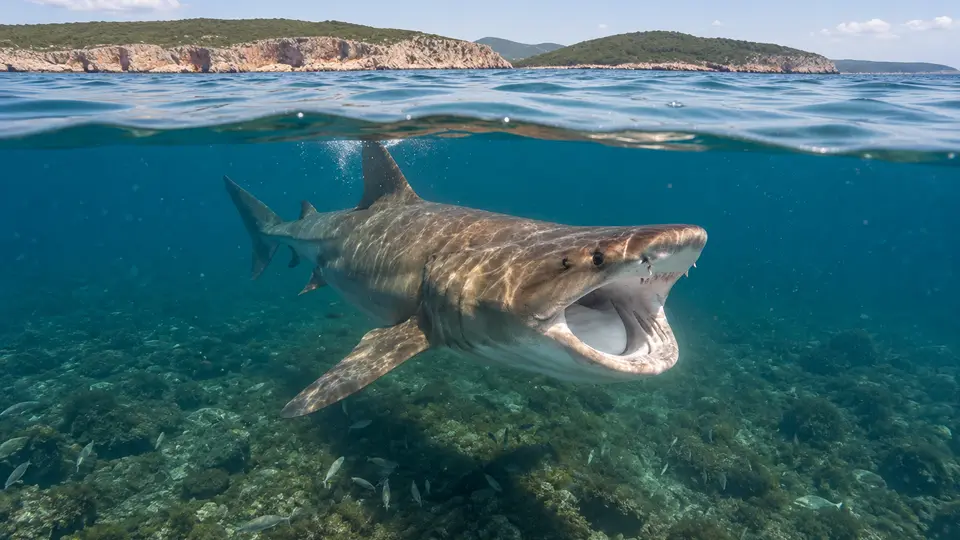
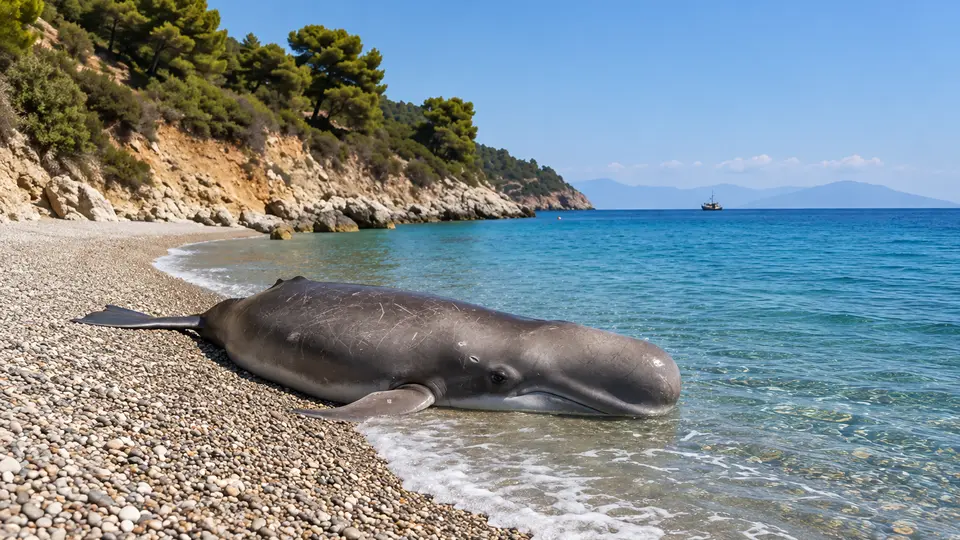
Risso's DolphinAI-modifiedRisso's DolphinBasking SharkAI-modifiedBasking SharkCuvier's Beaked WhaleAI-modifiedCuvier's Beaked Whale
Animal groupMarine lifeAnimal groupMarine lifeAnimal groupMarine life
DestinationsEgypt, Greece, Portugal, Scotland, Turkey, MaldivesDestinationsScotlandDestinationsGreece
Scientific nameGrampus griseusScientific nameScientific name
All wildlife destinations
AI-modified
Plan your trip

Find your next wildlife adventure

Compare destinations, shore programs and dates with the animals and habitats you would love to see.

  • Naturalist-led shore excursions
  • Responsible wildlife watching
  • Small expedition ships