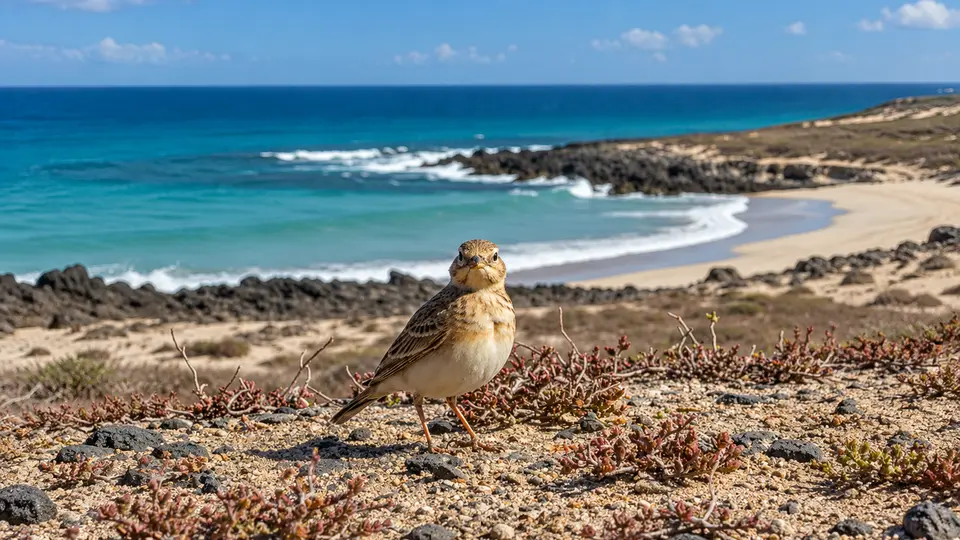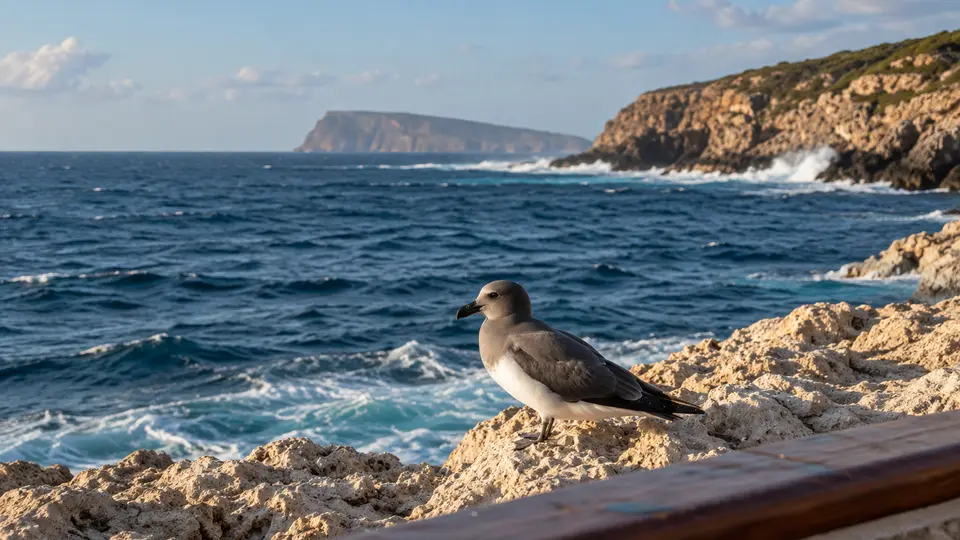
Fea's Petrel in its natural habitat, AI illustration
Size33-36 cm longLifespanNot reliably establishedStatusNear Threatened

Fea's Petrel: where and when to see them

Pterodroma feae

Fea's Petrel at a glance

Fea's petrel is a Cape Verde breeding gadfly petrel adapted to wide-ranging oceanic life. Grey upperparts and pale underparts conceal a powerful flyer capable of sweeping arcs above the sea. Its nesting distribution is restricted, even though individuals travel far beyond the archipelago. Modern treatments separate it from the closely similar Desertas petrel, making older records and names potentially confusing. Most visitors are more likely to obtain a distant offshore glimpse than a clear shore-based identification.

Behaviour & reproduction

Size
33-36 cm long
Weight
Not reliably established
Lifespan
Not reliably established
Status
Near Threatened

Fea's petrels use wind to sustain long gliding flights, alternating banking arcs with periods of flapping. They range widely while feeding and return to nesting areas mainly at night. Pairs occupy concealed burrows or rock cavities, where a single egg is laid. Adults alternate incubation and feeding duties over a prolonged breeding cycle. Quiet colony behaviour and difficult terrain make nesting birds hard to observe, and introduced predators pose particular risks to eggs and chicks. Courtship displays often involve aerial pursuits and vocalizations at night near breeding sites. Adults are highly vulnerable to introduced predators such as cats and rats, which can decimate entire colonies. The single chick remains in the burrow for an extended period, relying on parental feeding trips before fledging.

Top wildlife locations

Cape Verde wildlife habitat

Cape Verde

Exposed coastal viewpoints may offer rare distant views, with offshore decks generally more plausible. Breeding colonies lie in rugged inland uplands, require specialist access and are not standard coastal landings.

Adventure cruises in Cape Verde
Destinations describe the species' habitat, not guaranteed cruise stops. Some animals require an optional inland excursion or are found in restricted reserves.

Fun facts about the Fea's Petrel

  • Its name commemorates the Italian naturalist Leonardo Fea.
  • Under current species limits, its breeding range is confined to Cape Verde.
  • It belongs to the gadfly petrels, named for their restless aerial style.
  • Desertas petrel was formerly treated within the same species.

Best time to see the Fea's Petrel

Late autumn through spring broadly overlaps breeding attendance in Cape Verde, although timing varies between islands and pairs. Distant deck observation remains possible outside that period. Wind, sea state and identification conditions matter, and breeding attendance does not make colonies appropriate visitor destinations. Peak breeding activity, including egg laying and chick rearing, typically falls within these months. Outside the breeding season, individuals disperse widely across the Atlantic. For cruises, understanding these seasonal patterns helps predict the likelihood of encountering the species at sea.

Fea's Petrel: season matrix by destination

Travel and observation windows vary by region. Highlighted months are an orientation for planning, not confirmed sightings or a guarantee of access.

Cape Verde

This broad window overlaps commonly reported breeding attendance, not assured sightings; island-specific timing varies, and offshore birds can occur beyond these months.

JanFebMarAprMayJunJulAugSepOctNovDec
Cruise ships in Cape Verde

Where the Fea's Petrel lives

Open Atlantic waters provide feeding habitat, while breeding occurs in rugged upland terrain on selected Cape Verde islands. Nest sites include burrows and rocky cavities. Colonies are not ordinary shoreline attractions, and steep terrain or conservation restrictions can prevent public access. Some breeding sites are located on steep cliff faces or in remote, inaccessible areas, further emphasizing their isolation. These unique environments provide protection from terrestrial predators. Although breeding occurs on land, the species spends the vast majority of its life at sea.

What the Fea's Petrel eats

Squid, small fish and crustaceans are reported prey, obtained at or near the sea surface. Detailed diet information remains limited compared with many widespread seabirds. Offshore feeding distributions shift with ocean conditions, so nearby land does not necessarily indicate a regular feeding concentration. Observations indicate prey is often snatched from the surface or just below, sometimes with shallow dives. Like many petrels, they likely utilize olfactory cues to locate patchy food sources. Their diet likely reflects the availability of small pelagic organisms in their specific feeding grounds.

Species at a glance

Common name
Fea's Petrel
Scientific name
Pterodroma feae
Animal group
Birds
Size
33-36 cm long
Weight
Not reliably established
Lifespan
Not reliably established
Status
Near Threatened
Identification
Its grey upperparts, dark upperwing pattern and mostly dark underwings suggest the Fea's group, but separating it from Desertas and Zino's petrels at distance often requires expert assessment of bill and structure. The Fea's petrel (sensu lato) has a distinctive flight style, with powerful, somewhat stiff wingbeats interspersed with long glides. Key features to note include the short, stout bill and proportionally long wings. Pay attention to overall size and body shape, as this can help differentiate it from other seabirds at a distance.

Fea's Petrel: frequently asked questions

Where can I see the Fea's Petrel?
Cape Verde. Watch only from safe coastal viewpoints or a stable deck, preferably with an experienced seabird guide. Do not seek out nocturnal nesting sites, use playback or enter fragile burrows and restricted upland colonies. Focus on areas with known pelagic bird activity, especially around upwellings or current lines. Binoculars and spotting scopes are essential for effective observation from a moving vessel. Patience is key, as these birds can be elusive and appear suddenly.
When is the best time to see the Fea's Petrel?
Late autumn through spring broadly overlaps breeding attendance in Cape Verde, although timing varies between islands and pairs. Distant deck observation remains possible outside that period. Wind, sea state and identification conditions matter, and breeding attendance does not make colonies appropriate visitor destinations. Peak breeding activity, including egg laying and chick rearing, typically falls within these months. Outside the breeding season, individuals disperse widely across the Atlantic. For cruises, understanding these seasonal patterns helps predict the likelihood of encountering the species at sea.
How big does the Fea's Petrel get?
33-36 cm long. Adult weight: Not reliably established. Size varies with age, sex and population.
How should I behave around the Fea's Petrel?
Watch only from safe coastal viewpoints or a stable deck, preferably with an experienced seabird guide. Do not seek out nocturnal nesting sites, use playback or enter fragile burrows and restricted upland colonies. Focus on areas with known pelagic bird activity, especially around upwellings or current lines. Binoculars and spotting scopes are essential for effective observation from a moving vessel. Patience is key, as these birds can be elusive and appear suddenly.
What does the Fea's Petrel eat?
Squid, small fish and crustaceans are reported prey, obtained at or near the sea surface. Detailed diet information remains limited compared with many widespread seabirds. Offshore feeding distributions shift with ocean conditions, so nearby land does not necessarily indicate a regular feeding concentration. Observations indicate prey is often snatched from the surface or just below, sometimes with shallow dives. Like many petrels, they likely utilize olfactory cues to locate patchy food sources. Their diet likely reflects the availability of small pelagic organisms in their specific feeding grounds.
Are wildlife sightings guaranteed on an adventure cruise?
No. Animals move freely and routes, weather, access restrictions and local conditions influence every outing. Confirm the actual itinerary and shore programme before booking.

Compare wildlife in the same destinations

Explore other birds recorded in these destinations. Similar surroundings do not mean the animals share the same habits or viewing season.

Species comparison by animal group and destination
Fea's PetrelFea's PetrelAlexander's SwiftAlexander's SwiftBar-tailed LarkBar-tailed Lark
Animal groupBirdsAnimal groupBirdsAnimal groupBirds
DestinationsCape VerdeDestinationsCape VerdeDestinationsCape Verde
All wildlife destinations
Plan your trip

Find your next wildlife adventure

Compare destinations, shore programmes and dates with the animals and habitats you would love to see.

  • Naturalist-led shore excursions
  • Responsible wildlife watching
  • Small expedition ships

Newsletter

Take Blue Rides with you

Adventure cruise offers, last-minute deals and trip inspiration.

Free, unsubscribe anytime. Details: Privacy Policy

Partner with Blue Rides

Affiliate Program

Recommend adventure cruises and earn commission on every confirmed booking.

Share. Track. Earn.