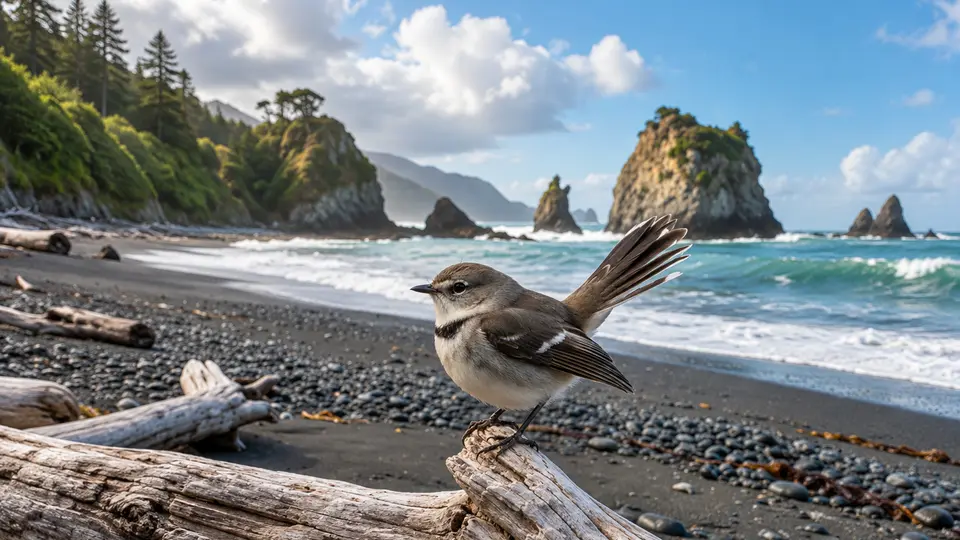
Fantail in its natural habitatAI-modified

FantailRhipidura fuliginosaWhere and when to see them

Fantail at a glance

The New Zealand fantail, or pīwakawaka, is a small endemic insect-eating bird whose expressive tail makes it immediately memorable. It is widespread in forest, scrub, gardens and parks, often approaching people as it catches insects disturbed by their movement. Most birds have contrasting pale eyebrows and breast markings, while a dark morph occurs especially on the South Island. Despite their familiar presence, local populations can suffer sharp losses during prolonged cold weather.

Behaviour & reproduction

Size
16 cm (6.3 in) body length
Weight
6-9 g (0.21-0.32 oz)
Lifespan
Not reliably established
Status
Least Concern

Fantails move almost continuously, pivoting on branches, flicking their wings and spreading the tail while searching for insects. Short aerial sallies take them around foliage and close to walkers, but this apparent friendliness reflects feeding opportunities rather than tameness. Pairs build neat cup nests and may attempt several broods in favorable conditions. Both parents care for young, while winter survival depends heavily on finding enough active insects during short, cold days. The elaborate fanning of their tail, used to flush out insects, is a characteristic and frequent display. Fantails are known to be polyandrous or serially monogamous, with females laying multiple clutches with different males within a single breeding season.

Top wildlife locations

New Zealand wildlife habitatAI-modified

New Zealand

Sheltered coastal woodland, gardens and regenerating scrub beside public walking tracks provide plausible shore-excursion habitat. No inland journey is necessarily required, although exposed beaches without vegetation are unsuitable places to search.
Destinations describe the species' habitat, not guaranteed cruise stops. Some animals require an optional inland excursion or are found in restricted reserves.

Fun facts about the Fantail

  • Black-morph birds are much more frequent on the South Island than on the North Island.
  • The nest often has a narrow tail of material extending below its cup.
  • Walkers can unintentionally flush the insects that attract nearby fantails.
  • Several nesting attempts may occur within one favorable breeding season.

Best time to see the Fantail

Observation is possible throughout the year wherever suitable vegetation occurs. Spring and summer often provide abundant insects and busy family groups, while autumn can also be productive. Cold spells may reduce local numbers, particularly in southern or high-altitude habitats. In milder northern regions, individuals can sometimes breed year-round, especially if food is plentiful. During winter, birds may move to lower altitudes or more sheltered areas to find warmer microclimates and insect activity.

Fantail: season matrix by destination

Travel and observation windows vary by region. Highlighted months are an orientation for planning, not confirmed sightings or a guarantee of access.

New Zealand

Resident year-round; weather, insect activity and local vegetation influence detectability more than a fixed travel season.

JanFebMarAprMayJunJulAugSepOctNovDec
Cruise ships in New Zealand

Where the Fantail lives

Fantails occupy native and exotic woodland, shrubland, regenerating vegetation, gardens and sheltered urban parks. Coastal forest edges can provide excellent land-based observation. They generally need vegetation supporting insects and shelter, rather than open beaches or exposed shorelines without nearby cover. While common throughout much of New Zealand, they are absent from the Chatham Islands. Fantails often inhabit forest understories, frequently joining mixed-species feeding flocks.

What the Fantail eats

Small flying insects and other arthropods supply almost all food. Fantails catch prey in brief aerial chases or pick it from vegetation. They sometimes follow people or other animals because movement disturbs insects, creating opportunities for quick, close-range feeding. Their diet can also include small spiders and, occasionally, fruit or nectar, though insects remain primary. Fantails exhibit remarkable agility, performing acrobatic twists and turns to capture prey mid-flight.

Species at a glance

Common name
Fantail
Scientific name
Rhipidura fuliginosa
Animal group
Birds
Size
16 cm (6.3 in) body length
Weight
6-9 g (0.21-0.32 oz)
Lifespan
Not reliably established
Status
Least Concern
Identification
Its disproportionately long, frequently fanned tail and contrasting eyebrow distinguish it from New Zealand robins and tomtits, which have shorter tails and less fluttering flight. Two distinct color morphs occur: a common pied morph with black and white plumage, and a rarer melanistic (all black) morph, particularly prevalent in the South Island. The pied morph has a noticeable white eyebrow stripe and two white wing bars, which are absent in the darker morph.

Fantail: frequently asked questions

Where can I see the Fantail?
New Zealand. Stand quietly beside a vegetated track and let birds approach naturally. Do not feed them or clear branches for photographs. Keep cats and dogs controlled, and avoid lingering beside an actively attended nest. Be alert for their distinctive 'cheet' call, which often signals their presence before you see them. Watching fantails at the edge of the forest from a stationary vantage point can provide excellent, sustained views.
When is the best time to see the Fantail?
Observation is possible throughout the year wherever suitable vegetation occurs. Spring and summer often provide abundant insects and busy family groups, while autumn can also be productive. Cold spells may reduce local numbers, particularly in southern or high-altitude habitats. In milder northern regions, individuals can sometimes breed year-round, especially if food is plentiful. During winter, birds may move to lower altitudes or more sheltered areas to find warmer microclimates and insect activity.
How big does the Fantail get?
16 cm (6.3 in) body length. Adult weight: 6-9 g (0.21-0.32 oz). Size varies with age, sex and population.
How should I behave around the Fantail?
Stand quietly beside a vegetated track and let birds approach naturally. Do not feed them or clear branches for photographs. Keep cats and dogs controlled, and avoid lingering beside an actively attended nest. Be alert for their distinctive 'cheet' call, which often signals their presence before you see them. Watching fantails at the edge of the forest from a stationary vantage point can provide excellent, sustained views.
What does the Fantail eat?
Small flying insects and other arthropods supply almost all food. Fantails catch prey in brief aerial chases or pick it from vegetation. They sometimes follow people or other animals because movement disturbs insects, creating opportunities for quick, close-range feeding. Their diet can also include small spiders and, occasionally, fruit or nectar, though insects remain primary. Fantails exhibit remarkable agility, performing acrobatic twists and turns to capture prey mid-flight.
Are wildlife sightings guaranteed on an adventure cruise?
No. Animals move freely and routes, weather, access restrictions and local conditions influence every outing. Confirm the actual itinerary and shore program before booking.

Compare wildlife in the same destinations

Explore other birds recorded in these destinations. Similar surroundings do not mean the animals share the same habits or viewing season.

Species comparison by animal group and destination
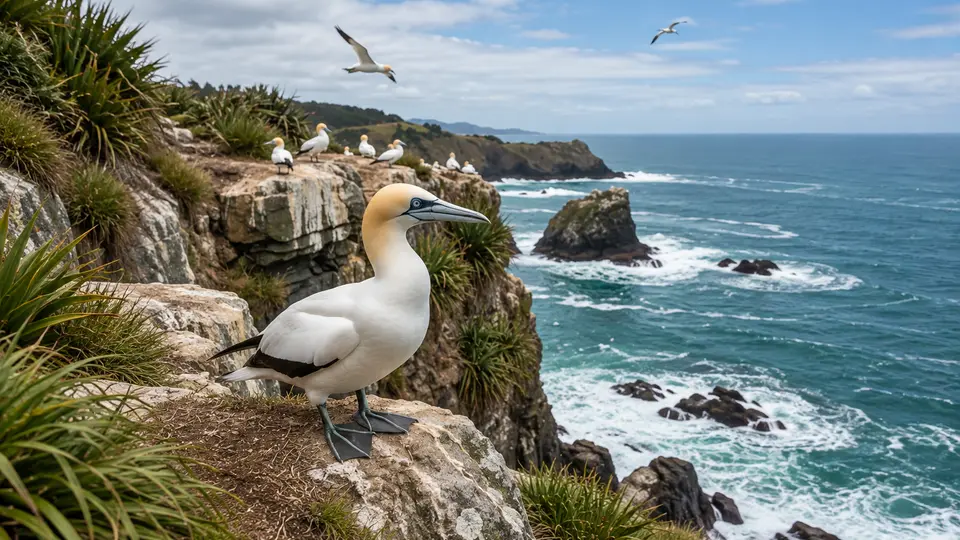
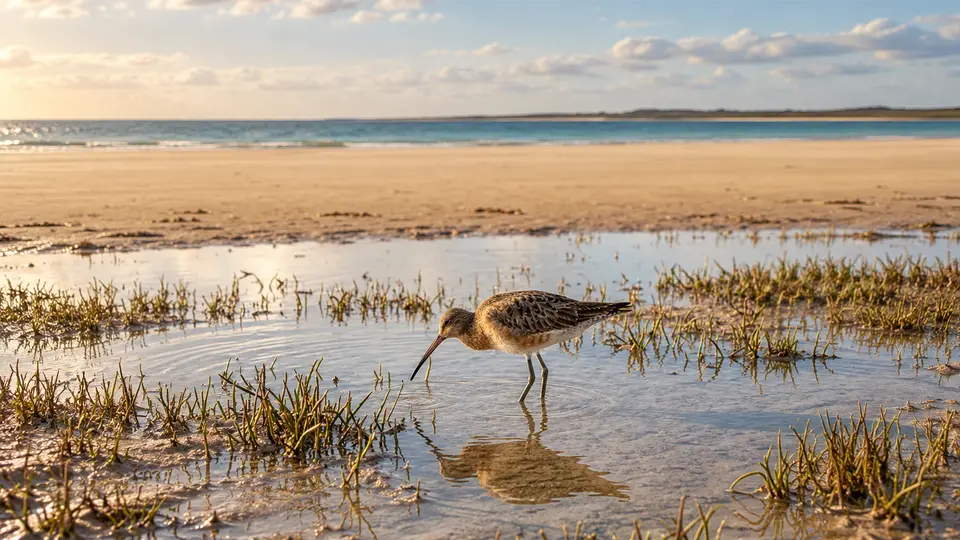
FantailAI-modifiedFantailAustralasian gannetAI-modifiedAustralasian gannetBar-tailed godwitAI-modifiedBar-tailed godwit
Animal groupBirdsAnimal groupBirdsAnimal groupBirds
DestinationsNew ZealandDestinationsNew ZealandDestinationsAustralia, New Zealand
Scientific nameRhipidura fuliginosaScientific nameScientific name
All wildlife destinations
AI-modified
Plan your trip

Find your next wildlife adventure

Compare destinations, shore programs and dates with the animals and habitats you would love to see.

  • Naturalist-led shore excursions
  • Responsible wildlife watching
  • Small expedition ships