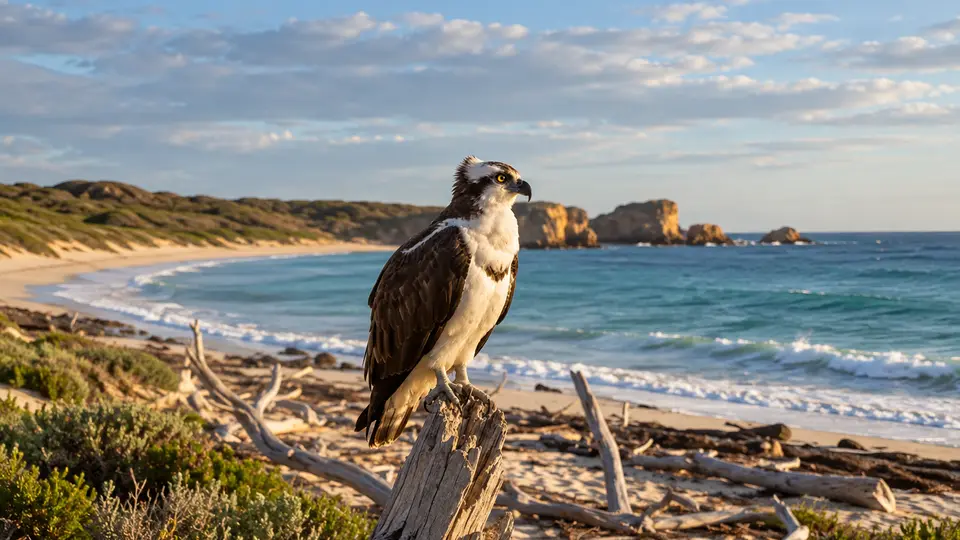
Eastern osprey in its natural habitat, AI illustration

Eastern ospreyPandion haliaetus cristatusWhere and when to see them

Eastern osprey at a glance

The eastern osprey is the Australasian form of the osprey, a fish-catching raptor strongly associated with coasts, estuaries and large waterways. Taxonomic treatments differ: some recognize Pandion cristatus as a species, while others retain it within Pandion haliaetus. Australian birds are mostly resident, unlike many northern-hemisphere ospreys. Their bulky stick nests can become conspicuous coastal landmarks, but disturbance and loss of suitable nesting structures create local conservation concerns despite a broad distribution.

Behaviour & reproduction

Size
50-65 cm long; wingspan 145-170 cm
Weight
1.0-1.8 kg
Lifespan
Not reliably established
Status
Assessment varies

Ospreys search for fish by circling or hovering above clear water, then dropping feet-first to seize prey near the surface. From a shore viewpoint, successful birds may be seen carrying a fish lengthwise beneath the body toward a feeding perch. Pairs commonly reuse nests, adding sticks over successive seasons. Adults defend the immediate nest area and communicate with sharp whistles. Young remain dependent on their parents while developing the flight and hunting skills needed for independence. Courtship displays involve aerial manoeuvres and the male offering fish to the female. Pairs exhibit strong site fidelity, returning to the same breeding territory and nest year after year, sometimes for decades.

Top wildlife locations

Australia wildlife habitat

Australia

Rocky headlands, estuary lookouts and sheltered coastal bays offer shore or distant deck viewing across parts of Australia. Distribution is patchy, and nest sites on cliffs or offshore stacks may be inaccessible.
Destinations describe the species' habitat, not guaranteed cruise stops. Some animals require an optional inland excursion or are found in restricted reserves.

Fun facts about the Eastern osprey

  • The outer toe can rotate backward to help hold fish.
  • Fish are often carried head-first to reduce air resistance.
  • Pairs may enlarge the same stick nest over several years.
  • Its nostrils can close during the brief impact with water while catching prey.

Best time to see the Eastern osprey

Resident birds can be watched year-round along suitable Australian coasts. Breeding timing differs between regions, so no single national nesting season is reliable. Favor good visibility, moderate weather and local access guidance, and avoid treating an occupied nest as a close-viewing attraction. Early mornings or late afternoons often provide the best viewing opportunities as ospreys are most active during these times. During nesting season, observing the adults bringing fish to the nest can be a highlight, showcasing parental care.

Eastern osprey: season matrix by destination

Travel and observation windows vary by region. Highlighted months are an orientation for planning, not confirmed sightings or a guarantee of access.

Australia

Australian populations are largely resident; these months indicate general observation potential, not a uniform breeding season or guaranteed local presence.

JanFebMarAprMayJunJulAugSepOctNovDec
Cruise ships in Australia

Where the Eastern osprey lives

Australian eastern ospreys occur around rocky coasts, sheltered bays, estuaries, lagoons and some inland waterways. They need fish-bearing water and secure nest or perch sites. Nests may occupy tall trees, cliffs, offshore rock stacks or suitable artificial structures. While predominantly coastal, they can also be found hundreds of kilometres inland along major rivers and large dams, demonstrating adaptability to freshwater environments. These birds are sensitive to human disturbance, often choosing secluded locations for their nest sites to ensure breeding success.

What the Eastern osprey eats

Fish make up almost the entire diet, usually captured alive near the surface. Prey species vary with local waters rather than following one fixed menu. Roughened foot pads, strongly curved talons and a reversible outer toe improve the grip on slippery fish. Occasionally, they may take carrion, small mammals, or birds if fish are scarce, though this is uncommon. After a successful capture, the osprey repositions the fish head-first for improved aerodynamics during flight back to a perch or nest.

Species at a glance

Common name
Eastern osprey
Scientific name
Pandion haliaetus cristatus
Animal group
Birds
Size
50-65 cm long; wingspan 145-170 cm
Weight
1.0-1.8 kg
Lifespan
Not reliably established
Status
Assessment varies
Identification
Long angled wings, a white head with a dark eye stripe and pale underparts distinguish an osprey from the broader-winged white-bellied sea eagle. Juveniles display pale buffy fringing to their upperpart feathers, which fades with age, and a more streaked chest band. Their long, slender wings, often held with a distinct 'M' shape in flight, are a key identifier when soaring.

Eastern osprey: frequently asked questions

Where can I see the Eastern osprey?
Australia. Watch from shore or a vessel's deck with binoculars, keeping well clear of nesting trees and platforms. Do not linger if adults alarm-call or stop approaching the nest; avoid positioning yourself beneath active feeding perches. Be mindful that ospreys are protected species, and disturbing them, especially during nesting, is illegal. Keep your distance and use high-powered optics to avoid causing stress to the birds.
When is the best time to see the Eastern osprey?
Resident birds can be watched year-round along suitable Australian coasts. Breeding timing differs between regions, so no single national nesting season is reliable. Favor good visibility, moderate weather and local access guidance, and avoid treating an occupied nest as a close-viewing attraction. Early mornings or late afternoons often provide the best viewing opportunities as ospreys are most active during these times. During nesting season, observing the adults bringing fish to the nest can be a highlight, showcasing parental care.
How big does the Eastern osprey get?
50-65 cm long; wingspan 145-170 cm. Adult weight: 1.0-1.8 kg. Size varies with age, sex and population.
How should I behave around the Eastern osprey?
Watch from shore or a vessel's deck with binoculars, keeping well clear of nesting trees and platforms. Do not linger if adults alarm-call or stop approaching the nest; avoid positioning yourself beneath active feeding perches. Be mindful that ospreys are protected species, and disturbing them, especially during nesting, is illegal. Keep your distance and use high-powered optics to avoid causing stress to the birds.
What does the Eastern osprey eat?
Fish make up almost the entire diet, usually captured alive near the surface. Prey species vary with local waters rather than following one fixed menu. Roughened foot pads, strongly curved talons and a reversible outer toe improve the grip on slippery fish. Occasionally, they may take carrion, small mammals, or birds if fish are scarce, though this is uncommon. After a successful capture, the osprey repositions the fish head-first for improved aerodynamics during flight back to a perch or nest.
Are wildlife sightings guaranteed on an adventure cruise?
No. Animals move freely and routes, weather, access restrictions and local conditions influence every outing. Confirm the actual itinerary and shore program before booking.

Compare wildlife in the same destinations

Explore other birds recorded in these destinations. Similar surroundings do not mean the animals share the same habits or viewing season.

Species comparison by animal group and destination
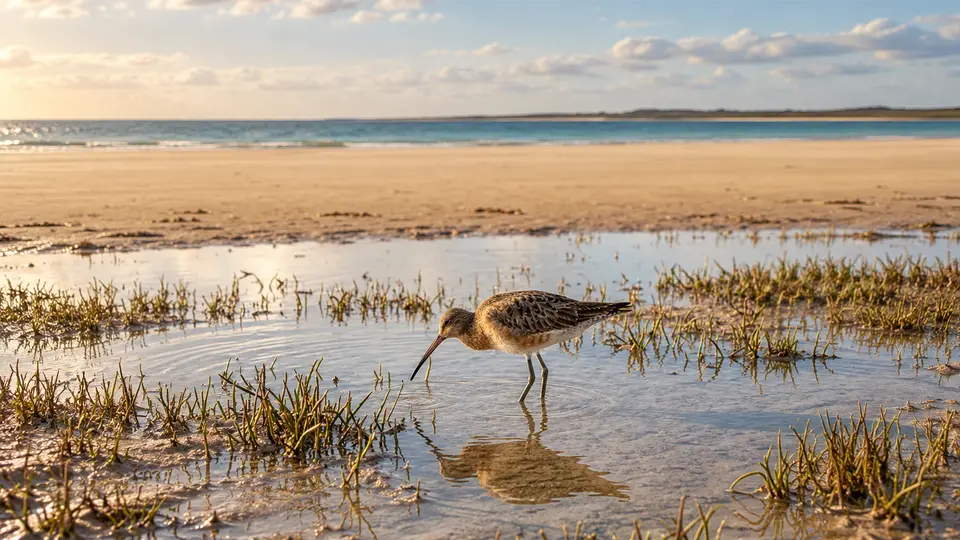
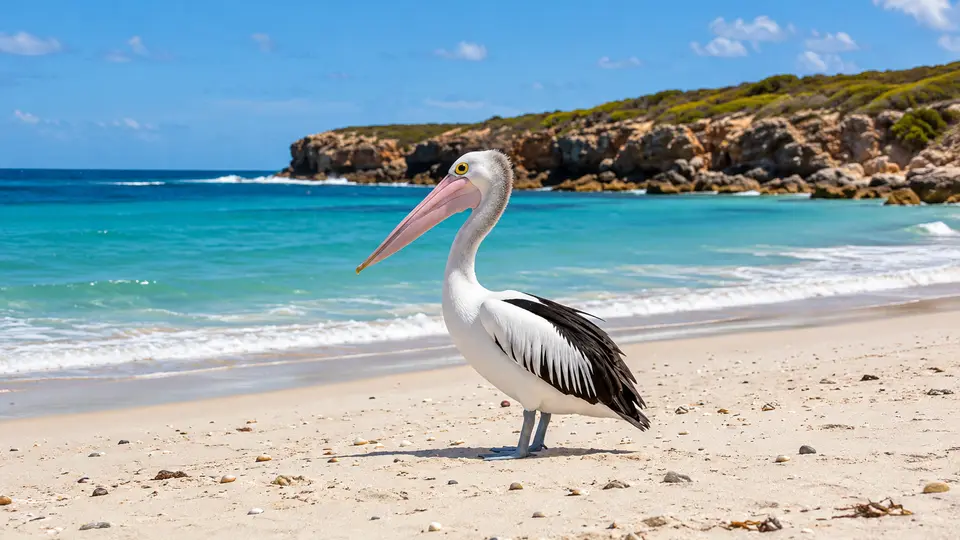
Eastern ospreyEastern ospreyAustralian pelicanAustralian pelicanBar-tailed godwitBar-tailed godwit
Animal groupBirdsAnimal groupBirdsAnimal groupBirds
DestinationsAustraliaDestinationsAustraliaDestinationsAustralia, New Zealand
All wildlife destinations
Plan your trip

Find your next wildlife adventure

Compare destinations, shore programs and dates with the animals and habitats you would love to see.

  • Naturalist-led shore excursions
  • Responsible wildlife watching
  • Small expedition ships

Newsletter

Take Blue Rides with you

Adventure cruise offers, last-minute deals and trip inspiration.

Free, unsubscribe anytime. Details: Privacy Policy

Partner with Blue Rides

Affiliate Program

Recommend adventure cruises and earn commission on every confirmed booking.

Share. Track. Earn.

Your footage, our stage

Send us your videos or pictures.

Captured remarkable nature or wildlife on your journey? Share it with us, we may feature it on Blue Rides.