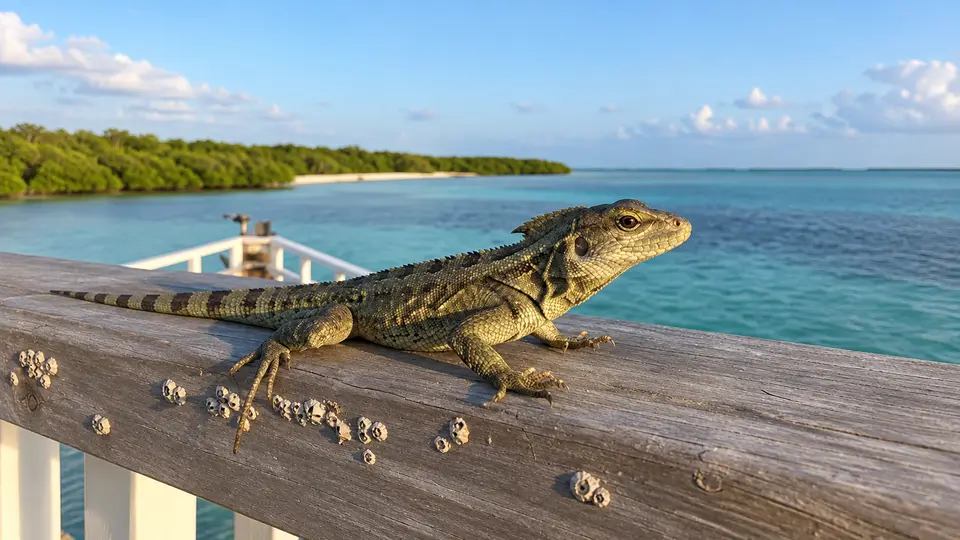
Brown Basilisk in its natural habitat, AI illustration

Brown Basilisk: where and when to see them

Basiliscus vittatus

Brown Basilisk at a glance

The brown basilisk is a long-tailed Central American lizard that has established introduced populations in southern Florida. Brown striping provides camouflage along vegetated water margins, while adult males develop a conspicuous head crest. Its famous ability to sprint across water is an escape response, not a routine display for observers. In Florida it occupies canals, ponds and landscaped waterways, where its presence reflects introduction rather than membership in the state's native reptile fauna.

Behaviour & reproduction

Size
40-60 cm total length
Weight
Not reliably established
Lifespan
Not reliably established
Status
Least Concern

Brown basilisks are active during daylight, basking on branches, walls and banks before searching for food. When alarmed, they may run upright on their hind legs and cross short stretches of water using rapid foot strokes. They also swim readily and retreat into dense vegetation. Males display and defend areas against rivals, while females lay eggs in excavated ground nests. At night, individuals commonly rest on vegetation near water, away from many ground-level threats. This ability to run on water, termed 'Jesus Christ lizard' behavior, is a remarkable adaptation for escaping predators like birds and larger reptiles. Males establish territories through head bobs and push ups, which they defend from other males to secure mating opportunities with females within their area.

Top wildlife locations

Florida wildlife habitat

Florida

Vegetated freshwater canals and ponds in southern coastal cities offer plausible viewing from public paths. A short inland excursion may be needed, since sandy beaches and saltwater shorelines are not typical habitat.

Adventure cruises in Florida
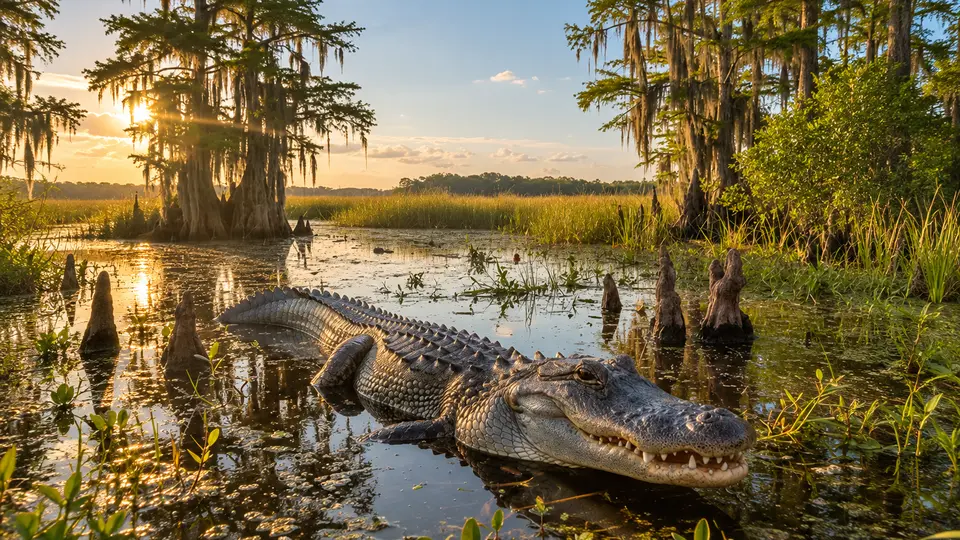
Destinations describe the species' habitat, not guaranteed cruise stops. Some animals require an optional inland excursion or are found in restricted reserves.

Fun facts about the Brown Basilisk

  • Florida populations are introduced rather than native.
  • Its exceptionally long tail accounts for much of its total length.
  • Fringed hind toes help generate support during rapid water-running escapes.
  • Adult males have a more conspicuous head crest than females.

Best time to see the Brown Basilisk

Warm weather increases daytime activity, so March through October is a practical Florida observation window. Animals can remain active during mild winter spells in the south. Sunny mornings often suit viewing better than intense midday heat, while cold fronts can sharply reduce visible activity. Early mornings following a cool night can be particularly productive for viewing, as lizards bask to raise their body temperature. Prolonged drought conditions can reduce overall activity and make finding basilisks more challenging.

Brown Basilisk: season matrix by destination

Travel and observation windows vary by region. Highlighted months are an orientation for planning, not confirmed sightings or a guarantee of access.

Florida

Warm months favour activity, but summer storms and heat affect visibility; established populations are localized rather than statewide.

JanFebMarAprMayJunJulAugSepOctNovDec
Cruise ships in Florida

Where the Brown Basilisk lives

Warm, humid lowlands with nearby freshwater are characteristic habitat. In southern Florida, canals, drainage ponds, suburban lakes and densely planted banks can support introduced populations. Sheltered vegetation and sunny basking places are both important, while prolonged cold limits their suitability for more northerly areas. They often prefer habitats with canopy cover from trees or shrubs, which provide both shade and an escape route from predators. While often found near human habitation, they can also thrive in more natural riparian zones and forest edges.

What the Brown Basilisk eats

Insects and other small invertebrates make up much of the diet. Brown basilisks also take small vertebrates and some plant material when available. They forage on the ground and in low vegetation, using quick movements to seize prey rather than depending exclusively on aquatic food. Their diet primarily consists of arthropods such as crickets, grasshoppers, and beetles, reflecting their opportunistic foraging strategy. They may occasionally consume small fruits or flowers, particularly during times of insect scarcity.

Species at a glance

Common name
Brown Basilisk
Scientific name
Basiliscus vittatus
Animal group
Reptiles
Size
40-60 cm total length
Weight
Not reliably established
Lifespan
Not reliably established
Status
Least Concern
Identification
The brown basilisk has brown striped plumage-like patterning and a prominent male head crest, unlike the green coloration of green basilisks and the heavier build and throat dewlap of green iguanas. Beyond the brown stripes, individuals often have a creamy white or yellow lateral stripe running from behind the eye to the hind limbs. Juvenile basilisks are less vividly marked than adults, but still exhibit the characteristic striped pattern.

Brown Basilisk: frequently asked questions

Where can I see the Brown Basilisk?
Florida. Watch canal banks from public paths and avoid chasing lizards toward water. Florida waterways may contain alligators, so remain back from the edge and never attempt to catch or relocate introduced basilisks. Look closely among the tangled roots of waterside trees and shrubs, as they often perch camouflaged within this vegetation. Scan both sunny spots and shaded areas along the water's edge, as they move between these zones throughout the day.
When is the best time to see the Brown Basilisk?
Warm weather increases daytime activity, so March through October is a practical Florida observation window. Animals can remain active during mild winter spells in the south. Sunny mornings often suit viewing better than intense midday heat, while cold fronts can sharply reduce visible activity. Early mornings following a cool night can be particularly productive for viewing, as lizards bask to raise their body temperature. Prolonged drought conditions can reduce overall activity and make finding basilisks more challenging.
How big does the Brown Basilisk get?
40-60 cm total length. Adult weight: Not reliably established. Size varies with age, sex and population.
How should I behave around the Brown Basilisk?
Watch canal banks from public paths and avoid chasing lizards toward water. Florida waterways may contain alligators, so remain back from the edge and never attempt to catch or relocate introduced basilisks. Look closely among the tangled roots of waterside trees and shrubs, as they often perch camouflaged within this vegetation. Scan both sunny spots and shaded areas along the water's edge, as they move between these zones throughout the day.
What does the Brown Basilisk eat?
Insects and other small invertebrates make up much of the diet. Brown basilisks also take small vertebrates and some plant material when available. They forage on the ground and in low vegetation, using quick movements to seize prey rather than depending exclusively on aquatic food. Their diet primarily consists of arthropods such as crickets, grasshoppers, and beetles, reflecting their opportunistic foraging strategy. They may occasionally consume small fruits or flowers, particularly during times of insect scarcity.
Are wildlife sightings guaranteed on an adventure cruise?
No. Animals move freely and routes, weather, access restrictions and local conditions influence every outing. Confirm the actual itinerary and shore program before booking.

Compare wildlife in the same destinations

Explore other reptiles recorded in these destinations. Similar surroundings do not mean the animals share the same habits or viewing season.

Species comparison by animal group and destination
Brown BasiliskBrown BasiliskAmerican AlligatorAmerican AlligatorAmerican CrocodileAmerican Crocodile
Animal groupReptilesAnimal groupReptilesAnimal groupReptiles
DestinationsFloridaDestinationsFloridaDestinationsCosta Rica, Florida
All wildlife destinations
Plan your trip

Find your next wildlife adventure

Compare destinations, shore programs and dates with the animals and habitats you would love to see.

  • Naturalist-led shore excursions
  • Responsible wildlife watching
  • Small expedition ships

Newsletter

Take Blue Rides with you

Adventure cruise offers, last-minute deals and trip inspiration.

Free, unsubscribe anytime. Details: Privacy Policy

Partner with Blue Rides

Affiliate Program

Recommend adventure cruises and earn commission on every confirmed booking.

Share. Track. Earn.

Your footage, our stage

Send us your videos or pictures.

Captured beautiful landscapes or wildlife? Share your videos and pictures with us, we may feature them on Blue Rides.
