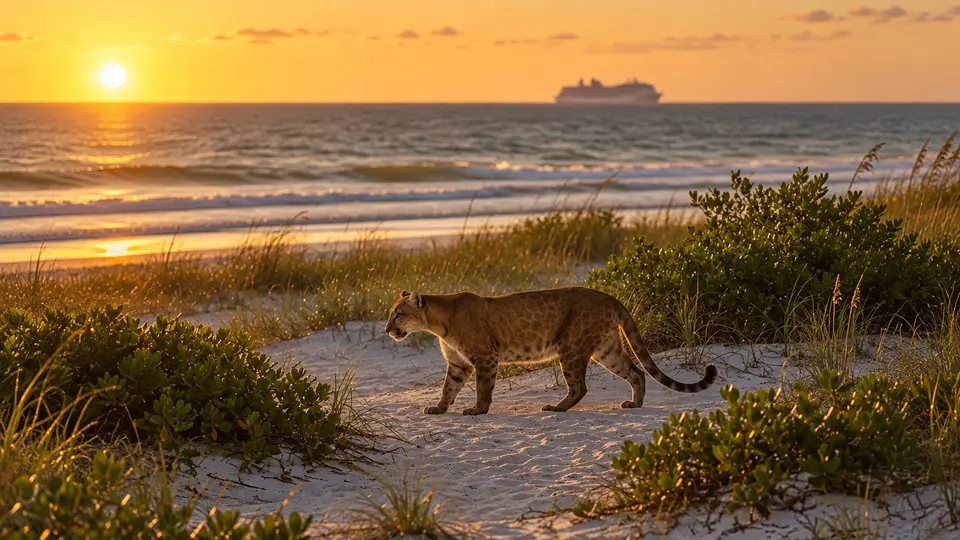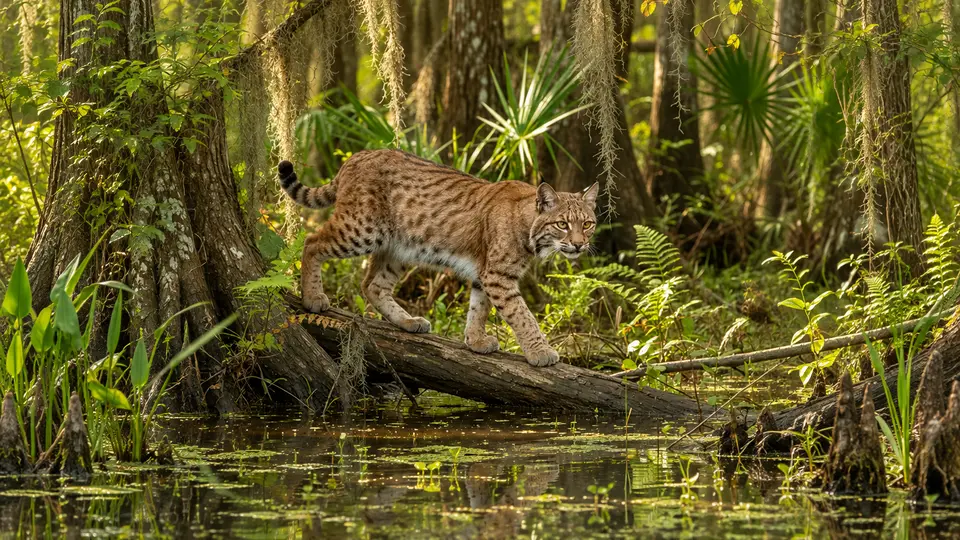
Bobcat in its natural habitat, AI illustration

BobcatLynx rufusWhere and when to see them

Bobcat at a glance

The bobcat is a compact North American wild cat with a short tail, facial ruff and variably spotted coat. Florida animals are often smaller than those from northern populations and occupy a surprisingly broad range of wooded and wetland landscapes. Adaptability does not make them easy to see: their camouflage, quiet movements and preference for cover usually keep them unnoticed. Road traffic, habitat fragmentation and exposure to rodenticides can create serious local pressures.

Behaviour & reproduction

Size
65–105 cm body length
Weight
6–14 kg
Lifespan
7–12 years
Status
Least Concern

Bobcats are primarily solitary, marking their home ranges with scent and using well-covered routes between hunting and resting areas. Activity often peaks around dawn, dusk and night, although daytime movement is normal. They stalk prey closely before making a short rush rather than relying on prolonged pursuit. Females raise kittens in sheltered dens and may move them if disturbed. Individuals can swim when necessary, an advantage in Florida's wetland mosaics. Bobcats are excellent climbers and will often scale trees to escape danger, rest, or survey their surroundings. They are territorial, with males often having larger home ranges that overlap with those of several females.

Top wildlife locations

Florida wildlife habitat

Florida

Quiet coastal preserves with hammocks, scrub and marsh edges provide plausible habitat along established trails. Sightings are rare; an inland preserve excursion may improve habitat access but still offers no reliable encounter.
Destinations describe the species' habitat, not guaranteed cruise stops. Some animals require an optional inland excursion or are found in restricted reserves.

Fun facts about the Bobcat

  • The common name refers to its naturally short, bobbed-looking tail.
  • Its hind legs are longer than its forelegs.
  • Florida bobcats can cross waterways by swimming.
  • Unlike Canada lynx, bobcats lack extremely broad, snow-adapted feet.

Best time to see the Bobcat

Bobcats are resident in Florida and may be encountered in any month. Cooler, drier weather generally makes coastal preserve walks more comfortable and can improve visibility along trails. Dawn and dusk are useful activity periods, but sightings remain uncommon and unpredictable throughout the year. While year-round residents, bobcat activity can be more concentrated around den sites during late winter and spring when females are raising young. Cooler temperatures in the dry season (November to April) also reduce insect activity, making trail walks more pleasant for observers.

Bobcat: season matrix by destination

Travel and observation windows vary by region. Highlighted months are an orientation for planning, not confirmed sightings or a guarantee of access.

Florida

Cooler months are a practical walking window, not a migration or exclusive activity season; bobcats remain resident year-round.

JanFebMarAprMayJunJulAugSepOctNovDec
Cruise ships in Florida

Where the Bobcat lives

Florida habitat includes pine flatwoods, hardwood hammocks, scrub, swamps and vegetated wetland edges. Coastal preserves may support bobcats where cover and prey remain connected. Open beaches and busy waterfronts are less useful observation settings than quiet trails bordering dense vegetation. They can adapt to fragmented landscapes and even suburban areas if sufficient cover and prey are available. While adaptable, their preference for dense undergrowth and proximity to water sources influences their distribution within the state.

What the Bobcat eats

Rabbits, rodents and other small mammals provide much of the diet, supplemented by birds, reptiles and occasional larger prey or carrion. Hunting is opportunistic and locally variable. Bobcats can take prey larger than themselves, but they are not dependent on large game. Small rodents like cotton rats and marsh rabbits are frequent prey items in Florida. Bobcats also consume reptiles, such as snakes and lizards, and amphibians, particularly in wetland environments.

Species at a glance

Common name
Bobcat
Scientific name
Lynx rufus
Animal group
Mammals
Size
65–105 cm body length
Weight
6–14 kg
Lifespan
7–12 years
Status
Least Concern
Identification
A short, black-tipped tail with a pale underside, spotted coat and modest ear tufts distinguish it from a long-tailed Florida panther. Their short, muscular legs and relatively large feet are well-suited for stealthy movement through diverse terrain. The tail typically has one or more black bands near the tip on the upper side.

Bobcat: frequently asked questions

Where can I see the Bobcat?
Florida. Watch quietly from established trails and give any cat an unobstructed escape route. Never feed, follow or approach kittens, and keep children close and pets leashed; an adult may be nearby but unseen. Scan forest edges and dense thickets, as bobcats often remain hidden until confident of their safety. Look for tracks or scat along sandy trails or muddy banks, which can indicate recent bobcat activity in the area.
When is the best time to see the Bobcat?
Bobcats are resident in Florida and may be encountered in any month. Cooler, drier weather generally makes coastal preserve walks more comfortable and can improve visibility along trails. Dawn and dusk are useful activity periods, but sightings remain uncommon and unpredictable throughout the year. While year-round residents, bobcat activity can be more concentrated around den sites during late winter and spring when females are raising young. Cooler temperatures in the dry season (November to April) also reduce insect activity, making trail walks more pleasant for observers.
How big does the Bobcat get?
65–105 cm body length. Adult weight: 6–14 kg. Size varies with age, sex and population.
How should I behave around the Bobcat?
Watch quietly from established trails and give any cat an unobstructed escape route. Never feed, follow or approach kittens, and keep children close and pets leashed; an adult may be nearby but unseen. Scan forest edges and dense thickets, as bobcats often remain hidden until confident of their safety. Look for tracks or scat along sandy trails or muddy banks, which can indicate recent bobcat activity in the area.
What does the Bobcat eat?
Rabbits, rodents and other small mammals provide much of the diet, supplemented by birds, reptiles and occasional larger prey or carrion. Hunting is opportunistic and locally variable. Bobcats can take prey larger than themselves, but they are not dependent on large game. Small rodents like cotton rats and marsh rabbits are frequent prey items in Florida. Bobcats also consume reptiles, such as snakes and lizards, and amphibians, particularly in wetland environments.
Are wildlife sightings guaranteed on an adventure cruise?
No. Animals move freely and routes, weather, access restrictions and local conditions influence every outing. Confirm the actual itinerary and shore program before booking.

Compare wildlife in the same destinations

Explore other mammals recorded in these destinations. Similar surroundings do not mean the animals share the same habits or viewing season.

Species comparison by animal group and destination
BobcatBobcatCommon Bottlenose DolphinCommon Bottlenose DolphinFlorida PantherFlorida Panther
Animal groupMammalsAnimal groupMammalsAnimal groupMammals
DestinationsFloridaDestinationsCosta Rica, Florida, Galapagos, Mexico, Cape Verde, Croatia, Greece, Portugal, Scotland, Seychelles, Turkey, Maldives, Australia, New ZealandDestinationsFlorida
All wildlife destinations
Plan your trip

Find your next wildlife adventure

Compare destinations, shore programs and dates with the animals and habitats you would love to see.

  • Naturalist-led shore excursions
  • Responsible wildlife watching
  • Small expedition ships

Newsletter

Take Blue Rides with you

Adventure cruise offers, last-minute deals and trip inspiration.

Free, unsubscribe anytime. Details: Privacy Policy

Partner with Blue Rides

Affiliate Program

Recommend adventure cruises and earn commission on every confirmed booking.

Share. Track. Earn.

Your footage, our stage

Send us your videos or pictures.

Captured remarkable nature or wildlife on your journey? Share it with us, we may feature it on Blue Rides.