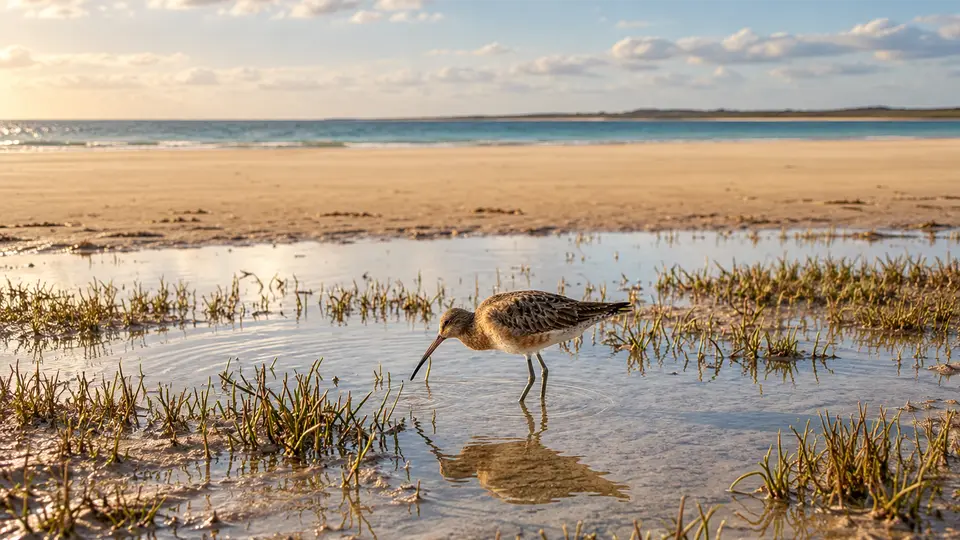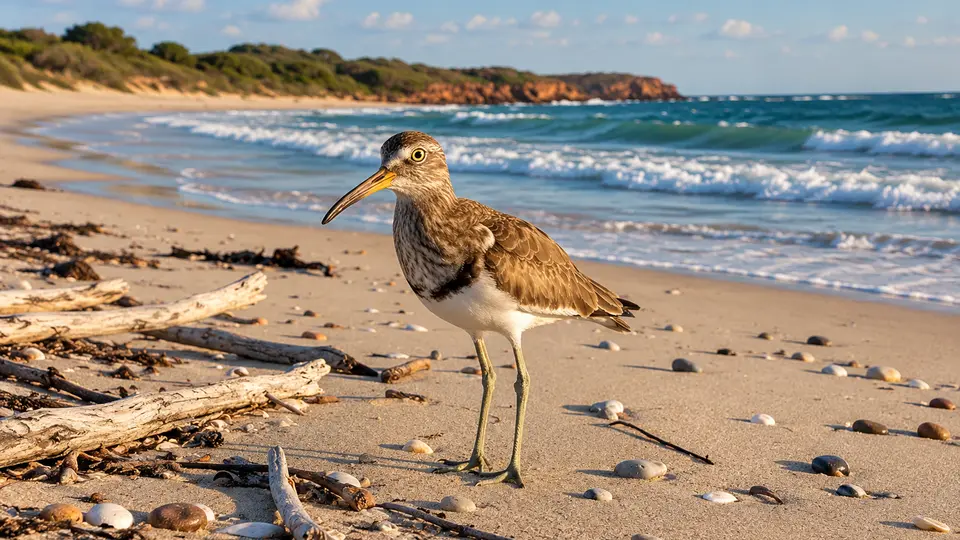
Beach stone-curlew in its natural habitat, AI illustration
Size54–56 cm longLifespanNot reliably establishedStatusNear Threatened

Beach stone-curlew: where and when to see them

Esacus magnirostris

Beach stone-curlew at a glance

The beach stone-curlew is a large tropical shorebird with a deep bill, long legs and striking yellow eyes. It belongs to the stone-curlew family rather than the true curlews. In Australia it is associated mainly with northern and northeastern coasts, where quiet beaches and tidal flats support scattered pairs. Its dependence on relatively undisturbed shorelines makes local populations vulnerable to development, roaming dogs and repeated disturbance around nesting areas.

Behaviour & reproduction

Size
54–56 cm long
Weight
Not reliably established
Lifespan
Not reliably established
Status
Near Threatened

Pairs commonly occupy coastal territories and remain unobtrusive during much of the day, resting above the tide line or standing motionless among beach debris. Feeding often increases around dusk, at night or when suitable tidal flats become exposed. Birds walk deliberately before making quick lunges at prey. A nest is little more than a scrape, usually holding one egg, and adults rely heavily on vigilance and camouflage. Pairs maintain permanent territories, often defending them aggressively from other beach stone-curlews. They communicate through a loud, wailing call, particularly at night, which can carry over long distances.

Top wildlife locations

Australia wildlife habitat

Australia

Quiet northern and northeastern beaches, mangrove margins and estuary spits provide plausible shore habitat. Birds are sparsely distributed, and nesting refuges or protected coastal sections may be closed to visitors.

Adventure cruises in Australia

Destinations describe the species' habitat, not guaranteed cruise stops. Some animals require an optional inland excursion or are found in restricted reserves.

Fun facts about the Beach stone-curlew

  • A typical clutch contains just one egg.
  • Its large eyes suit activity in low light.
  • It is also widely known as the beach thick-knee.
  • Its heavy bill is well suited to handling crabs.

Best time to see the Beach stone-curlew

Beach stone-curlews can be present throughout the year in occupied Australian territories. Northern dry-season travel often makes shore access easier, but breeding timing varies regionally. Select quiet, legally accessible beaches and suitable tides rather than assuming a single national breeding season. While present year-round, successful nesting periods can be severely impacted by peak tourist seasons or high tides. Planning excursions during cooler, drier months in northern Australia may offer better viewing opportunities due to lower human activity on beaches.

Beach stone-curlew: season matrix by destination

Travel and observation windows vary by region. Highlighted months are an orientation for planning, not confirmed sightings or a guarantee of access.

Australia

These months broadly favour travel along many northern coasts; birds may be resident year-round, and local nesting and access conditions differ.

JanFebMarAprMayJunJulAugSepOctNovDec
Cruise ships in Australia

Where the Beach stone-curlew lives

Typical habitat includes sheltered tropical beaches, sandy spits, estuary mouths, coral rubble shores and tidal flats beside mangroves. Birds need nearby ground above normal high tide for resting and nesting. Busy recreational beaches generally offer poorer conditions than quiet coastal stretches. The species shows a strong preference for undisturbed coastal areas, often avoiding human-modified shorelines. Their reliance on these specific habitats makes them vulnerable to coastal development and recreational disturbance.

What the Beach stone-curlew eats

Crabs are important prey, supplemented by other coastal invertebrates. The powerful bill helps birds seize and process hard-bodied animals exposed on beaches and tidal flats. Feeding opportunities depend on tides, substrate and the availability of prey near the shoreline. They forage primarily by sight, systematically patrolling the intertidal zone to detect movement. Larger prey, such as crabs, may be taken to water for rinsing or dismembered before consumption.

Species at a glance

Common name
Beach stone-curlew
Scientific name
Esacus magnirostris
Animal group
Birds
Size
54–56 cm long
Weight
Not reliably established
Lifespan
Not reliably established
Status
Near Threatened
Identification
Unlike the slimmer bush stone-curlew, the beach stone-curlew has a massive bill, bold black-and-white facial markings and a strong association with tidal shores. Their large, yellow eyes and broad, flattened bill are distinctive features easily noted even from a distance. The overall grey-brown plumage provides excellent camouflage against sandy or rocky substrates.

Beach stone-curlew: frequently asked questions

Where can I see the Beach stone-curlew?
Australia. Use binoculars from the established beach access and keep dogs away. Avoid approaching lone birds above the tide line, since an inconspicuous egg or chick may be nearby; withdraw at alarm calls. Maintain a significant distance to avoid causing stress, as these birds are easily disturbed, especially during nesting. On a cruise, binoculars are essential for spotting these well-camouflaged birds from a distance along the shore.
When is the best time to see the Beach stone-curlew?
Beach stone-curlews can be present throughout the year in occupied Australian territories. Northern dry-season travel often makes shore access easier, but breeding timing varies regionally. Select quiet, legally accessible beaches and suitable tides rather than assuming a single national breeding season. While present year-round, successful nesting periods can be severely impacted by peak tourist seasons or high tides. Planning excursions during cooler, drier months in northern Australia may offer better viewing opportunities due to lower human activity on beaches.
How big does the Beach stone-curlew get?
54–56 cm long. Adult weight: Not reliably established. Size varies with age, sex and population.
How should I behave around the Beach stone-curlew?
Use binoculars from the established beach access and keep dogs away. Avoid approaching lone birds above the tide line, since an inconspicuous egg or chick may be nearby; withdraw at alarm calls. Maintain a significant distance to avoid causing stress, as these birds are easily disturbed, especially during nesting. On a cruise, binoculars are essential for spotting these well-camouflaged birds from a distance along the shore.
What does the Beach stone-curlew eat?
Crabs are important prey, supplemented by other coastal invertebrates. The powerful bill helps birds seize and process hard-bodied animals exposed on beaches and tidal flats. Feeding opportunities depend on tides, substrate and the availability of prey near the shoreline. They forage primarily by sight, systematically patrolling the intertidal zone to detect movement. Larger prey, such as crabs, may be taken to water for rinsing or dismembered before consumption.
Are wildlife sightings guaranteed on an adventure cruise?
No. Animals move freely and routes, weather, access restrictions and local conditions influence every outing. Confirm the actual itinerary and shore programme before booking.

Compare wildlife in the same destinations

Explore other birds recorded in these destinations. Similar surroundings do not mean the animals share the same habits or viewing season.

Species comparison by animal group and destination
Beach stone-curlewBeach stone-curlewAustralian pelicanAustralian pelicanBar-tailed godwitBar-tailed godwit
Animal groupBirdsAnimal groupBirdsAnimal groupBirds
DestinationsAustraliaDestinationsAustraliaDestinationsAustralia, New Zealand
All wildlife destinations
Plan your trip

Find your next wildlife adventure

Compare destinations, shore programmes and dates with the animals and habitats you would love to see.

  • Naturalist-led shore excursions
  • Responsible wildlife watching
  • Small expedition ships

Newsletter

Take Blue Rides with you

Adventure cruise offers, last-minute deals and trip inspiration.

Free, unsubscribe anytime. Details: Privacy Policy

Partner with Blue Rides

Affiliate Program

Recommend adventure cruises and earn commission on every confirmed booking.

Share. Track. Earn.