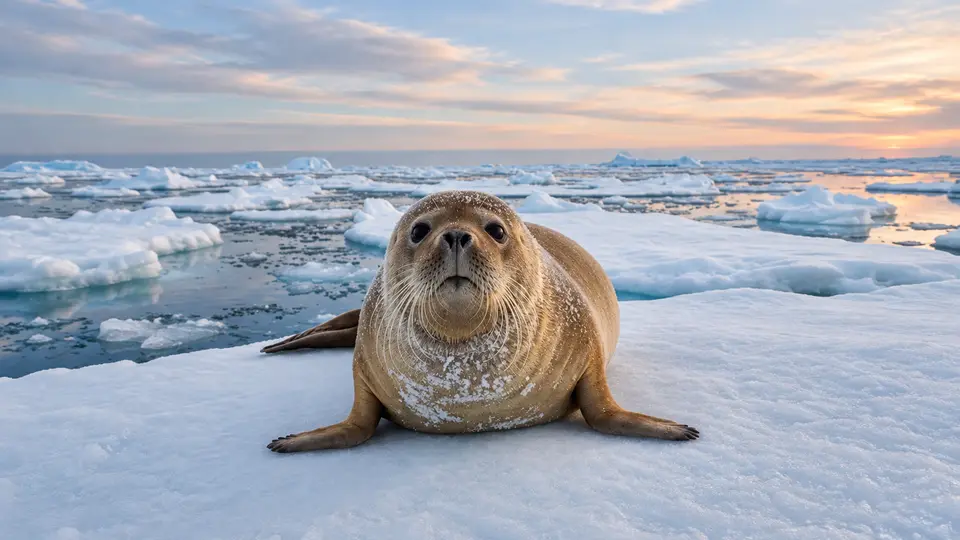
Bearded Seal in its natural habitat, AI illustration

Bearded SealErignathus barbatusWhere and when to see them

Bearded Seal at a glance

The bearded seal is a large Arctic seal named for its exceptionally dense whiskers. It is closely associated with shallow shelf seas, where those sensitive whiskers help locate food on the seabed. Adults usually appear grey or brown, sometimes with rusty staining around the face. Floating ice provides important resting and pupping platforms. Although globally widespread around the Arctic, the species depends on conditions that are changing as sea ice declines.

Behaviour & reproduction

Size
2.1–2.7 m long
Weight
200–430 kg
Lifespan
Not reliably established
Status
Least Concern

Bearded seals are often solitary when resting on ice and tend to choose small floes with easy access to water. They frequently lie near an edge, ready to leave if disturbed. During the breeding season, males produce elaborate calls that carry through the sea. Pups enter the water very early in life and develop rapidly during a short nursing period, while mothers alternate care with feeding. Bearded seals are generally solitary, but loose aggregations can sometimes form in areas with abundant food or ideal ice conditions. Males vocalize extensively underwater during the breeding season to attract mates and establish territories. Pups are born with a soft, woolly, gray-brown coat and are highly precocial, entering the water within hours of birth.

Top wildlife locations

Norway wildlife habitat

Norway

Svalbard's shallow coastal seas and drifting ice offer plausible habitat, usually viewed from a distant deck. Mainland Norwegian shores are not a dependable option, and Arctic land access requires appropriate safety arrangements.

Arctic wildlife habitat

Arctic

Remote shelf coasts and ice margins provide potential deck observation habitat across the Arctic. Many areas are inaccessible to ordinary visitors, and shore viewing depends on legal access and local safety restrictions.

Destinations describe the species' habitat, not guaranteed cruise stops. Some animals require an optional inland excursion or are found in restricted reserves.

Fun facts about the Bearded Seal

  • Their whiskers can appear curled when dry.
  • Males produce long, elaborate breeding calls.
  • Pups can swim shortly after birth.
  • Rust-coloured facial patches can result from contact with iron-rich seabed sediments.

Best time to see the Bearded Seal

Late spring and summer provide the most practical daylight and vessel access in many Arctic regions. Around Svalbard, summer routes may pass suitable ice habitat. Pupping generally occurs earlier, with timing varying geographically, so travel season should not be treated as pupping season. Prime viewing opportunities often coincide with summer expedition cruises when sea ice is sufficiently broken up to allow vessel navigation into their typical habitat. Although pupping occurs earlier, mothers and pups are still often seen together during early summer as pups are weaned. The presence of foraging individuals is more consistent throughout the ice-free season.

Bearded Seal: season matrix by destination

Travel and observation windows vary by region. Highlighted months are an orientation for planning, not confirmed sightings or a guarantee of access.

Norway

Summer supports Svalbard access and daylight; ice distribution and vessel routes determine whether suitable habitat can be viewed.

JanFebMarAprMayJunJulAugSepOctNovDec
Cruise ships in Norway

Arctic

This broad summer window reflects regional travel feasibility; ice conditions, latitude and local access can narrow it substantially.

JanFebMarAprMayJunJulAugSepOctNovDec
Cruise ships in Arctic

Where the Bearded Seal lives

The species mainly occupies Arctic and subarctic shelf waters with drifting pack ice and productive seabeds. It generally favours shallower seas over deep central ocean basins. Seasonal ice movements influence distribution, and occasional animals rest on land where suitable ice is scarce. The species' distribution closely aligns with the extent of seasonal sea ice, crucial for resting and pupping. While generally preferring shallower waters, they can be found in a variety of coastal marine environments with depths up to 200 meters. They frequently occur in areas with strong currents that prevent ice from freezing solid, creating polynya habitats.

What the Bearded Seal eats

Bearded seals eat bottom-dwelling animals, including clams, other molluscs, shrimps, crabs and marine worms, as well as fish. Sensitive whiskers help detect prey in soft sediment. Their relatively small teeth and suction-feeding ability suit this seabed-focused feeding strategy. Their diet varies seasonally and geographically, reflecting local prey availability. While bottom-feeders, they are known to consume pelagic fish when available. Their unique suction-feeding allows them to consume soft-bodied invertebrates with ease, leaving distinct feeding trails on the seabed.

Species at a glance

Common name
Bearded Seal
Scientific name
Erignathus barbatus
Animal group
Mammals
Size
2.1–2.7 m long
Weight
200–430 kg
Lifespan
Not reliably established
Status
Least Concern
Identification
Compared with ringed seals, bearded seals are much larger and have a broad muzzle, luxuriant pale whiskers and unusually square-looking foreflippers. Beyond their whiskers and foreflippers, adult bearded seals have a relatively small head compared to their robust body. Their overall coloration is typically grayish brown, often with a darker dorsal stripe and sometimes indistinct lighter blotches. Distinctive long, white, curly whiskers, which can reach up to 50 cm, are a key feature for identification.

Bearded Seal: frequently asked questions

Where can I see the Bearded Seal?
Norway, Arctic. Observe ice-resting seals from a distant deck or permitted coastal viewpoint. Do not approach floes or block access to water, and follow local bear-safety procedures during any Arctic shore visit. Listen for their distinctive trilling underwater calls which can sometimes be detected by hydrophones from the ship. When observing on ice, maintain a respectful distance to avoid causing them to prematurely abandon their resting sites. Look for them hauled out on small ice floes, particularly in areas of loose pack ice.
When is the best time to see the Bearded Seal?
Late spring and summer provide the most practical daylight and vessel access in many Arctic regions. Around Svalbard, summer routes may pass suitable ice habitat. Pupping generally occurs earlier, with timing varying geographically, so travel season should not be treated as pupping season. Prime viewing opportunities often coincide with summer expedition cruises when sea ice is sufficiently broken up to allow vessel navigation into their typical habitat. Although pupping occurs earlier, mothers and pups are still often seen together during early summer as pups are weaned. The presence of foraging individuals is more consistent throughout the ice-free season.
How big does the Bearded Seal get?
2.1–2.7 m long. Adult weight: 200–430 kg. Size varies with age, sex and population.
How should I behave around the Bearded Seal?
Observe ice-resting seals from a distant deck or permitted coastal viewpoint. Do not approach floes or block access to water, and follow local bear-safety procedures during any Arctic shore visit. Listen for their distinctive trilling underwater calls which can sometimes be detected by hydrophones from the ship. When observing on ice, maintain a respectful distance to avoid causing them to prematurely abandon their resting sites. Look for them hauled out on small ice floes, particularly in areas of loose pack ice.
What does the Bearded Seal eat?
Bearded seals eat bottom-dwelling animals, including clams, other molluscs, shrimps, crabs and marine worms, as well as fish. Sensitive whiskers help detect prey in soft sediment. Their relatively small teeth and suction-feeding ability suit this seabed-focused feeding strategy. Their diet varies seasonally and geographically, reflecting local prey availability. While bottom-feeders, they are known to consume pelagic fish when available. Their unique suction-feeding allows them to consume soft-bodied invertebrates with ease, leaving distinct feeding trails on the seabed.
Are wildlife sightings guaranteed on an adventure cruise?
No. Animals move freely and routes, weather, access restrictions and local conditions influence every outing. Confirm the actual itinerary and shore program before booking.

Compare wildlife in the same destinations

Explore other mammals recorded in these destinations. Similar surroundings do not mean the animals share the same habits or viewing season.

Species comparison by animal group and destination
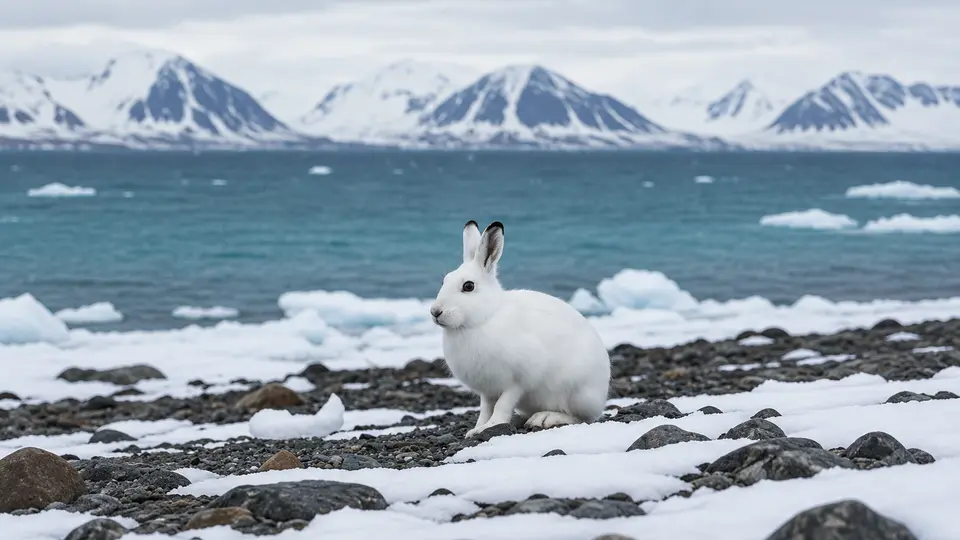
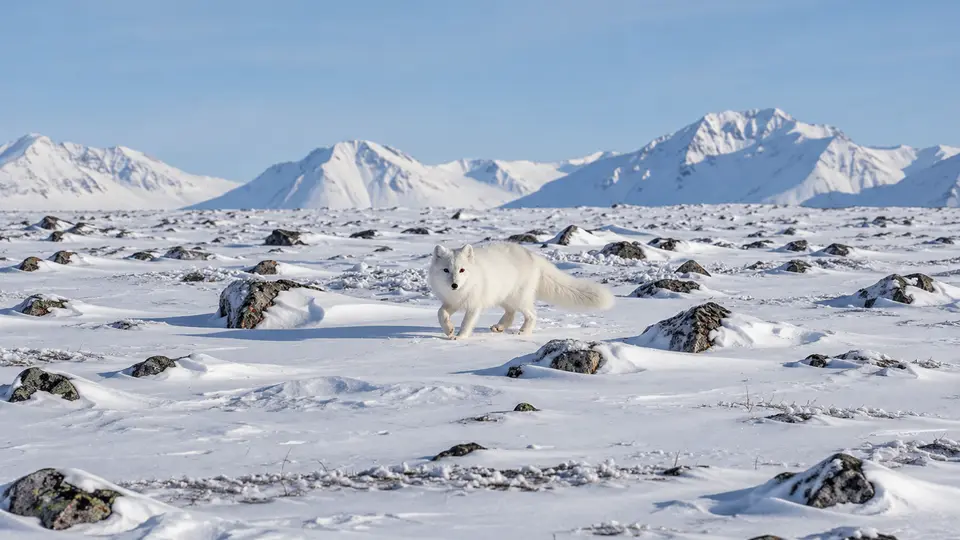
Bearded SealBearded SealArctic FoxArctic FoxArctic HareArctic Hare
Animal groupMammalsAnimal groupMammalsAnimal groupMammals
DestinationsNorway, ArcticDestinationsNorway, ArcticDestinationsArctic
All wildlife destinations
Plan your trip

Find your next wildlife adventure

Compare destinations, shore programs and dates with the animals and habitats you would love to see.

  • Naturalist-led shore excursions
  • Responsible wildlife watching
  • Small expedition ships

Newsletter

Take Blue Rides with you

Adventure cruise offers, last-minute deals and trip inspiration.

Free, unsubscribe anytime. Details: Privacy Policy

Partner with Blue Rides

Affiliate Program

Recommend adventure cruises and earn commission on every confirmed booking.

Share. Track. Earn.

Your footage, our stage

Send us your videos or pictures.

Captured remarkable nature or wildlife on your journey? Share it with us, we may feature it on Blue Rides.