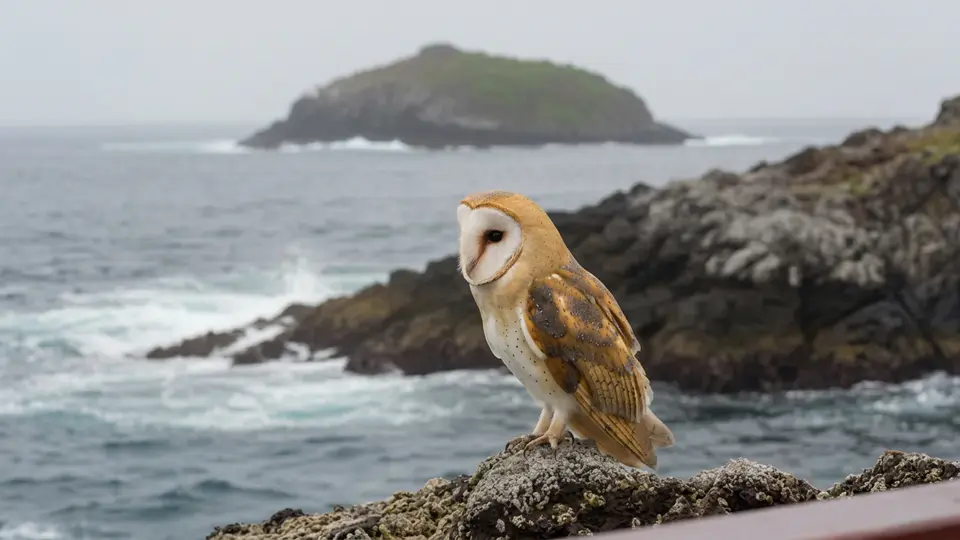
Barn Owl in its natural habitat, AI illustration

Barn Owl: where and when to see them

Tyto furcata

Barn Owl at a glance

The Galápagos barn owl belongs to the American barn owl lineage, commonly treated as Tyto furcata, with the island form named punctatissima. Older references often place it within a broadly defined Tyto alba. This nocturnal predator is an established part of the archipelago's terrestrial food webs, not a visiting seabird. Its small island form is comparatively dark and heavily marked, and it can remain unnoticed near daytime human activity.

Behaviour & reproduction

Size
28–35 cm long in the Galápagos population
Weight
Not reliably established
Lifespan
Not reliably established
Status
Least Concern

Barn owls usually leave sheltered roosts around dusk and hunt with low, searching flights. Acute hearing helps them locate prey concealed by darkness or vegetation. During the day they remain in cavities, rock shelters or suitable structures, where repeated disturbance can be costly. Pairs nest in protected spaces rather than building elaborate nests. Food availability influences breeding effort, so reproductive timing need not follow a simple temperate-season pattern. Courtship rituals involve aerial displays and mutual preening, with males often bringing food offerings to females at the roost. Their pellets, which are typically dense and dark, can be found near roost sites and offer valuable insights into their diet and local prey availability.

Top wildlife locations

Galapagos wildlife habitat

Galapagos

Dry coastal vegetation and open land near permitted visitor routes may offer incidental dusk views. Many roosts are inaccessible, and inland excursions or special access arrangements may be necessary; standard landings promise nothing.

Adventure cruises in Galapagos
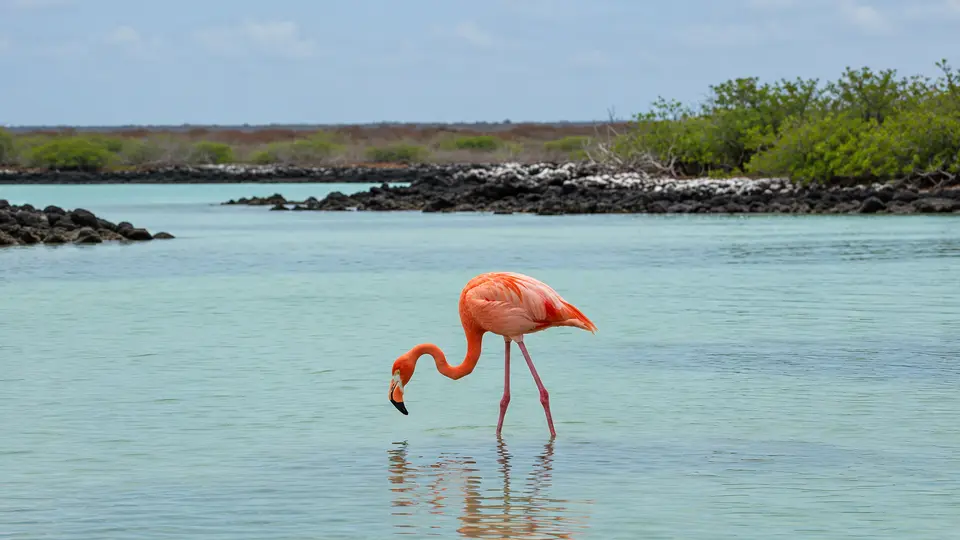
Destinations describe the species' habitat, not guaranteed cruise stops. Some animals require an optional inland excursion or are found in restricted reserves.

Fun facts about the Barn Owl

  • The Galápagos form is known as punctatissima.
  • Older books may list it under Tyto alba rather than Tyto furcata.
  • Asymmetrical ear placement helps barn owls locate prey by sound.
  • Regurgitated pellets reveal prey remains without requiring observation of a hunt.

Best time to see the Barn Owl

There is no well-supported archipelago-wide season guaranteeing better barn owl observations. The birds are resident, and legal access, dusk timing and knowledge of local habitat matter more than month. Organized visits must respect park schedules and avoid disturbing known roosts. While breeding can occur year-round in the Galápagos depending on food availability, the dry season might offer slightly clearer viewing due to less dense vegetation. Successful observation often depends more on the guide's knowledge of active roosts and recent activity patterns than on a specific month.

Barn Owl: season matrix by destination

Travel and observation windows vary by region. Highlighted months are an orientation for planning, not confirmed sightings or a guarantee of access.

Galapagos

Resident year-round, but no defensible month-specific shore-observation window is established; park access and local activity govern opportunities.

JanFebMarAprMayJunJulAugSepOctNovDec
Cruise ships in Galapagos

Where the Barn Owl lives

The Galápagos population uses dry lowlands, open vegetation, agricultural areas and other landscapes offering prey and sheltered roosts. Cavities in rock or trees and some buildings can provide refuge. Occupied roosts may be inaccessible or closed to visitors. They are highly adaptable, often found near human habitation which provides both hunting grounds and roosting opportunities. Their preference for open country allows for efficient low-level hunting flights across deforested areas and agricultural fields.

What the Barn Owl eats

Small mammals are important prey, including introduced rodents where available, with birds, reptiles and larger invertebrates also taken. Prey is often swallowed whole or in large portions. Indigestible bones, fur and feathers are later expelled in compact pellets beneath roosts. Their diet plays a crucial role in controlling populations of introduced rodents like rats and mice, making them beneficial in agricultural settings. The owls' unique asymmetrical ear openings allow for exceptional directional hearing, enabling them to pinpoint prey with precision in complete darkness.

Species at a glance

Common name
Barn Owl
Scientific name
Tyto furcata
Animal group
Birds
Size
28–35 cm long in the Galápagos population
Weight
Not reliably established
Lifespan
Not reliably established
Status
Least Concern
Identification
Its heart-shaped facial disc distinguishes it from the Galápagos short-eared owl, which has a rounder face and conspicuous yellow eyes. The pale underparts and golden-brown upperparts, finely mottled with grey and black, provide excellent camouflage against dry vegetation or rock faces. Their long legs and short, powerful talons are adapted for capturing small, quick-moving prey on the ground.

Barn Owl: frequently asked questions

Where can I see the Barn Owl?
Galapagos. Watch quietly from permitted paths at dusk, without playback or lights directed at the face. Never enter roost cavities or approach nestlings; night access may be restricted, and an owl encounter should remain incidental rather than expected. Their silent flight, aided by specialized feather structures, makes them difficult to detect until they are quite close. Using red-light headlamps, if permitted, can help observers navigate without fully disturbing the owls' nocturnal activities.
When is the best time to see the Barn Owl?
There is no well-supported archipelago-wide season guaranteeing better barn owl observations. The birds are resident, and legal access, dusk timing and knowledge of local habitat matter more than month. Organized visits must respect park schedules and avoid disturbing known roosts. While breeding can occur year-round in the Galápagos depending on food availability, the dry season might offer slightly clearer viewing due to less dense vegetation. Successful observation often depends more on the guide's knowledge of active roosts and recent activity patterns than on a specific month.
How big does the Barn Owl get?
28–35 cm long in the Galápagos population. Adult weight: Not reliably established. Size varies with age, sex and population.
How should I behave around the Barn Owl?
Watch quietly from permitted paths at dusk, without playback or lights directed at the face. Never enter roost cavities or approach nestlings; night access may be restricted, and an owl encounter should remain incidental rather than expected. Their silent flight, aided by specialized feather structures, makes them difficult to detect until they are quite close. Using red-light headlamps, if permitted, can help observers navigate without fully disturbing the owls' nocturnal activities.
What does the Barn Owl eat?
Small mammals are important prey, including introduced rodents where available, with birds, reptiles and larger invertebrates also taken. Prey is often swallowed whole or in large portions. Indigestible bones, fur and feathers are later expelled in compact pellets beneath roosts. Their diet plays a crucial role in controlling populations of introduced rodents like rats and mice, making them beneficial in agricultural settings. The owls' unique asymmetrical ear openings allow for exceptional directional hearing, enabling them to pinpoint prey with precision in complete darkness.
Are wildlife sightings guaranteed on an adventure cruise?
No. Animals move freely and routes, weather, access restrictions and local conditions influence every outing. Confirm the actual itinerary and shore program before booking.

Compare wildlife in the same destinations

Explore other birds recorded in these destinations. Similar surroundings do not mean the animals share the same habits or viewing season.

Species comparison by animal group and destination
Barn OwlBarn OwlAmerican FlamingoAmerican FlamingoBlue-footed BoobyBlue-footed Booby
Animal groupBirdsAnimal groupBirdsAnimal groupBirds
DestinationsGalapagosDestinationsGalapagos, MexicoDestinationsCosta Rica, Galapagos, Mexico
All wildlife destinations
Plan your trip

Find your next wildlife adventure

Compare destinations, shore programs and dates with the animals and habitats you would love to see.

  • Naturalist-led shore excursions
  • Responsible wildlife watching
  • Small expedition ships

Newsletter

Take Blue Rides with you

Adventure cruise offers, last-minute deals and trip inspiration.

Free, unsubscribe anytime. Details: Privacy Policy

Partner with Blue Rides

Affiliate Program

Recommend adventure cruises and earn commission on every confirmed booking.

Share. Track. Earn.