Bluerides – Blue Rides - احجز رحلات الغوص البحرية حول العالمOCEAN ADVENTURES
رحلات بحرية استكشافية

Adventure Cruise destinations

Small ships, remarkable places and unforgettable wildlife.

  • AlaskaAlaskaAmericas
  • Costa RicaCosta RicaAmericas
  • FloridaFloridaAmericas
  • GalápagosGalápagosAmericas
  • MexicoMexicoAmericas
  • New EnglandNew EnglandAmericas
  • Cape VerdeCape VerdeEMEA
  • CroatiaCroatiaEMEA
Adventure CruisesAdventure Cruise search
عروضالطبيعة والحياة البريةوعدنااتصل بنا
رحلات بحرية استكشافيةعروضالطبيعة والحياة البريةوعدنااتصل بناتسجيل الدخول

اتصل بنا

تواصل معنا

تواصل معنا في أي وقت, يسعدنا مساعدتك في اختيار رحلتك أو الإجابة عن أسئلتك.

البريد الإلكترونيراسلنا, نرد عادةً خلال ساعات قليلة.
contact@bluerides.com
واتسابتواصل معنا عبر واتساب، الاثنين–الجمعة 10:00–16:00 (CET).
ابدأ محادثة واتساب
الهاتفاتصل بنا, يسعدنا مساعدتك.
مكالمة مجانية، الاثنين–الجمعة 10:00–20:00 (CET).
أوروبا+49 800 1144 990الولايات المتحدة+1 888 557 7735المملكة المتحدة+44 800 707 4152أستراليا+61 2 8599 6113كندا+1 888 557 7735
Which expedition is yours?Answer 8 quick questions and find the adventure cruise that fits you.
8 questions, 1 minute·Plus Gift
طرق دفع آمنةمدفوعاتك محمية بالكامل بتشفير AES-256.
مدعوم منStripeWiseAMEXPayGoogle PaySEPABank

مشغلو الأساطيل

  • Aggressor Adventures
  • Master Liveaboards
  • Emperor Liveaboards
  • DUNE Liveaboards
  • Sea Serpent Fleet
  • Blue Force Fleet
  • كل قوارب الغوص (A–Z) →

أفضل مواقع الغوص

  • إس إس ثيستليجورم
  • الثقب الأزرق العظيم
  • صخرة ريشيليو
  • بلو كورنر
  • رأس محمد
  • شعاب الفينستون المرجانية
  • أفضل مواقع الغوص (A–Z) →

الأدلة والأسئلة الشائعة

  • أسئلة شائعة عن قوارب الغوص
  • الغوص بقوارب الإقامة حول العالم
  • أفضل قوارب الغوص حول العالم
  • دليل الغوص بقوارب الغوص
  • مسرد الغوص
  • مقارنات الغوص
  • عرض جميع الأدلة →

علوم

  • إطعام أسماك القرش والطعوم
  • إطعام الحيتان وقروش الحوت
  • ابيضاض المرجان وارتفاع درجة حرارة المحيطات
  • تحمض المحيطات
  • الصيد الجائر: تقييم المخزون العالمي
  • فيزيولوجيا الغوص وأبحاث تخفيف الضغط
  • كل مقالات العلوم →
بصمة·الشروط والأحكام·سياسة الخصوصية·من نحن·اتصل بنا·إخلاء المسؤولية·برنامج الشركاء·رحلات خاصة·
4.8 / 5 · 246اقرأ تقييماتنا
تابعونا هنا

© 2026 Blue Rides. جميع الحقوق محفوظة.·

Bluerides – Blue Rides - احجز رحلات الغوص البحرية حول العالمOCEAN ADVENTURES
رحلات بحرية استكشافية

Adventure Cruise destinations

Small ships, remarkable places and unforgettable wildlife.

  • AlaskaAlaskaAmericas
  • Costa RicaCosta RicaAmericas
  • FloridaFloridaAmericas
  • GalápagosGalápagosAmericas
  • MexicoMexicoAmericas
  • New EnglandNew EnglandAmericas
  • Cape VerdeCape VerdeEMEA
  • CroatiaCroatiaEMEA
Adventure CruisesAdventure Cruise search
عروضالطبيعة والحياة البريةوعدنااتصل بنا
رحلات بحرية استكشافيةعروضالطبيعة والحياة البريةوعدنااتصل بناتسجيل الدخول
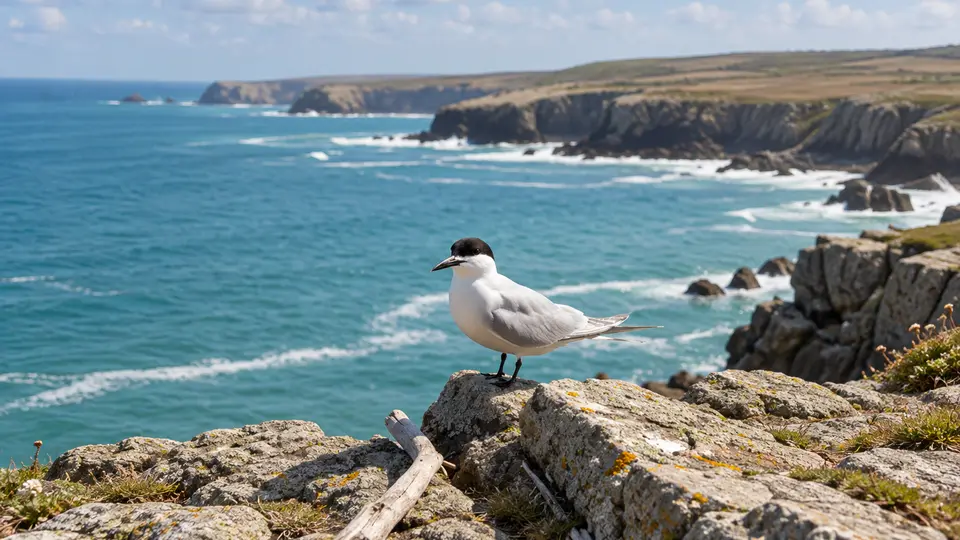
Roseate Tern in its natural habitat, AI illustration
الرئيسية›Adventure Cruises›Nature & Wildlife›Roseate Tern

Roseate Tern: where and when to see them

Sterna dougallii

Previous speciesRoseate SpoonbillNext speciesRoss Seal

Roseate Tern at a glance

The roseate tern is a slender seabird whose pale plumage can carry a delicate pink flush during breeding. Its global distribution is fragmented, with colonies scattered across tropical and temperate coasts. North Atlantic populations depend on relatively few nesting islands, making local protection particularly important despite the species' global assessment. Long tail streamers and buoyant flight give adults an unusually elegant silhouette above coastal waters.

Behaviour & reproduction

Size
33–38 cm long
Weight
90–140 g
Lifespan
Not reliably established
Status
Least Concern

Roseate terns usually nest colonially, often alongside common terns, but choose more sheltered nest positions beneath vegetation, rocks or artificial nest structures. Partners exchange fish during courtship and share incubation and chick care. Adults catch prey with quick aerial plunges and may travel substantial distances between colonies and feeding areas. Outside breeding, birds gather at coastal roosts before migrating toward warmer seas, with movements differing among populations. Courtship rituals include aerial chases and the male offering fish to the female, reinforcing pair bonds. They are long-lived birds, with some individuals recorded living over 20 years. Post-breeding, some populations undertake impressive trans-Atlantic migrations, covering thousands of kilometers to wintering grounds off West Africa or Brazil.

Top wildlife locations

New England wildlife habitat

New England

Protected offshore nesting islands and nearby coastal feeding waters offer possible views from public headlands or authorized boat routes. Colony interiors are restricted, and birds may be difficult to separate from common terns.

Adventure cruises in New England

Portugal wildlife habitat

Portugal

The Azores provide Portugal's principal breeding context, with possible views over coastal waters near protected island colonies. Mainland encounters are much less dependable, and nesting islets are not unrestricted visitor destinations.

Adventure cruises in Portugal

Destinations describe the species' habitat, not guaranteed cruise stops. Some animals require an optional inland excursion or are found in restricted reserves.

Fun facts about the Roseate Tern

  • Its name refers to a subtle pink wash that can appear on the breast.
  • Sheltered nest boxes are used in some conservation-managed colonies.
  • North Atlantic birds can migrate to coastal waters off South America.
  • Adults frequently carry a single fish crosswise in the bill when provisioning chicks.

Best time to see the Roseate Tern

In New England, late spring through summer offers the strongest coastal observation window around protected breeding areas. In Portugal, opportunities are more localized, particularly in the Azores during spring and summer. Colony access restrictions remain important throughout nesting and chick rearing. In New England, peak breeding activity and chick-rearing can be observed from late June through July, offering opportunities to witness feeding flights. Migration south from New England begins in late August, with most birds departed by mid-September. The Azores host a smaller, but important, breeding population from April to September.

Roseate Tern: season matrix by destination

Travel and observation windows vary by region. Highlighted months are an orientation for planning, not confirmed sightings or a guarantee of access.

New England

Late spring and summer overlap regional breeding presence; viewing depends on local access, colony activity and offshore feeding movements.

JanFebMarAprMayJunJulAugSepOctNovDec
Cruise ships in New England

Portugal

This window suits Azorean breeding-season coastal observation, not a promise of mainland occurrence or access to colonies.

JanFebMarAprMayJunJulAugSepOctNovDec
Cruise ships in Portugal

Where the Roseate Tern lives

Breeding habitat consists mainly of small marine islands with sparse vegetation, rocky shelter or sandy ground. Feeding takes place over shallow coastal waters, channels and tide-driven fish concentrations. Quiet beaches, offshore rocks and sandbars provide resting places during migration and outside breeding. Nests are often shallow scrapes on the ground or within existing hollows, sometimes lined with plant material. Key breeding sites in New England include islands off Massachusetts and Maine, while in Portugal, the Berlengas archipelago is significant. Roseate terns are sensitive to habitat degradation and require predator-free nesting sites.

What the Roseate Tern eats

Small schooling fish dominate the diet, especially sand eels, herring relatives and other locally abundant coastal species. Adults select relatively slender prey that chicks can swallow. Feeding success depends on fish being accessible near the surface rather than simply abundant at depth. Prey fish are typically less than 10cm long, with sand eels being a primary food source where available. Adults carry multiple small fish crosswise in their bills back to chicks, a distinguishing feeding behavior. Feeding often occurs in flocks, sometimes mixed with other tern species, targeting schools of fish concentrated by currents.

Species at a glance

Common name
Roseate Tern
Scientific name
Sterna dougallii
Animal group
Birds
Size
33–38 cm long
Weight
90–140 g
Lifespan
Not reliably established
Status
Least Concern
Identification
Compared with common tern, an adult roseate tern has paler upperparts, exceptionally long tail streamers and a mostly black bill that develops a red base during breeding. Juvenile roseate terns have a scaly appearance on their backs and a shorter tail compared to adults, lacking the long streamers. The pale rosy blush on the underside of breeding adults is often difficult to see at a distance or in poor light conditions. Its primary flight feathers are translucent when viewed against the light, aiding in separation from similar species.

Roseate Tern: frequently asked questions

Where can I see the Roseate Tern?
New England, Portugal. Watch from designated coastal viewpoints or a passing vessel with binoculars. Never enter tern colonies or approach roosting flocks, since disturbance exposes eggs and chicks and can displace birds from essential resting sites. Scanning open water near breeding islands during feeding times can reveal their characteristic quick, shallow plunges for fish. Pay attention to their calls, a distinct 'kewick' or 'chivet', which can help locate them before they are seen. Binoculars or a spotting scope are essential for observing these active, fast-flying birds from a distance.
When is the best time to see the Roseate Tern?
In New England, late spring through summer offers the strongest coastal observation window around protected breeding areas. In Portugal, opportunities are more localized, particularly in the Azores during spring and summer. Colony access restrictions remain important throughout nesting and chick rearing. In New England, peak breeding activity and chick-rearing can be observed from late June through July, offering opportunities to witness feeding flights. Migration south from New England begins in late August, with most birds departed by mid-September. The Azores host a smaller, but important, breeding population from April to September.
How big does the Roseate Tern get?
33–38 cm long. Adult weight: 90–140 g. Size varies with age, sex and population.
How should I behave around the Roseate Tern?
Watch from designated coastal viewpoints or a passing vessel with binoculars. Never enter tern colonies or approach roosting flocks, since disturbance exposes eggs and chicks and can displace birds from essential resting sites. Scanning open water near breeding islands during feeding times can reveal their characteristic quick, shallow plunges for fish. Pay attention to their calls, a distinct 'kewick' or 'chivet', which can help locate them before they are seen. Binoculars or a spotting scope are essential for observing these active, fast-flying birds from a distance.
What does the Roseate Tern eat?
Small schooling fish dominate the diet, especially sand eels, herring relatives and other locally abundant coastal species. Adults select relatively slender prey that chicks can swallow. Feeding success depends on fish being accessible near the surface rather than simply abundant at depth. Prey fish are typically less than 10cm long, with sand eels being a primary food source where available. Adults carry multiple small fish crosswise in their bills back to chicks, a distinguishing feeding behavior. Feeding often occurs in flocks, sometimes mixed with other tern species, targeting schools of fish concentrated by currents.
Are wildlife sightings guaranteed on an adventure cruise?
No. Animals move freely and routes, weather, access restrictions and local conditions influence every outing. Confirm the actual itinerary and shore program before booking.

Compare wildlife in the same destinations

Explore other birds recorded in these destinations. Similar surroundings do not mean the animals share the same habits or viewing season.

Species comparison by animal group and destination
Roseate TernRoseate TernAtlantic PuffinAtlantic PuffinAudouin's GullAudouin's Gull
Animal groupBirdsAnimal groupBirdsAnimal groupBirds
DestinationsNew England, PortugalDestinationsNew England, Norway, Scotland, ArcticDestinationsCroatia, Greece, Portugal, Turkey
Previous speciesRoseate SpoonbillNext speciesRoss Seal
All wildlife destinations
On this page
  • 01About
  • 02Behaviour & reproduction
  • 03Top wildlife locations
  • 04Fun facts
  • 05Best season
  • 06Season matrix by destination
  • 07Habitat
  • 08Diet
  • 09Species at a glance
  • 10Questions & answers
  • 11Compare

Find your wildlife cruise

خطط رحلتك

Find your next wildlife adventure

Compare destinations, shore programs and dates with the animals and habitats you would love to see.

  • Naturalist-led shore excursions
  • Responsible wildlife watching
  • Small expedition ships
Search wildlife cruises