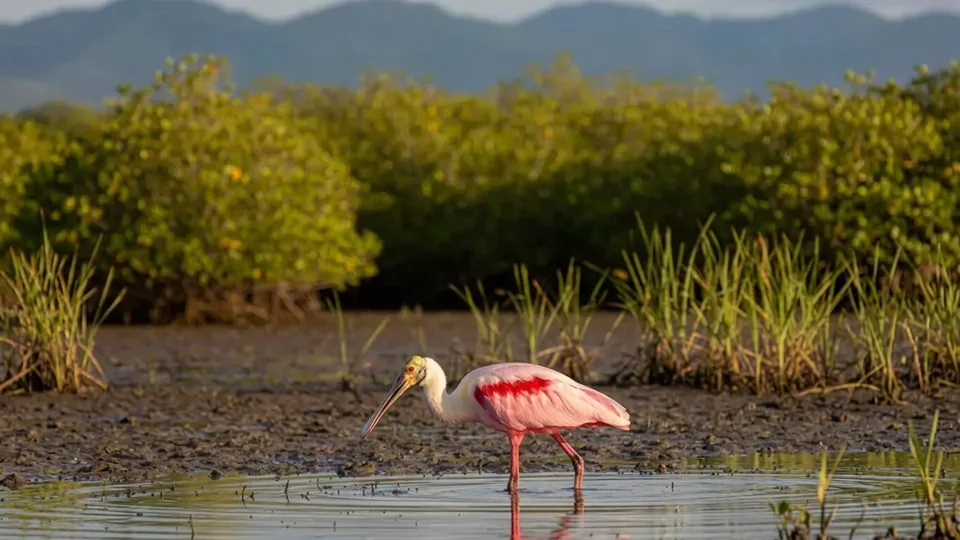
Roseate Spoonbill in its natural habitatAI-modified

Roseate SpoonbillPlatalea ajajaWhere and when to see them

Roseate Spoonbill at a glance

The roseate spoonbill is a large American wading bird with pink plumage and a broad, flattened bill adapted for finding prey by touch. Adults have bare, greenish heads, whereas young birds are paler and retain head feathers. Its striking appearance once made it a target for plume hunters. Today, successful feeding and breeding depend on wetlands that provide the right water depths, abundant small aquatic animals and secure nesting sites.

Behaviour & reproduction

Size
71-86 cm (28-34 in) long
Weight
1.2-1.8 kg (2.6-4.0 lb)
Lifespan
Not reliably established
Status
Least Concern

Spoonbills feed by sweeping partly open bills from side to side through shallow water. Contact with prey triggers a rapid closure, allowing feeding even when the water is cloudy. Birds often forage socially and may move between wetlands as water levels change. They nest colonially in trees or shrubs, sometimes among herons and ibises. Adults feed chicks by regurgitation, and young birds gradually develop the stronger pink coloration associated with maturity. Courtship displays involve head-shaking and bill-clapping, often performed by males to attract mates. They are quite social, often roosting and foraging in mixed-species flocks with other wading birds like ibises and egrets. Parental care extends to both adults incubating eggs and feeding chicks, which fledge after about 35-40 days.

Top wildlife locations

Costa Rica wildlife habitatAI-modified

Costa Rica

Pacific coastal lagoons, estuary margins and shallow wetlands offer plausible shore viewing, especially in the northwest. Birds are localized, and some productive wetlands require an inland excursion or authorized reserve access.

Florida wildlife habitatAI-modified

Florida

Mangrove-fringed bays, tidal shallows and managed wetlands offer accessible shoreline or boardwalk habitat. Birds occur unevenly, and nesting islands may be closed; viewing should remain outside colonies and sensitive feeding areas.

Mexico wildlife habitatAI-modified

Mexico

Gulf and Caribbean coastal lagoons, mangroves and some Pacific estuaries provide plausible shore-viewing habitat. Distribution is regional, and access may require reserve paths or inland wetland excursions rather than beach walks.

Destinations describe the species' habitat, not guaranteed cruise stops. Some animals require an optional inland excursion or are found in restricted reserves.

Fun facts about the Roseate Spoonbill

  • The bill's broad tip helps detect small animals by touch.
  • Juveniles have feathered heads that become bare with maturity.
  • Diet-derived carotenoid pigments contribute to the pink plumage.
  • Unlike flamingos, spoonbills fly with their necks extended and relatively straight bills pointing forward.

Best time to see the Roseate Spoonbill

Useful viewing periods depend on regional rainfall, tides and wetland water levels rather than a single continental breeding season. Drier months often concentrate feeding birds in accessible shallows. Florida supports year-round observation, while Costa Rican and Mexican opportunities vary considerably among coastal wetland systems. In Florida, nesting typically occurs between March and May, leading to increased activity around breeding colonies. Migratory movements are often influenced by local food availability and water conditions, with birds following productive feeding grounds. Costa Rica sees nesting during the dry season, generally from December to April, coinciding with lower water levels and concentrated prey.

Roseate Spoonbill: season matrix by destination

Travel and observation windows vary by region. Highlighted months are an orientation for planning, not confirmed sightings or a guarantee of access.

Costa Rica

The Pacific dry season often improves access and concentrates wetland feeding opportunities; it is not a nationwide spoonbill breeding calendar.

JanFebMarAprMayJunJulAugSepOctNovDec
Cruise ships in Costa Rica

Florida

Cooler months offer comfortable wetland observation, but spoonbills occur year-round and local tides and water management can be more important.

JanFebMarAprMayJunJulAugSepOctNovDec
Cruise ships in Florida

Mexico

This broad dry-season travel window suits many coastal wetlands, but regional rainfall and water levels vary; it does not imply synchronized nesting across Mexico.

JanFebMarAprMayJunJulAugSepOctNovDec
Cruise ships in Mexico

Where the Roseate Spoonbill lives

The species uses shallow freshwater, brackish and saltwater wetlands, including lagoons, tidal creeks, marshes and flooded flats. Mangrove islands and wooded wetland margins provide nesting habitat. Feeding success depends strongly on shallow water that makes small prey accessible to the sweeping bill. The species requires stable water levels for foraging and nesting, making them sensitive to hydrological changes. They often utilize man-made impoundments and aquaculture ponds when natural wetlands are disturbed. Coastal estuaries are particularly important for foraging during low tide cycles.

What the Roseate Spoonbill eats

Small fish, shrimp, aquatic insects and other invertebrates form the diet. The bill detects prey largely through touch rather than precise visual targeting. Carotenoid pigments obtained through food contribute to pink plumage, with intensity varying according to age, condition and diet. Their specialized bill allows them to detect even small, camouflaged prey that other wading birds might miss. Juveniles primarily consume small invertebrates, gradually shifting to larger prey as they mature. The unique bill morphology allows them to filter feed efficiently in murky waters.

Species at a glance

Common name
Roseate Spoonbill
Scientific name
Platalea ajaja
Animal group
Birds
Size
71-86 cm (28-34 in) long
Weight
1.2-1.8 kg (2.6-4.0 lb)
Lifespan
Not reliably established
Status
Least Concern
Identification
Its pink body and flattened spoon-shaped bill distinguish it from flamingos, which have strongly bent bills and much longer legs and necks. Immature birds are much paler pink, sometimes almost white, with a dusky bill and head, developing full adult coloration over several years. Adults display a distinctive bare, greenish-gray head and a bright red shoulder patch during breeding season. Unlike most wading birds, their leg color is typically pinkish-red, which can be visible when they are standing.

Roseate Spoonbill: frequently asked questions

Where can I see the Roseate Spoonbill?
Costa Rica, Florida, Mexico. Watch from boardwalks, shoreline hides or established paths without entering feeding shallows. Give nesting islands a wide berth, and follow local crocodilian warnings rather than approaching muddy margins for closer photographs. When viewing from a boat, maintain a respectful distance to avoid flushing birds from feeding or roosting sites. Utilize binoculars or spotting scopes for detailed observation to minimize disturbance. Early morning and late afternoon are often the best times for observing active feeding.
When is the best time to see the Roseate Spoonbill?
Useful viewing periods depend on regional rainfall, tides and wetland water levels rather than a single continental breeding season. Drier months often concentrate feeding birds in accessible shallows. Florida supports year-round observation, while Costa Rican and Mexican opportunities vary considerably among coastal wetland systems. In Florida, nesting typically occurs between March and May, leading to increased activity around breeding colonies. Migratory movements are often influenced by local food availability and water conditions, with birds following productive feeding grounds. Costa Rica sees nesting during the dry season, generally from December to April, coinciding with lower water levels and concentrated prey.
How big does the Roseate Spoonbill get?
71-86 cm (28-34 in) long. Adult weight: 1.2-1.8 kg (2.6-4.0 lb). Size varies with age, sex and population.
How should I behave around the Roseate Spoonbill?
Watch from boardwalks, shoreline hides or established paths without entering feeding shallows. Give nesting islands a wide berth, and follow local crocodilian warnings rather than approaching muddy margins for closer photographs. When viewing from a boat, maintain a respectful distance to avoid flushing birds from feeding or roosting sites. Utilize binoculars or spotting scopes for detailed observation to minimize disturbance. Early morning and late afternoon are often the best times for observing active feeding.
What does the Roseate Spoonbill eat?
Small fish, shrimp, aquatic insects and other invertebrates form the diet. The bill detects prey largely through touch rather than precise visual targeting. Carotenoid pigments obtained through food contribute to pink plumage, with intensity varying according to age, condition and diet. Their specialized bill allows them to detect even small, camouflaged prey that other wading birds might miss. Juveniles primarily consume small invertebrates, gradually shifting to larger prey as they mature. The unique bill morphology allows them to filter feed efficiently in murky waters.
Are wildlife sightings guaranteed on an adventure cruise?
No. Animals move freely and routes, weather, access restrictions and local conditions influence every outing. Confirm the actual itinerary and shore program before booking.

Compare wildlife in the same destinations

Explore other birds recorded in these destinations. Similar surroundings do not mean the animals share the same habits or viewing season.

Species comparison by animal group and destination
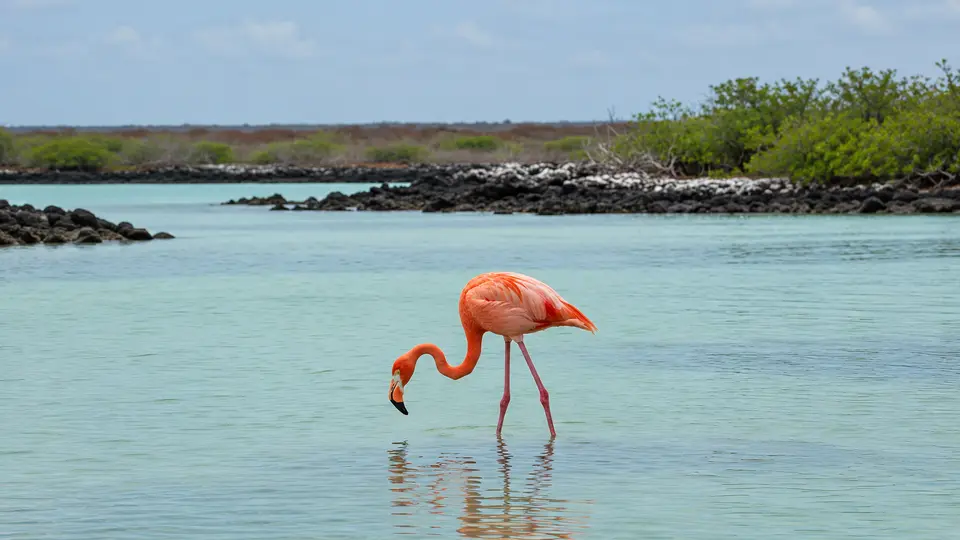
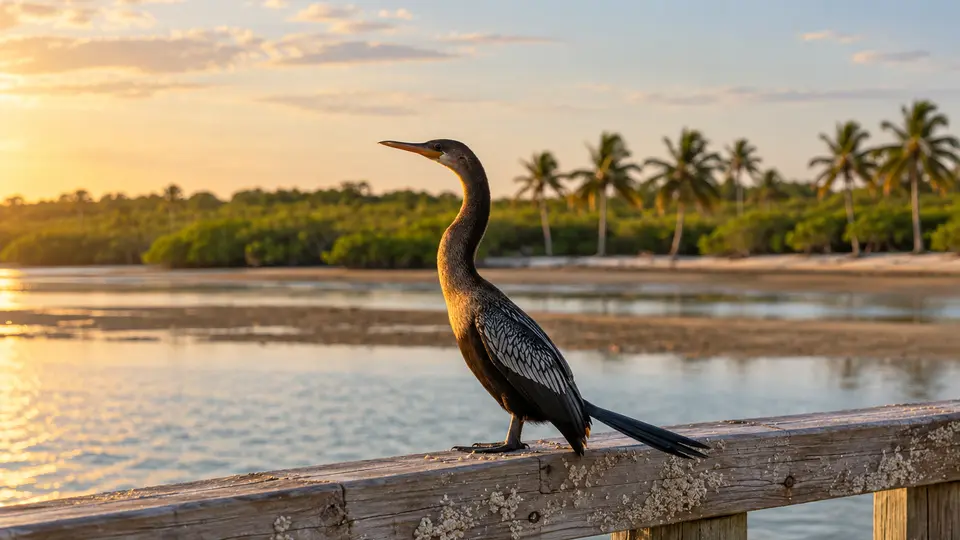
Roseate SpoonbillAI-modifiedRoseate SpoonbillAmerican FlamingoAI-modifiedAmerican FlamingoAnhingaAI-modifiedAnhinga
Animal groupBirdsAnimal groupBirdsAnimal groupBirds
DestinationsCosta Rica, Florida, MexicoDestinationsGalapagos, MexicoDestinationsFlorida
Scientific namePlatalea ajajaScientific nameScientific name
All wildlife destinations
AI-modified
Plan your trip

Find your next wildlife adventure

Compare destinations, shore programs and dates with the animals and habitats you would love to see.

  • Naturalist-led shore excursions
  • Responsible wildlife watching
  • Small expedition ships