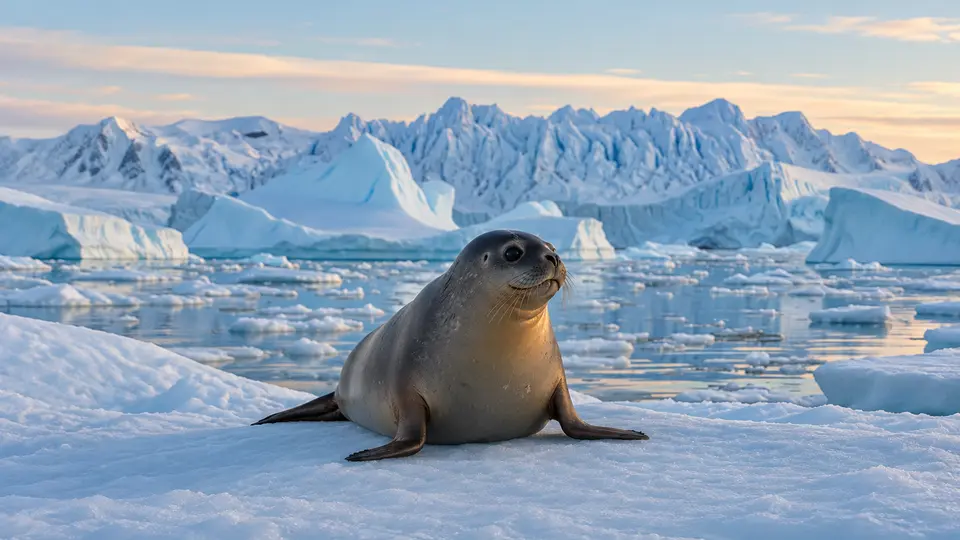
Ross Seal in its natural habitat, AI illustration

Ross SealOmmatophoca rossiiWhere and when to see them

Ross Seal at a glance

The Ross seal is one of Antarctica's least frequently observed seals, associated especially with remote, consolidated pack ice. Its small head, large eyes and thick neck create a distinctive appearance when it rests on an ice floe. Unlike seals commonly encountered near Antarctic visitor routes, it is sparsely distributed and difficult to study. Much of its life history remains less thoroughly documented than that of other Antarctic seals.

Behaviour & reproduction

Size
1.7–2.4 m long
Weight
130–220 kg
Lifespan
Not reliably established
Status
Least Concern

Usually solitary on the ice, Ross seals spend much of their time at sea and can travel beyond the pack into open Southern Ocean waters. They haul out for breeding and moulting, with females nursing a single pup during a short spring period. Adults produce elaborate calls used in acoustic studies. When disturbed on ice, an animal may raise its head and inflate its conspicuous throat region. They are known for their unique, trilling vocalizations that can carry long distances underwater and through the ice. When startled, a Ross seal may also hiss or growl while inflating its throat. Their solitary nature makes group sightings exceptionally uncommon.

Top wildlife locations

Antarctica wildlife habitat

Antarctica

Remote pack-ice floes are the relevant habitat, viewed only opportunistically from a vessel's deck. Most suitable areas are inaccessible to standard coastal visits, and this seal is rare on regular itineraries.
Destinations describe the species' habitat, not guaranteed cruise stops. Some animals require an optional inland excursion or are found in restricted reserves.

Fun facts about the Ross Seal

  • Its genus name refers to its conspicuous eyes.
  • It is the smallest of the four seals closely associated with Antarctic pack ice.
  • Its repertoire includes distinctive, sweeping vocalizations.
  • Tracking has shown that some individuals spend extended periods far from the ice.

Best time to see the Ross Seal

The Antarctic visitor season, roughly November through March, provides the practical deck-observation window. Ross seals remain exceptionally unpredictable even then because their preferred pack ice is often inaccessible. This travel window does not imply that ordinary peninsula itineraries reach breeding habitat. Encounters are extremely rare even during the austral summer months due to their preference for dense pack ice. Expedition cruise itineraries focusing on the deep Weddell Sea or East Antarctica might offer a slightly higher chance of a distant sighting. Even then, successful sightings are more a matter of luck and persistence.

Ross Seal: season matrix by destination

Travel and observation windows vary by region. Highlighted months are an orientation for planning, not confirmed sightings or a guarantee of access.

Antarctica

These are practical Antarctic travel months, not a reliable Ross seal viewing season; ice, route and sparse distribution strongly limit opportunities.

JanFebMarAprMayJunJulAugSepOctNovDec
Cruise ships in Antarctica

Where the Ross Seal lives

Ross seals inhabit the Southern Ocean around Antarctica, using dense pack ice as resting and breeding habitat. They also range through deep offshore water beyond the ice edge. Their preference for remote ice conditions places much suitable habitat outside ordinary coastal visitor access. They are thought to prefer very heavy, consolidated pack ice for hauling out. This makes them one of the least frequently encountered pinniped species in the Southern Ocean. Their distribution is circumpolar, primarily in the East Antarctic and Weddell Sea sectors.

What the Ross Seal eats

Squid and fish form the main documented diet, with some crustaceans also recorded. Large eyes are consistent with finding prey in dim conditions. Knowledge comes from limited samples and tracking work, so prey proportions should not be generalized across the entire Antarctic range. Despite their large eyes, their diving capabilities and feeding depths are not well understood due to their remote habitat. The high proportion of squid in their diet suggests they are effective nocturnal or deep-water hunters. Stomach content analysis has also revealed krill, suggesting opportunistic feeding.

Species at a glance

Common name
Ross Seal
Scientific name
Ommatophoca rossii
Animal group
Mammals
Size
1.7–2.4 m long
Weight
130–220 kg
Lifespan
Not reliably established
Status
Least Concern
Identification
Compared with crabeater and Weddell seals, the Ross seal has a smaller head, unusually large eyes, a thick neck and prominent pale streaking along the throat. The Ross seal's head often appears disproportionately small compared to its very thick neck and body. Distinctive pale stripes on the throat can be a key identifying feature, running from the chin to the chest. Its small, peg-like teeth are also unique among Antarctic seals, though not visible from a distance.

Ross Seal: frequently asked questions

Where can I see the Ross Seal?
Antarctica. Search distant ice floes from the deck using binoculars and a camera lens. Do not request an approach through hazardous ice or disturb a hauled-out seal; sightings are unusual on standard visitor routes. Be prepared for very brief and distant sightings, often of a single individual. Your best chance is scanning icebergs and large ice floes in remote, dense pack ice regions. Patience is key, as they are not found in areas typically visited by tourists.
When is the best time to see the Ross Seal?
The Antarctic visitor season, roughly November through March, provides the practical deck-observation window. Ross seals remain exceptionally unpredictable even then because their preferred pack ice is often inaccessible. This travel window does not imply that ordinary peninsula itineraries reach breeding habitat. Encounters are extremely rare even during the austral summer months due to their preference for dense pack ice. Expedition cruise itineraries focusing on the deep Weddell Sea or East Antarctica might offer a slightly higher chance of a distant sighting. Even then, successful sightings are more a matter of luck and persistence.
How big does the Ross Seal get?
1.7–2.4 m long. Adult weight: 130–220 kg. Size varies with age, sex and population.
How should I behave around the Ross Seal?
Search distant ice floes from the deck using binoculars and a camera lens. Do not request an approach through hazardous ice or disturb a hauled-out seal; sightings are unusual on standard visitor routes. Be prepared for very brief and distant sightings, often of a single individual. Your best chance is scanning icebergs and large ice floes in remote, dense pack ice regions. Patience is key, as they are not found in areas typically visited by tourists.
What does the Ross Seal eat?
Squid and fish form the main documented diet, with some crustaceans also recorded. Large eyes are consistent with finding prey in dim conditions. Knowledge comes from limited samples and tracking work, so prey proportions should not be generalized across the entire Antarctic range. Despite their large eyes, their diving capabilities and feeding depths are not well understood due to their remote habitat. The high proportion of squid in their diet suggests they are effective nocturnal or deep-water hunters. Stomach content analysis has also revealed krill, suggesting opportunistic feeding.
Are wildlife sightings guaranteed on an adventure cruise?
No. Animals move freely and routes, weather, access restrictions and local conditions influence every outing. Confirm the actual itinerary and shore program before booking.

Compare wildlife in the same destinations

Explore other mammals recorded in these destinations. Similar surroundings do not mean the animals share the same habits or viewing season.

Species comparison by animal group and destination
Ross SealRoss SealAntarctic Fur SealAntarctic Fur SealBlue WhaleBlue Whale
Animal groupMammalsAnimal groupMammalsAnimal groupMammals
DestinationsAntarcticaDestinationsAntarcticaDestinationsMexico, Norway, Portugal, Antarctica, Arctic, Maldives, New Zealand
All wildlife destinations
Plan your trip

Find your next wildlife adventure

Compare destinations, shore programs and dates with the animals and habitats you would love to see.

  • Naturalist-led shore excursions
  • Responsible wildlife watching
  • Small expedition ships

Newsletter

Take Blue Rides with you

Adventure cruise offers, last-minute deals and trip inspiration.

Free, unsubscribe anytime. Details: Privacy Policy

Partner with Blue Rides

Affiliate Program

Recommend adventure cruises and earn commission on every confirmed booking.

Share. Track. Earn.

Your footage, our stage

Send us your videos or pictures.

Captured remarkable nature or wildlife on your journey? Share it with us, we may feature it on Blue Rides.