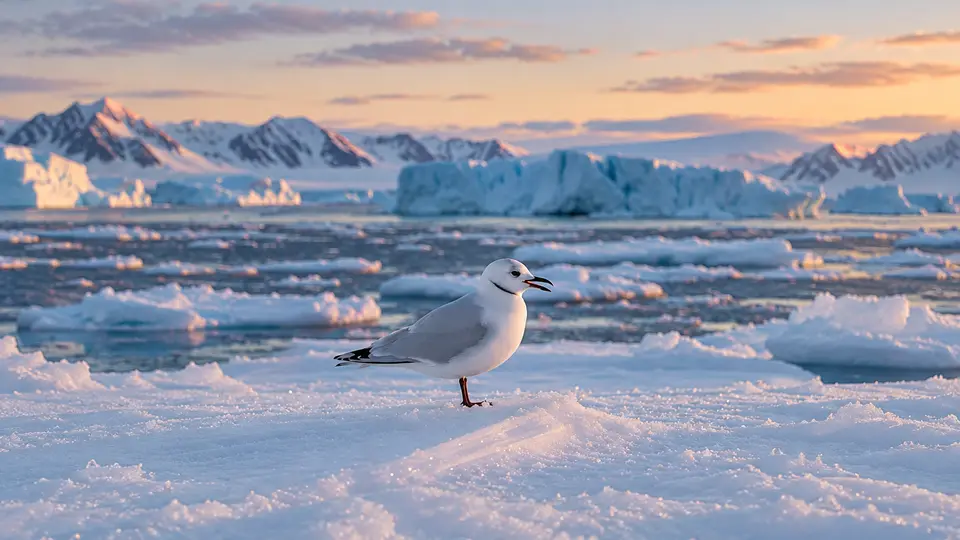
Ross's Gull in its natural habitat, AI illustration

Ross's Gull: where and when to see them

Rhodostethia rosea

Ross's Gull at a glance

Ross's gull is a small Arctic gull celebrated for its delicate pink breeding plumage and narrow black neck ring. Most breeding occurs in northeastern Siberia, with much smaller and irregularly occupied outposts elsewhere in the Arctic. Its remote distribution and mobile habits make encounters highly unpredictable. Although often imagined as a bird of sea ice, it nests principally in wet tundra landscapes with pools and low vegetation.

Behaviour & reproduction

Size
29–32 cm long
Weight
120–250 g
Lifespan
Not reliably established
Status
Least Concern

During breeding, Ross's gulls occupy small, loose colonies or scattered pairs and defend the immediate surroundings of their nests. They pick insects from vegetation and water, sometimes catching them in flight. After breeding, birds move toward marine feeding areas and may gather along ice margins or productive coasts. Their movements can vary substantially between years, and isolated birds occasionally wander far outside the normal Arctic range. Courtship involves aerial displays and pair-bonding rituals on the ground. Despite their remote breeding sites, they are generally approachable when encountered on the open ocean or along ice margins outside the breeding season.

Top wildlife locations

Arctic wildlife habitat

Arctic

Wet tundra near river deltas and remote coastal ice margins are plausible habitats. Most breeding areas are inaccessible to ordinary visits, and sightings from shores or decks remain rare and highly localized.

Adventure cruises in Arctic
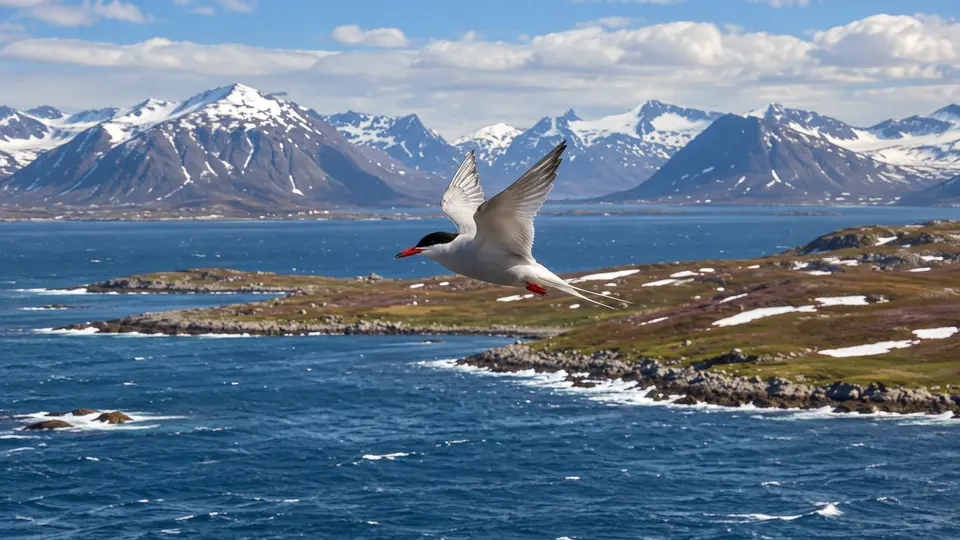
Destinations describe the species' habitat, not guaranteed cruise stops. Some animals require an optional inland excursion or are found in restricted reserves.

Fun facts about the Ross's Gull

  • Breeding adults can show a remarkably strong pink flush on the body.
  • Most of the breeding population is concentrated in northeastern Siberia.
  • The species is the sole member of the genus Rhodostethia.
  • Its tail is wedge-shaped rather than the more typical square-ended gull tail.

Best time to see the Ross's Gull

Arctic summer offers access to potential breeding landscapes, while late summer and autumn can bring coastal movements in certain regions. There is no dependable season for the entire Arctic destination. Local knowledge and current records are essential before planning observation. Prime viewing opportunities often coincide with ice breakup in spring, as birds return to breeding areas, or during late autumn migration when they gather before moving offshore. Optimal sightings are frequently linked to specific migratory routes along Arctic coastlines rather than widespread distribution.

Ross's Gull: season matrix by destination

Travel and observation windows vary by region. Highlighted months are an orientation for planning, not confirmed sightings or a guarantee of access.

Arctic

This broad window reflects Arctic travel access and possible summer or early autumn presence; timing varies greatly by region and does not establish local occurrence.

JanFebMarAprMayJunJulAugSepOctNovDec
Cruise ships in Arctic

Where the Ross's Gull lives

Nesting habitat includes marshy tundra, sedge wetlands and shallow freshwater pools, often near river deltas. Outside breeding, Ross's gulls use Arctic coastal waters, leads and pack-ice margins. Suitable habitat is extensive but remote, and local occupancy can be intermittent. Though primarily a High Arctic breeder, some individuals occasionally breed further south in northern Russia and Canada. Wintering occurs in the ice-covered marginal seas of the Arctic Ocean, particularly the Bering, Chukchi, and Beaufort Seas.

What the Ross's Gull eats

Breeding birds eat many insects and other small invertebrates collected around tundra pools. At sea, they take small fish, crustaceans and other accessible marine prey. Feeding methods include surface picking, shallow dipping and aerial pursuit of insects when conditions favor them. They will readily consume emerging chironomid flies, an abundant food source in Arctic wetlands during summer. In marine environments, they are known to follow whales and seals to feed on discarded scraps or dislodged prey.

Species at a glance

Common name
Ross's Gull
Scientific name
Rhodostethia rosea
Animal group
Birds
Size
29–32 cm long
Weight
120–250 g
Lifespan
Not reliably established
Status
Least Concern
Identification
An adult Ross's gull differs from little gull by its wedge-shaped tail, narrow black breeding neck ring and pale underwings rather than strongly dark adult underwings. Juveniles show a dark 'W' pattern across their wings, a dark tail band, and a dusky collar, distinguishing them from adults. The small, dainty body and buoyant, tern-like flight are also key field marks for this species.

Ross's Gull: frequently asked questions

Where can I see the Ross's Gull?
Arctic. Use distant coastal viewpoints or the vessel's deck, and avoid entering tundra nesting patches. Follow local polar-bear precautions ashore; never leave an authorized group to pursue a distant gull or approach its nest. When viewing from the vessel, focus on ice edges and open leads, as these are preferred foraging and resting areas. Shore excursions in breeding areas are extremely rare; if undertaken, maintain significant distance from any observed nests to prevent disturbance.
When is the best time to see the Ross's Gull?
Arctic summer offers access to potential breeding landscapes, while late summer and autumn can bring coastal movements in certain regions. There is no dependable season for the entire Arctic destination. Local knowledge and current records are essential before planning observation. Prime viewing opportunities often coincide with ice breakup in spring, as birds return to breeding areas, or during late autumn migration when they gather before moving offshore. Optimal sightings are frequently linked to specific migratory routes along Arctic coastlines rather than widespread distribution.
How big does the Ross's Gull get?
29–32 cm long. Adult weight: 120–250 g. Size varies with age, sex and population.
How should I behave around the Ross's Gull?
Use distant coastal viewpoints or the vessel's deck, and avoid entering tundra nesting patches. Follow local polar-bear precautions ashore; never leave an authorized group to pursue a distant gull or approach its nest. When viewing from the vessel, focus on ice edges and open leads, as these are preferred foraging and resting areas. Shore excursions in breeding areas are extremely rare; if undertaken, maintain significant distance from any observed nests to prevent disturbance.
What does the Ross's Gull eat?
Breeding birds eat many insects and other small invertebrates collected around tundra pools. At sea, they take small fish, crustaceans and other accessible marine prey. Feeding methods include surface picking, shallow dipping and aerial pursuit of insects when conditions favor them. They will readily consume emerging chironomid flies, an abundant food source in Arctic wetlands during summer. In marine environments, they are known to follow whales and seals to feed on discarded scraps or dislodged prey.
Are wildlife sightings guaranteed on an adventure cruise?
No. Animals move freely and routes, weather, access restrictions and local conditions influence every outing. Confirm the actual itinerary and shore program before booking.

Compare wildlife in the same destinations

Explore other birds recorded in these destinations. Similar surroundings do not mean the animals share the same habits or viewing season.

Species comparison by animal group and destination
Ross's GullRoss's GullArctic TernArctic TernAtlantic PuffinAtlantic Puffin
Animal groupBirdsAnimal groupBirdsAnimal groupBirds
DestinationsArcticDestinationsAlaska, Norway, ArcticDestinationsNew England, Norway, Scotland, Arctic
All wildlife destinations
Plan your trip

Find your next wildlife adventure

Compare destinations, shore programs and dates with the animals and habitats you would love to see.

  • Naturalist-led shore excursions
  • Responsible wildlife watching
  • Small expedition ships

Newsletter

Take Blue Rides with you

Adventure cruise offers, last-minute deals and trip inspiration.

Free, unsubscribe anytime. Details: Privacy Policy

Partner with Blue Rides

Affiliate Program

Recommend adventure cruises and earn commission on every confirmed booking.

Share. Track. Earn.

Your footage, our stage

Send us your videos or pictures.

Captured beautiful landscapes or wildlife? Share your videos and pictures with us, we may feature them on Blue Rides.