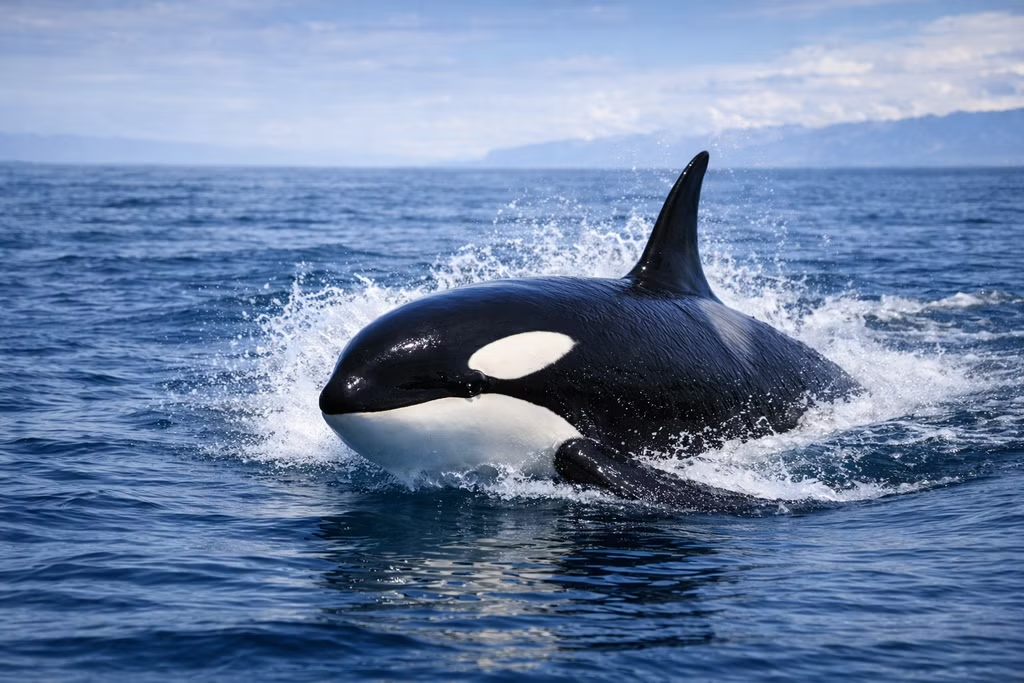
Join a dedicated expedition to the world's top Orca hotspots and witness their power and intelligence.
Seeing Orcas in their natural habitat is an unforgettable experience, and a liveaboard is the ultimate platform to make it happen. The most renowned and reliable encounters occur during the winter herring run in the fjords of Northern Norway, where snorkeling with hunting pods is the main event. Expedition-style liveaboards in Antarctica also offer frequent sightings during the austral summer, often with whales investigating the vessel and zodiacs. More opportunistic, but still thrilling, encounters happen in Mexico's Sea of Cortez and around remote oceanic islands like Socorro and the Galápagos.
Liveaboards provide the range and endurance needed to operate in these remote, wild locations. They can follow the pods and adapt to changing conditions, maximizing your chances of a respectful encounter. Onboard experts deliver crucial briefings on Orca behavior and the strict protocols for in-water interactions. This curated list focuses on vessels with proven track records in key Orca regions, prioritizing operators who are deeply committed to ethical, conservation-focused expeditions and employ knowledgeable guides essential for a successful trip.
The prime season for Orca encounters varies by region. For the most predictable sightings, head to Northern Norway from late October to early February. This is when massive schools of herring draw in hundreds of Orcas, and trips focus on snorkeling with them. The Antarctic Peninsula is the other hotspot, with the season running from November to March. Here, Orcas are part of a larger polar spectacle, and sightings happen from the ship, zodiacs, or even while diving or kayaking.
The right vessel is critical, especially in polar waters. Look for ice-strengthened or ice-class hulls for safety and access in Antarctica and Norway. All serious Orca expeditions rely on rigid inflatable boats (RIBs) or zodiacs to deploy snorkelers or divers quickly and safely for close, respectful encounters. A hydrophone is a valuable tool used by top operators to locate pods by listening for their vocalizations. While dive decks are important on a diving trip, for snorkel-focused itineraries, a simple, efficient gearing-up area suffices.
A dedicated Norwegian Orca liveaboard typically runs for 7 nights and costs between $4,000 and $7,000 USD. Antarctic expeditions are a bigger commitment, spanning 10 to 21 nights and ranging from $10,000 to over $25,000. For trips to the Sea of Cortez or Socorro, where Orcas are a potential bonus, expect to pay $3,500 to $6,000 for a 7-9 night itinerary. These prices reflect the logistical complexity, expert guidance, and remote nature of the destinations.
Ethical encounters are paramount. Reputable operators follow strict guidelines, such as not chasing the animals, approaching slowly from the side, and letting the Orcas control the interaction. The goal is a passive observation that doesn't alter their natural behavior. A common mistake is having unrealistic expectations; these are wild animals, not performers. The best pro tip is to be patient, be prepared to get in the water at a moment's notice (even in freezing weather), listen intently to your guides, and appreciate the entire ecosystem you're privileged to visit.
The world's most reliable encounters are snorkeling (not diving) trips in Northern Norway from October to February. For diving, Antarctica (November-March) offers opportunities, though sightings are part of a broader expedition. The Galápagos, Socorro Island, and the Sea of Cortez in Mexico are also known for opportunistic sightings while diving, but Orcas are a special bonus there, not the main attraction. Norway remains the top choice for a dedicated Orca-focused trip.
The best time is highly dependent on the location. For Northern Norway, the peak season is late October to early February, coinciding with the winter herring migration. In Antarctica, the austral summer from November to March provides the best conditions and highest chances of sightings. For other destinations like Mexico’s Sea of Cortez or Socorro, encounters are possible year-round but are far less predictable and considered a lucky bonus to a standard dive itinerary.
Not necessarily. The premier Orca trips in Norway are snorkeling-only and require no dive certification, just comfort in cold water. For liveaboards that offer diving in Orca habitats like Antarctica, an Advanced Open Water certification is the standard minimum. Furthermore, drysuit certification and significant experience in cold, challenging environments are almost always required by operators to ensure diver safety and comfort on these specialized polar diving expeditions.
Costs vary widely. A 7-night, snorkel-focused Orca expedition in Norway typically ranges from $4,000 to $7,000 USD. An Antarctic liveaboard, where Orcas are one of many highlights, is a larger investment, from $10,000 to over $25,000 USD for trips of 10-21 nights. Trips in destinations like the Sea of Cortez, where sightings are a bonus, generally fall between $3,500 and $6,000 USD. Prices reflect the remoteness, vessel specifications, and duration of the trip.
No. Encounters with wild animals like Orcas can never be guaranteed. These are intelligent, fast-moving predators covering vast territories. Reputable liveaboards use expert knowledge of seasons and animal behavior to maximize your chances, but factors like weather, prey movement, and the whales' own choices play a huge role. The most successful trips are undertaken with patience, realistic expectations, and an appreciation for the entire marine environment, not just one species.