
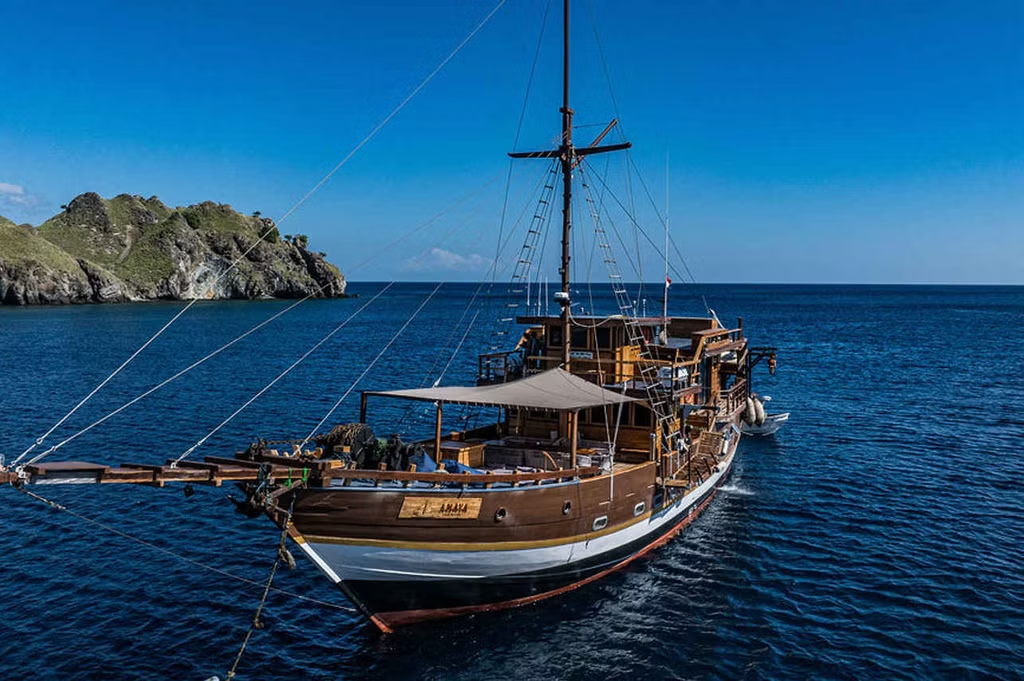
Dive Bali's incredible diversity, from the famed Liberty Wreck to Nusa Penida's mantas and mola mola.
Bali isn't just about temples and beaches; its underwater world is a diver's paradise. Liveaboards here unlock a staggering variety of experiences that day trips can't match. You'll drop in on the famous USAT Liberty Wreck in Tulamben, a coral-encrusted spectacle buzzing with life. Then, you'll head south to Nusa Penida's legendary Manta Point and Crystal Bay, hoping for a fly-by from majestic manta rays or the elusive Mola mola (ocean sunfish), typically seen from July to October. It's this mix of world-class wrecks, thrilling drift dives, and unique big fish encounters that makes Bali so special.
Beyond the headliners, Bali liveaboards can explore the muck diving havens of the north coast, revealing a world of weird and wonderful macro critters. We’ve curated this list to spotlight the boats that deliver the best all-around Bali experience. Our selection isn't based on luxury alone but on a combination of smart itineraries, top-notch dive safety and operations, comfortable facilities, and crews who know Bali’s secrets inside and out. These are the vessels we’d book for our own dive trips.
 #1
#1Amaya Explorer is a top pick for its luxurious traditional Phinisi experience amidst Indonesia's diverse marine environments. It offers dedicated exploration of remote underwater marvels, perfect for discerning adventurers.
 #2
#2The Ilike offers unparalleled access to Indonesia's diverse dive sites, from vibrant coral gardens to macro havens, delivering an authentic liveaboard experience for exploring these underwater marvels.
 #3
#3Mermaid I offers superior steel-hulled craftsmanship and expert scuba hardware, ensuring top-tier diving journeys in Alor's nutrient-rich waters for incredible marine life encounters.
 #4
#4Expertly navigating Indonesia's 17,000+ islands, the Naga Biru redefines remote diving. Explore distinct ecosystems from high-speed connectivity, accessing sites far beyond typical routes.
 #5
#5Sunshine offers unmatched access to Indonesia's richest dive sites. Explore diverse ecosystems from Halmahera to Sangihe Islands, ensuring unique pelagic and macro encounters.
 #6
#6The Tiare Cruise offers a luxurious way to explore Indonesia's rich marine ecosystems. Its traditional Phinisi design masterfully navigates diverse underwater landscapes.
The best time to dive Bali is during the dry season, from April to November. This period generally offers the best visibility and calmest seas, making for comfortable cruising and diving. The absolute peak season for seeing the rare Mola mola (ocean sunfish) around Nusa Penida is from July to October, when cooler deep-water upwellings bring them closer to the surface. Diving is possible year-round, but be aware that the rainy season (December to March) can mean rougher seas and reduced visibility, particularly on the north and east coasts.
For a Bali liveaboard, look for a vessel with solid, powerful dive tenders (RIBs). These are essential for safe and efficient drop-offs and pick-ups in the often-strong currents around Nusa Penida and the Lombok Strait. Nitrox availability is a huge plus, allowing you to maximize bottom time on repetitive dives at sites like the Liberty Wreck or during macro-hunts. While the travel distances aren't as vast as in Komodo, a well-organized dive deck is still crucial for a smooth, uncrowded experience when gearing up for Bali’s diverse dive sites.
Bali liveaboard itineraries are typically shorter than in other Indonesian destinations, often ranging from 3 to 7 nights. This makes them perfect for combining with a land-based Bali holiday. Trips usually focus on a loop that includes the northeast coast (Tulamben, Amed), the Gili Islands of Lombok, and the southern islands of Nusa Penida and Lembongan. Prices are generally more accessible than a full Komodo or Raja Ampat safari, with a 5-7 night trip often falling in the $1,500 to $3,500 USD range, depending on the vessel’s comfort level and inclusions.
A common mistake is underestimating the strength of the currents. Some sites are for experienced divers only, and an Advanced Open Water certification is highly recommended for most Bali itineraries. A pro tip is to pack for multiple water temperatures; a warm 28°C in Tulamben can quickly be followed by a chilly 22°C at Crystal Bay. Don't become so focused on finding mantas and molas that you ignore the world-class muck diving. Areas like Seraya and Amed are macro havens, so bring your camera and a keen eye for the small stuff.
Most Bali liveaboards require an Advanced Open Water certification or equivalent experience. This is due to the potential for strong currents and deeper dive profiles at key sites like those around Nusa Penida. Some itineraries may accept Open Water divers with a significant number of logged dives, but you'll have more dive site options and feel more comfortable with an advanced ticket. Always check the specific boat's requirements before booking to ensure you meet their minimum criteria for safety.
Yes, absolutely! The best chance is from July to October, which is the peak season for Mola mola (ocean sunfish) sightings around Nusa Penida. Manta rays are present at nearby Manta Point year-round. A liveaboard focusing on this southern region maximizes your opportunities to encounter both iconic species during one trip. While nature offers no guarantees, booking during this window gives you the best possible shot at scoring this incredible big-animal doubleheader that makes Bali diving so famous.
It varies by vessel. Some liveaboards are intensely dive-focused, offering little for non-divers. However, because Bali itineraries often cruise close to shore, many boats incorporate snorkeling, kayaking, and beach visits, making them quite suitable for non-diving partners. Some even offer a reduced rate for non-divers. If you're traveling in a mixed group, it's essential to choose a boat that explicitly caters to snorkelers and other activities. We can help you find the perfect option for everyone in your party.
Water temperatures in Bali are famously variable. The northern and eastern dive sites, like Tulamben and Amed, are typically a warm 27-29°C (81-84°F). In contrast, the waters around Nusa Penida can experience cold upwellings, causing temperatures to plummet to 20-24°C (68-75°F), especially during mola season. Because of this, a 5mm full wetsuit is the most practical choice for a Bali liveaboard, ensuring you're comfortable in both tropical warmth and surprising chill.
A liveaboard offers huge advantages. It eliminates the long daily road and boat transfers required for day trips, which means less travel fatigue and more time relaxing or diving. You'll be the first on-site at popular spots like the USAT Liberty Wreck, enjoying it before the crowds arrive. Most importantly, a liveaboard can seamlessly connect geographically distant dive regions like Tulamben in the northeast and Nusa Penida in the south, an itinerary impossible to achieve with land-based day diving.