
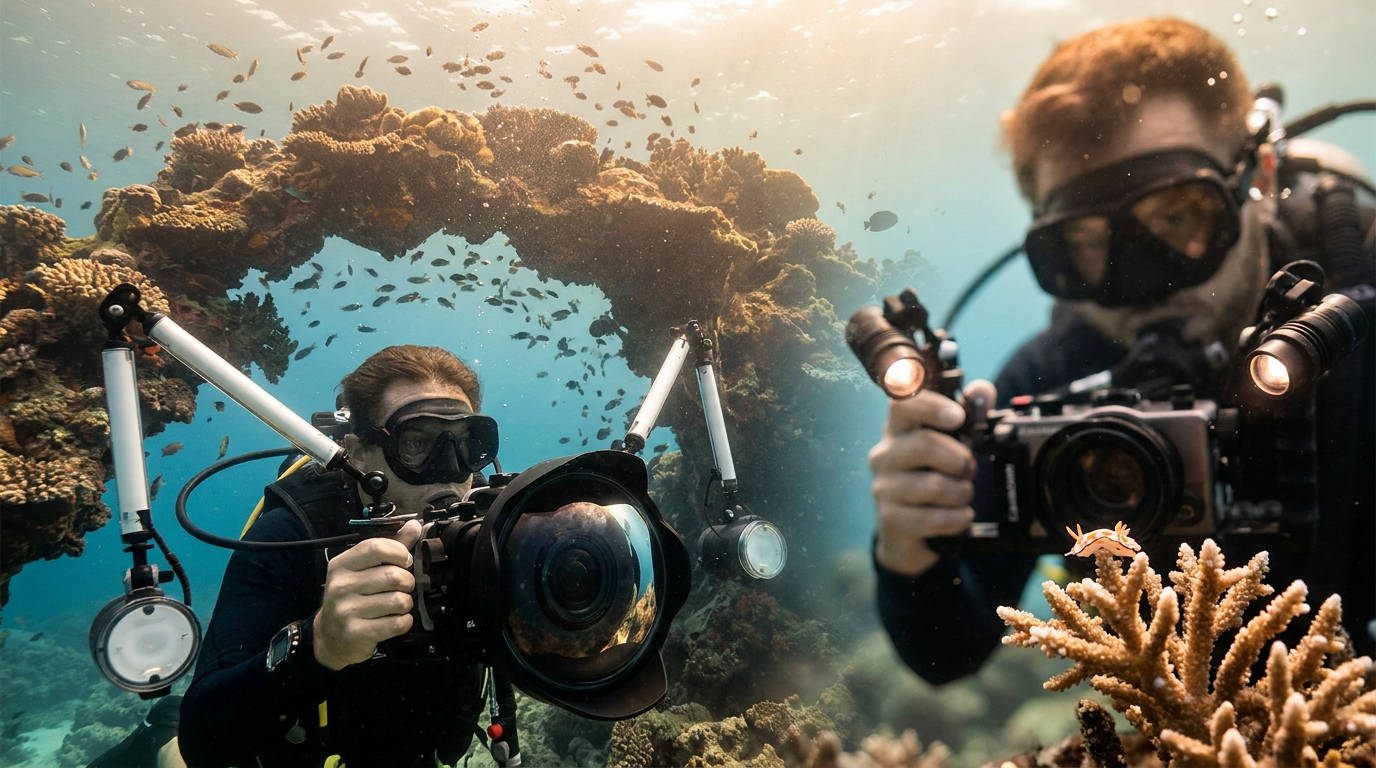
Wide-angle: scale and scenery
Wide-angle lenses (fisheye 8–15mm, rectilinear 16–35mm) capture huge subjects up close — whale sharks fill the frame from 1 m away, reef walls show their full grandeur, and divers add scale. Wide is the choice for blue water, schools, big animals, and storytelling shots.
Macro: the small world
Macro lenses (60mm, 100mm, 105mm) reveal detail your eye can't see — the iridescence on a mantis shrimp, the eyes of a pygmy seahorse, the patterns on a nudibranch's gills. Muck diving in Lembeh, Anilao or Ambon is built around macro. Patience is everything.
Gear and lighting
Wide-angle needs strong, wide-coverage strobes positioned far apart and aimed outward to avoid backscatter. Macro uses focused, close-in strobes (or a snoot for spot lighting) and small apertures (f/16–f/22) for depth of field.
Match the destination
Wide-angle destinations: Galápagos, Socorro, Maldives, Bahamas, Cocos. Macro destinations: Lembeh, Anilao, Ambon, Tulamben, Romblon. Mixed (do both): Raja Ampat, Komodo, Philippines.
Choosing per dive
Decide before the dive based on the briefing — switching lenses underwater is impossible. Many photographers do wide on shark/manta dives and macro on muck/critter sites within the same trip.
Frequently Asked Questions
Which is easier for beginners?
Macro — subjects don't run away and you have time to perfect composition. Wide-angle is harder because of fast-moving subjects and tricky lighting.
Can one lens do both?
Not well. Mid-range zooms (24–70mm) compromise on both ends. Serious shooters carry dedicated lenses.
Do I need two cameras for a mixed trip?
Helpful but not essential. Most photographers swap lenses topside between dives.
Related Searches
Popular searches related to this guide