
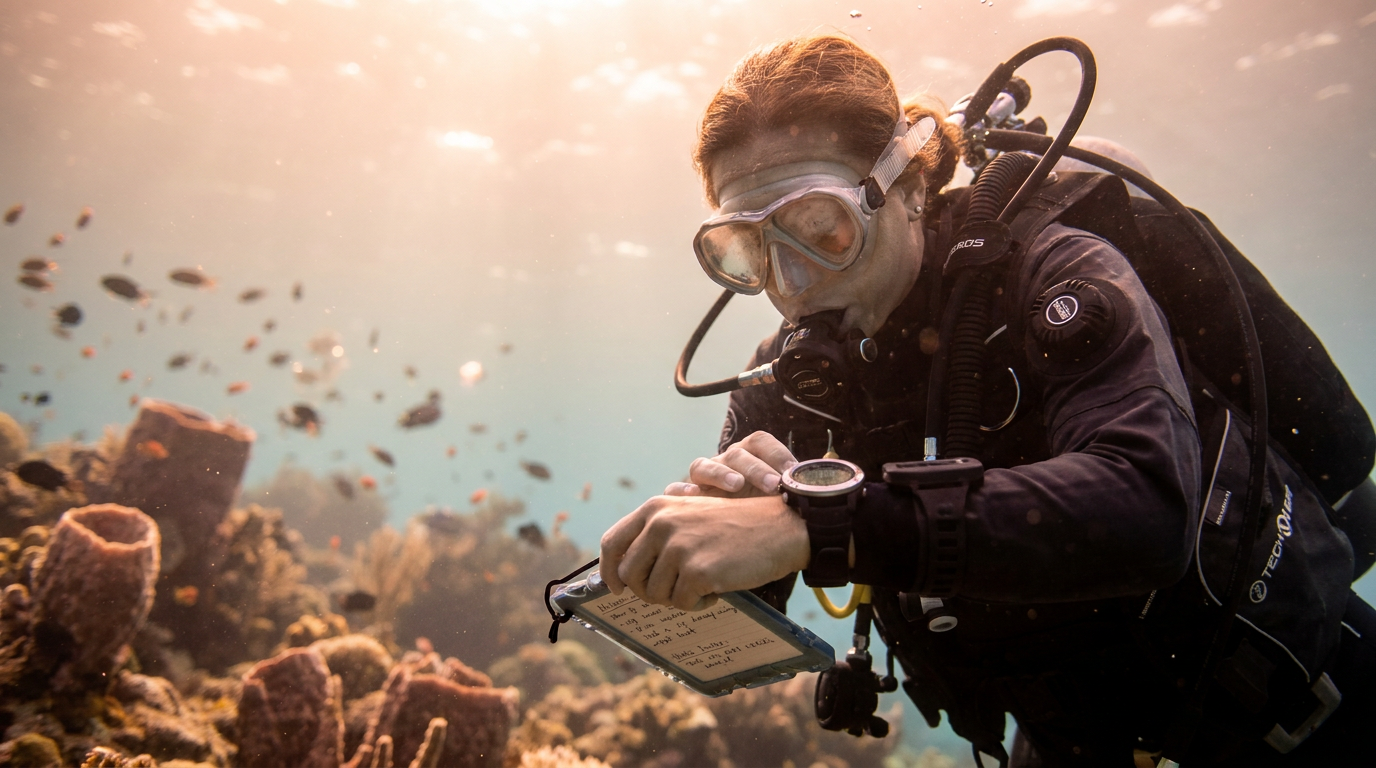
Diving on your period — the honest answer
Yes, you can dive on your period. There's no scientific evidence sharks are attracted to menstrual blood. Tampons and menstrual cups (Diva Cup, Saalt) work fine underwater — empty between dives. Some divers find cramps worse with cold water; ibuprofen helps. The only real issue: heavy flow + slow boat = annoying laundry.
Birth control & DCS risk
Combined oral contraceptives (with oestrogen) slightly increase clotting risk, which theoretically increases DCS risk. DAN's current position: no proven link, but be conservative — extra hydration, slower ascents, longer safety stops. Progestin-only pills, IUDs, and implants have no proven DCS impact.
Pregnancy: the absolute no
Diving while pregnant is NOT recommended at any stage. The foetus has no way to off-gas nitrogen — bubbles can form in unborn tissue. There's no 'safe' depth or duration. If you're trying to conceive or might be pregnant, stop diving. Resume 6+ weeks postpartum (longer if breastfeeding and no medical clearance).
Breast implants underwater
Saline and silicone implants compress and expand normally with depth — no risk to the implant or you. The 6-week post-surgery diving ban is for incision healing, not implant safety. After that you're fine, including in cold water. Don't crash into reefs. (Good advice anyway.)
Menopause & diving
No specific contraindications. Hot flashes underwater can be jarring (literally). Hormone Replacement Therapy with oestrogen has the same theoretical clot risk as combined birth control — discuss with a dive doctor if you're starting HRT and dive often. Most women over 50 dive without issue for decades.
Liveaboard practical tips for women
Pack 2× the menstrual products you think you'll need (boats run out). Bring spare bras (sun, salt, and constant wetsuit pressure destroy underwires). Sunscreen for face — reef-safe mineral, not chemical, especially around eyes. Long-sleeve rashguards prevent sunburn AND show less salt staining than swimsuits. Hair tie + small bottle of leave-in conditioner = sanity saver.
Frequently Asked Questions
Will sharks really not be attracted to my period?
Correct — no documented case. Sharks respond to fish blood and electrical signals, not human blood.
Can I dive on hormonal birth control?
Yes, with awareness. Stay extra hydrated, ascend slowly, and use a conservative dive computer profile.
When can I dive again after giving birth?
Minimum 4–6 weeks for vaginal delivery, 8–12 weeks for C-section. Get medical clearance and start with shallow, easy dives.
Do menstrual cups work for diving?
Yes, very well. Many divers prefer them — no string to manage, less waste, lasts a 7-day trip.
Should I tell my dive guide I'm on my period?
Only if you want to. It doesn't affect your safety or the dive plan.
Dive on your terms, every week of the month
Browse liveaboards with quality bathrooms, privacy, and welcoming crews.
Find liveaboardsRelated Searches
Popular searches related to this guide