
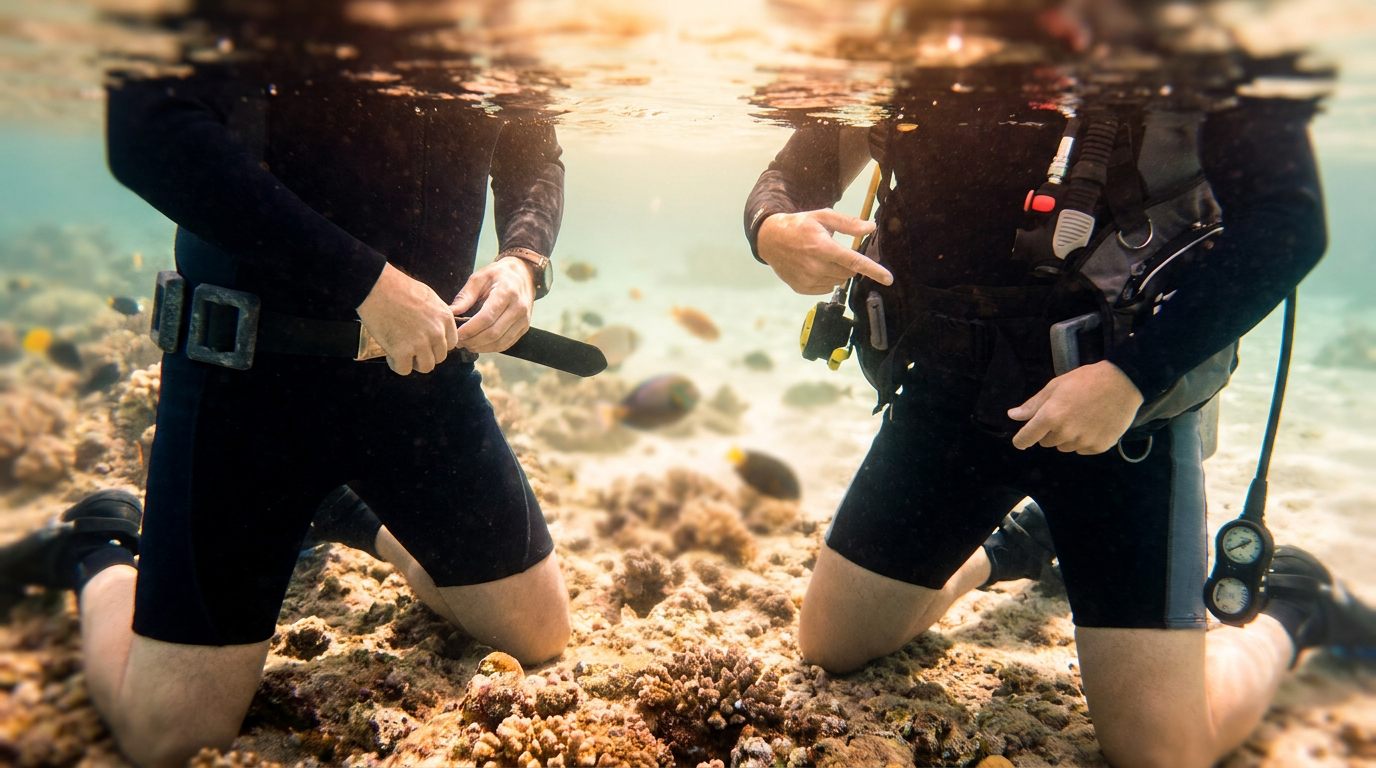
Weight belt vs integrated — pros and cons
Weight belts are simple, cheap, and fail-safe — release the buckle and you drop everything. Downside: pressure on hips, and they slip on long dives. Integrated weights live in BCD pockets — more comfortable, no hip pressure, and harder to lose by accident. Most modern BCDs are integrated; many divers wear a 1–2 kg belt as backup ditchable weight.
How much weight do I actually need?
Rough start: 10% of body weight in saltwater + extra for thick wetsuits. A weight check on day 1 of any liveaboard is mandatory — at the surface with empty BCD and half-full lungs you should float at eye level; exhale and you sink slowly. Most divers are over-weighted by 1–3 kg, which kills air consumption and trim. Add a kilo for each 1mm of wetsuit thickness above 3mm.
Trim weights — the secret to horizontal swimming
If your fins keep dropping below your head and you swim feet-down, you're not balanced. Move 1–2 kg from your hip area to trim pockets on your tank straps (between shoulder blades). Most divers immediately go horizontal and use 20% less air. Many BCDs have trim pockets — use them.
Saltwater vs freshwater, thick suit vs thin
Saltwater needs about 2 kg more than freshwater. A 5mm full wetsuit needs 4–6 kg more than a 3mm shorty. Drysuits add another 4–8 kg over wetsuit. Steel tanks need ~2 kg less weight than aluminium. On liveaboards, you'll usually use 12L aluminium (the most common rental). Plan accordingly and adjust on the first dive.
Weight pouch types — quick-release matters
Your weight system MUST drop fast in an emergency. Test it before each trip: can you ditch one-handed, with cold fingers, in 3 seconds? Velcro+buckle integrated pouches are reliable; pure-velcro integrated systems fail when wet sand gets in. Belt buckles should be metal, not plastic — plastic snaps after 200 dives.
Travel tip: don't fly with lead
Lead weights are heavy, expensive to ship, and provided free on every liveaboard. Don't pack them. Bring only your own quick-release weight pouches if you're particular; the boat supplies the lead.
Frequently Asked Questions
How do I do a proper weight check?
Float at the surface, BCD empty, regulator out, normal breath: water should be at eye level. Exhale fully — you should sink slowly. If not, add or drop 0.5 kg and re-check.
Why does my buddy use less weight than me?
Body composition (muscle is denser than fat), wetsuit thickness, BCD buoyancy, and breathing technique. Comparing weight is only useful between identical-kit divers.
Can I lose weight as a beginner over time?
Yes — most divers shed 2–4 kg over their first 50 dives as breathing relaxes and they trust their BCD.
What if I need more weight than the liveaboard provides?
Most boats have 30+ kg of lead per diver. If you need 12+ kg, mention it at booking — some boats charge a small fee or need to source extra.
Are soft (shot) weights better than hard?
Soft moulds to your body and is more comfortable in pockets; hard is cheaper and indestructible. Both work — buy what's available.
Find your next liveaboard
Trips for every level, every wetsuit thickness, every weight need.
Browse tripsRelated Searches
Popular searches related to this guide