
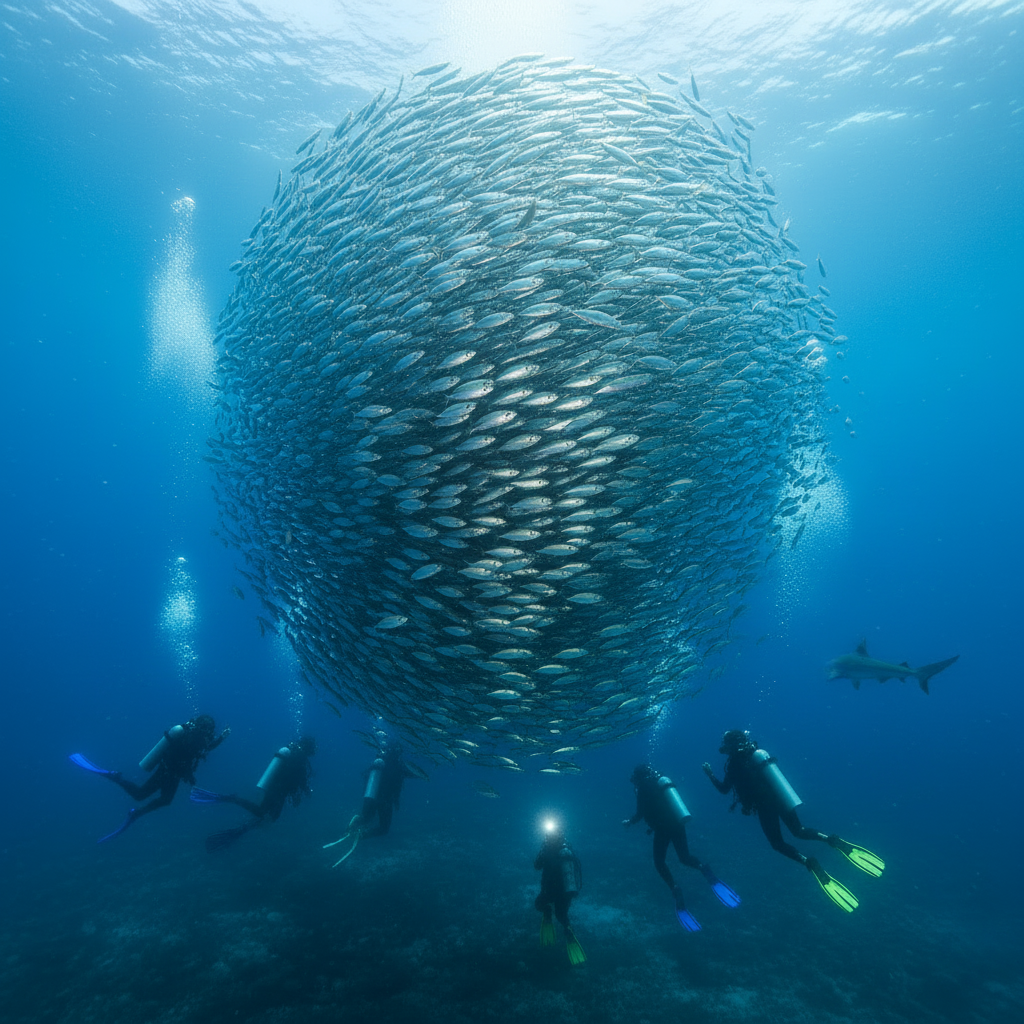
Imagine being immersed in an underwater ballet where millions of performers move as one, their silver scales catching the light, creating a dazzling spectacle unlike anything you’ve witnessed before. This isn't a fantastical dream; it's the legendary Sardine Run of Moalboal, Cebu in the Philippines, an experience that transcends mere diving to become a profound connection with the ocean's raw power and beauty. If you've been searching for that unparalleled aquatic adventure, that single, breathtaking event to crown your diving journey, then prepare to be captivated by one of the ocean's most mesmerising phenomena.
Why Sardine Run Belongs on Your Bucket List
The Sardine Run in Moalboal isn't just another dive; it's a living, breathing natural wonder that consistently redefines what divers consider possible underwater. Unlike the more seasonal, migratory sardine runs in South Africa, Moalboal offers a year-round spectacle of colossal bait balls. We’re talking about an estimated several million sardines, congregated so densely they blot out the sun, creating swirling, pulsating curtains of silver right off the shore. This isn't a fleeting event you chase at sea; it's practically a permanent fixture, accessible from the beach, making it uniquely reliable and astonishingly intimate.
What makes this experience globally unique is its sheer accessibility and scale. You don't need a deep expedition to witness this marvel; it unfolds metres from the coastline, often in surprisingly shallow water, making it suitable for snorkelers, freedivers, and certified scuba divers alike. The 'wow factor' comes from the sheer volume and coordinated movement of the sardines. As they respond to predators – often common thresher sharks from nearby Malapascua, opportunistic trevallies, or barracudas – the bait balls morph into incredible, fluid shapes, forming tunnels, walls, and spheres that dance to an ancient rhythm. It’s an immersive, multisensory experience that fills you with awe and a profound appreciation for the ocean’s intricate food web.
This phenomenal gathering suits almost everyone with a love for the ocean. For photographers, it’s an absolute dream, offering endless opportunities for wide-angle marvels and stunning natural light shows. For those seeking adrenaline, the sudden burst of predators through the school is a heart-pounding spectacle. And for those simply wishing to witness one of nature's greatest shows, it delivers an unforgettable memory that will undoubtedly rank among your top aquatic encounters. It’s an active ecosystem in full display, a vibrant pulse of life that serves as a powerful reminder of nature’s grandeur.
What You'll See and Do
Once you descend into the azure waters off Moalboal's Panagsama Beach, the famous sardine ball awaits. The primary marine life you'll encounter, of course, are the millions of sardines themselves, often found congregating near the drop-off of the reef wall. These aren't just static fish; you'll witness their incredible schooling behaviours, from tight, defensive formations to explosive bursts when predators strike. It’s an ever-changing, dynamic spectacle. Beyond the sardines, the vibrant reef ecosystem thrives, attracting a diverse range of marine life. Keep your eyes peeled for pelagic hunters like giant trevally, barracuda, and sometimes even the occasional thresher shark or smaller reef sharks, all drawn to this colossal buffet. Turtles, particularly green sea turtles and hawksbill turtles, are also common residents, gracefully navigating the active reef.
The beauty of the Moalboal Sardine Run is its versatility in terms of dive styles and depths. Snorkelers can enjoy the spectacle from the surface, observing the mesmerising patterns and the silver flash of millions of scales as the light hits them. Freedivers can descend into the shimmering schools, feeling completely enveloped by the living curtain. For scuba divers, the experience typically begins relatively shallow, often between 5 to 15 metres, where the main bulk of the sardine ball frequently hovers. You can spend your entire dive amongst them, observing their intricate movements and the dynamic interactions with predators. The reef itself then plunges to greater depths, providing opportunities to explore coral gardens, look for macro life, or spot larger reef dwellers.
Encounters with predators are a highlight. When a school is attacked, it breaks apart and reforms with astonishing speed, creating ephemeral tunnels and windows through the fish. Being inside one of these tunnels as it swirls around you is a truly magical moment. The sheer density of the sardines also means you'll often have excellent visibility for photography, allowing you to capture stunning wide-angle shots of the incredible formations. Furthermore, the surrounding reef at sites like Pescador Island or the Moalboal House Reef offers an abundance of colourful soft and hard corals, nudibranchs, frogfish, and robust populations of damselfish and anthias, ensuring that even when the sardines aren't the focus, there's always something incredible to observe.
Best Time to Go
One of the most appealing aspects of the Moalboal Sardine Run is its availability year-round. Unlike its South African counterpart, the sardines off Moalboal's Panagsama Beach remain consistently present, making it a reliable destination for divers at any time. While the sardines are always there, weather conditions can influence the overall experience. The Philippines experiences two main seasons: the dry season (December to May) and the wet season (June to November).
During the dry season, expect generally calmer seas, less rain, and plenty of sunshine, which contribute to more comfortable boat rides and often better visibility. Air temperatures average around 28-32°C (82-90°F). Water temperatures in Moalboal are consistently warm, ranging from 26-30°C (79-86°F) year-round. Visibility is typically very good, often exceeding 20-30 metres, though it can vary slightly depending on plankton blooms or recent rainfall. Currents around Moalboal are generally mild to moderate, making for comfortable drift dives, particularly along the reef wall. The conditions are usually very favourable for all levels of divers.
How to Dive Sardine Run
Accessing the Sardine Run off Moalboal is remarkably easy. For most visitors, day-boat excursions from Moalboal itself are the standard. Numerous dive shops operate from Panagsama Beach, offering daily trips to the sardine site, which is just a few minutes' boat ride away, or even accessible via a short swim from some shore entry points. While liveaboards operating in the Visayas region might include a stop at Moalboal in their itinerary, the nature of the Sardine Run – being so close to shore and consistently present – makes day trips the predominant and most convenient method. This allows for multiple dives on the sardines, often combining them with dives at other nearby sites like Pescador Island for varied marine encounters.
The Sardine Run is accessible to divers of all levels, from beginners to seasoned pros. An Open Water Diver certification is sufficient, as the main action often happens in relatively shallow water (5-15 metres). However, if you really want to make the most of your time, having some logged dives is beneficial, as comfort in the water certainly enhances the experience. For those looking to maximise bottom time and minimise surface intervals, a PADI Enriched Air Diver (Nitrox) certification is highly recommended. The often gentle currents also make an Advanced Open Water Diver certification, which typically includes a drift dive, worthwhile for exploring the wider reef system. A 3mm wetsuit or rash guard is usually sufficient given the warm water temperatures, but some divers may prefer a 5mm for extended bottom times. Basic gear – BCD, regulator, mask, fins – is all you need, though a camera (with a wide-angle lens for underwater photographers) is highly encouraged to capture the mesmerising spectacle.
Conservation and Responsible Diving
The Moalboal Sardine Run is a precious natural phenomenon, and its continued presence relies on respectful and responsible actions from all visitors. Always maintain a respectful distance from the sardine ball and any predators. Avoid chasing, touching, or interfering with marine life. This includes refraining from deliberately breaking up the sardine ball, as this disrupts their natural defensive behaviours and can stress the fish. Remember to control your buoyancy at all times to prevent accidental contact with corals or the seabed. When taking photos, be mindful of your fin kicks and ensure you don't inadvertently damage the delicate reef. Support local dive operators who demonstrate strong environmental ethics and participate in local conservation efforts. By adhering to these principles, we can all contribute to safeguarding this incredible experience for future generations of divers.
Plan Your Trip
Witnessing the Moalboal Sardine Run is an experience that resonates long after you've surfaced. The sheer scale, the intricate dance of life and death, and the profound connection to the ocean's heartbeat make it a truly unforgettable adventure. If you're ready to add this unparalleled spectacle to your dive log and create memories that will last a lifetime, we invite you to explore our premium liveaboard options that depart for the Visayas region, offering a gateway to this and many other incredible diving experiences in the Philippines.